Lidded Plastic Ice Bag
CN → US| HS编码 | 关税税率 | 原产国 | 目的国 | 文档 |
|---|---|---|---|---|
| 3923900014 | 38.0% | CN | US | 官方文档 |
| 3924104000 | 13.4% | CN | US | 官方文档 |
| 3924905650 | 20.9% | CN | US | 官方文档 |
| 3923900012 | 38.0% | CN | US | 官方文档 |
| 3926901000 | 20.9% | CN | US | 官方文档 |
商品图片
AI分析
🧊 Lidded Plastic Ice Bag
🌐 HS Code Reference & Customs Clearance Guide | 2026 Latest Tariff Analysis | Professional Clearance Strategy
📌 I. Product Definition & Classification: What Exactly is a "Lidded Plastic Ice Bag"?
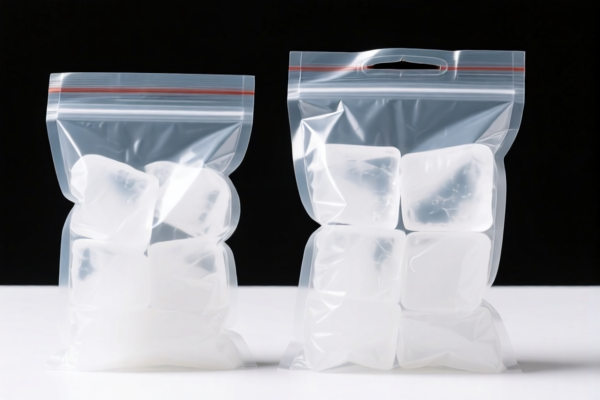
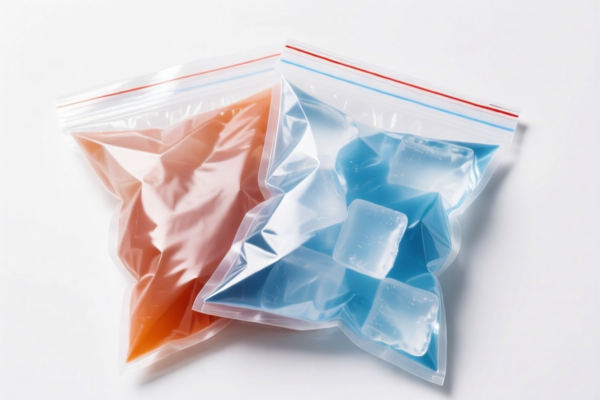
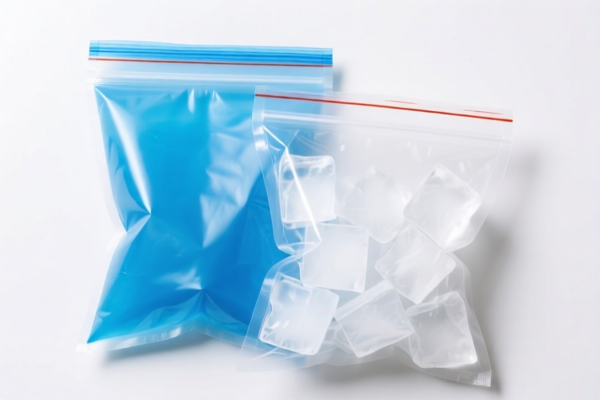
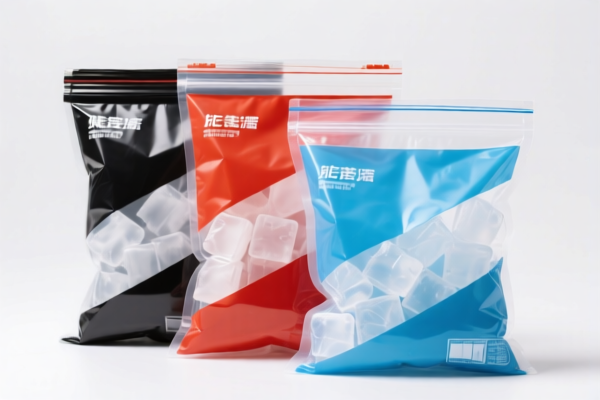
A "Lidded Plastic Ice Bag" is a specialized containment vessel made of plastic, designed specifically for the storage and transport of ice. The key differentiator here is the "Lidded" (with cover) feature and the "Bag" (bucket/drum-like) shape, which distinguishes it from simple open containers or rigid non-packaging items.
In international trade, classification hinges on two factors: 1. Function: Is it primarily for packaging (holding goods for sale/distribution) or household use (storage within the home)? 2. Structure: Does it have a sealable lid? Is it considered a "drum" or "canister"?
⚠️ Key Distinction Point: * If it is a sealable container intended for packaging/storage of goods (even if used for ice at home, if it's sold as a storage vessel), it often falls under Chapter 39.23 (Articles for the conveyance or packing of goods). * If it is strictly a household container (like a bin) without specific "packaging" intent in the commercial sense, it may fall under Chapter 39.24 (Household articles) or 39.26 (Other articles of plastic).
📦 II. HS Code Classification Details (Based on Provided Data)
Below are the specific HS Codes and their corresponding tax implications as per the <DATA> provided. Each code represents a slightly different regulatory interpretation of the "plastic bucket/drum with lid."
| HS Code | Summary Description | Total Tax Rate | Tax Breakdown |
|---|---|---|---|
3923.90.00.14 |
Plastic material, lidded bucket-type, used for packaging | 38.0% | Base: 3.0% Section 301: 25.0% Section 122: 10% |
3924.10.40.00 |
Plastic material, household goods/containers, bucket-type | 13.4% | Base: 3.4% Section 301: 0.0% Section 122: 10% |
3924.90.56.50 |
Plastic material, other household goods/containers, bucket-type | 20.9% | Base: 3.4% Section 301: 7.5% Section 122: 10% |
3923.90.00.12 |
Plastic material, lidded bucket, used for packaging | 38.0% | Base: 3.0% Section 301: 25.0% Section 122: 10% |
3926.90.10.00 |
Plastic material, bucket articles | 20.9% | Base: 3.4% Section 301: 7.5% Section 122: 10% |
🔍 Analysis of the Data: * The highest tax rate (38.0%) applies to items explicitly defined as "used for packaging" (
3923...). This includes the "Lidded Plastic Ice Bag" if it is deemed a packaging container. * The lowest tax rate (13.4%) applies to household containers (3924.10.40.00) that do not attract the 25% Section 301 tariff, but are still subject to the 10% Section 122 tariff. * Items classified as "Other household articles" or "Bucket articles" (3924.90.../3926.90...) incur a 20.9% rate, combining a 7.5% Section 301 tariff with 10% Section 122.
💰 III. 2026 Latest Tariff Rate Detailed Explanation
✅ Applicable Country: United States (US)
✅ Origin: China (CN)
✅ 生效时间: Current applicable rates as per data
🎯 1. 3923.90.00.14 & 3923.90.00.12 —— Lidded Plastic Containers for Packaging
- Summary: "Plastic material, lidded bucket-type, used for packaging" / "Plastic material, lidded bucket, used for packaging"
- Total Tax Rate: 38.0%
- Breakdown:
- Base Duty: 3.0%
- Section 301 Duty: 25.0% (High penalty for Chinese-made packaging materials)
- Section 122 Duty: 10% (Specific surcharge on certain Chinese goods)
- Implication: If your "Ice Bag" is marketed or used as a packaging unit (e.g., sold to stores to hold bulk ice for customers), it falls here. This is the most expensive classification due to the 25% Section 301 tariff.
🎯 2. 3924.10.40.00 —— Household Plastic Containers (Bucket Type)
- Summary: "Plastic material, household goods/containers, bucket-type"
- Total Tax Rate: 13.4%
- Breakdown:
- Base Duty: 3.4%
- Section 301 Duty: 0.0% (Crucial Advantage!)
- Section 122 Duty: 10%
- Implication: If the product is clearly defined as a household item (e.g., a kitchen bin, a freezer storage bucket) and not a "packaging" vessel, it may qualify for this lower rate. The absence of the 25% Section 301 tariff makes this the most cost-effective option, provided the classification holds.
🎯 3. 3924.90.56.50 & 3926.90.10.00 —— Other Household/Plastic Bucket Articles
- Summary: "Plastic material, other household goods/containers, bucket-type" / "Plastic material, bucket articles"
- Total Tax Rate: 20.9%
- Breakdown:
- Base Duty: 3.4%
- Section 301 Duty: 7.5%
- Section 122 Duty: 10%
- Implication: This is a middle-ground classification. It applies if the product is a plastic bucket but doesn't fit the specific "household container" or "packaging" definitions precisely, or if it's categorized as "other." It incurs a moderate Section 301 tariff (7.5%).
🛠️ IV. Customs Clearance Practical Advice
✅ 1. Strategic Classification Recommendation
Goal: Minimize Tax Burden (Target: 13.4% vs 38.0%)
| Scenario | Recommended HS Code | Tax Rate | Reasoning |
|---|---|---|---|
| Best Case: Sold as a reusable household freezer bin | 3924.10.40.00 |
13.4% | Avoids Section 301 (25%). Must prove it's a "household article," not "packaging." |
| Middle Case: Generic plastic bucket, unclear intent | 3924.90.56.50 |
20.9% | Safer fallback if "household" definition is weak, but still avoids full Section 301. |
| Worst Case: Sold as a container for commercial ice distribution | 3923.90.00.14 |
38.0% | Classified as "packaging." Attracts full 25% Section 301 tariff. |
⚠️ Critical Warning:
Do NOT use3923.90.00.14or3923.90.00.12unless the product is undeniably a "packaging" item. The 24.6% tax difference (38.0% - 13.4%) is massive.
✅ 2. Documentation & Declaration Tips
- Product Name: Use terms like "Reusable Household Plastic Freezer Bucket" or "Kitchen Ice Storage Container" instead of "Ice Packaging Bag."
- Function Description: Emphasize reusability and household use. Avoid words like "shipping," "distribution," "commercial packaging," or "bulk supply unit."
- Photos: Provide images showing the product in a home kitchen or freezer setting, not in a warehouse or attached to a pallet.
- Material Declaration: Clearly state "100% Plastic" to align with Chapter 39.
✅ 3. Special Considerations for "Ice Bags"
- Food Contact Safety: If the product is intended to hold food (ice), ensure you have FDA Compliance documentation. While not directly affecting HS code, lack of compliance can lead to detention.
- "Bag" vs. "Bucket": The term "Ice Bag" might mislead customs into thinking it's a flexible plastic bag (Chapter 39.01-39.04). However, the data specifies "Bucket-type" (桶状). Ensure your description matches "Rigid Plastic Container" or "Bucket" to justify HS Codes under 39.23/39.24/39.26, not flexible packaging codes.
🌍 V. Global Market Comparison (Quick Reference)
| Market | Likely HS Code | Est. Duty | Key Requirement |
|---|---|---|---|
| 🇺🇸 USA | 3924.10.40.00 |
13.4% | Avoid "Packaging" label; Prove Household Use |
| 🇨🇳 China | 3924.10.40.00 |
~5% | Standard household plastic goods |
| 🇪🇺 EU | 3924.10 |
~4-6% | CE/FDA for food contact |
📌 Conclusion:
The US market is the most complex due to Section 301 and Section 122 tariffs. The key to cost optimization is successfully classifying the item as a "Household Article" (3924) rather than a "Packaging Material" (3923).
📌 VI. Common Errors & Pitfalls
❌ Error 1: Using "Ice Bag" in the commercial invoice without clarification.
👉 Risk: Customs may assume it's a flexible plastic bag (higher duty or different classification) or a packaging item.
✅ Fix: Use "Plastic Ice Storage Bucket" or "Lidded Plastic Container."
❌ Error 2: Claiming "Packaging" use in marketing materials.
👉 Risk: Customs will apply 3923 codes with 38% tax.
✅ Fix: Market it as a "Reusable Kitchen Storage Solution."
❌ Error 3: Ignoring Section 122 (10%).
👉 Risk: All provided HS codes include a 10% Section 122 tariff. No exemption here.
✅ Fix: Factor this 10% into all cost calculations.
🎯 VII. Final Recommendation
- Aim for
3924.10.40.00(13.4%): This is the optimal HS code. Ensure your product is marketed and documented as a household storage container. - Avoid
3923.90.00.14(38.0%): Do not label it as "packaging" unless absolutely necessary. - Prepare for Section 122: All options include a 10% surcharge. Budget accordingly.
- Consult a Customs Broker: Before shipment, submit the product description and photos to a licensed US customs broker for a Pre-Ruling to confirm the 13.4% rate.
✨ Pro Tip:
"Packaging Pays More, Household Saves More!"
Choose the right description, and you save 24.6% on taxes. Don't let a single word ("packaging") cost you dearly.
📌 Disclaimer:
This guide is based on the provided <DATA> for 2026. Tariff laws are subject to change. Always verify with official US CBP sources or a licensed customs broker before filing.
用户评价
关于 HS 编码归类
协调制度(HS)是由世界海关组织(WCO)制定的国际贸易商品分类标准。全球 200 多个国家采用 HS 系统作为海关关税、贸易统计和进出口监管的基础。
每个 HS 编码遵循以下层级结构:
- 章(2 位)——商品大类(例如:第 84 章:机器和机械设备)
- 品目(4 位)——章内的更具体分类
- 子目(6 位)——国际通用细分,所有 WCO 成员国统一使用
- 本国细分(8-10 位)——各国自行扩展的细分编码,如美国 HTSUS 10 位编码
正确的 HS 编码归类对于顺利通关、准确缴纳关税和遵守贸易法规至关重要。错误归类可能导致海关延误、多缴关税或罚款。
从CN进口到US时,适用的关税税率可能包括:
- 最惠国(MFN)税率——适用于 WTO 成员国的标准关税税率
- 普通税率——适用于无贸易协定国家
- 贸易救济关税——附加关税,如 301 条款(反倾销)、232 条款(国家安全)或反补贴税
本页内容仅供参考。如需正式归类,请咨询当地海关或持牌报关代理。