Lidded Plastic Ice Bag
CN → US| HS Code | Tariff Rate | Origin | Destination | Doc |
|---|---|---|---|---|
| 3923900014 | 38.0% | CN | US | Official Doc |
| 3924104000 | 13.4% | CN | US | Official Doc |
| 3924905650 | 20.9% | CN | US | Official Doc |
| 3923900012 | 38.0% | CN | US | Official Doc |
| 3926901000 | 20.9% | CN | US | Official Doc |
Product Images



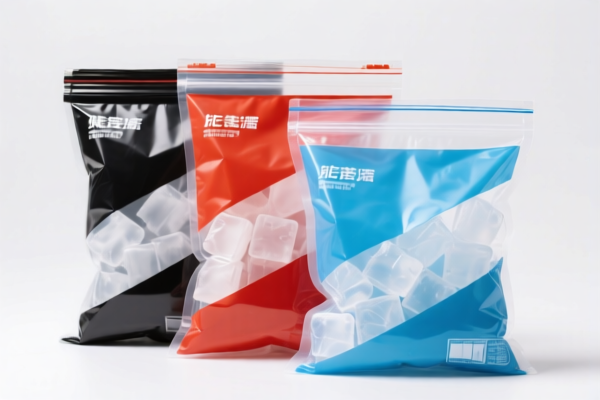
AI Analysis
🧊 Lidded Plastic Ice Bag
🌐 HS Code Reference & Customs Clearance Guide | 2026 Latest Tariff Analysis | Professional Clearance Strategy
📌 I. Product Definition & Classification: What Exactly is a "Lidded Plastic Ice Bag"?
A "Lidded Plastic Ice Bag" is a specialized containment vessel made of plastic, designed specifically for the storage and transport of ice. The key differentiator here is the "Lidded" (with cover) feature and the "Bag" (bucket/drum-like) shape, which distinguishes it from simple open containers or rigid non-packaging items.
In international trade, classification hinges on two factors: 1. Function: Is it primarily for packaging (holding goods for sale/distribution) or household use (storage within the home)? 2. Structure: Does it have a sealable lid? Is it considered a "drum" or "canister"?
⚠️ Key Distinction Point: * If it is a sealable container intended for packaging/storage of goods (even if used for ice at home, if it's sold as a storage vessel), it often falls under Chapter 39.23 (Articles for the conveyance or packing of goods). * If it is strictly a household container (like a bin) without specific "packaging" intent in the commercial sense, it may fall under Chapter 39.24 (Household articles) or 39.26 (Other articles of plastic).
📦 II. HS Code Classification Details (Based on Provided Data)
Below are the specific HS Codes and their corresponding tax implications as per the <DATA> provided. Each code represents a slightly different regulatory interpretation of the "plastic bucket/drum with lid."
| HS Code | Summary Description | Total Tax Rate | Tax Breakdown |
|---|---|---|---|
3923.90.00.14 |
Plastic material, lidded bucket-type, used for packaging | 38.0% | Base: 3.0% Section 301: 25.0% Section 122: 10% |
3924.10.40.00 |
Plastic material, household goods/containers, bucket-type | 13.4% | Base: 3.4% Section 301: 0.0% Section 122: 10% |
3924.90.56.50 |
Plastic material, other household goods/containers, bucket-type | 20.9% | Base: 3.4% Section 301: 7.5% Section 122: 10% |
3923.90.00.12 |
Plastic material, lidded bucket, used for packaging | 38.0% | Base: 3.0% Section 301: 25.0% Section 122: 10% |
3926.90.10.00 |
Plastic material, bucket articles | 20.9% | Base: 3.4% Section 301: 7.5% Section 122: 10% |
🔍 Analysis of the Data: * The highest tax rate (38.0%) applies to items explicitly defined as "used for packaging" (
3923...). This includes the "Lidded Plastic Ice Bag" if it is deemed a packaging container. * The lowest tax rate (13.4%) applies to household containers (3924.10.40.00) that do not attract the 25% Section 301 tariff, but are still subject to the 10% Section 122 tariff. * Items classified as "Other household articles" or "Bucket articles" (3924.90.../3926.90...) incur a 20.9% rate, combining a 7.5% Section 301 tariff with 10% Section 122.
💰 III. 2026 Latest Tariff Rate Detailed Explanation
✅ Applicable Country: United States (US)
✅ Origin: China (CN)
✅ 生效时间: Current applicable rates as per data
🎯 1. 3923.90.00.14 & 3923.90.00.12 —— Lidded Plastic Containers for Packaging
- Summary: "Plastic material, lidded bucket-type, used for packaging" / "Plastic material, lidded bucket, used for packaging"
- Total Tax Rate: 38.0%
- Breakdown:
- Base Duty: 3.0%
- Section 301 Duty: 25.0% (High penalty for Chinese-made packaging materials)
- Section 122 Duty: 10% (Specific surcharge on certain Chinese goods)
- Implication: If your "Ice Bag" is marketed or used as a packaging unit (e.g., sold to stores to hold bulk ice for customers), it falls here. This is the most expensive classification due to the 25% Section 301 tariff.
🎯 2. 3924.10.40.00 —— Household Plastic Containers (Bucket Type)
- Summary: "Plastic material, household goods/containers, bucket-type"
- Total Tax Rate: 13.4%
- Breakdown:
- Base Duty: 3.4%
- Section 301 Duty: 0.0% (Crucial Advantage!)
- Section 122 Duty: 10%
- Implication: If the product is clearly defined as a household item (e.g., a kitchen bin, a freezer storage bucket) and not a "packaging" vessel, it may qualify for this lower rate. The absence of the 25% Section 301 tariff makes this the most cost-effective option, provided the classification holds.
🎯 3. 3924.90.56.50 & 3926.90.10.00 —— Other Household/Plastic Bucket Articles
- Summary: "Plastic material, other household goods/containers, bucket-type" / "Plastic material, bucket articles"
- Total Tax Rate: 20.9%
- Breakdown:
- Base Duty: 3.4%
- Section 301 Duty: 7.5%
- Section 122 Duty: 10%
- Implication: This is a middle-ground classification. It applies if the product is a plastic bucket but doesn't fit the specific "household container" or "packaging" definitions precisely, or if it's categorized as "other." It incurs a moderate Section 301 tariff (7.5%).
🛠️ IV. Customs Clearance Practical Advice
✅ 1. Strategic Classification Recommendation
Goal: Minimize Tax Burden (Target: 13.4% vs 38.0%)
| Scenario | Recommended HS Code | Tax Rate | Reasoning |
|---|---|---|---|
| Best Case: Sold as a reusable household freezer bin | 3924.10.40.00 |
13.4% | Avoids Section 301 (25%). Must prove it's a "household article," not "packaging." |
| Middle Case: Generic plastic bucket, unclear intent | 3924.90.56.50 |
20.9% | Safer fallback if "household" definition is weak, but still avoids full Section 301. |
| Worst Case: Sold as a container for commercial ice distribution | 3923.90.00.14 |
38.0% | Classified as "packaging." Attracts full 25% Section 301 tariff. |
⚠️ Critical Warning:
Do NOT use3923.90.00.14or3923.90.00.12unless the product is undeniably a "packaging" item. The 24.6% tax difference (38.0% - 13.4%) is massive.
✅ 2. Documentation & Declaration Tips
- Product Name: Use terms like "Reusable Household Plastic Freezer Bucket" or "Kitchen Ice Storage Container" instead of "Ice Packaging Bag."
- Function Description: Emphasize reusability and household use. Avoid words like "shipping," "distribution," "commercial packaging," or "bulk supply unit."
- Photos: Provide images showing the product in a home kitchen or freezer setting, not in a warehouse or attached to a pallet.
- Material Declaration: Clearly state "100% Plastic" to align with Chapter 39.
✅ 3. Special Considerations for "Ice Bags"
- Food Contact Safety: If the product is intended to hold food (ice), ensure you have FDA Compliance documentation. While not directly affecting HS code, lack of compliance can lead to detention.
- "Bag" vs. "Bucket": The term "Ice Bag" might mislead customs into thinking it's a flexible plastic bag (Chapter 39.01-39.04). However, the data specifies "Bucket-type" (桶状). Ensure your description matches "Rigid Plastic Container" or "Bucket" to justify HS Codes under 39.23/39.24/39.26, not flexible packaging codes.
🌍 V. Global Market Comparison (Quick Reference)
| Market | Likely HS Code | Est. Duty | Key Requirement |
|---|---|---|---|
| 🇺🇸 USA | 3924.10.40.00 |
13.4% | Avoid "Packaging" label; Prove Household Use |
| 🇨🇳 China | 3924.10.40.00 |
~5% | Standard household plastic goods |
| 🇪🇺 EU | 3924.10 |
~4-6% | CE/FDA for food contact |
📌 Conclusion:
The US market is the most complex due to Section 301 and Section 122 tariffs. The key to cost optimization is successfully classifying the item as a "Household Article" (3924) rather than a "Packaging Material" (3923).
📌 VI. Common Errors & Pitfalls
❌ Error 1: Using "Ice Bag" in the commercial invoice without clarification.
👉 Risk: Customs may assume it's a flexible plastic bag (higher duty or different classification) or a packaging item.
✅ Fix: Use "Plastic Ice Storage Bucket" or "Lidded Plastic Container."
❌ Error 2: Claiming "Packaging" use in marketing materials.
👉 Risk: Customs will apply 3923 codes with 38% tax.
✅ Fix: Market it as a "Reusable Kitchen Storage Solution."
❌ Error 3: Ignoring Section 122 (10%).
👉 Risk: All provided HS codes include a 10% Section 122 tariff. No exemption here.
✅ Fix: Factor this 10% into all cost calculations.
🎯 VII. Final Recommendation
- Aim for
3924.10.40.00(13.4%): This is the optimal HS code. Ensure your product is marketed and documented as a household storage container. - Avoid
3923.90.00.14(38.0%): Do not label it as "packaging" unless absolutely necessary. - Prepare for Section 122: All options include a 10% surcharge. Budget accordingly.
- Consult a Customs Broker: Before shipment, submit the product description and photos to a licensed US customs broker for a Pre-Ruling to confirm the 13.4% rate.
✨ Pro Tip:
"Packaging Pays More, Household Saves More!"
Choose the right description, and you save 24.6% on taxes. Don't let a single word ("packaging") cost you dearly.
📌 Disclaimer:
This guide is based on the provided <DATA> for 2026. Tariff laws are subject to change. Always verify with official US CBP sources or a licensed customs broker before filing.
Customer Reviews
About HS Code Classification
The Harmonized System (HS) is an internationally standardized nomenclature developed by the World Customs Organization (WCO) to classify traded products. Over 200 countries use the HS system as the basis for customs tariffs, trade statistics, and import/export regulations.
Each HS code follows a hierarchical structure:
- Chapter (2 digits) — Broad category of goods (e.g., Chapter 84: Machinery and Mechanical Appliances)
- Heading (4 digits) — More specific grouping within the chapter
- Subheading (6 digits) — Internationally standardized breakdown, used by all WCO member countries
- National subdivisions (8-10 digits) — Country-specific extensions for further classification, such as US HTSUS 10-digit codes
Correct HS code classification is essential for smooth customs clearance, accurate duty payment, and compliance with trade regulations. Misclassification can lead to customs delays, overpayment of duties, or penalties.
When importing from CN to US, the applicable tariff rates may include:
- Most-Favored-Nation (MFN) rate — The standard duty rate applied to WTO members
- General rate — Applied to countries without trade agreements
- Trade remedy duties — Additional tariffs such as Section 301 (anti-dumping), Section 232 (national security), or countervailing duties
The information provided on this page is for reference purposes only. For official classification, please consult with your local customs authority or a licensed customs broker.