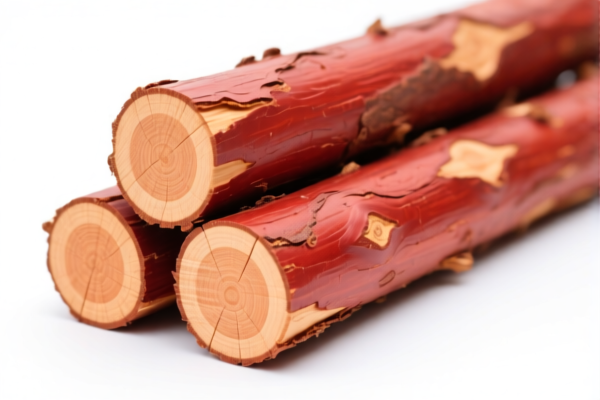
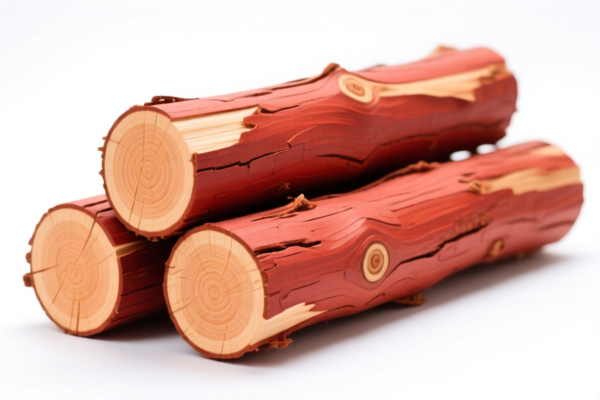
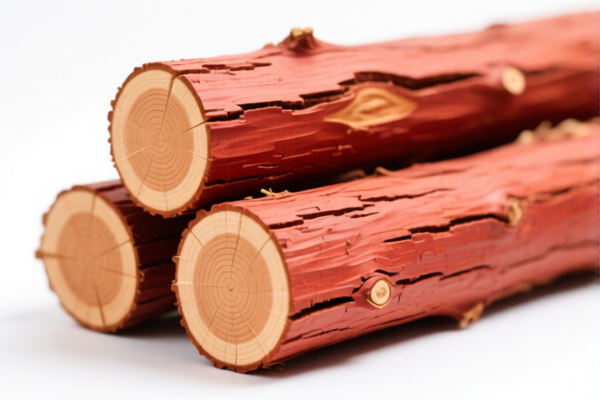
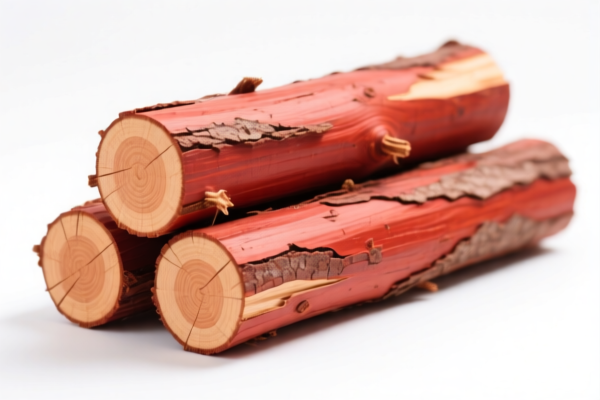
Light Red Meranti Tree Trunks
CN → US| HS编码 | 关税税率 | 原产国 | 目的国 | 文档 |
|---|---|---|---|---|
| 4407250000 | 35.0% | CN | US | 官方文档 |
| 4407290216 | 35.0% | CN | US | 官方文档 |
商品图片
AI分析
🌳 Light Red Meranti (Shavings/Planks for Export)
🌐 HS Code Reference & Customs Clearance Guide | 2026 Latest Tariff Analysis | Professional Clearance Strategy
📌 I. Product Definition and Classification: Understanding "Light Red Meranti"
Light Red Meranti (Shorea spp.) is a premium tropical hardwood widely used in plywood manufacturing, joinery, furniture, and interior flooring. In international trade, it is categorized under the general heading of sawn wood from tropical trees.
⚠️ Critical Distinction:
- Light Red Meranti is a specific type of Meranti, distinct from Dark Red Meranti and Meranti Bakau. - The product must be sawn, chipped, sliced, or peeled. - Thickness must exceed 6 mm. - If the wood is processed further (e.g., turned into veneer sheets thinner than 6mm), it may fall under a different heading (Chapter 44, Heading 4401 or 4408). For sawn timber >6mm, it remains in 4407.
📦 II. HS Code Classification Details (2026 Latest Tariff Authority Comparison)
Based on the provided data, Light Red Meranti falls under specific HS Codes within the "Tropical Wood" category.
| HS Code | Product Description | Applicable Scenario | Key Characteristics |
|---|---|---|---|
4407.25.00.00 |
Wood of tropical wood: Dark Red Meranti, Light Red Meranti and Meranti Bakau | Sawed or chipped Meranti wood (>6mm thickness) | Includes Light Red Meranti; specific sub-category for Meranti types |
4407.29.02.16 |
Wood of tropical wood: Other Keruing (Dipterocarpus spp.) | Other types of tropical hardwoods (e.g., Keruing) | NOT applicable to Light Red Meranti; this is for other Dipterocarpus species |
🔍 Important Note:
- Light Red Meranti is explicitly included in4407.25.00.00.
- Do not confuse it with4407.29.02.16, which covers other Keruing species not listed in the specific Meranti sub-category.
- Both codes apply to wood that has been sawn, chipped, sliced, or peeled, whether or not it has been planed, sanded, or end-jointed, provided the thickness is > 6 mm.
💰 III. 2026 Latest Tariff Rate Details (Including Additional Taxes)
✅ Applicable Country: United States (US)
✅ Origin: China (CN) (Assuming origin based on typical trade context; verify actual origin)
✅ Effective Date: Current tariffs apply as per 2025-2026 trade policies
🎯 1. 4407.25.00.00 —— Light Red Meranti (and related Meranti types)
| Item | Content |
|---|---|
| Base Tariff Rate | 0.0% (ad valorem) |
| Section 301 / Additional Tariff | +25.0% |
| Total Effective Tariff | 25.0% |
| Tax Calculation Basis | CIF Value × 25% |
| De Minimis Exemption Eligible? | ❌ No (De minimis usually applies to low-value shipments, but wood products are often scrutinized; confirm if < $800 threshold applies with specific exemptions for wood) |
| Legal Basis Path | HTSUS:4407.25.00.00 → USITC Footnote for Section 301 → 25% Additional Duty |
📌 Explanation:
- The base duty for this specific Meranti code is 0%, reflecting standard MFN (Most Favored Nation) rates for many tropical woods. - However, an additional 25% tariff is applied, likely under Section 301 of the Trade Act of 1974, targeting specific Chinese-origin goods. - Total Tax Burden: 25%. This is a significant cost factor for exporters.
🎯 2. 4407.29.02.16 —— Other Keruing (For Comparison)
| Item | Content |
|---|---|
| Base Tariff Rate | 0.0% |
| Additional Tariff | +25.0% |
| Total Effective Tariff | 25.0% |
| Note | Same tariff structure as Meranti; high additional tax applies to these tropical wood products. |
📌 Key Takeaway:
- Regardless of whether it’s classified as Light Red Meranti (4407.25.00.00) or Other Keruing (4407.29.02.16), the total tariff remains 25%. - The critical step is correct classification to ensure proper customs documentation and avoid misdeclaration penalties.
🛠️ IV. Customs Clearance Practical Advice (Avoiding Pitfalls)
✅ 1. Required Documentation Checklist
| Document | Mandatory? | Notes |
|---|---|---|
| Commercial Invoice | ✅ Yes | Must clearly state: "Light Red Meranti," HS Code 4407.25.00.00, Origin, Value, Dimensions |
| Packing List | ✅ Yes | Detail net/gross weight, number of packages, dimensions |
| Bill of Lading / Air Waybill | ✅ Yes | Standard transport document |
| Phytosanitary Certificate | ✅ Yes | Crucial for wood products; issued by the country of origin’s plant quarantine authority |
| Fumigation Certificate | ✅ Yes | Often required to prove treatment against pests (ISPM 15 standards) |
| Certificate of Origin | ✅ Yes | To prove origin; may affect tariff eligibility if trade agreements apply (though 301 tariffs often override FTAs for China origin) |
| Product Specification | ✅ Recommended | Confirm thickness (>6mm), processing method (sawn/chipped/etc.) |
✅ 2. Declaration Tips
🔥 "Be Specific, Be Accurate, Be Compliant!"
| Situation | Correct Declaration | Common Mistake |
|---|---|---|
| Light Red Meranti Planks | 4407.25.00.00 - Light Red Meranti |
Misclassifying as "Other Tropical Wood" (4407.29) → Risk of penalty |
| Wood Thickness > 6mm | Confirm in description | Declaring as veneer (<6mm) → Wrong HS Code |
| Processed Wood | State if planed/sanded | Omitting processing details → Ambiguity in classification |
| Fumigation Status | Mention ISPM 15 compliance | No proof of treatment → Rejection or destruction at border |
✅ 3. Special Handling Considerations
| Scenario | Recommendation |
|---|---|
| Mixed Species Loads | Separate Light Red Meranti from Dark Red Meranti or Keruing if possible; otherwise, declare correctly and ensure all parts fall under the same tariff if applicable. |
| High Value Shipments | Consider Advance Ruling from CBP to confirm HS Code and tariff liability before shipment. |
| Anti-Dumping / Countervailing Duties | Check if any specific anti-dumping measures apply to Chinese wood products. |
| Environmental Regulations | Ensure compliance with Lacey Act (USA) – provide declaration of species and country of harvest. |
🌍 V. Global Market Customs Comparison (2026)
| Country/Region | Recommended HS Code | Tariff Rate | Certification | Notes |
|---|---|---|---|---|
| 🇺🇸 USA | 4407.25.00.00 |
25% (Total) | Phytosanitary, Lacey Act | High additional tariff due to Section 301 |
| 🇨🇳 China | 4407.25.00.00 |
~10-15% | Phytosanitary | Export from China; import tariffs vary by trade agreements |
| 🇪🇺 EU | 4407.25.00.00 |
0% (if eligible) | EUTR Compliance | EU Timber Regulation requires due diligence |
| 🇦🇺 Australia | 4407.25.00.00 |
~5% | Phytosanitary | Strict biosecurity laws |
| 🇯🇵 Japan | 4407.25.00.00 |
5-6% | Phytosanitary | Standard MFN rates |
📌 Conclusion:
- USA imposes a 25% total tariff on Light Red Meranti from China. - EU and Australia have strict phytosanitary and environmental compliance requirements. - Always verify origin-specific rules to leverage any potential Free Trade Agreement (FTA) benefits, though Section 301 may negate these for Chinese origin.
📌 VI. Common Errors & Pitfalls (Lessons Learned)
❌ Error 1: Misclassifying Light Red Meranti as generic "Tropical Wood" (4407.29)
👉 Consequence: Potential misdeclaration, customs delays, or incorrect duty assessment.
❌ Error 2: Failing to provide a Phytosanitary Certificate
👉 Consequence: Shipment held, destroyed, or returned at destination border.
❌ Error 3: Ignoring Lacey Act declarations in the USA
👉 Consequence: Fines, penalties, and seizure of goods for non-compliance with wildlife protection laws.
❌ Error 4: Declaring wood thickness as <6mm to avoid duties
👉 Consequence: Fraudulent declaration if actual thickness >6mm; severe penalties.
✅ Correct Approach:
"Light Red Meranti, Sawn Wood, Thickness >6mm, Fumigated, ISPM 15 Compliant, HS Code: 4407.25.00.00, Origin: [Country]"
🎯 VII. Conclusion: Professional Clearance, Cost Efficiency, Risk Mitigation
🎯 Remember the Key Points:
🔹 "Light Red Meranti = 4407.25.00.00"
🔹 "Total Tariff to USA = 25% (0% Base + 25% Additional)"
🔹 "Phytosanitary Certificate is Non-Negotiable"
🔹 "Lacey Act Compliance Required for USA"
📌 Pro Tip:
If your Light Red Meranti is sourced from Southeast Asia (e.g., Indonesia, Malaysia) and exported to the USA, ensure you have all CITES and EUTR documentation if applicable, though the 25% US tariff remains a significant factor.
📣 Immediate Action:
📞 Consult with a licensed customs broker.
📄 Prepare all phytosanitary and fumigation documents.
🚀 Ensure accurate HS Code declaration to avoid delays.
✨ Professional clearance starts with precise classification!
💼 Every detail matters in wood product trade!
用户评价
关于 HS 编码归类
协调制度(HS)是由世界海关组织(WCO)制定的国际贸易商品分类标准。全球 200 多个国家采用 HS 系统作为海关关税、贸易统计和进出口监管的基础。
每个 HS 编码遵循以下层级结构:
- 章(2 位)——商品大类(例如:第 84 章:机器和机械设备)
- 品目(4 位)——章内的更具体分类
- 子目(6 位)——国际通用细分,所有 WCO 成员国统一使用
- 本国细分(8-10 位)——各国自行扩展的细分编码,如美国 HTSUS 10 位编码
正确的 HS 编码归类对于顺利通关、准确缴纳关税和遵守贸易法规至关重要。错误归类可能导致海关延误、多缴关税或罚款。
从CN进口到US时,适用的关税税率可能包括:
- 最惠国(MFN)税率——适用于 WTO 成员国的标准关税税率
- 普通税率——适用于无贸易协定国家
- 贸易救济关税——附加关税,如 301 条款(反倾销)、232 条款(国家安全)或反补贴税
本页内容仅供参考。如需正式归类,请咨询当地海关或持牌报关代理。