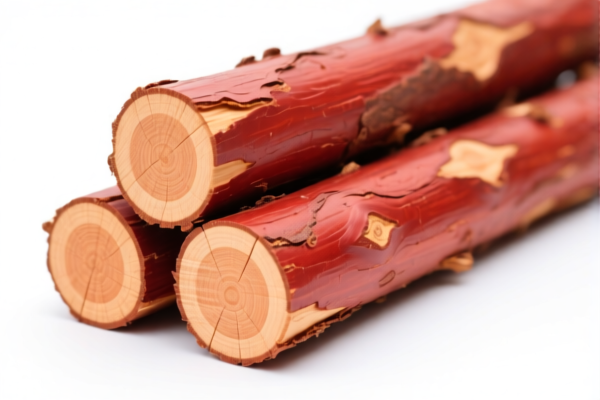
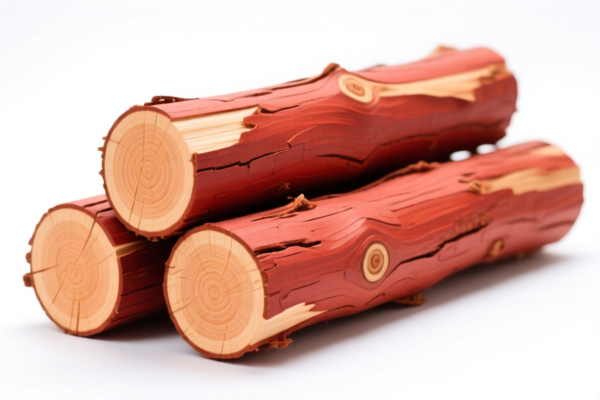
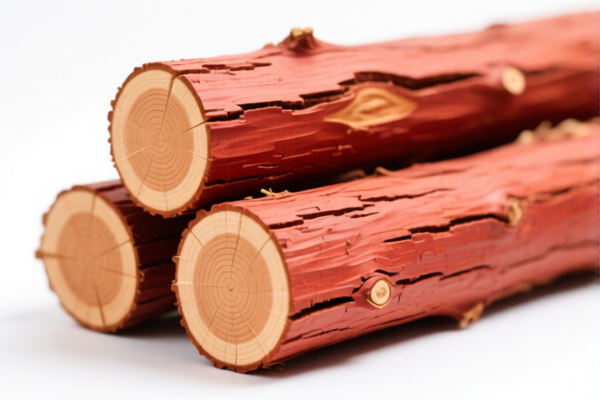
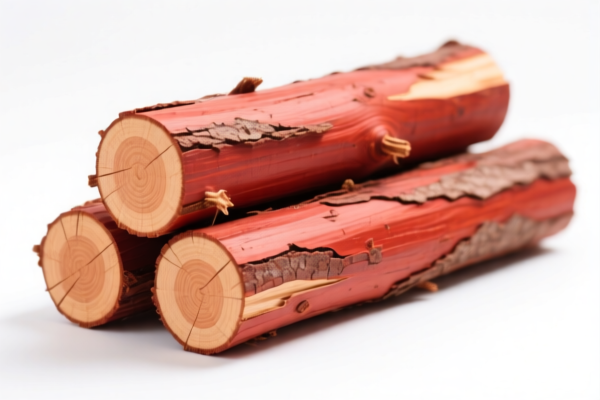
Light Red Meranti Tree Trunks
CN → US| HS Code | Tariff Rate | Origin | Destination | Doc |
|---|---|---|---|---|
| 4407250000 | 35.0% | CN | US | Official Doc |
| 4407290216 | 35.0% | CN | US | Official Doc |
Product Images
AI Analysis
🌳 Light Red Meranti (Shavings/Planks for Export)
🌐 HS Code Reference & Customs Clearance Guide | 2026 Latest Tariff Analysis | Professional Clearance Strategy
📌 I. Product Definition and Classification: Understanding "Light Red Meranti"
Light Red Meranti (Shorea spp.) is a premium tropical hardwood widely used in plywood manufacturing, joinery, furniture, and interior flooring. In international trade, it is categorized under the general heading of sawn wood from tropical trees.
⚠️ Critical Distinction:
- Light Red Meranti is a specific type of Meranti, distinct from Dark Red Meranti and Meranti Bakau. - The product must be sawn, chipped, sliced, or peeled. - Thickness must exceed 6 mm. - If the wood is processed further (e.g., turned into veneer sheets thinner than 6mm), it may fall under a different heading (Chapter 44, Heading 4401 or 4408). For sawn timber >6mm, it remains in 4407.
📦 II. HS Code Classification Details (2026 Latest Tariff Authority Comparison)
Based on the provided data, Light Red Meranti falls under specific HS Codes within the "Tropical Wood" category.
| HS Code | Product Description | Applicable Scenario | Key Characteristics |
|---|---|---|---|
4407.25.00.00 |
Wood of tropical wood: Dark Red Meranti, Light Red Meranti and Meranti Bakau | Sawed or chipped Meranti wood (>6mm thickness) | Includes Light Red Meranti; specific sub-category for Meranti types |
4407.29.02.16 |
Wood of tropical wood: Other Keruing (Dipterocarpus spp.) | Other types of tropical hardwoods (e.g., Keruing) | NOT applicable to Light Red Meranti; this is for other Dipterocarpus species |
🔍 Important Note:
- Light Red Meranti is explicitly included in4407.25.00.00.
- Do not confuse it with4407.29.02.16, which covers other Keruing species not listed in the specific Meranti sub-category.
- Both codes apply to wood that has been sawn, chipped, sliced, or peeled, whether or not it has been planed, sanded, or end-jointed, provided the thickness is > 6 mm.
💰 III. 2026 Latest Tariff Rate Details (Including Additional Taxes)
✅ Applicable Country: United States (US)
✅ Origin: China (CN) (Assuming origin based on typical trade context; verify actual origin)
✅ Effective Date: Current tariffs apply as per 2025-2026 trade policies
🎯 1. 4407.25.00.00 —— Light Red Meranti (and related Meranti types)
| Item | Content |
|---|---|
| Base Tariff Rate | 0.0% (ad valorem) |
| Section 301 / Additional Tariff | +25.0% |
| Total Effective Tariff | 25.0% |
| Tax Calculation Basis | CIF Value × 25% |
| De Minimis Exemption Eligible? | ❌ No (De minimis usually applies to low-value shipments, but wood products are often scrutinized; confirm if < $800 threshold applies with specific exemptions for wood) |
| Legal Basis Path | HTSUS:4407.25.00.00 → USITC Footnote for Section 301 → 25% Additional Duty |
📌 Explanation:
- The base duty for this specific Meranti code is 0%, reflecting standard MFN (Most Favored Nation) rates for many tropical woods. - However, an additional 25% tariff is applied, likely under Section 301 of the Trade Act of 1974, targeting specific Chinese-origin goods. - Total Tax Burden: 25%. This is a significant cost factor for exporters.
🎯 2. 4407.29.02.16 —— Other Keruing (For Comparison)
| Item | Content |
|---|---|
| Base Tariff Rate | 0.0% |
| Additional Tariff | +25.0% |
| Total Effective Tariff | 25.0% |
| Note | Same tariff structure as Meranti; high additional tax applies to these tropical wood products. |
📌 Key Takeaway:
- Regardless of whether it’s classified as Light Red Meranti (4407.25.00.00) or Other Keruing (4407.29.02.16), the total tariff remains 25%. - The critical step is correct classification to ensure proper customs documentation and avoid misdeclaration penalties.
🛠️ IV. Customs Clearance Practical Advice (Avoiding Pitfalls)
✅ 1. Required Documentation Checklist
| Document | Mandatory? | Notes |
|---|---|---|
| Commercial Invoice | ✅ Yes | Must clearly state: "Light Red Meranti," HS Code 4407.25.00.00, Origin, Value, Dimensions |
| Packing List | ✅ Yes | Detail net/gross weight, number of packages, dimensions |
| Bill of Lading / Air Waybill | ✅ Yes | Standard transport document |
| Phytosanitary Certificate | ✅ Yes | Crucial for wood products; issued by the country of origin’s plant quarantine authority |
| Fumigation Certificate | ✅ Yes | Often required to prove treatment against pests (ISPM 15 standards) |
| Certificate of Origin | ✅ Yes | To prove origin; may affect tariff eligibility if trade agreements apply (though 301 tariffs often override FTAs for China origin) |
| Product Specification | ✅ Recommended | Confirm thickness (>6mm), processing method (sawn/chipped/etc.) |
✅ 2. Declaration Tips
🔥 "Be Specific, Be Accurate, Be Compliant!"
| Situation | Correct Declaration | Common Mistake |
|---|---|---|
| Light Red Meranti Planks | 4407.25.00.00 - Light Red Meranti |
Misclassifying as "Other Tropical Wood" (4407.29) → Risk of penalty |
| Wood Thickness > 6mm | Confirm in description | Declaring as veneer (<6mm) → Wrong HS Code |
| Processed Wood | State if planed/sanded | Omitting processing details → Ambiguity in classification |
| Fumigation Status | Mention ISPM 15 compliance | No proof of treatment → Rejection or destruction at border |
✅ 3. Special Handling Considerations
| Scenario | Recommendation |
|---|---|
| Mixed Species Loads | Separate Light Red Meranti from Dark Red Meranti or Keruing if possible; otherwise, declare correctly and ensure all parts fall under the same tariff if applicable. |
| High Value Shipments | Consider Advance Ruling from CBP to confirm HS Code and tariff liability before shipment. |
| Anti-Dumping / Countervailing Duties | Check if any specific anti-dumping measures apply to Chinese wood products. |
| Environmental Regulations | Ensure compliance with Lacey Act (USA) – provide declaration of species and country of harvest. |
🌍 V. Global Market Customs Comparison (2026)
| Country/Region | Recommended HS Code | Tariff Rate | Certification | Notes |
|---|---|---|---|---|
| 🇺🇸 USA | 4407.25.00.00 |
25% (Total) | Phytosanitary, Lacey Act | High additional tariff due to Section 301 |
| 🇨🇳 China | 4407.25.00.00 |
~10-15% | Phytosanitary | Export from China; import tariffs vary by trade agreements |
| 🇪🇺 EU | 4407.25.00.00 |
0% (if eligible) | EUTR Compliance | EU Timber Regulation requires due diligence |
| 🇦🇺 Australia | 4407.25.00.00 |
~5% | Phytosanitary | Strict biosecurity laws |
| 🇯🇵 Japan | 4407.25.00.00 |
5-6% | Phytosanitary | Standard MFN rates |
📌 Conclusion:
- USA imposes a 25% total tariff on Light Red Meranti from China. - EU and Australia have strict phytosanitary and environmental compliance requirements. - Always verify origin-specific rules to leverage any potential Free Trade Agreement (FTA) benefits, though Section 301 may negate these for Chinese origin.
📌 VI. Common Errors & Pitfalls (Lessons Learned)
❌ Error 1: Misclassifying Light Red Meranti as generic "Tropical Wood" (4407.29)
👉 Consequence: Potential misdeclaration, customs delays, or incorrect duty assessment.
❌ Error 2: Failing to provide a Phytosanitary Certificate
👉 Consequence: Shipment held, destroyed, or returned at destination border.
❌ Error 3: Ignoring Lacey Act declarations in the USA
👉 Consequence: Fines, penalties, and seizure of goods for non-compliance with wildlife protection laws.
❌ Error 4: Declaring wood thickness as <6mm to avoid duties
👉 Consequence: Fraudulent declaration if actual thickness >6mm; severe penalties.
✅ Correct Approach:
"Light Red Meranti, Sawn Wood, Thickness >6mm, Fumigated, ISPM 15 Compliant, HS Code: 4407.25.00.00, Origin: [Country]"
🎯 VII. Conclusion: Professional Clearance, Cost Efficiency, Risk Mitigation
🎯 Remember the Key Points:
🔹 "Light Red Meranti = 4407.25.00.00"
🔹 "Total Tariff to USA = 25% (0% Base + 25% Additional)"
🔹 "Phytosanitary Certificate is Non-Negotiable"
🔹 "Lacey Act Compliance Required for USA"
📌 Pro Tip:
If your Light Red Meranti is sourced from Southeast Asia (e.g., Indonesia, Malaysia) and exported to the USA, ensure you have all CITES and EUTR documentation if applicable, though the 25% US tariff remains a significant factor.
📣 Immediate Action:
📞 Consult with a licensed customs broker.
📄 Prepare all phytosanitary and fumigation documents.
🚀 Ensure accurate HS Code declaration to avoid delays.
✨ Professional clearance starts with precise classification!
💼 Every detail matters in wood product trade!
Customer Reviews
About HS Code Classification
The Harmonized System (HS) is an internationally standardized nomenclature developed by the World Customs Organization (WCO) to classify traded products. Over 200 countries use the HS system as the basis for customs tariffs, trade statistics, and import/export regulations.
Each HS code follows a hierarchical structure:
- Chapter (2 digits) — Broad category of goods (e.g., Chapter 84: Machinery and Mechanical Appliances)
- Heading (4 digits) — More specific grouping within the chapter
- Subheading (6 digits) — Internationally standardized breakdown, used by all WCO member countries
- National subdivisions (8-10 digits) — Country-specific extensions for further classification, such as US HTSUS 10-digit codes
Correct HS code classification is essential for smooth customs clearance, accurate duty payment, and compliance with trade regulations. Misclassification can lead to customs delays, overpayment of duties, or penalties.
When importing from CN to US, the applicable tariff rates may include:
- Most-Favored-Nation (MFN) rate — The standard duty rate applied to WTO members
- General rate — Applied to countries without trade agreements
- Trade remedy duties — Additional tariffs such as Section 301 (anti-dumping), Section 232 (national security), or countervailing duties
The information provided on this page is for reference purposes only. For official classification, please consult with your local customs authority or a licensed customs broker.