Light Truck Inner Tube
CN → US| HS编码 | 关税税率 | 原产国 | 目的国 | 文档 |
|---|---|---|---|---|
| 4016996010 | 37.5% | CN | US | 官方文档 |
| 4013100020 | 38.7% | CN | US | 官方文档 |
| 4016993550 | 35.0% | CN | US | 官方文档 |
| 4011201015 | 39.0% | CN | US | 官方文档 |
| 4011205020 | 38.4% | CN | US | 官方文档 |
商品图片
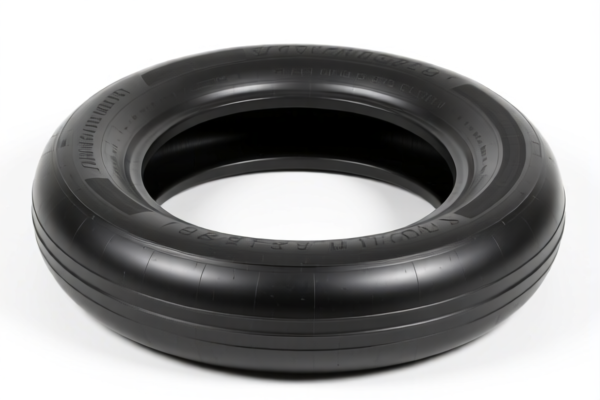
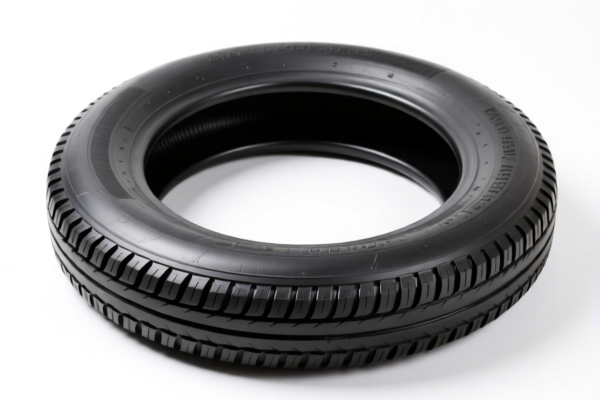
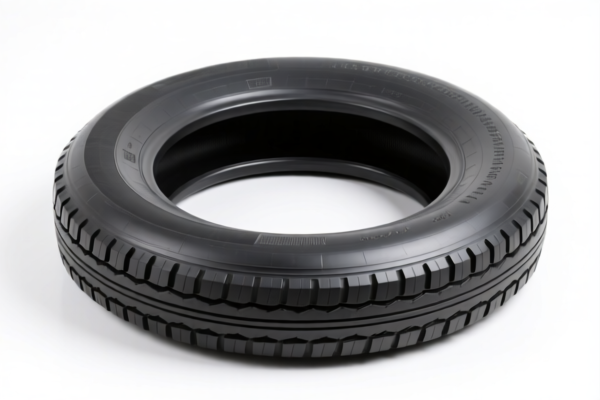
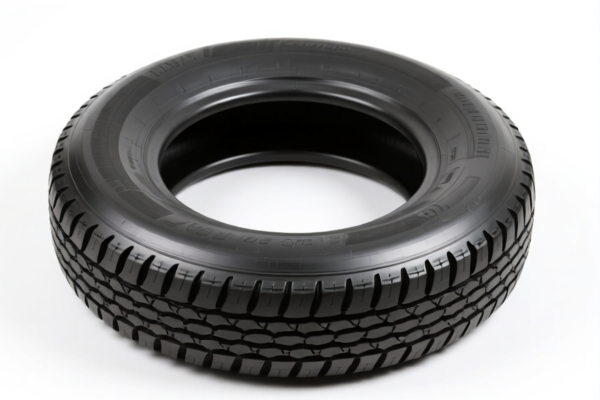
AI分析
🚛 Light Truck Inner Tubes: HS Code Classification & US Customs Clearance Guide 2026
🌐 HS Code Reference & Customs Strategy | 2026 Tariff Update | Professional Clearance Protocol
📌 I. Product Definition: What is a "Light Truck Inner Tube"?
A Light Truck Inner Tube is a pneumatic rubber component inserted inside a tire to retain air pressure. Unlike the outer tire, which provides traction and protection, the inner tube is the primary sealing element.
Key Classification Dilemma:
In international trade, inner tubes can be classified in two distinct chapters depending on their specific nature:
1. Chapter 40 (Rubber Articles): If classified as a general rubber good or part of a rubber article.
2. Chapter 40 (Tires & Tubes): If explicitly recognized as a tire tube under specific tire headings (4011/4012).
⚠️ Critical Distinction:
- If the product is merely a rubber tube without specific tire-tube features, it may fall under 4016.99 (Other rubber articles).
- If it is specifically designed as a tube for tires, it often falls under 4013.10 (Tubes of rubber) or potentially 4011 (Tires, though less common for inner tubes specifically, some brokers attempt this).
- US Customs often scrutinizes whether it is a "part of a vehicle" (Chapter 87 - unlikely for rubber tubes) or a "rubber article" (Chapter 40).
📦 II. HS Code Classification Matrix (2026 Latest Tariff Data)
Based on the provided data, here are the 5 potential HS Codes for "Light Truck Inner Tube" imported from China to the US.
| HS Code | Product Description & Matching Logic | Total Tax Rate | Tax Breakdown |
|---|---|---|---|
4016.99.60.10 |
Other Rubber Articles • Logic: "Inner Tube" is inferred as a vulcanized rubber product. • Use: "Truck" implies automotive mechanical parts. • Form: Vulcanized rubber article. |
37.5% | Base: 2.5% + Sec. 301: 25.0% + Section 122: 10.0% |
4013.10.00.20 |
Tubes of Rubber (Tire Tubes) • Logic: "Truck" = Use; "Inner Tube" = Form; "Rubber" = Material. • Fit: Matches material, form, and use requirements perfectly. |
38.7% | Base: 3.7% + Sec. 301: 25.0% + Section 122: 10.0% |
4016.99.35.50 |
Other Vulcanized Rubber Articles • Logic: Infers vulcanized rubber (natural/synthetic). • Exclusion: Not a "rubber belt," fits "Other Natural Rubber Articles" logic. |
35.0% | Base: 0.0% + Sec. 301: 25.0% + Section 122: 10.0% |
4011.20.10.15 |
Truck Tires (Radial) • Logic: Rubber material (inferred); Radial/Road use for trucks. • Note: Often used if brokers classify tubes under tire headings incorrectly or if specific regulatory overlap exists. |
39.0% | Base: 4.0% + Sec. 301: 25.0% + Section 122: 10.0% |
4011.20.50.20 |
Other Truck Tires (Radial) • Logic: Matches material (rubber), use (truck), and form (part of tire system). • Category: Road/Truck use category. |
38.4% | Base: 3.4% + Sec. 301: 25.0% + Section 122: 10.0% |
🔍 Key Insight:
- Lowest Base Rate:4016.99.35.50(0% base) → Total 35.0%
- Highest Base Rate:4011.20.10.15(4% base) → Total 39.0%
- Most Technically Accurate:4013.10.00.20(Explicitly "Tubes of rubber") → Total 38.7%
💰 III. 2026 US Tariff Structure Explained (China Origin)
All rates above apply to goods originating from China. The total tax is a compound of three layers:
🎯 1. Base Tariff (Harmonized Tariff Schedule)
- Varies by HS code (0.0% to 4.0%).
- Determined by the specific description of the rubber article.
🎯 2. Section 301 Tariffs (Trade War Levies)
- Rate: +25%
- Authority: US Trade Representative (USTR) under Section 301 of the Trade Act of 1974.
- Applies to: Almost all rubber products (Chapter 40) from China.
- Status: Currently Active.
🎯 3. Section 122 Tariffs (Trade Act of 1974)
- Rate: +10%
- Authority: US Customs and Border Protection (CBP) under Section 122 of the Trade Act of 1974.
- Applies to: Certain imports to prevent trade diversion or specific economic harms.
- Status: Currently Active.
📌 Total Tax Calculation Example:
For HS4016.99.60.10:
$2.5\% (\text{Base}) + 25.0\% (\text{Sec. 301}) + 10.0\% (\text{Sec. 122}) = \mathbf{37.5\%}$
🛠️ IV. Customs Clearance Strategy & Tips
✅ 1. Documentation Requirements
To ensure smooth clearance and avoid reclassification or penalties:
| Document | Purpose | Key Details to Include |
|---|---|---|
| Commercial Invoice | Declare Value & Origin | Clearly state "Inner Tube for Light Truck," HS Code, Origin: China. |
| Packing List | Quantity & Weight | List number of units, gross/net weight, packaging type. |
| Product Specification | Classify Correctly | Material (Vulcanized Rubber), Diameter, Width, Valve Type, Brand. |
| Manufacturer Info | Provenance | Name and address of the Chinese manufacturer. |
| Certificate of Origin | Verify Origin | Essential for confirming China origin (triggers Sec. 301/122). |
✅ 2. Classification Advice: Which HS Code to Choose?
🔥 Strategy: Balance Accuracy vs. Cost
| Scenario | Recommended HS Code | Reason |
|---|---|---|
| Best Cost Efficiency | 4016.99.35.50 (35.0%) |
Lowest base rate (0%). Risk: Must prove it’s not a "tire tube" under 4013. |
| Most Accurate Technical Fit | 4013.10.00.20 (38.7%) |
Explicitly covers "Tubes of rubber." Best defense against CBP challenge. |
| If Broker Suggests Tire Heading | 4011.20.50.20 (38.4%) |
Sometimes used if tubes are sold as part of a tire kit. |
| Avoid | 4011.20.10.15 (39.0%) |
Highest total tax. Only use if explicitly required by specific supply chain contracts. |
✅ 3. Common Pitfalls & How to Avoid Them
❌ Pitfall 1: Misclassifying as "Tire" instead of "Tube"
- Risk: HS 4011 codes are for tires, not inner tubes. CBP may reject this if the product is clearly a tube.
- Solution: Use 4013 (Tubes) or 4016 (Other Rubber Articles).
❌ Pitfall 2: Ignoring Section 122
- Risk: Forgetting to account for the additional 10%.
- Solution: Always calculate Total Tax = Base + 25% + 10%.
❌ Pitfall 3: Incomplete Description
- Risk: CBP requests additional info, causing delays.
- Solution: Include material composition (e.g., "100% Vulcanized Rubber") in the invoice.
🌍 V. Global Market Comparison (2026)
| Country/Region | Recommended HS Code | Total Tax (China Origin) | Notes |
|---|---|---|---|
| 🇺🇸 USA | 4016.99.35.50 |
35.0% | Highest effective rate due to Sec. 301 + 122. |
| 🇨🇳 China | 4013.10.00.00 |
0% - 2% | Import duty is low; no Sec. 301/122. |
| 🇪🇺 EU | 4013.10.00.00 |
3.5% | No US-style附加税. CE marking required. |
| 🇯🇵 Japan | 4013.10.00.00 |
4.5% | No additional tariffs. |
| 🇲🇽 Mexico | 4013.10.00.00 |
0% (under USMCA if eligible) | Check rules of origin for tariff-free status. |
📌 Conclusion:
The US market is the most expensive for Chinese rubber products due to layered tariffs. Consider supply chain diversification (e.g., manufacturing in Vietnam or Mexico) if volume is high.
📌 VI. Pro Tips for Importers
- Pre-Ruling Application:
Submit a Binding Ruling Request to US CBP to confirm the correct HS Code before shipment. This protects you from unexpected audits. - Product Labeling:
Clearly mark products as "Inner Tube - Rubber" to avoid confusion with "Tires" or "Parts of Vehicles." - Volume Discounts:
Negotiate with suppliers to absorb part of the tariff, especially given the 35-39% total duty burden. - Alternative Markets:
If targeting the US, consider sourcing from non-China countries (e.g., Thailand, Vietnam) to potentially avoid Sec. 301 tariffs.
🎯 Final Recommendation
✨ For Light Truck Inner Tubes from China:
- Safest Classification:4013.10.00.20(38.7%)
- Lowest Cost Classification:4016.99.35.50(35.0%)
- Action: Consult your customs broker to decide between accuracy (4013) and cost savings (4016).
- Always include: Full product specs, material declaration, and correct origin documentation.
📣 Ready to Import?
📞 Contact your freight forwarder today to calculate landed costs based on these HS codes.
📦 Ensure all documents are precise to avoid CBP holds.
🚀 Minimize risk, maximize profit!
✨ Professional Clearance Starts with Accurate Classification!
💼 Your cost efficiency depends on every digit of the HS Code!
用户评价
关于 HS 编码归类
协调制度(HS)是由世界海关组织(WCO)制定的国际贸易商品分类标准。全球 200 多个国家采用 HS 系统作为海关关税、贸易统计和进出口监管的基础。
每个 HS 编码遵循以下层级结构:
- 章(2 位)——商品大类(例如:第 84 章:机器和机械设备)
- 品目(4 位)——章内的更具体分类
- 子目(6 位)——国际通用细分,所有 WCO 成员国统一使用
- 本国细分(8-10 位)——各国自行扩展的细分编码,如美国 HTSUS 10 位编码
正确的 HS 编码归类对于顺利通关、准确缴纳关税和遵守贸易法规至关重要。错误归类可能导致海关延误、多缴关税或罚款。
从CN进口到US时,适用的关税税率可能包括:
- 最惠国(MFN)税率——适用于 WTO 成员国的标准关税税率
- 普通税率——适用于无贸易协定国家
- 贸易救济关税——附加关税,如 301 条款(反倾销)、232 条款(国家安全)或反补贴税
本页内容仅供参考。如需正式归类,请咨询当地海关或持牌报关代理。