Light Truck Inner Tube
CN → US| HS Code | Tariff Rate | Origin | Destination | Doc |
|---|---|---|---|---|
| 4016996010 | 37.5% | CN | US | Official Doc |
| 4013100020 | 38.7% | CN | US | Official Doc |
| 4016993550 | 35.0% | CN | US | Official Doc |
| 4011201015 | 39.0% | CN | US | Official Doc |
| 4011205020 | 38.4% | CN | US | Official Doc |
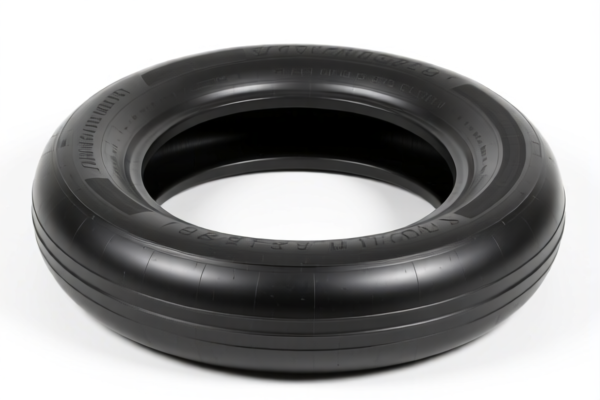
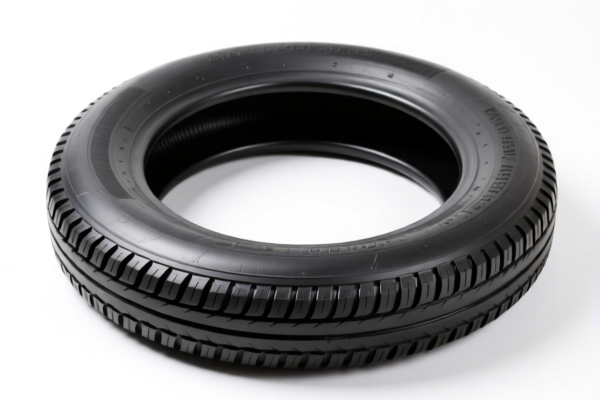
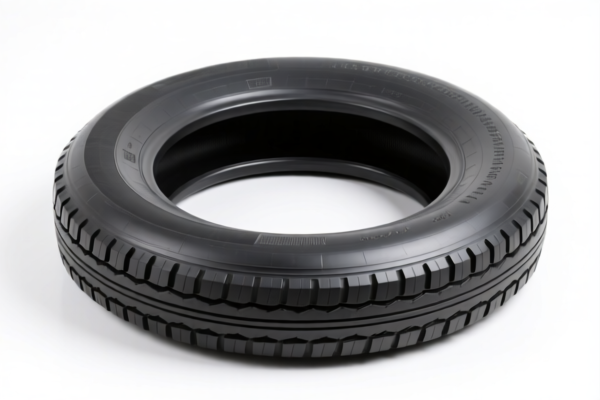
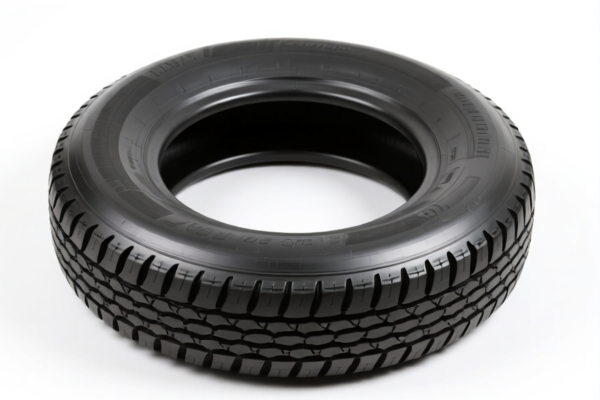
Product Images
AI Analysis
🚛 Light Truck Inner Tubes: HS Code Classification & US Customs Clearance Guide 2026
🌐 HS Code Reference & Customs Strategy | 2026 Tariff Update | Professional Clearance Protocol
📌 I. Product Definition: What is a "Light Truck Inner Tube"?
A Light Truck Inner Tube is a pneumatic rubber component inserted inside a tire to retain air pressure. Unlike the outer tire, which provides traction and protection, the inner tube is the primary sealing element.
Key Classification Dilemma:
In international trade, inner tubes can be classified in two distinct chapters depending on their specific nature:
1. Chapter 40 (Rubber Articles): If classified as a general rubber good or part of a rubber article.
2. Chapter 40 (Tires & Tubes): If explicitly recognized as a tire tube under specific tire headings (4011/4012).
⚠️ Critical Distinction:
- If the product is merely a rubber tube without specific tire-tube features, it may fall under 4016.99 (Other rubber articles).
- If it is specifically designed as a tube for tires, it often falls under 4013.10 (Tubes of rubber) or potentially 4011 (Tires, though less common for inner tubes specifically, some brokers attempt this).
- US Customs often scrutinizes whether it is a "part of a vehicle" (Chapter 87 - unlikely for rubber tubes) or a "rubber article" (Chapter 40).
📦 II. HS Code Classification Matrix (2026 Latest Tariff Data)
Based on the provided data, here are the 5 potential HS Codes for "Light Truck Inner Tube" imported from China to the US.
| HS Code | Product Description & Matching Logic | Total Tax Rate | Tax Breakdown |
|---|---|---|---|
4016.99.60.10 |
Other Rubber Articles • Logic: "Inner Tube" is inferred as a vulcanized rubber product. • Use: "Truck" implies automotive mechanical parts. • Form: Vulcanized rubber article. |
37.5% | Base: 2.5% + Sec. 301: 25.0% + Section 122: 10.0% |
4013.10.00.20 |
Tubes of Rubber (Tire Tubes) • Logic: "Truck" = Use; "Inner Tube" = Form; "Rubber" = Material. • Fit: Matches material, form, and use requirements perfectly. |
38.7% | Base: 3.7% + Sec. 301: 25.0% + Section 122: 10.0% |
4016.99.35.50 |
Other Vulcanized Rubber Articles • Logic: Infers vulcanized rubber (natural/synthetic). • Exclusion: Not a "rubber belt," fits "Other Natural Rubber Articles" logic. |
35.0% | Base: 0.0% + Sec. 301: 25.0% + Section 122: 10.0% |
4011.20.10.15 |
Truck Tires (Radial) • Logic: Rubber material (inferred); Radial/Road use for trucks. • Note: Often used if brokers classify tubes under tire headings incorrectly or if specific regulatory overlap exists. |
39.0% | Base: 4.0% + Sec. 301: 25.0% + Section 122: 10.0% |
4011.20.50.20 |
Other Truck Tires (Radial) • Logic: Matches material (rubber), use (truck), and form (part of tire system). • Category: Road/Truck use category. |
38.4% | Base: 3.4% + Sec. 301: 25.0% + Section 122: 10.0% |
🔍 Key Insight:
- Lowest Base Rate:4016.99.35.50(0% base) → Total 35.0%
- Highest Base Rate:4011.20.10.15(4% base) → Total 39.0%
- Most Technically Accurate:4013.10.00.20(Explicitly "Tubes of rubber") → Total 38.7%
💰 III. 2026 US Tariff Structure Explained (China Origin)
All rates above apply to goods originating from China. The total tax is a compound of three layers:
🎯 1. Base Tariff (Harmonized Tariff Schedule)
- Varies by HS code (0.0% to 4.0%).
- Determined by the specific description of the rubber article.
🎯 2. Section 301 Tariffs (Trade War Levies)
- Rate: +25%
- Authority: US Trade Representative (USTR) under Section 301 of the Trade Act of 1974.
- Applies to: Almost all rubber products (Chapter 40) from China.
- Status: Currently Active.
🎯 3. Section 122 Tariffs (Trade Act of 1974)
- Rate: +10%
- Authority: US Customs and Border Protection (CBP) under Section 122 of the Trade Act of 1974.
- Applies to: Certain imports to prevent trade diversion or specific economic harms.
- Status: Currently Active.
📌 Total Tax Calculation Example:
For HS4016.99.60.10:
$$2.5\% (\text{Base}) + 25.0\% (\text{Sec. 301}) + 10.0\% (\text{Sec. 122}) = \mathbf{37.5\%}$$
🛠️ IV. Customs Clearance Strategy & Tips
✅ 1. Documentation Requirements
To ensure smooth clearance and avoid reclassification or penalties:
| Document | Purpose | Key Details to Include |
|---|---|---|
| Commercial Invoice | Declare Value & Origin | Clearly state "Inner Tube for Light Truck," HS Code, Origin: China. |
| Packing List | Quantity & Weight | List number of units, gross/net weight, packaging type. |
| Product Specification | Classify Correctly | Material (Vulcanized Rubber), Diameter, Width, Valve Type, Brand. |
| Manufacturer Info | Provenance | Name and address of the Chinese manufacturer. |
| Certificate of Origin | Verify Origin | Essential for confirming China origin (triggers Sec. 301/122). |
✅ 2. Classification Advice: Which HS Code to Choose?
🔥 Strategy: Balance Accuracy vs. Cost
| Scenario | Recommended HS Code | Reason |
|---|---|---|
| Best Cost Efficiency | 4016.99.35.50 (35.0%) |
Lowest base rate (0%). Risk: Must prove it’s not a "tire tube" under 4013. |
| Most Accurate Technical Fit | 4013.10.00.20 (38.7%) |
Explicitly covers "Tubes of rubber." Best defense against CBP challenge. |
| If Broker Suggests Tire Heading | 4011.20.50.20 (38.4%) |
Sometimes used if tubes are sold as part of a tire kit. |
| Avoid | 4011.20.10.15 (39.0%) |
Highest total tax. Only use if explicitly required by specific supply chain contracts. |
✅ 3. Common Pitfalls & How to Avoid Them
❌ Pitfall 1: Misclassifying as "Tire" instead of "Tube"
- Risk: HS 4011 codes are for tires, not inner tubes. CBP may reject this if the product is clearly a tube.
- Solution: Use 4013 (Tubes) or 4016 (Other Rubber Articles).
❌ Pitfall 2: Ignoring Section 122
- Risk: Forgetting to account for the additional 10%.
- Solution: Always calculate Total Tax = Base + 25% + 10%.
❌ Pitfall 3: Incomplete Description
- Risk: CBP requests additional info, causing delays.
- Solution: Include material composition (e.g., "100% Vulcanized Rubber") in the invoice.
🌍 V. Global Market Comparison (2026)
| Country/Region | Recommended HS Code | Total Tax (China Origin) | Notes |
|---|---|---|---|
| 🇺🇸 USA | 4016.99.35.50 |
35.0% | Highest effective rate due to Sec. 301 + 122. |
| 🇨🇳 China | 4013.10.00.00 |
0% - 2% | Import duty is low; no Sec. 301/122. |
| 🇪🇺 EU | 4013.10.00.00 |
3.5% | No US-style附加税. CE marking required. |
| 🇯🇵 Japan | 4013.10.00.00 |
4.5% | No additional tariffs. |
| 🇲🇽 Mexico | 4013.10.00.00 |
0% (under USMCA if eligible) | Check rules of origin for tariff-free status. |
📌 Conclusion:
The US market is the most expensive for Chinese rubber products due to layered tariffs. Consider supply chain diversification (e.g., manufacturing in Vietnam or Mexico) if volume is high.
📌 VI. Pro Tips for Importers
- Pre-Ruling Application:
Submit a Binding Ruling Request to US CBP to confirm the correct HS Code before shipment. This protects you from unexpected audits. - Product Labeling:
Clearly mark products as "Inner Tube - Rubber" to avoid confusion with "Tires" or "Parts of Vehicles." - Volume Discounts:
Negotiate with suppliers to absorb part of the tariff, especially given the 35-39% total duty burden. - Alternative Markets:
If targeting the US, consider sourcing from non-China countries (e.g., Thailand, Vietnam) to potentially avoid Sec. 301 tariffs.
🎯 Final Recommendation
✨ For Light Truck Inner Tubes from China:
- Safest Classification:4013.10.00.20(38.7%)
- Lowest Cost Classification:4016.99.35.50(35.0%)
- Action: Consult your customs broker to decide between accuracy (4013) and cost savings (4016).
- Always include: Full product specs, material declaration, and correct origin documentation.
📣 Ready to Import?
📞 Contact your freight forwarder today to calculate landed costs based on these HS codes.
📦 Ensure all documents are precise to avoid CBP holds.
🚀 Minimize risk, maximize profit!
✨ Professional Clearance Starts with Accurate Classification!
💼 Your cost efficiency depends on every digit of the HS Code!
Customer Reviews
About HS Code Classification
The Harmonized System (HS) is an internationally standardized nomenclature developed by the World Customs Organization (WCO) to classify traded products. Over 200 countries use the HS system as the basis for customs tariffs, trade statistics, and import/export regulations.
Each HS code follows a hierarchical structure:
- Chapter (2 digits) — Broad category of goods (e.g., Chapter 84: Machinery and Mechanical Appliances)
- Heading (4 digits) — More specific grouping within the chapter
- Subheading (6 digits) — Internationally standardized breakdown, used by all WCO member countries
- National subdivisions (8-10 digits) — Country-specific extensions for further classification, such as US HTSUS 10-digit codes
Correct HS code classification is essential for smooth customs clearance, accurate duty payment, and compliance with trade regulations. Misclassification can lead to customs delays, overpayment of duties, or penalties.
When importing from CN to US, the applicable tariff rates may include:
- Most-Favored-Nation (MFN) rate — The standard duty rate applied to WTO members
- General rate — Applied to countries without trade agreements
- Trade remedy duties — Additional tariffs such as Section 301 (anti-dumping), Section 232 (national security), or countervailing duties
The information provided on this page is for reference purposes only. For official classification, please consult with your local customs authority or a licensed customs broker.