Lightweight Goat Skin
CN → US商品图片
AI分析
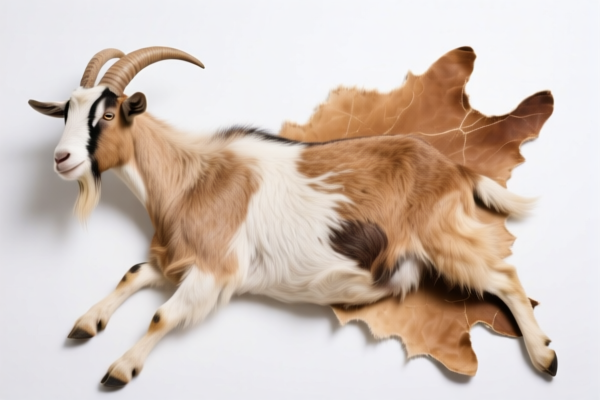
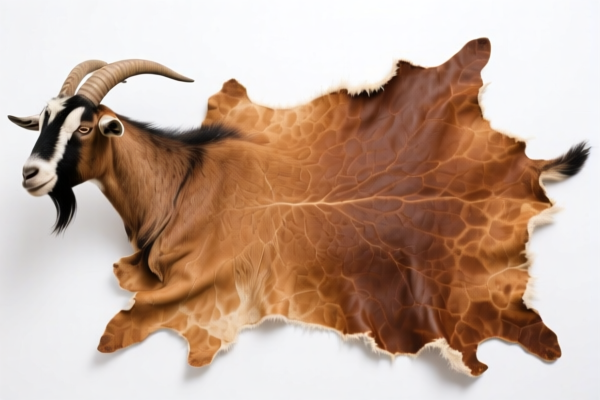
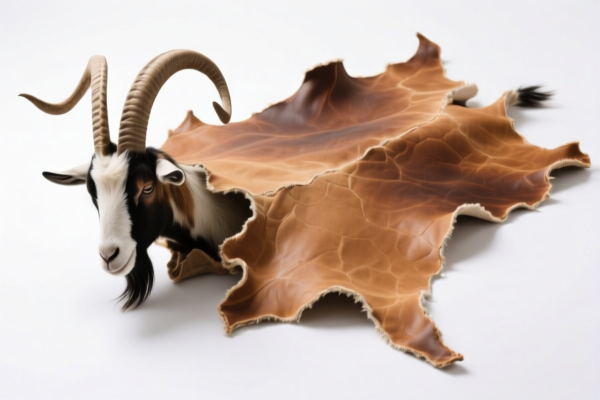
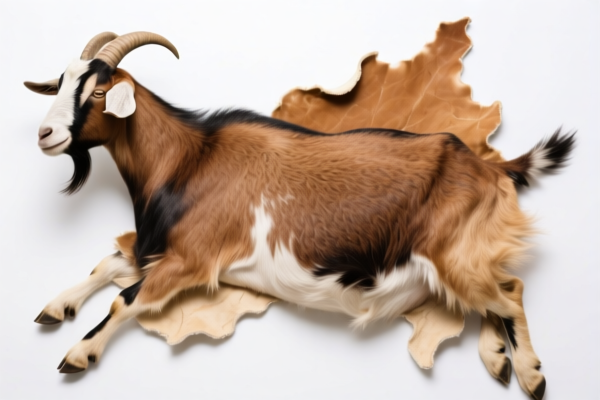
🐐 Lightweight Goat Skin (Tanned Leather / Raw Hides)
🌐 HS Code Reference & Customs Clearance Guide | 2026 Latest Tariff Analysis | Professional-Level Import Strategy
📌 I. Product Definition & Classification: What Exactly is "Lightweight Goat Skin"?
Goat skin leather is a premium material known for its durability, softness, and distinctive grain. In international trade, the classification depends heavily on whether the leather is tanned, finished, or raw, and its weight/thickness.
"Lightweight" typically implies: 1. Finished Leather: Tanned, dyed, and finished sheets suitable for gloves, clothing, linings, or luxury accessories. 2. Raw Skins: Light-weight pelts ready for tanning (less common in finished goods trade, but possible).
⚠️ Key Distinction:
- If the skin is tanned, dyed, and finished (ready for use in manufacturing) → It is classified as Leather (Chapter 41 or 43).
- If it is raw, salted, or fresh (not yet tanned) → It may fall under Animal Skins (Chapter 41 or 43).
- If it is waste or scraps → It falls under Leather Waste (4115 or 4303/4304).
📦 II. HS Code Classification Details (2026 Latest Tariff Authoritative Reference)
| HS Code | Product Description | Application Scenario | Tanning Status |
|---|---|---|---|
4106.31.00.00 |
Goatskin or kidskin, tanned or crusted, with hair on, split | Raw tanned skins with fur intact (e.g., for shearling products) | ✅ Tanned (Hair-on) |
4106.32.00.00 |
Goatskin or kidskin, tanned or crusted, without hair, split | Top-grain leather, smooth finish, for gloves/clothing | ✅ Tanned (Hair-off) |
4106.40.00.00 |
Goatskin or kidskin, tanned or crusted, further dressed (finished) | Final consumer-ready leather (dyed, embossed, weighted) | ✅ Tanned & Finished |
4106.91.00.00 |
Other goat skins, tanned or crusted, with hair on, split | Less common finish, often for industrial use | ✅ Tanned (Hair-on) |
4106.92.00.00 |
Other goat skins, tanned or crusted, without hair, split | Lower grade hair-off leather, linings | ✅ Tanned (Hair-off) |
4303.10.00.00 |
Articles of apparel, clothing accessories, other articles of whole goatskin | Finished goods (gloves, jackets) made from goat skin | ❌ Finished Product |
4304.00.00.00 |
Artificial fur | Not applicable to natural goat skin | ❌ N/A |
🔍 Critical Reminder:
- "Lightweight" is not an HS Code keyword. You must specify the condition (tanned, finished, raw).
- Most commercial "Lightweight Goat Skin" refers to finished leather for gloves or clothing, which falls under 4106.40.00.00 or 4106.32.00.00.
- If importing finished gloves made of goat skin, use 4203.21.00.00, not leather codes.
💰 III. 2026 Latest Tariff Rate Breakdown (Including Surcharges & Policy Add-ons)
✅ Applicable Country: United States (US)
✅ Country of Origin: China (CN)
✅ Effective Date: From November 10, 2025 (including subsequent imports)
🎯 1. 4106.40.00.00 – Goatskin, Tanned and Further Dressed (Finished Leather)
| Item | Content |
|---|---|
| Base Rate | 0% (ad valorem) |
| USITC Surcharge | +25% (from USITC Footnote 9903.88.01) |
| IEEPA Surcharge | +10% (for China/HK products, from Nov 10, 2025) |
| Total Rate | 35% |
| Tax Calculation | CIF Value × 35% |
| De Minimis Eligibility | ❌ No (deny_de_minimis) |
| Legal Basis Path | IEEPA:9903.01.25 → IEEPA:9903.01.24 → USITC:4106.40.00.00 → FOOTNOTE:9903.88.01 |
📌 Explanation:
- "USITC Surcharge 25%" comes from Section 301 tariffs.
- "IEEPA 10%" is the additional tariff under the International Emergency Economic Powers Act.
- Total 35% is high. This applies to most finished leather sheets.
🎯 2. 4106.32.00.00 – Goatskin, Tanned, Without Hair (Split/Top Grain)
| Item | Content |
|---|---|
| Base Rate | 0% |
| USITC Surcharge | +25% |
| IEEPA Surcharge | +10% |
| Total Rate | 35% |
| Tax Calculation | CIF × 35% |
| De Minimis Eligibility | ❌ No |
| Legal Basis Path | IEEPA:9901.25 → IEEPA:9903.01.24 → USITC:4106.32.00.00 → FOOTNOTE:9903.88.01 |
📌 Note:
- Same rate as finished leather. Even "unfinished" tanned leather attracts the full surcharge.
- Includes "split" leather (lower quality) and "top grain" (higher quality).
🎯 3. 4106.31.00.00 – Goatskin, Tanned, With Hair On
| Item | Content |
|---|---|
| Base Rate | 0% |
| USITC Surcharge | +25% |
| IEEPA Surcharge | +10% |
| Total Rate | 35% |
| Tax Calculation | CIF × 35% |
| De Minimis Eligibility | ❌ No |
📌 Note:
- Often used for shearling coats or fur-lined products.
- If the hair is removed during tanning, it reverts to 4106.32 or 4106.40.
🎯 4. 4303.10.00.00 – Articles of Apparel, Clothing Accessories, Other Articles of Whole Goat Skin (Finished Goods)
| Item | Content |
|---|---|
| Base Rate | 12% (General) |
| USITC Surcharge | +25% |
| IEEPA Surcharge | +10% |
| Total Rate | 47% |
| Tax Calculation | CIF × 47% |
| De Minimis Eligibility | ❌ No |
📌 Warning:
- If you import finished gloves or jackets made of goat skin, the tax jumps to 47%.
- Many exporters try to ship leather sheets (35%) instead of finished goods (47%) to save cost.
🛠️ IV. Customs Clearance Practical Advice (Real-World Pitfall Guide)
✅ 1. Required Documentation Checklist
| Document | Must Provide | Explanation |
|---|---|---|
| ✅ Product Specification Sheet | ✔️ | Include weight (grams/m²), thickness, tanning method (vegetable/chrome), finish type. |
| ✅ Tanning Certificate | ✔️ | Proof of tanning process (Chrome vs. Vegetable) for environmental compliance. |
| ✅ Product Photos (Label & Texture) | ✔️ | Show grain pattern, dye color, and any embossing. |
| ✅ Commercial Invoice | ✔️ | Must state "Goatskin Leather, Tanned & Finished" – not vague terms like "Animal Skin". |
| ✅ Packing List | ✔️ | Separate packaging from raw skins to prevent cross-contamination or misdeclaration. |
| ✅ Certificate of Origin (CO) | ✔️ | If origin is Vietnam, Thailand, or Mexico, you may apply for IEEPA Exemption. |
✅ 2. Declaration Tips (Key Mantra)
🔥 "Finish Level Defines Code, Origin Defines Tax, Hair On/Off Defines Grade!"
| Scenario | Correct Declaration | Wrong Practice |
|---|---|---|
| Finished leather sheets for gloves | 4106.40.00.00 |
Declaring as "Raw Skin" → Risk of penalty |
| Leather with fur intact (shearling) | 4106.31.00.00 |
Declaring as "Hair-off" → Wrong HS Code |
| Raw salted skins (un-tanned) | 4101.20 or 4102.20 |
Declaring as "Tanned" → False declaration |
| Finished goat skin gloves | 4203.21.00.00 |
Declaring as "Leather" → 47% instead of potential lower rates for accessories |
✅ 3. Special Cases
| Scenario | Handling Advice |
|---|---|
| Low Weight/Thin Leather | Specify weight (g/m²) in docs. If < 100g/m², it may be considered "lightweight fashion leather." |
| Chrome-Tanned vs. Vegetable-Tanned | Chrome-tanned is more common for lightweight fashion. Vegetable-tanned may have different environmental claims. |
| Mixed Materials | If leather is backed with fabric, it may be classified as "composite material" – consult a specialist. |
| Sample Shipments | Even samples must be declared correctly. "De Minimis" does not apply to Chinese-origin leather due to IEEPA. |
🌍 V. Global Market Comparison (2026 Latest)
| Country/Region | Recommended HS Code | Tariff | Certification | Notes |
|---|---|---|---|---|
| 🇺🇸 USA | 4106.40.00.00 |
35% (Leather) 47% (Finished Goods) |
None specific | High tariff burden for China origin. |
| 🇨🇳 China | 4106.40.00.00 |
5-7% | REACH (if exporting to EU) | Lower import tariff than US. |
| 🇪🇺 EU | 4106.40.00.00 |
0% (if compliant) | REACH, REACH SVHC | No extra tariffs if eco-compliant. |
| 🇦🇺 Australia | 4106.40.00.00 |
5% | None | Moderate tariff. |
| 🇯🇵 Japan | 4106.40.00.00 |
0-5% | JIS Standard | Low barrier for quality leather. |
📌 Conclusion:
- USA is the most expensive market for Chinese-origin goat skin leather due to 35% surcharge.
- EU and Japan offer better tariff conditions if quality and environmental standards are met.
- Strategic Shift: Consider sourcing from Vietnam or Turkey to bypass US surcharges.
📌 VI. Common Errors & Pitfalls (Lessons from Blood & Tears)
❌ Error 1: Declaring "Leather" as "Textile" or "Plastic"
👉 Consequence: Severe penalty for misdeclaration + back taxes.
❌ Error 2: Ignoring "Hair On" vs. "Hair Off"
👉 Consequence: Wrong HS Code → Delayed customs release + Inspection fees.
❌ Error 3: Not declaring Chrome Content
👉 Consequence: Environmental compliance issues in EU/US. Chrome VI limits apply.
❌ Error 4: Using "Goat Skin" for Rabbit or Sheep Skin
👉 Consequence: Rejection by customs due to species mismatch. Always provide scientific name (Capra hircus) if unsure.
✅ Correct Declaration Example:
"Goatskin Leather, Chrome-Tanned, Hair-Off, Dyed Black, Weight 180g/m², Width 1.2m, For Gloves Manufacturing, Origin: China"
🎯 VII. Conclusion: Professional Declaration, Save Time, Reduce Cost!
🎯 Remember the Mantra:
🔹 "Finish Level Codes It, Origin Taxes It, Hair Status Grades It!"
🔹 "US Tax is High, Origin Choice is Key, Correct Code Saves Thousands!"
📌 Pro Tip:
If your goat skin is sourced from Vietnam, Turkey, or Mexico, you may be eligible for IEEPA Exemption, reducing the tariff from 35% to 0-10%.
Consider Advance Ruling for complex cases (e.g., split vs. top grain).
📣 Immediate Action:
📞 Contact a licensed customs broker + Provide Tanning Certificate + Apply for HS Code Advance Ruling
🚀 Ensure your goat skin passes customs smoothly, avoids delays, and maximizes profit margins!
✨ Professional Clearance Starts with Accurate Classification!
💼 Every percent of tariff saved is pure profit!
用户评价
关于 HS 编码归类
协调制度(HS)是由世界海关组织(WCO)制定的国际贸易商品分类标准。全球 200 多个国家采用 HS 系统作为海关关税、贸易统计和进出口监管的基础。
每个 HS 编码遵循以下层级结构:
- 章(2 位)——商品大类(例如:第 84 章:机器和机械设备)
- 品目(4 位)——章内的更具体分类
- 子目(6 位)——国际通用细分,所有 WCO 成员国统一使用
- 本国细分(8-10 位)——各国自行扩展的细分编码,如美国 HTSUS 10 位编码
正确的 HS 编码归类对于顺利通关、准确缴纳关税和遵守贸易法规至关重要。错误归类可能导致海关延误、多缴关税或罚款。
从CN进口到US时,适用的关税税率可能包括:
- 最惠国(MFN)税率——适用于 WTO 成员国的标准关税税率
- 普通税率——适用于无贸易协定国家
- 贸易救济关税——附加关税,如 301 条款(反倾销)、232 条款(国家安全)或反补贴税
本页内容仅供参考。如需正式归类,请咨询当地海关或持牌报关代理。