Lightweight Goat Skin
CN → USProduct Images

AI Analysis
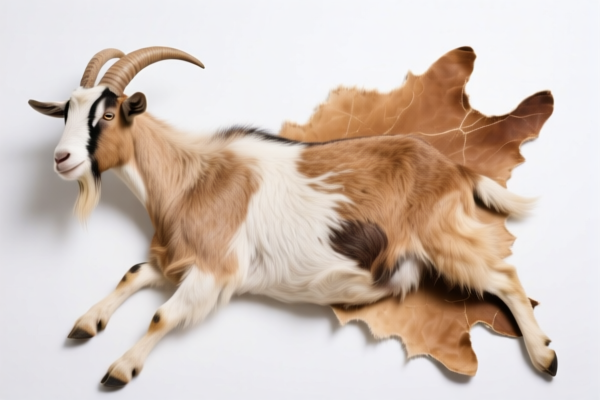
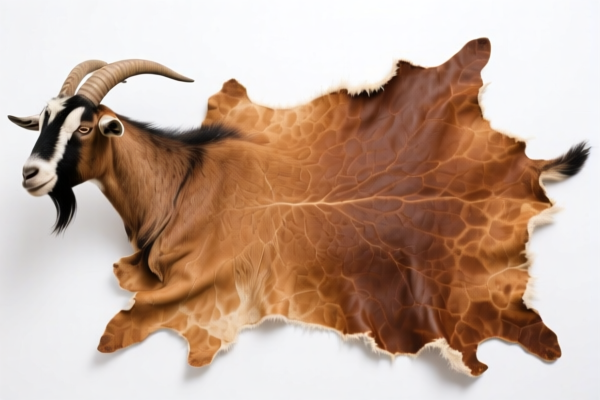
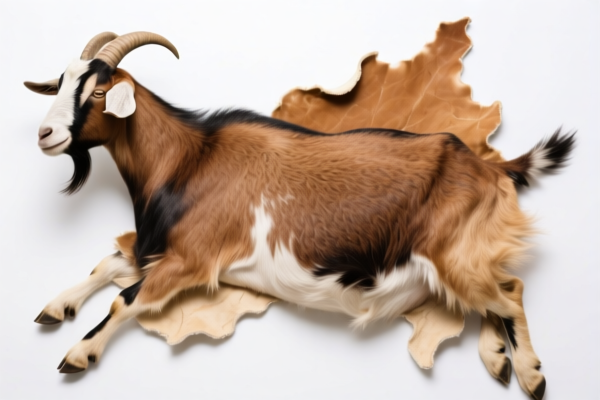
🐐 Lightweight Goat Skin (Tanned Leather / Raw Hides)
🌐 HS Code Reference & Customs Clearance Guide | 2026 Latest Tariff Analysis | Professional-Level Import Strategy
📌 I. Product Definition & Classification: What Exactly is "Lightweight Goat Skin"?
Goat skin leather is a premium material known for its durability, softness, and distinctive grain. In international trade, the classification depends heavily on whether the leather is tanned, finished, or raw, and its weight/thickness.
"Lightweight" typically implies: 1. Finished Leather: Tanned, dyed, and finished sheets suitable for gloves, clothing, linings, or luxury accessories. 2. Raw Skins: Light-weight pelts ready for tanning (less common in finished goods trade, but possible).
⚠️ Key Distinction:
- If the skin is tanned, dyed, and finished (ready for use in manufacturing) → It is classified as Leather (Chapter 41 or 43).
- If it is raw, salted, or fresh (not yet tanned) → It may fall under Animal Skins (Chapter 41 or 43).
- If it is waste or scraps → It falls under Leather Waste (4115 or 4303/4304).
📦 II. HS Code Classification Details (2026 Latest Tariff Authoritative Reference)
| HS Code | Product Description | Application Scenario | Tanning Status |
|---|---|---|---|
4106.31.00.00 |
Goatskin or kidskin, tanned or crusted, with hair on, split | Raw tanned skins with fur intact (e.g., for shearling products) | ✅ Tanned (Hair-on) |
4106.32.00.00 |
Goatskin or kidskin, tanned or crusted, without hair, split | Top-grain leather, smooth finish, for gloves/clothing | ✅ Tanned (Hair-off) |
4106.40.00.00 |
Goatskin or kidskin, tanned or crusted, further dressed (finished) | Final consumer-ready leather (dyed, embossed, weighted) | ✅ Tanned & Finished |
4106.91.00.00 |
Other goat skins, tanned or crusted, with hair on, split | Less common finish, often for industrial use | ✅ Tanned (Hair-on) |
4106.92.00.00 |
Other goat skins, tanned or crusted, without hair, split | Lower grade hair-off leather, linings | ✅ Tanned (Hair-off) |
4303.10.00.00 |
Articles of apparel, clothing accessories, other articles of whole goatskin | Finished goods (gloves, jackets) made from goat skin | ❌ Finished Product |
4304.00.00.00 |
Artificial fur | Not applicable to natural goat skin | ❌ N/A |
🔍 Critical Reminder:
- "Lightweight" is not an HS Code keyword. You must specify the condition (tanned, finished, raw).
- Most commercial "Lightweight Goat Skin" refers to finished leather for gloves or clothing, which falls under 4106.40.00.00 or 4106.32.00.00.
- If importing finished gloves made of goat skin, use 4203.21.00.00, not leather codes.
💰 III. 2026 Latest Tariff Rate Breakdown (Including Surcharges & Policy Add-ons)
✅ Applicable Country: United States (US)
✅ Country of Origin: China (CN)
✅ Effective Date: From November 10, 2025 (including subsequent imports)
🎯 1. 4106.40.00.00 – Goatskin, Tanned and Further Dressed (Finished Leather)
| Item | Content |
|---|---|
| Base Rate | 0% (ad valorem) |
| USITC Surcharge | +25% (from USITC Footnote 9903.88.01) |
| IEEPA Surcharge | +10% (for China/HK products, from Nov 10, 2025) |
| Total Rate | 35% |
| Tax Calculation | CIF Value × 35% |
| De Minimis Eligibility | ❌ No (deny_de_minimis) |
| Legal Basis Path | IEEPA:9903.01.25 → IEEPA:9903.01.24 → USITC:4106.40.00.00 → FOOTNOTE:9903.88.01 |
📌 Explanation:
- "USITC Surcharge 25%" comes from Section 301 tariffs.
- "IEEPA 10%" is the additional tariff under the International Emergency Economic Powers Act.
- Total 35% is high. This applies to most finished leather sheets.
🎯 2. 4106.32.00.00 – Goatskin, Tanned, Without Hair (Split/Top Grain)
| Item | Content |
|---|---|
| Base Rate | 0% |
| USITC Surcharge | +25% |
| IEEPA Surcharge | +10% |
| Total Rate | 35% |
| Tax Calculation | CIF × 35% |
| De Minimis Eligibility | ❌ No |
| Legal Basis Path | IEEPA:9901.25 → IEEPA:9903.01.24 → USITC:4106.32.00.00 → FOOTNOTE:9903.88.01 |
📌 Note:
- Same rate as finished leather. Even "unfinished" tanned leather attracts the full surcharge.
- Includes "split" leather (lower quality) and "top grain" (higher quality).
🎯 3. 4106.31.00.00 – Goatskin, Tanned, With Hair On
| Item | Content |
|---|---|
| Base Rate | 0% |
| USITC Surcharge | +25% |
| IEEPA Surcharge | +10% |
| Total Rate | 35% |
| Tax Calculation | CIF × 35% |
| De Minimis Eligibility | ❌ No |
📌 Note:
- Often used for shearling coats or fur-lined products.
- If the hair is removed during tanning, it reverts to 4106.32 or 4106.40.
🎯 4. 4303.10.00.00 – Articles of Apparel, Clothing Accessories, Other Articles of Whole Goat Skin (Finished Goods)
| Item | Content |
|---|---|
| Base Rate | 12% (General) |
| USITC Surcharge | +25% |
| IEEPA Surcharge | +10% |
| Total Rate | 47% |
| Tax Calculation | CIF × 47% |
| De Minimis Eligibility | ❌ No |
📌 Warning:
- If you import finished gloves or jackets made of goat skin, the tax jumps to 47%.
- Many exporters try to ship leather sheets (35%) instead of finished goods (47%) to save cost.
🛠️ IV. Customs Clearance Practical Advice (Real-World Pitfall Guide)
✅ 1. Required Documentation Checklist
| Document | Must Provide | Explanation |
|---|---|---|
| ✅ Product Specification Sheet | ✔️ | Include weight (grams/m²), thickness, tanning method (vegetable/chrome), finish type. |
| ✅ Tanning Certificate | ✔️ | Proof of tanning process (Chrome vs. Vegetable) for environmental compliance. |
| ✅ Product Photos (Label & Texture) | ✔️ | Show grain pattern, dye color, and any embossing. |
| ✅ Commercial Invoice | ✔️ | Must state "Goatskin Leather, Tanned & Finished" – not vague terms like "Animal Skin". |
| ✅ Packing List | ✔️ | Separate packaging from raw skins to prevent cross-contamination or misdeclaration. |
| ✅ Certificate of Origin (CO) | ✔️ | If origin is Vietnam, Thailand, or Mexico, you may apply for IEEPA Exemption. |
✅ 2. Declaration Tips (Key Mantra)
🔥 "Finish Level Defines Code, Origin Defines Tax, Hair On/Off Defines Grade!"
| Scenario | Correct Declaration | Wrong Practice |
|---|---|---|
| Finished leather sheets for gloves | 4106.40.00.00 |
Declaring as "Raw Skin" → Risk of penalty |
| Leather with fur intact (shearling) | 4106.31.00.00 |
Declaring as "Hair-off" → Wrong HS Code |
| Raw salted skins (un-tanned) | 4101.20 or 4102.20 |
Declaring as "Tanned" → False declaration |
| Finished goat skin gloves | 4203.21.00.00 |
Declaring as "Leather" → 47% instead of potential lower rates for accessories |
✅ 3. Special Cases
| Scenario | Handling Advice |
|---|---|
| Low Weight/Thin Leather | Specify weight (g/m²) in docs. If < 100g/m², it may be considered "lightweight fashion leather." |
| Chrome-Tanned vs. Vegetable-Tanned | Chrome-tanned is more common for lightweight fashion. Vegetable-tanned may have different environmental claims. |
| Mixed Materials | If leather is backed with fabric, it may be classified as "composite material" – consult a specialist. |
| Sample Shipments | Even samples must be declared correctly. "De Minimis" does not apply to Chinese-origin leather due to IEEPA. |
🌍 V. Global Market Comparison (2026 Latest)
| Country/Region | Recommended HS Code | Tariff | Certification | Notes |
|---|---|---|---|---|
| 🇺🇸 USA | 4106.40.00.00 |
35% (Leather) 47% (Finished Goods) |
None specific | High tariff burden for China origin. |
| 🇨🇳 China | 4106.40.00.00 |
5-7% | REACH (if exporting to EU) | Lower import tariff than US. |
| 🇪🇺 EU | 4106.40.00.00 |
0% (if compliant) | REACH, REACH SVHC | No extra tariffs if eco-compliant. |
| 🇦🇺 Australia | 4106.40.00.00 |
5% | None | Moderate tariff. |
| 🇯🇵 Japan | 4106.40.00.00 |
0-5% | JIS Standard | Low barrier for quality leather. |
📌 Conclusion:
- USA is the most expensive market for Chinese-origin goat skin leather due to 35% surcharge.
- EU and Japan offer better tariff conditions if quality and environmental standards are met.
- Strategic Shift: Consider sourcing from Vietnam or Turkey to bypass US surcharges.
📌 VI. Common Errors & Pitfalls (Lessons from Blood & Tears)
❌ Error 1: Declaring "Leather" as "Textile" or "Plastic"
👉 Consequence: Severe penalty for misdeclaration + back taxes.
❌ Error 2: Ignoring "Hair On" vs. "Hair Off"
👉 Consequence: Wrong HS Code → Delayed customs release + Inspection fees.
❌ Error 3: Not declaring Chrome Content
👉 Consequence: Environmental compliance issues in EU/US. Chrome VI limits apply.
❌ Error 4: Using "Goat Skin" for Rabbit or Sheep Skin
👉 Consequence: Rejection by customs due to species mismatch. Always provide scientific name (Capra hircus) if unsure.
✅ Correct Declaration Example:
"Goatskin Leather, Chrome-Tanned, Hair-Off, Dyed Black, Weight 180g/m², Width 1.2m, For Gloves Manufacturing, Origin: China"
🎯 VII. Conclusion: Professional Declaration, Save Time, Reduce Cost!
🎯 Remember the Mantra:
🔹 "Finish Level Codes It, Origin Taxes It, Hair Status Grades It!"
🔹 "US Tax is High, Origin Choice is Key, Correct Code Saves Thousands!"
📌 Pro Tip:
If your goat skin is sourced from Vietnam, Turkey, or Mexico, you may be eligible for IEEPA Exemption, reducing the tariff from 35% to 0-10%.
Consider Advance Ruling for complex cases (e.g., split vs. top grain).
📣 Immediate Action:
📞 Contact a licensed customs broker + Provide Tanning Certificate + Apply for HS Code Advance Ruling
🚀 Ensure your goat skin passes customs smoothly, avoids delays, and maximizes profit margins!
✨ Professional Clearance Starts with Accurate Classification!
💼 Every percent of tariff saved is pure profit!
Customer Reviews
About HS Code Classification
The Harmonized System (HS) is an internationally standardized nomenclature developed by the World Customs Organization (WCO) to classify traded products. Over 200 countries use the HS system as the basis for customs tariffs, trade statistics, and import/export regulations.
Each HS code follows a hierarchical structure:
- Chapter (2 digits) — Broad category of goods (e.g., Chapter 84: Machinery and Mechanical Appliances)
- Heading (4 digits) — More specific grouping within the chapter
- Subheading (6 digits) — Internationally standardized breakdown, used by all WCO member countries
- National subdivisions (8-10 digits) — Country-specific extensions for further classification, such as US HTSUS 10-digit codes
Correct HS code classification is essential for smooth customs clearance, accurate duty payment, and compliance with trade regulations. Misclassification can lead to customs delays, overpayment of duties, or penalties.
When importing from CN to US, the applicable tariff rates may include:
- Most-Favored-Nation (MFN) rate — The standard duty rate applied to WTO members
- General rate — Applied to countries without trade agreements
- Trade remedy duties — Additional tariffs such as Section 301 (anti-dumping), Section 232 (national security), or countervailing duties
The information provided on this page is for reference purposes only. For official classification, please consult with your local customs authority or a licensed customs broker.