Lightweight Textile Composite Plastic Strip
CN → US| HS编码 | 关税税率 | 原产国 | 目的国 | 文档 |
|---|---|---|---|---|
| 5911900040 | 38.8% | CN | US | 官方文档 |
| 5911900080 | 38.8% | CN | US | 官方文档 |
| 3926905900 | 37.4% | CN | US | 官方文档 |
| 3926905700 | 41.5% | CN | US | 官方文档 |
商品图片
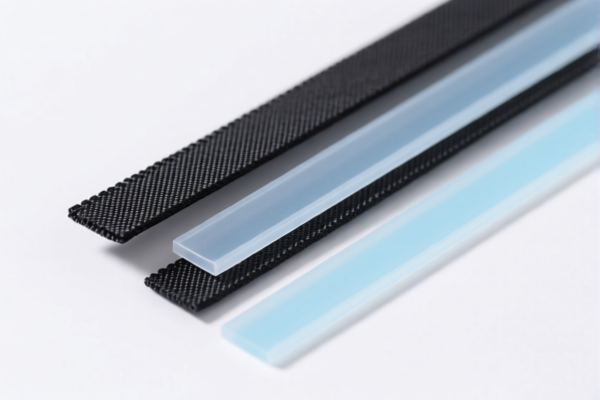
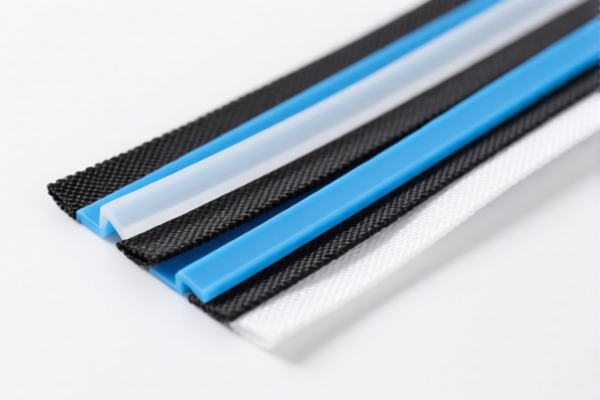
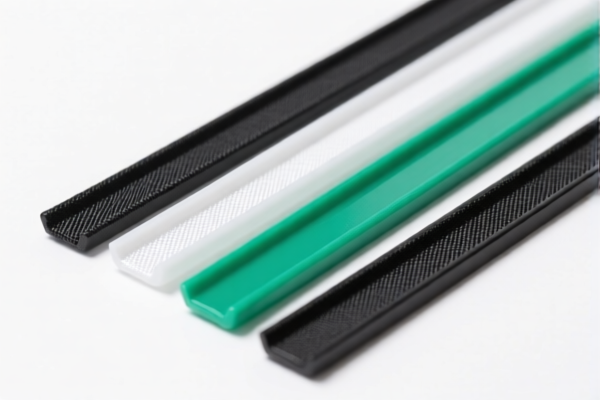

AI分析
🧵🧱 Lightweight Textile Composite Plastic Strip (Industrial Belting & Technical Textiles)
🌐 HS Code Reference & Customs Clearance Guide | 2026 Latest Tariff Analysis | Professional Strategy for "Plastic-Textile Hybrids"
📌 I. Product Definition & Classification: What Exactly Is This "Composite Strip"?
The product "Lightweight Textile Composite Plastic Strip" is a hybrid industrial component. It typically falls into one of two distinct customs categories depending on its primary material composition and intended function:
- As an Industrial Belt/Strap: If it is used for machinery transmission, conveying, or pressing, and contains textile fibers, it is classified as a plastic article containing textile fibers (Heading 3926).
- As a Technical Textile Accessory: If it is used as packing, lubrication material, or general industrial textile utility (not specifically a machine belt), it is classified as a technical textile product (Heading 5911).
⚠️ Critical Distinction Point:
- Is it a Belt for Machinery? → Look at 3926.90 (Plastics, containing textiles).
- Is it a Technical Textile (Packing/Lubrication)? → Look at 5911.90 (Textiles for technical uses).
- Key Factor: The presence of man-made fibers vs. other textiles drastically changes the tax rate in the US market.
📦 II. HS Code Classification Details (2026 Latest Tariff Authority Mapping)
Based on your input data, here are the exact HS Codes, descriptions, and tax implications:
| HS Code | Product Description | Key Classification Criteria | Tariff Profile (US/CN) |
|---|---|---|---|
3926.90.59.00 |
Other articles of plastics: Belting/belts for machinery, containing textile fibers: Other: Other | - General plastic belting with textile reinforcement. - Does not fit specific "man-made fiber predominant" category or other sub-codes. - Often implies mixed fibers or non-dominant synthetic content. |
Base: 2.4% Section 301: +25% Total: 27.4% |
3926.90.57.00 |
Other articles of plastics: Belting/belts for machinery, containing textile fibers: Other: With textile components in which man-made fibers predominate by weight | - Specific for belts where synthetic fibers (nylon, polyester, etc.) make up >50% of the textile weight. - Highly common for industrial conveyor belts or drive belts. |
Base: 0.0% Section 301: +0% Total: 0.0% |
5911.90.00.40 |
Textile products for technical uses: Other Cords, braids, and the like: Of a kind used in industry as packing or lubricating material | - Used as gaskets, seals, or lubrication strips. - NOT primarily for machinery transmission power. - Textile-based. |
Base: 0.0% Section 301: +0% Total: 0.0% |
5911.90.00.80 |
Textile products for technical uses: Other: Other | - Catch-all for technical textiles NOT used as packing/lubrication. - Broad category for miscellaneous technical textile strips/plies. |
Base: 0.0% Section 301: +0% Total: 0.0% |
🔍 Strategic Insight:
- Code3926.90.57.00is the "Golden Ticket" for Belts: If your strip is a machinery belt and made predominantly of synthetic/man-made fibers, it enjoys 0% Total Tax.
- Code3926.90.59.00is the "Cost Trap": If classified here, you pay 27.4%. This often happens if the textile component is natural (cotton/wool) or if the classification system fails to recognize the synthetic predominance.
- Codes5911.90.xxare Tax-Free: If the product is NOT a "belt for machinery" but rather a "technical textile strip" (e.g., packing, insulation, non-power-transmission), it is 0% Tax. However, you must prove it is not a belt.
💰 III. 2026 Latest Tariff Rate Details (With Additional Taxes & Policy Attachments)
✅ Applicable Country: United States (US)
✅ Country of Origin: China (CN)
✅ Effective Date: 2025/2026 Current Trade Rules
🎯 1. 3926.90.59.00 — Plastic Articles with Textiles (Other Belts)
| Item | Detail |
|---|---|
| Base Duty Rate | 2.4% (Ad Valorem) |
| USITC Additional Duty (Section 301) | +25.0% |
| Total Effective Rate | 27.4% |
| Calculation Basis | CIF Value × 27.4% |
| De Minimis Eligibility | ❌ No (Valued goods subject to 301 duties) |
| Legal Authority | USITC Tariff Schedule 2026; IEEPA Footnotes for China-origin goods |
📌 Explanation:
- The 2.4% base rate applies to general plastic articles containing textiles.
- The +25% Section 301 tariff is a heavy penalty for Chinese-origin industrial plastic/textile composites.
- Risk: Misclassifying a 0% belt as this code costs you 27.4% extra.
🎯 2. 3926.90.57.00 — Plastic Belts with Predominant Man-Made Fibers
| Item | Detail |
|---|---|
| Base Duty Rate | 0.0% |
| USITC Additional Duty (Section 301) | +0.0% |
| Total Effective Rate | 0.0% |
| Calculation Basis | $0.00 |
| De Minimis Eligibility | N/A (Low value goods may still qualify, but duty is zero anyway) |
| Legal Authority | USITC Tariff Schedule 2026; Specific exclusion for man-made fiber predominant textile-plastic hybrids |
📌 Explanation:
- This is the most favorable code for machinery belts.
- Condition: You must provide evidence (material specs, fiber analysis) that man-made fibers (polyester, nylon, aramid) dominate the textile component by weight.
- If you can prove this, tax savings are massive compared to3926.90.59.00.
🎯 3. 5911.90.00.40 & 5911.90.00.80 — Technical Textiles (Non-Belt)
| Item | Detail |
|---|---|
| Base Duty Rate | 0.0% |
| USITC Additional Duty (Section 301) | +0.0% |
| Total Effective Rate | 0.0% |
| Calculation Basis | $0.00 |
| Key Constraint | Product must NOT be defined as a "belt for machinery." |
📌 Explanation:
-5911.90.00.40: For packing/lubrication strips (e.g., braided cords for sealing pumps).
-5911.90.00.80: For other technical textiles (e.g., reinforced plies, filter strips).
- Crucial Warning: If US Customs (CBP) determines the item is a "belt" (used for power transmission/conveying), they will reject these codes and force reclassification to3926, potentially triggering the 27.4% tax.
🛠️ IV. Customs Clearance Practical Advice (Battle-Tested Tips)
✅ 1. Documentation Checklist (Non-Negotiable)
| Document | Requirement | Purpose |
|---|---|---|
| ✅ Product Specification Sheet | Must explicitly state: 1. Composition % (Plastic vs. Textile) 2. Fiber Type (Man-made vs. Natural) 3. Intended Use (Belt vs. Packing) |
Proves eligibility for 3926.90.57.00 (0% tax) or 5911 (0% tax). |
| ✅ Fiber Content Analysis | Lab report confirming man-made fiber predominance (>50% by weight) | Essential for claiming 0% rate under 3926.90.57.00. |
| ✅ Use Statement | Clear declaration: "Used as [Conveyor Belt / Packing Gasket / Lubrication Cord]" | Prevents reclassification to "Other Plastic Articles" (higher tax). |
| ✅ Photos & Diagrams | Cross-section showing plastic coating and textile core | Visual proof of composite structure. |
| ✅ Commercial Invoice | Description: "Lightweight Textile Composite Strip, Man-Made Fiber Dominant, for Industrial Use" | Avoids vague terms like "Plastic Tape." |
✅ 2. Classification Strategy (The "Tax Optimization" Matrix)
| Scenario | Recommended HS Code | Tax Rate | Why? |
|---|---|---|---|
| Industrial Belt + >50% Synthetic Fiber | 3926.90.57.00 |
0.0% | Best Option. Proves synthetic dominance. |
| Industrial Belt + Mixed/Natural Fiber | 3926.90.59.00 |
27.4% | High Cost. Harder to avoid if not synthetic-dominant. |
| Packing/Lubrication Strip (Not a Belt) | 5911.90.00.40 |
0.0% | Best Option. Avoids "Belt" classification trap. |
| Other Technical Textile Strip | 5911.90.00.80 |
0.0% | Best Option. Broad catch-all for non-belt tech textiles. |
🔥 "Don't Call It a Belt If It's a Gasket!"
If the product is used for sealing or packing, insist on5911. If it transmits power or moves material, it’s a belt → use3926.
✅ 3. Special Cases & Pitfalls
| Situation | Advice |
|---|---|
| OEM/Custom Product | Provide the End-User Application Letter. If the end-user says "this is for pumping seals," CBP is more likely to accept 5911.90.00.40. |
| Ambiguous Use (Both Belt & Packing?) | Do not claim 0%. Classify as 3926.90.59.00 (27.4%) to avoid penalties for misdeclaration. Better to pay 27% than get fined for evasion. |
| "Composite" Means Both Materials | CBP looks at GRI 3(b): Material/Function predominance. If plastic coating >50%, it’s Heading 39. If textile core >50% and it's a technical textile, it might be Heading 59. Document the weight ratio. |
| Origin: China | Section 301 applies. Only 3926.90.57.00 and 5911 codes are safe. 3926.90.59.00 is expensive. |
🌍 V. Global Market Comparison (2026)
| Market | HS Code | Duty Rate (China Origin) | Key Requirement |
|---|---|---|---|
| 🇺🇸 USA | 3926.90.57.00 |
0.0% | Must prove man-made fiber predominance. |
| 🇺🇸 USA | 3926.90.59.00 |
27.4% | Default for non-dominant synthetic belts. |
| 🇺🇸 USA | 5911.90.00.xx |
0.0% | Must prove NOT a machinery belt. |
| 🇪🇺 EU | 3926 / 5911 | Varies (0-4%) | No Section 301 equivalent; lower risk. |
| 🇨🇳 China | 3926 / 5911 | 0-5% | Low import duty, no punitive tariffs. |
📌 Conclusion:
- USA is the critical market. The difference between 0% and 27.4% is purely based on fiber type and product definition.
- EU/Asia are less sensitive to this classification nuance regarding punitive tariffs.
📌 VI. Common Mistakes & Avoidance Guide (Lesson Learned)
❌ Mistake 1: Calling it "Plastic Belt" but submitting specs for a "Packing Cord."
👉 Result: CBP rejects 5911, forces 3926.90.59.00 (27.4%), demands back taxes.
✅ Fix: Ensure name, specs, and HS code match the primary function.
❌ Mistake 2: Ignoring fiber composition in the invoice.
👉 Result: CBP assumes worst-case (natural fibers or mixed) → 3926.90.59.00 (27.4%).
✅ Fix: Explicitly state "Man-Made Fiber Predominant" on the commercial invoice.
❌ Mistake 3: Using "Textile Strip" for a heavy-duty conveyor belt.
👉 Result: CBP argues it’s a "machine belt," not a technical textile → rejects 5911.
✅ Fix: If it’s a belt, use 3926. If it’s a strip for packing, use 5911.
🎯 VII. Conclusion: Precision Saves Money!
🎯 Remember the Golden Rules:
🔹 "If it's a belt, check the fiber: Man-Made = 0%, Mixed/Natural = 27.4%."
🔹 "If it's not a belt, it's likely Technical Textile = 0%."
🔹 "Document everything! CBP does not guess."
📌 Pro Tip:
If your product is a belt and you are unsure if the fibers are "predominantly man-made," request a Fiber Content Analysis from your supplier. If the result is >50% synthetic, file under
3926.90.57.00. This single decision saves 27.4% on every shipment.
📣 Immediate Action:
- Check Material Specs: Is it >50% man-made fiber?
- Define Function: Belt (Power/Convey) vs. Packing/Lubrication?
- Select Code:
- Belt + Synthetic Dominant →
3926.90.57.00(0%)- Belt + Other →
3926.90.59.00(27.4%)- Packing/Other Tech Textile →
5911.90.00.xx(0%)🚀 Clear Classification = Maximum Profit!
✨ Professional Clearance Starts with Accurate Classification!
💼 Don’t let a 27.4% tariff eat your margin when 0% is available.
用户评价
关于 HS 编码归类
协调制度(HS)是由世界海关组织(WCO)制定的国际贸易商品分类标准。全球 200 多个国家采用 HS 系统作为海关关税、贸易统计和进出口监管的基础。
每个 HS 编码遵循以下层级结构:
- 章(2 位)——商品大类(例如:第 84 章:机器和机械设备)
- 品目(4 位)——章内的更具体分类
- 子目(6 位)——国际通用细分,所有 WCO 成员国统一使用
- 本国细分(8-10 位)——各国自行扩展的细分编码,如美国 HTSUS 10 位编码
正确的 HS 编码归类对于顺利通关、准确缴纳关税和遵守贸易法规至关重要。错误归类可能导致海关延误、多缴关税或罚款。
从CN进口到US时,适用的关税税率可能包括:
- 最惠国(MFN)税率——适用于 WTO 成员国的标准关税税率
- 普通税率——适用于无贸易协定国家
- 贸易救济关税——附加关税,如 301 条款(反倾销)、232 条款(国家安全)或反补贴税
本页内容仅供参考。如需正式归类,请咨询当地海关或持牌报关代理。