Lightweight Textile Composite Plastic Strip
CN → US| HS Code | Tariff Rate | Origin | Destination | Doc |
|---|---|---|---|---|
| 5911900040 | 38.8% | CN | US | Official Doc |
| 5911900080 | 38.8% | CN | US | Official Doc |
| 3926905900 | 37.4% | CN | US | Official Doc |
| 3926905700 | 41.5% | CN | US | Official Doc |
Product Images
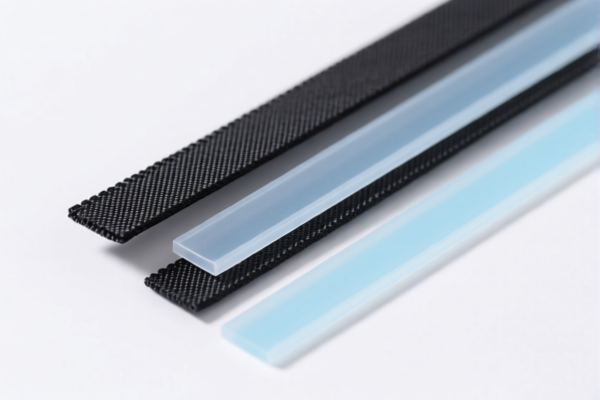
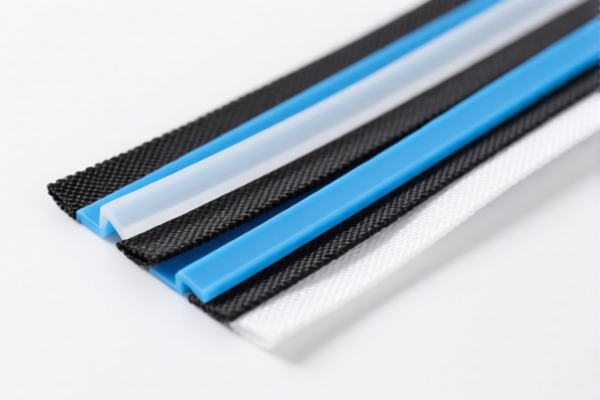
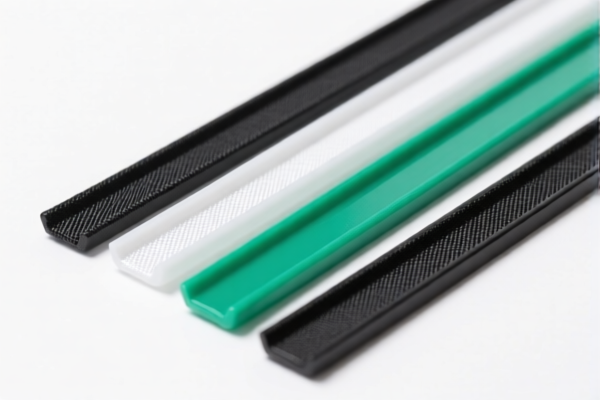

AI Analysis
🧵🧱 Lightweight Textile Composite Plastic Strip (Industrial Belting & Technical Textiles)
🌐 HS Code Reference & Customs Clearance Guide | 2026 Latest Tariff Analysis | Professional Strategy for "Plastic-Textile Hybrids"
📌 I. Product Definition & Classification: What Exactly Is This "Composite Strip"?
The product "Lightweight Textile Composite Plastic Strip" is a hybrid industrial component. It typically falls into one of two distinct customs categories depending on its primary material composition and intended function:
- As an Industrial Belt/Strap: If it is used for machinery transmission, conveying, or pressing, and contains textile fibers, it is classified as a plastic article containing textile fibers (Heading 3926).
- As a Technical Textile Accessory: If it is used as packing, lubrication material, or general industrial textile utility (not specifically a machine belt), it is classified as a technical textile product (Heading 5911).
⚠️ Critical Distinction Point:
- Is it a Belt for Machinery? → Look at 3926.90 (Plastics, containing textiles).
- Is it a Technical Textile (Packing/Lubrication)? → Look at 5911.90 (Textiles for technical uses).
- Key Factor: The presence of man-made fibers vs. other textiles drastically changes the tax rate in the US market.
📦 II. HS Code Classification Details (2026 Latest Tariff Authority Mapping)
Based on your input data, here are the exact HS Codes, descriptions, and tax implications:
| HS Code | Product Description | Key Classification Criteria | Tariff Profile (US/CN) |
|---|---|---|---|
3926.90.59.00 |
Other articles of plastics: Belting/belts for machinery, containing textile fibers: Other: Other | - General plastic belting with textile reinforcement. - Does not fit specific "man-made fiber predominant" category or other sub-codes. - Often implies mixed fibers or non-dominant synthetic content. |
Base: 2.4% Section 301: +25% Total: 27.4% |
3926.90.57.00 |
Other articles of plastics: Belting/belts for machinery, containing textile fibers: Other: With textile components in which man-made fibers predominate by weight | - Specific for belts where synthetic fibers (nylon, polyester, etc.) make up >50% of the textile weight. - Highly common for industrial conveyor belts or drive belts. |
Base: 0.0% Section 301: +0% Total: 0.0% |
5911.90.00.40 |
Textile products for technical uses: Other Cords, braids, and the like: Of a kind used in industry as packing or lubricating material | - Used as gaskets, seals, or lubrication strips. - NOT primarily for machinery transmission power. - Textile-based. |
Base: 0.0% Section 301: +0% Total: 0.0% |
5911.90.00.80 |
Textile products for technical uses: Other: Other | - Catch-all for technical textiles NOT used as packing/lubrication. - Broad category for miscellaneous technical textile strips/plies. |
Base: 0.0% Section 301: +0% Total: 0.0% |
🔍 Strategic Insight:
- Code3926.90.57.00is the "Golden Ticket" for Belts: If your strip is a machinery belt and made predominantly of synthetic/man-made fibers, it enjoys 0% Total Tax.
- Code3926.90.59.00is the "Cost Trap": If classified here, you pay 27.4%. This often happens if the textile component is natural (cotton/wool) or if the classification system fails to recognize the synthetic predominance.
- Codes5911.90.xxare Tax-Free: If the product is NOT a "belt for machinery" but rather a "technical textile strip" (e.g., packing, insulation, non-power-transmission), it is 0% Tax. However, you must prove it is not a belt.
💰 III. 2026 Latest Tariff Rate Details (With Additional Taxes & Policy Attachments)
✅ Applicable Country: United States (US)
✅ Country of Origin: China (CN)
✅ Effective Date: 2025/2026 Current Trade Rules
🎯 1. 3926.90.59.00 — Plastic Articles with Textiles (Other Belts)
| Item | Detail |
|---|---|
| Base Duty Rate | 2.4% (Ad Valorem) |
| USITC Additional Duty (Section 301) | +25.0% |
| Total Effective Rate | 27.4% |
| Calculation Basis | CIF Value × 27.4% |
| De Minimis Eligibility | ❌ No (Valued goods subject to 301 duties) |
| Legal Authority | USITC Tariff Schedule 2026; IEEPA Footnotes for China-origin goods |
📌 Explanation:
- The 2.4% base rate applies to general plastic articles containing textiles.
- The +25% Section 301 tariff is a heavy penalty for Chinese-origin industrial plastic/textile composites.
- Risk: Misclassifying a 0% belt as this code costs you 27.4% extra.
🎯 2. 3926.90.57.00 — Plastic Belts with Predominant Man-Made Fibers
| Item | Detail |
|---|---|
| Base Duty Rate | 0.0% |
| USITC Additional Duty (Section 301) | +0.0% |
| Total Effective Rate | 0.0% |
| Calculation Basis | $0.00 |
| De Minimis Eligibility | N/A (Low value goods may still qualify, but duty is zero anyway) |
| Legal Authority | USITC Tariff Schedule 2026; Specific exclusion for man-made fiber predominant textile-plastic hybrids |
📌 Explanation:
- This is the most favorable code for machinery belts.
- Condition: You must provide evidence (material specs, fiber analysis) that man-made fibers (polyester, nylon, aramid) dominate the textile component by weight.
- If you can prove this, tax savings are massive compared to3926.90.59.00.
🎯 3. 5911.90.00.40 & 5911.90.00.80 — Technical Textiles (Non-Belt)
| Item | Detail |
|---|---|
| Base Duty Rate | 0.0% |
| USITC Additional Duty (Section 301) | +0.0% |
| Total Effective Rate | 0.0% |
| Calculation Basis | $0.00 |
| Key Constraint | Product must NOT be defined as a "belt for machinery." |
📌 Explanation:
-5911.90.00.40: For packing/lubrication strips (e.g., braided cords for sealing pumps).
-5911.90.00.80: For other technical textiles (e.g., reinforced plies, filter strips).
- Crucial Warning: If US Customs (CBP) determines the item is a "belt" (used for power transmission/conveying), they will reject these codes and force reclassification to3926, potentially triggering the 27.4% tax.
🛠️ IV. Customs Clearance Practical Advice (Battle-Tested Tips)
✅ 1. Documentation Checklist (Non-Negotiable)
| Document | Requirement | Purpose |
|---|---|---|
| ✅ Product Specification Sheet | Must explicitly state: 1. Composition % (Plastic vs. Textile) 2. Fiber Type (Man-made vs. Natural) 3. Intended Use (Belt vs. Packing) |
Proves eligibility for 3926.90.57.00 (0% tax) or 5911 (0% tax). |
| ✅ Fiber Content Analysis | Lab report confirming man-made fiber predominance (>50% by weight) | Essential for claiming 0% rate under 3926.90.57.00. |
| ✅ Use Statement | Clear declaration: "Used as [Conveyor Belt / Packing Gasket / Lubrication Cord]" | Prevents reclassification to "Other Plastic Articles" (higher tax). |
| ✅ Photos & Diagrams | Cross-section showing plastic coating and textile core | Visual proof of composite structure. |
| ✅ Commercial Invoice | Description: "Lightweight Textile Composite Strip, Man-Made Fiber Dominant, for Industrial Use" | Avoids vague terms like "Plastic Tape." |
✅ 2. Classification Strategy (The "Tax Optimization" Matrix)
| Scenario | Recommended HS Code | Tax Rate | Why? |
|---|---|---|---|
| Industrial Belt + >50% Synthetic Fiber | 3926.90.57.00 |
0.0% | Best Option. Proves synthetic dominance. |
| Industrial Belt + Mixed/Natural Fiber | 3926.90.59.00 |
27.4% | High Cost. Harder to avoid if not synthetic-dominant. |
| Packing/Lubrication Strip (Not a Belt) | 5911.90.00.40 |
0.0% | Best Option. Avoids "Belt" classification trap. |
| Other Technical Textile Strip | 5911.90.00.80 |
0.0% | Best Option. Broad catch-all for non-belt tech textiles. |
🔥 "Don't Call It a Belt If It's a Gasket!"
If the product is used for sealing or packing, insist on5911. If it transmits power or moves material, it’s a belt → use3926.
✅ 3. Special Cases & Pitfalls
| Situation | Advice |
|---|---|
| OEM/Custom Product | Provide the End-User Application Letter. If the end-user says "this is for pumping seals," CBP is more likely to accept 5911.90.00.40. |
| Ambiguous Use (Both Belt & Packing?) | Do not claim 0%. Classify as 3926.90.59.00 (27.4%) to avoid penalties for misdeclaration. Better to pay 27% than get fined for evasion. |
| "Composite" Means Both Materials | CBP looks at GRI 3(b): Material/Function predominance. If plastic coating >50%, it’s Heading 39. If textile core >50% and it's a technical textile, it might be Heading 59. Document the weight ratio. |
| Origin: China | Section 301 applies. Only 3926.90.57.00 and 5911 codes are safe. 3926.90.59.00 is expensive. |
🌍 V. Global Market Comparison (2026)
| Market | HS Code | Duty Rate (China Origin) | Key Requirement |
|---|---|---|---|
| 🇺🇸 USA | 3926.90.57.00 |
0.0% | Must prove man-made fiber predominance. |
| 🇺🇸 USA | 3926.90.59.00 |
27.4% | Default for non-dominant synthetic belts. |
| 🇺🇸 USA | 5911.90.00.xx |
0.0% | Must prove NOT a machinery belt. |
| 🇪🇺 EU | 3926 / 5911 | Varies (0-4%) | No Section 301 equivalent; lower risk. |
| 🇨🇳 China | 3926 / 5911 | 0-5% | Low import duty, no punitive tariffs. |
📌 Conclusion:
- USA is the critical market. The difference between 0% and 27.4% is purely based on fiber type and product definition.
- EU/Asia are less sensitive to this classification nuance regarding punitive tariffs.
📌 VI. Common Mistakes & Avoidance Guide (Lesson Learned)
❌ Mistake 1: Calling it "Plastic Belt" but submitting specs for a "Packing Cord."
👉 Result: CBP rejects 5911, forces 3926.90.59.00 (27.4%), demands back taxes.
✅ Fix: Ensure name, specs, and HS code match the primary function.
❌ Mistake 2: Ignoring fiber composition in the invoice.
👉 Result: CBP assumes worst-case (natural fibers or mixed) → 3926.90.59.00 (27.4%).
✅ Fix: Explicitly state "Man-Made Fiber Predominant" on the commercial invoice.
❌ Mistake 3: Using "Textile Strip" for a heavy-duty conveyor belt.
👉 Result: CBP argues it’s a "machine belt," not a technical textile → rejects 5911.
✅ Fix: If it’s a belt, use 3926. If it’s a strip for packing, use 5911.
🎯 VII. Conclusion: Precision Saves Money!
🎯 Remember the Golden Rules:
🔹 "If it's a belt, check the fiber: Man-Made = 0%, Mixed/Natural = 27.4%."
🔹 "If it's not a belt, it's likely Technical Textile = 0%."
🔹 "Document everything! CBP does not guess."
📌 Pro Tip:
If your product is a belt and you are unsure if the fibers are "predominantly man-made," request a Fiber Content Analysis from your supplier. If the result is >50% synthetic, file under
3926.90.57.00. This single decision saves 27.4% on every shipment.
📣 Immediate Action:
- Check Material Specs: Is it >50% man-made fiber?
- Define Function: Belt (Power/Convey) vs. Packing/Lubrication?
- Select Code:
- Belt + Synthetic Dominant →
3926.90.57.00(0%)- Belt + Other →
3926.90.59.00(27.4%)- Packing/Other Tech Textile →
5911.90.00.xx(0%)🚀 Clear Classification = Maximum Profit!
✨ Professional Clearance Starts with Accurate Classification!
💼 Don’t let a 27.4% tariff eat your margin when 0% is available.
Customer Reviews
About HS Code Classification
The Harmonized System (HS) is an internationally standardized nomenclature developed by the World Customs Organization (WCO) to classify traded products. Over 200 countries use the HS system as the basis for customs tariffs, trade statistics, and import/export regulations.
Each HS code follows a hierarchical structure:
- Chapter (2 digits) — Broad category of goods (e.g., Chapter 84: Machinery and Mechanical Appliances)
- Heading (4 digits) — More specific grouping within the chapter
- Subheading (6 digits) — Internationally standardized breakdown, used by all WCO member countries
- National subdivisions (8-10 digits) — Country-specific extensions for further classification, such as US HTSUS 10-digit codes
Correct HS code classification is essential for smooth customs clearance, accurate duty payment, and compliance with trade regulations. Misclassification can lead to customs delays, overpayment of duties, or penalties.
When importing from CN to US, the applicable tariff rates may include:
- Most-Favored-Nation (MFN) rate — The standard duty rate applied to WTO members
- General rate — Applied to countries without trade agreements
- Trade remedy duties — Additional tariffs such as Section 301 (anti-dumping), Section 232 (national security), or countervailing duties
The information provided on this page is for reference purposes only. For official classification, please consult with your local customs authority or a licensed customs broker.