Lignosulfonate Pesticide Dispersant
CN → US| HS编码 | 关税税率 | 原产国 | 目的国 | 文档 |
|---|---|---|---|---|
| 3824994140 | 39.6% | CN | US | 官方文档 |
| 3824999397 | 40.0% | CN | US | 官方文档 |
| 3804001000 | 35.0% | CN | US | 官方文档 |
| 3804005000 | 38.7% | CN | US | 官方文档 |
| 3824994140 | 39.6% | CN | US | 官方文档 |
商品图片
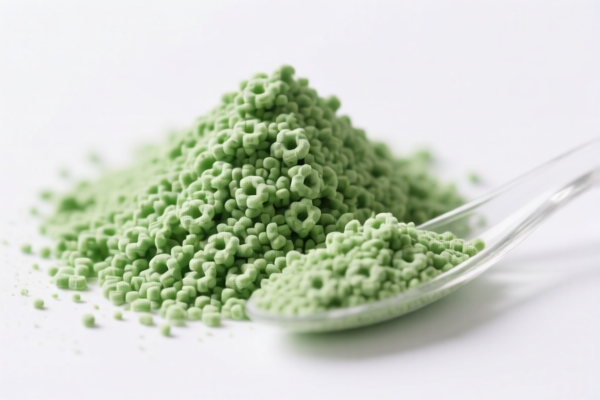
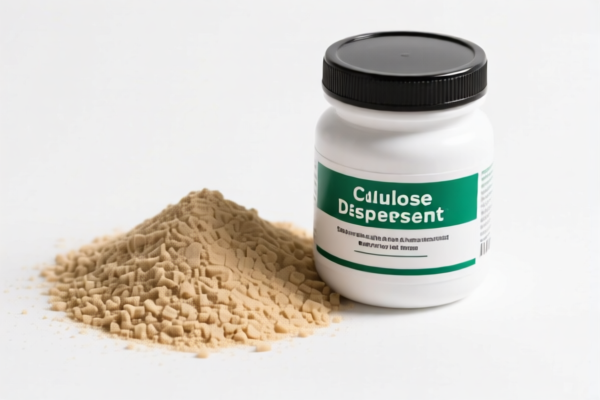
AI分析
🌿 Lignosulfonate Pesticide Dispersant (High Concentration & Solution)
🌐 HS Code Reference & Customs Clearance Guide | 2026 Latest Tariff Analysis | Professional Entry Strategy for US Markets
📌 I. Product Definition & Classification: What Exactly is This Chemical?
Lignosulfonate is a by-product of the wood pulping industry, widely used as a dispersant, binder, and plasticizer. In the context of pesticides and agriculture, it serves as a critical auxiliary agent to ensure active ingredients are evenly distributed.
Because chemical products often lack a specific "named" HS code, they frequently fall under "Other" (Catch-all) categories. The classification depends heavily on: 1. Concentration: Is it a high-concentration solid/powder or a liquid solution? 2. Specific Use: Is it strictly for pesticides, or does it fit broader industrial chemical definitions? 3. Origin: The provided data specifies a Chinese Origin (CN) entering the US Market, triggering specific trade war tariffs (Section 301 and Section 122/IEEPA).
⚠️ Key Distinction Point:
- High-Concentration Dispersant: Usually classified under 3824 (Prepared Binders/Chemical Products).
- Liquid Solution: May be classified under 3804 (Tanning Extracts/Lignin Salts) if it resembles residual alkaline liquor from paper manufacturing.
📦 II. HS Code Classification Details (2026 Latest Tariff Authority对照)
| HS Code | Product Description | Applicable Scenario | Tax Logic & Data Source |
|---|---|---|---|
3824.99.41.40 |
High-Concentration Lignosulfonate Dispersant | Plant-derived chemical, used as a generic dispersant. Fits the "Other" catch-all logic for prepared chemical products. | Total Tax: 39.6% Base: 4.6% + Sec 301: 25% + Sec 122: 10% |
3824.99.93.97 |
High-Concentration Lignosulfonate Dispersant | Chemical industrial related product. Fits the "Other" catch-all logic for chemical industry preparations. | Total Tax: 40.0% Base: 5.0% + Sec 301: 25% + Sec 122: 10% |
3804.00.10.00 |
Lignosulfonate Solution | Material matches HS code. Liquid form matches "residual alkaline liquor" characteristics. | Total Tax: 35.0% Base: 0.0% + Sec 301: 25% + Sec 122: 10% |
3804.00.50.00 |
Lignosulfonate Solution | Material matches key classification. Liquid form matches "paper pulp manufacturing residual alkaline liquor." | Total Tax: 38.7% Base: 3.7% + Sec 301: 25% + Sec 122: 10% |
🔍 Focus Reminder:
- Solid/High-Concentration Forms fall under 3824 (Base rates 4.6% - 5.0%).
- Liquid Solutions fall under 3804 (Base rates 0.0% - 3.7%).
- All entries suffer from 25% Section 301 Tariff and 10% Section 122/IEEPA Tariff.
💰 III. 2026 Latest Tariff Rate Breakdown (Including Add-ons, Policy Add-ons)
✅ Applicable Country: USA (US)
✅ Origin: China (CN)
✅ Effective Date: Current Trade War Policies (Section 301 & Section 122)
🎯 1. 3824.99.41.40 —— High-Concentration Lignosulfonate Dispersant (Plant-Derived)
| Item | Content |
|---|---|
| Base Tariff | 4.6% (ad valorem) |
| Section 301 Tariff | +25% (USITC Footnote 9903.88.01 applied to Ch 38) |
| Section 122 / IEEPA Tariff | +10% (Targeting Chinese goods, specific emergency powers) |
| Total Effective Rate | 39.6% |
| Tax Calculation | CIF Value × 39.6% |
| De Minimis Eligibility | ❌ NO (Section 301 goods are generally excluded from de minimis exemptions) |
| Legal Basis Path | USITC:3824.99.41.40 → SECTION301:9903.88.01 → SECTION122/IEEPA:9903.01.24 |
📌 Explanation:
- The 25% comes from the US Trade Representative’s Section 301 list, which covers most prepared chemical binders and dispersants from China.
- The 10% is an additional levy under Section 122 of the Trade Act of 1974 or related IEEPA orders targeting specific Chinese chemical imports.
- Combined 39.6% is a very high cost factor. Margin analysis is critical.
🎯 2. 3824.99.93.97 —— High-Concentration Lignosulfonate Dispersant (Chemical Industry Related)
| Item | Content |
|---|---|
| Base Tariff | 5.0% |
| Section 301 Tariff | +25% |
| Section 122 / IEEPA Tariff | +10% |
| Total Effective Rate | 40.0% |
| Tax Calculation | CIF × 40.0% |
| De Minimis Eligibility | ❌ NO |
| Legal Basis Path | USITC:3824.99.93.97 → SECTION301 → SECTION122 |
📌 Note:
- Slightly higher base rate (5.0% vs 4.6%) compared to the previous code.
- Applies to lignosulfonates classified broadly under "Other" chemical preparations.
- Same high tariff burden.
🎯 3. 3804.00.10.00 —— Lignosulfonate Solution (Residual Alkaline Liquor Characteristic)
| Item | Content |
|---|---|
| Base Tariff | 0.0% |
| Section 301 Tariff | +25% |
| Section 122 / IEEPA Tariff | +10% |
| Total Effective Rate | 35.0% |
| Tax Calculation | CIF × 35.0% |
| De Minimis Eligibility | ❌ NO |
| Legal Basis Path | USITC:3804.00.10.00 → SECTION301 → SECTION122 |
📌 Insight:
- Lowest Base Rate (0%): If the product can be convincingly described as a "solution" resembling residual alkaline liquor, the base tariff drops to zero.
- Still High Total: Despite 0% base, the 35% total tariff remains significant due to punitive add-ons.
🎯 4. 3804.00.50.00 —— Lignosulfonate Solution (Paper Pulp Residual Alkaline Liquor)
| Item | Content |
|---|---|
| Base Tariff | 3.7% |
| Section 301 Tariff | +25% |
| Section 122 / IEEPA Tariff | +10% |
| Total Effective Rate | 38.7% |
| Tax Calculation | CIF × 38.7% |
| De Minimis Eligibility | ❌ NO |
| Legal Basis Path | USITC:3804.00.50.00 → SECTION301 → SECTION122 |
📌 Insight:
- If the solution is explicitly linked to paper pulp manufacturing waste/recycling, it fits here.
- Base rate is 3.7%, making the total 38.7%.
- Riskier classification if the product is not directly from paper mills, as customs may audit the "residual liquor" claim.
🛠️ IV. Customs Clearance Practical Advice (Real-World Pitfall Avoidance)
✅ 1. Required Documentation Checklist (Non-Negotiable)
| Document | Required | Explanation |
|---|---|---|
| ✅ Product Specification Sheet | ✔️ | Must detail concentration, form (solid/liquid), and chemical composition. |
| ✅ MSDS/SDS (Safety Data Sheet) | ✔️ | Critical for hazardous material classification. Must confirm it is not highly flammable or toxic beyond standard limits. |
| ✅ Commercial Invoice | ✔️ | Clearly state "Lignosulfonate Dispersant" and HS Code. Do not use vague terms like "Chemical A". |
| ✅ Certificate of Origin (CO) | ✔️ | Essential for proving Chinese origin. If re-exported, rules of origin must be checked. |
| ✅ Usage Statement | ✔️ | Confirm use in Pesticide Formulation. Helps justify classification under 3824 (Prepared chemicals) vs 3804 (Extracts). |
| ✅ Packaging List | ✔️ | Specify net/gross weight and container type (drums, IBCs, liquid tanks). |
✅ 2. Declaration Tips (Key Mantra)
🔥 “Form Determines Code, Liquid Means 3804, Solid Means 3824, Be Honest or Get Fined!”
| Scenario | Correct Declaration | Wrong Action |
|---|---|---|
| High-Concentration Powder/Granules | 3824.99.41.40 or 3824.99.93.97 |
Misdeclare as liquid to get 0% base tax → Audit Failure |
| Liquid Solution (General) | 3824 (if additive) or 3804 (if liquor-like) |
Vague description "Pesticide Aid" → Delay/Red Inspection |
| Liquid Solution (Paper By-product) | 3804.00.50.00 |
Claiming 3804 when it’s a pure synthetic dispersant → Customs Rejection |
| Mixed Shipments (Solid + Liquid) | Split HS Codes | One HS Code for mixed items → Valuation Dispute |
✅ 3. Special Situation Handling
| Situation | Handling Advice |
|---|---|
| Is it a "Pesticide" or "Pesticide Adjuvant"? | If it’s the active ingredient, it goes to 3808 (Pesticides). Lignosulfonate is usually an adjuvant/disersant, so 3824/3804 is correct. |
| Can we use Section 122 Exemptions? | ❌ No. The data explicitly includes 10% Section 122 tax. Do not assume exemptions apply to Chinese chemical goods. |
| De Minimis (Value < $800) | ❌ Not Eligible. Section 301 and 122 tariffs apply even to small shipments from China. |
| Anti-Dumping/Countervailing Duties (AD/CVD) | Check if lignosulfonates have specific AD/CVD orders. The data provided focuses on Tariffs, but AD/CVD could add another 10-200%. |
🌍 V. Global Market Comparison (2026 Latest)
| Country/Region | Recommended HS Code | Tariff Rate | Certification | Notes |
|---|---|---|---|---|
| 🇺🇸 USA | 3824 or 3804 |
35% - 40% | None specific | Highest Cost: Due to 301 & 122 tariffs. |
| 🇨🇳 China | 3824 or 3804 |
~10-14% | None | Export duty may apply depending on local policy. |
| 🇪🇺 EU | 3824 or 3804 |
~6.5% | REACH Registration | Critical: REACH compliance is mandatory for chemicals in EU. |
| 🇬🇧 UK | 3824 or 3804 |
~6.5% | UK REACH | Similar to EU, requires UK REACH registration. |
| 🇯🇵 Japan | 3824 or 3804 |
~6-8% | JECFA/FEFAC | Food/Agro standards may apply if used in agri-food. |
📌 Conclusion:
- USA is the most expensive market for this product due to political tariffs.
- EU/UK require strict chemical compliance (REACH), which is a higher barrier to entry than just tariffs.
- China Origin is the main cost driver for US imports. Consider transshipment (high risk) or third-country manufacturing for tariff optimization.
📌 VI. Common Errors & Pitfall Guide (Lessons Learned)
❌ Error 1: Declaring as "Pesticide" (3808) to avoid "Chemical" tariffs.
👉 Consequence: If it’s a dispersant, not active ingredient, this is fraud. Penalty + Seizure.
👉 Correct: Use 3824 or 3804.
❌ Error 2: Ignoring the 10% Section 122 Tariff.
👉 Consequence: Underpayment of duties. Customs will demand back taxes + interest.
👉 Correct: Always calculate Total Tax = Base + 25% + 10%.
❌ Error 3: Confusing Solution vs. Concentrate.
👉 Consequence: Misclassification. A 50% solution declared as powder (3824) may face penalties if lab tests show high water content.
👉 Correct: Be precise. Use 3804 for liquids, 3824 for solids/concentrates.
✅ Correct Practice:
"Lignosulfonate Dispersant, Liquid Solution, 40% Concentration, Used in Pesticide Formulation, HS 3804.00.50.00, Origin: China, CIF $10,000, Tax $3,870."
🎯 VII. Conclusion: Professional Declaration, Cost Efficiency!
🎯 Remember the Mantra:
🔹 “Solid = 3824 (High Base), Liquid = 3804 (Low Base).”
🔹 “Total Tax is 35-40%: Don’t let the 25% + 10% surprise you!”
🔹 “De Minimis is Dead: Pay the tax, plan the margin!”
📌 Pro Tip:
If your customer is in the USA, consider:
1. Pre-Ruling (Advance Ruling): Request a binding ruling from CBP to confirm HS code.
2. Supply Chain Audit: Ensure no prohibited entities are involved.
3. REACH (if exporting to EU): Start registration early; it’s more expensive than the tariff.
📣 Immediate Action:
📞 Contact a licensed Customs Broker.
📄 Prepare SDS and Specification Sheets.
🚀 Calculate Landed Cost: (CIF + 39.6%) before quoting your customer!
✨ Professional Clearance Starts with Accurate Classification!
💼 Your Margin Depends on the HS Code!
用户评价
关于 HS 编码归类
协调制度(HS)是由世界海关组织(WCO)制定的国际贸易商品分类标准。全球 200 多个国家采用 HS 系统作为海关关税、贸易统计和进出口监管的基础。
每个 HS 编码遵循以下层级结构:
- 章(2 位)——商品大类(例如:第 84 章:机器和机械设备)
- 品目(4 位)——章内的更具体分类
- 子目(6 位)——国际通用细分,所有 WCO 成员国统一使用
- 本国细分(8-10 位)——各国自行扩展的细分编码,如美国 HTSUS 10 位编码
正确的 HS 编码归类对于顺利通关、准确缴纳关税和遵守贸易法规至关重要。错误归类可能导致海关延误、多缴关税或罚款。
从CN进口到US时,适用的关税税率可能包括:
- 最惠国(MFN)税率——适用于 WTO 成员国的标准关税税率
- 普通税率——适用于无贸易协定国家
- 贸易救济关税——附加关税,如 301 条款(反倾销)、232 条款(国家安全)或反补贴税
本页内容仅供参考。如需正式归类,请咨询当地海关或持牌报关代理。