Lignosulfonate Pesticide Dispersant
CN → US| HS Code | Tariff Rate | Origin | Destination | Doc |
|---|---|---|---|---|
| 3824994140 | 39.6% | CN | US | Official Doc |
| 3824999397 | 40.0% | CN | US | Official Doc |
| 3804001000 | 35.0% | CN | US | Official Doc |
| 3804005000 | 38.7% | CN | US | Official Doc |
| 3824994140 | 39.6% | CN | US | Official Doc |
Product Images
AI Analysis
🌿 Lignosulfonate Pesticide Dispersant (High Concentration & Solution)
🌐 HS Code Reference & Customs Clearance Guide | 2026 Latest Tariff Analysis | Professional Entry Strategy for US Markets
📌 I. Product Definition & Classification: What Exactly is This Chemical?
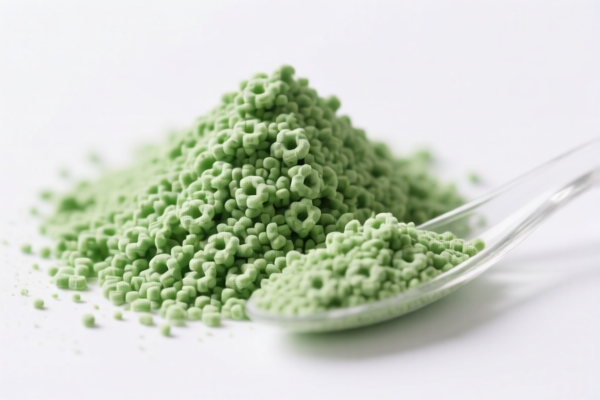
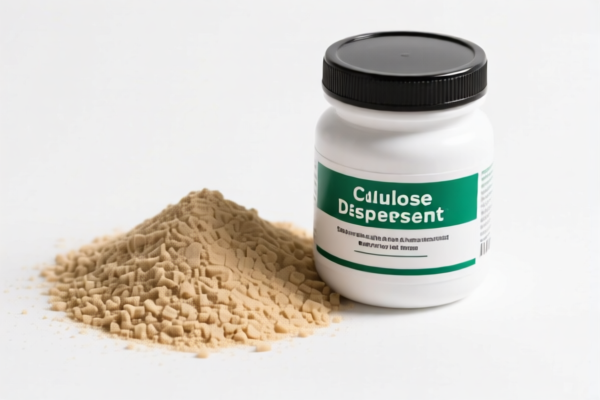
Lignosulfonate is a by-product of the wood pulping industry, widely used as a dispersant, binder, and plasticizer. In the context of pesticides and agriculture, it serves as a critical auxiliary agent to ensure active ingredients are evenly distributed.
Because chemical products often lack a specific "named" HS code, they frequently fall under "Other" (Catch-all) categories. The classification depends heavily on: 1. Concentration: Is it a high-concentration solid/powder or a liquid solution? 2. Specific Use: Is it strictly for pesticides, or does it fit broader industrial chemical definitions? 3. Origin: The provided data specifies a Chinese Origin (CN) entering the US Market, triggering specific trade war tariffs (Section 301 and Section 122/IEEPA).
⚠️ Key Distinction Point:
- High-Concentration Dispersant: Usually classified under 3824 (Prepared Binders/Chemical Products).
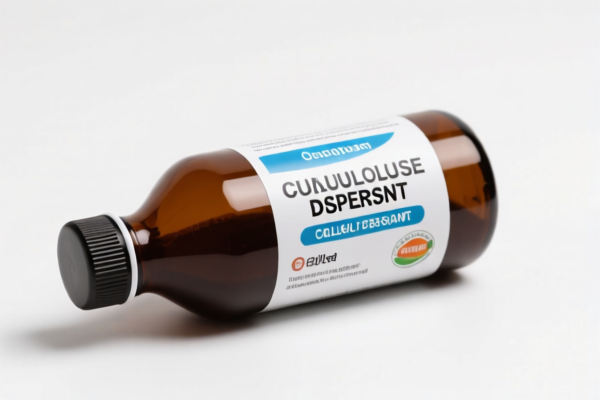
- Liquid Solution: May be classified under 3804 (Tanning Extracts/Lignin Salts) if it resembles residual alkaline liquor from paper manufacturing.
📦 II. HS Code Classification Details (2026 Latest Tariff Authority对照)
| HS Code | Product Description | Applicable Scenario | Tax Logic & Data Source |
|---|---|---|---|
3824.99.41.40 |
High-Concentration Lignosulfonate Dispersant | Plant-derived chemical, used as a generic dispersant. Fits the "Other" catch-all logic for prepared chemical products. | Total Tax: 39.6% Base: 4.6% + Sec 301: 25% + Sec 122: 10% |
3824.99.93.97 |
High-Concentration Lignosulfonate Dispersant | Chemical industrial related product. Fits the "Other" catch-all logic for chemical industry preparations. | Total Tax: 40.0% Base: 5.0% + Sec 301: 25% + Sec 122: 10% |
3804.00.10.00 |
Lignosulfonate Solution | Material matches HS code. Liquid form matches "residual alkaline liquor" characteristics. | Total Tax: 35.0% Base: 0.0% + Sec 301: 25% + Sec 122: 10% |
3804.00.50.00 |
Lignosulfonate Solution | Material matches key classification. Liquid form matches "paper pulp manufacturing residual alkaline liquor." | Total Tax: 38.7% Base: 3.7% + Sec 301: 25% + Sec 122: 10% |
🔍 Focus Reminder:
- Solid/High-Concentration Forms fall under 3824 (Base rates 4.6% - 5.0%).
- Liquid Solutions fall under 3804 (Base rates 0.0% - 3.7%).
- All entries suffer from 25% Section 301 Tariff and 10% Section 122/IEEPA Tariff.
💰 III. 2026 Latest Tariff Rate Breakdown (Including Add-ons, Policy Add-ons)
✅ Applicable Country: USA (US)
✅ Origin: China (CN)
✅ Effective Date: Current Trade War Policies (Section 301 & Section 122)
🎯 1. 3824.99.41.40 —— High-Concentration Lignosulfonate Dispersant (Plant-Derived)
| Item | Content |
|---|---|
| Base Tariff | 4.6% (ad valorem) |
| Section 301 Tariff | +25% (USITC Footnote 9903.88.01 applied to Ch 38) |
| Section 122 / IEEPA Tariff | +10% (Targeting Chinese goods, specific emergency powers) |
| Total Effective Rate | 39.6% |
| Tax Calculation | CIF Value × 39.6% |
| De Minimis Eligibility | ❌ NO (Section 301 goods are generally excluded from de minimis exemptions) |
| Legal Basis Path | USITC:3824.99.41.40 → SECTION301:9903.88.01 → SECTION122/IEEPA:9903.01.24 |
📌 Explanation:
- The 25% comes from the US Trade Representative’s Section 301 list, which covers most prepared chemical binders and dispersants from China.
- The 10% is an additional levy under Section 122 of the Trade Act of 1974 or related IEEPA orders targeting specific Chinese chemical imports.
- Combined 39.6% is a very high cost factor. Margin analysis is critical.
🎯 2. 3824.99.93.97 —— High-Concentration Lignosulfonate Dispersant (Chemical Industry Related)
| Item | Content |
|---|---|
| Base Tariff | 5.0% |
| Section 301 Tariff | +25% |
| Section 122 / IEEPA Tariff | +10% |
| Total Effective Rate | 40.0% |
| Tax Calculation | CIF × 40.0% |
| De Minimis Eligibility | ❌ NO |
| Legal Basis Path | USITC:3824.99.93.97 → SECTION301 → SECTION122 |
📌 Note:
- Slightly higher base rate (5.0% vs 4.6%) compared to the previous code.
- Applies to lignosulfonates classified broadly under "Other" chemical preparations.
- Same high tariff burden.
🎯 3. 3804.00.10.00 —— Lignosulfonate Solution (Residual Alkaline Liquor Characteristic)
| Item | Content |
|---|---|
| Base Tariff | 0.0% |
| Section 301 Tariff | +25% |
| Section 122 / IEEPA Tariff | +10% |
| Total Effective Rate | 35.0% |
| Tax Calculation | CIF × 35.0% |
| De Minimis Eligibility | ❌ NO |
| Legal Basis Path | USITC:3804.00.10.00 → SECTION301 → SECTION122 |
📌 Insight:
- Lowest Base Rate (0%): If the product can be convincingly described as a "solution" resembling residual alkaline liquor, the base tariff drops to zero.
- Still High Total: Despite 0% base, the 35% total tariff remains significant due to punitive add-ons.
🎯 4. 3804.00.50.00 —— Lignosulfonate Solution (Paper Pulp Residual Alkaline Liquor)
| Item | Content |
|---|---|
| Base Tariff | 3.7% |
| Section 301 Tariff | +25% |
| Section 122 / IEEPA Tariff | +10% |
| Total Effective Rate | 38.7% |
| Tax Calculation | CIF × 38.7% |
| De Minimis Eligibility | ❌ NO |
| Legal Basis Path | USITC:3804.00.50.00 → SECTION301 → SECTION122 |
📌 Insight:
- If the solution is explicitly linked to paper pulp manufacturing waste/recycling, it fits here.
- Base rate is 3.7%, making the total 38.7%.
- Riskier classification if the product is not directly from paper mills, as customs may audit the "residual liquor" claim.
🛠️ IV. Customs Clearance Practical Advice (Real-World Pitfall Avoidance)
✅ 1. Required Documentation Checklist (Non-Negotiable)
| Document | Required | Explanation |
|---|---|---|
| ✅ Product Specification Sheet | ✔️ | Must detail concentration, form (solid/liquid), and chemical composition. |
| ✅ MSDS/SDS (Safety Data Sheet) | ✔️ | Critical for hazardous material classification. Must confirm it is not highly flammable or toxic beyond standard limits. |
| ✅ Commercial Invoice | ✔️ | Clearly state "Lignosulfonate Dispersant" and HS Code. Do not use vague terms like "Chemical A". |
| ✅ Certificate of Origin (CO) | ✔️ | Essential for proving Chinese origin. If re-exported, rules of origin must be checked. |
| ✅ Usage Statement | ✔️ | Confirm use in Pesticide Formulation. Helps justify classification under 3824 (Prepared chemicals) vs 3804 (Extracts). |
| ✅ Packaging List | ✔️ | Specify net/gross weight and container type (drums, IBCs, liquid tanks). |
✅ 2. Declaration Tips (Key Mantra)
🔥 “Form Determines Code, Liquid Means 3804, Solid Means 3824, Be Honest or Get Fined!”
| Scenario | Correct Declaration | Wrong Action |
|---|---|---|
| High-Concentration Powder/Granules | 3824.99.41.40 or 3824.99.93.97 |
Misdeclare as liquid to get 0% base tax → Audit Failure |
| Liquid Solution (General) | 3824 (if additive) or 3804 (if liquor-like) |
Vague description "Pesticide Aid" → Delay/Red Inspection |
| Liquid Solution (Paper By-product) | 3804.00.50.00 |
Claiming 3804 when it’s a pure synthetic dispersant → Customs Rejection |
| Mixed Shipments (Solid + Liquid) | Split HS Codes | One HS Code for mixed items → Valuation Dispute |
✅ 3. Special Situation Handling
| Situation | Handling Advice |
|---|---|
| Is it a "Pesticide" or "Pesticide Adjuvant"? | If it’s the active ingredient, it goes to 3808 (Pesticides). Lignosulfonate is usually an adjuvant/disersant, so 3824/3804 is correct. |
| Can we use Section 122 Exemptions? | ❌ No. The data explicitly includes 10% Section 122 tax. Do not assume exemptions apply to Chinese chemical goods. |
| De Minimis (Value < $800) | ❌ Not Eligible. Section 301 and 122 tariffs apply even to small shipments from China. |
| Anti-Dumping/Countervailing Duties (AD/CVD) | Check if lignosulfonates have specific AD/CVD orders. The data provided focuses on Tariffs, but AD/CVD could add another 10-200%. |
🌍 V. Global Market Comparison (2026 Latest)
| Country/Region | Recommended HS Code | Tariff Rate | Certification | Notes |
|---|---|---|---|---|
| 🇺🇸 USA | 3824 or 3804 |
35% - 40% | None specific | Highest Cost: Due to 301 & 122 tariffs. |
| 🇨🇳 China | 3824 or 3804 |
~10-14% | None | Export duty may apply depending on local policy. |
| 🇪🇺 EU | 3824 or 3804 |
~6.5% | REACH Registration | Critical: REACH compliance is mandatory for chemicals in EU. |
| 🇬🇧 UK | 3824 or 3804 |
~6.5% | UK REACH | Similar to EU, requires UK REACH registration. |
| 🇯🇵 Japan | 3824 or 3804 |
~6-8% | JECFA/FEFAC | Food/Agro standards may apply if used in agri-food. |
📌 Conclusion:
- USA is the most expensive market for this product due to political tariffs.
- EU/UK require strict chemical compliance (REACH), which is a higher barrier to entry than just tariffs.
- China Origin is the main cost driver for US imports. Consider transshipment (high risk) or third-country manufacturing for tariff optimization.
📌 VI. Common Errors & Pitfall Guide (Lessons Learned)
❌ Error 1: Declaring as "Pesticide" (3808) to avoid "Chemical" tariffs.
👉 Consequence: If it’s a dispersant, not active ingredient, this is fraud. Penalty + Seizure.
👉 Correct: Use 3824 or 3804.
❌ Error 2: Ignoring the 10% Section 122 Tariff.
👉 Consequence: Underpayment of duties. Customs will demand back taxes + interest.
👉 Correct: Always calculate Total Tax = Base + 25% + 10%.
❌ Error 3: Confusing Solution vs. Concentrate.
👉 Consequence: Misclassification. A 50% solution declared as powder (3824) may face penalties if lab tests show high water content.
👉 Correct: Be precise. Use 3804 for liquids, 3824 for solids/concentrates.
✅ Correct Practice:
"Lignosulfonate Dispersant, Liquid Solution, 40% Concentration, Used in Pesticide Formulation, HS 3804.00.50.00, Origin: China, CIF $10,000, Tax $3,870."
🎯 VII. Conclusion: Professional Declaration, Cost Efficiency!
🎯 Remember the Mantra:
🔹 “Solid = 3824 (High Base), Liquid = 3804 (Low Base).”
🔹 “Total Tax is 35-40%: Don’t let the 25% + 10% surprise you!”
🔹 “De Minimis is Dead: Pay the tax, plan the margin!”
📌 Pro Tip:
If your customer is in the USA, consider:
1. Pre-Ruling (Advance Ruling): Request a binding ruling from CBP to confirm HS code.
2. Supply Chain Audit: Ensure no prohibited entities are involved.
3. REACH (if exporting to EU): Start registration early; it’s more expensive than the tariff.
📣 Immediate Action:
📞 Contact a licensed Customs Broker.
📄 Prepare SDS and Specification Sheets.
🚀 Calculate Landed Cost: (CIF + 39.6%) before quoting your customer!
✨ Professional Clearance Starts with Accurate Classification!
💼 Your Margin Depends on the HS Code!
Customer Reviews
About HS Code Classification
The Harmonized System (HS) is an internationally standardized nomenclature developed by the World Customs Organization (WCO) to classify traded products. Over 200 countries use the HS system as the basis for customs tariffs, trade statistics, and import/export regulations.
Each HS code follows a hierarchical structure:
- Chapter (2 digits) — Broad category of goods (e.g., Chapter 84: Machinery and Mechanical Appliances)
- Heading (4 digits) — More specific grouping within the chapter
- Subheading (6 digits) — Internationally standardized breakdown, used by all WCO member countries
- National subdivisions (8-10 digits) — Country-specific extensions for further classification, such as US HTSUS 10-digit codes
Correct HS code classification is essential for smooth customs clearance, accurate duty payment, and compliance with trade regulations. Misclassification can lead to customs delays, overpayment of duties, or penalties.
When importing from CN to US, the applicable tariff rates may include:
- Most-Favored-Nation (MFN) rate — The standard duty rate applied to WTO members
- General rate — Applied to countries without trade agreements
- Trade remedy duties — Additional tariffs such as Section 301 (anti-dumping), Section 232 (national security), or countervailing duties
The information provided on this page is for reference purposes only. For official classification, please consult with your local customs authority or a licensed customs broker.