Long Fiber Cotton Raw Material
CN → US| HS编码 | 关税税率 | 原产国 | 目的国 | 文档 |
|---|---|---|---|---|
| 5205111000 | 38.7% | CN | US | 官方文档 |
| 5201006000 | 0.0% | CN | US | 官方文档 |
| 5205121000 | 40.2% | CN | US | 官方文档 |
| 5205121000 | 40.2% | CN | US | 官方文档 |
| 5201003800 | 0.0% | CN | US | 官方文档 |
商品图片
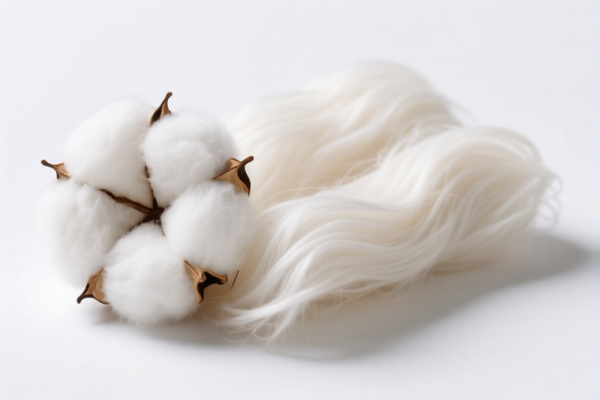
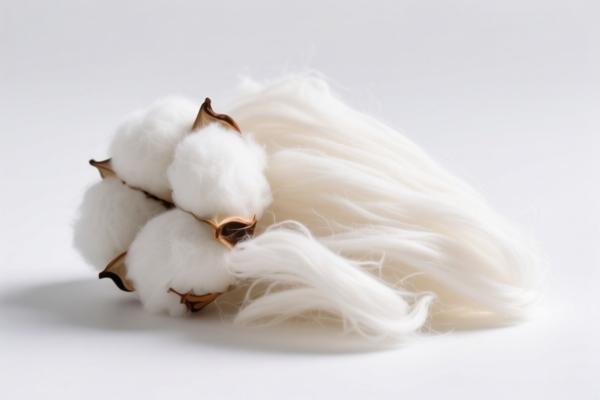
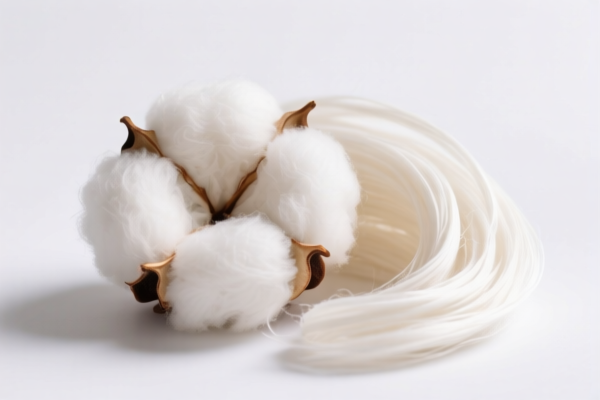
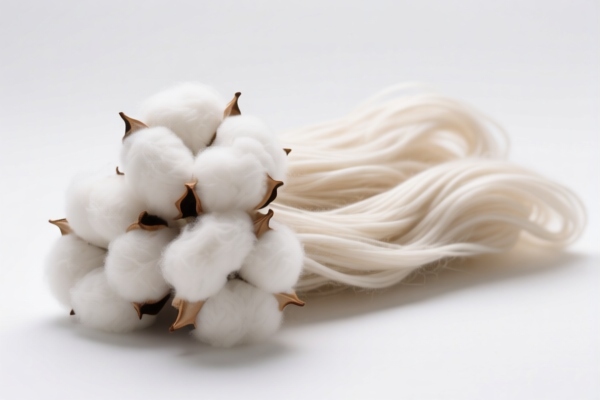
AI分析
🧵 Long Fiber Cotton Raw Material
🌐 HS Code Reference & Customs Clearance Guide | 2026 Tariff Analysis | Professional Clearance Strategy 📌 I. Product Definition & Classification: Do You Truly Understand "Long Fiber Cotton"?
Long Fiber Cotton refers to cotton fibers that exceed specific length standards (typically > 1-1/4 inches), processed in their primary raw state. In international trade, its classification hinges on two critical factors: 1. Processing State: Whether the fibers are carded/combed (processed) or not carded/combed (raw/primary). 2. Fiber Characteristics: Specific length intervals and cotton content (>85% is a key threshold).
⚠️ Key Distinction Point: - If the cotton is in its primary form (not carded/combed) with specific length standards → Falls under Chapter 5201. - If the cotton is carded/combed (processed for spinning) → Falls under Chapter 5205. - Crucial Warning: All items in this dataset are subject to significant additional tariffs (Section 301 & IEEPA). Misclassification leads to massive cost discrepancies.
📦 II. HS Code Classification Details (2026 Latest Tariff Schedule)
| HS Code | Product Description | Application Scenario | Processing State |
|---|---|---|---|
5201.00.60.00 |
Long fiber cotton, primary form, meeting fiber length standards | Raw cotton bales, unprocessed, standard long-staple cotton | ❌ Not Carded/Combed |
5201.00.38.00 |
Long fiber cotton, specific fiber length intervals | Specific length ranges (e.g., extra-long staple), raw form | ❌ Not Carded/Combed |
5205.11.10.00 |
Long fiber cotton, >85% cotton content, not carded/combed | Semi-processed or specific raw grades with high cotton purity | ❌ Not Carded/Combed |
5205.12.10.00 |
Long fiber cotton, primary form, not carded/combed | Processed raw cotton, carded/combed stage, generic long fiber | ⚠️ Carded/Combed (Primary) |
5205.12.10.00 |
Long fiber cotton, >85% cotton content, not carded/combed | High-purity processed cotton, specific grade | ⚠️ Carded/Combed (Primary) |
🔍 Focus Reminder: - Codes starting with 5201 are for non-processed (raw) cotton. - Codes starting with 5205 are for processed (carded/combed) cotton. - Tariff Impact: The "122 Clause Tariff" (10%) and "Section 301 Tariff" (25%) apply to ALL these categories if originating from China. Base tariffs vary slightly, but the total burden is heavy.
💰 III. 2026 Latest Tariff Rate Breakdown (Including Additional Taxes)
✅ Applicable Country: United States (US) ✅ Origin: China (CN) ✅ Effective Date: Current (Post-2025 adjustments)
🎯 1. 5201.00.60.00 – Long Fiber Cotton, Primary Form
| Item | Content |
|---|---|
| Base Tariff | 1.5¢/kg (Specific duty) |
| Section 301 Tariff | +25.0% (Ad valorem on CIF value) |
| 122 Clause Tariff | +10.0% (Ad valorem on CIF value) |
| Total Effective Tax | 1.5¢/kg + 35.0% |
| Tax Calculation | (1.5¢ × Weight in kg) + (CIF Value × 0.35) |
| De Minimis Exemption | ❌ Not Eligible (De Minimis does not apply to Section 301/122 duties) |
| Legal Basis | HTSUS 5201.00.60.00 + USITC Footnotes + IEEPA Authorities |
📌 Explanation: - This code applies to raw, unprocessed long-staple cotton. - The tax is a hybrid: A fixed per-kg fee PLUS a high percentage. - Total 35% additional tariff is extremely high, significantly impacting competitiveness.
🎯 2. 5201.00.38.00 – Long Fiber Cotton, Specific Length Intervals
| Item | Content |
|---|---|
| Base Tariff | 31.4¢/kg (Specific duty) |
| Section 301 Tariff | +25.0% (Ad valorem) |
| 122 Clause Tariff | +10.0% (Ad valorem) |
| Total Effective Tax | 31.4¢/kg + 35.0% |
| Tax Calculation | (31.4¢ × Weight in kg) + (CIF Value × 0.35) |
| De Minimis Exemption | ❌ Not Eligible |
| Legal Basis | HTSUS 5201.00.38.00 + USITC Footnotes + IEEPA Authorities |
📌 Note: - This code is for cotton with specific length characteristics (e.g., extra-long staple). - The higher base specific duty (31.4¢ vs 1.5¢) makes this significantly more expensive in absolute terms, even though the percentage surcharge is the same.
🎯 3. 5205.11.10.00 – Long Fiber Cotton, >85% Content, Not Carded
| Item | Content |
|---|---|
| Base Tariff | 3.7% (Ad valorem) |
| Section 301 Tariff | +25.0% (Ad valorem) |
| 122 Clause Tariff | +10.0% (Ad valorem) |
| Total Effective Tax | 38.7% |
| Tax Calculation | CIF Value × 0.387 |
| De Minimis Exemption | ❌ Not Eligible |
| Legal Basis | HTSUS 5205.11.10.00 + USITC Footnotes + IEEPA Authorities |
📌 Explanation: - This code applies to processed (carded/combed) cotton with high purity. - Pure percentage-based tax (38.7%). No specific duty component. - Higher base rate (3.7%) than raw cotton codes.
🎯 4. 5205.12.10.00 – Long Fiber Cotton, Primary Form/Not Carded (Two Variants)
| Item | Content |
|---|---|
| Base Tariff | 5.2% (Ad valorem) |
| Section 301 Tariff | +25.0% (Ad valorem) |
| 122 Clause Tariff | +10.0% (Ad valorem) |
| Total Effective Tax | 40.2% |
| Tax Calculation | CIF Value × 0.402 |
| De Minimis Exemption | ❌ Not Eligible |
| Legal Basis | HTSUS 5205.12.10.00 + USITC Footnotes + IEEPA Authorities |
📌 Note: - Applies to both "primary form" and ">85% content" variants in the data. - Highest total percentage tax (40.2%) among all listed codes. - Requires careful justification of "primary form" vs "processed" to avoid misclassification penalties.
🛠️ IV. Customs Clearance Practical Advice (Avoiding Pitfalls)
✅ 1. Documentation Checklist (Mandatory)
| Document | Required | Description |
|---|---|---|
| ✅ Certificate of Origin | ✔️ | Crucial for proving Chinese origin (triggers tariffs). |
| ✅ Commercial Invoice | ✔️ | Must detail: Fiber length (mm/inches), Cotton content %, Processing state (Carded/Combed vs Raw). |
| ✅ Bill of Lading | ✔️ | Consistent weight and description with invoice. |
| ✅ Laboratory Test Report | ✔️ | Critical: Must verify fiber length and cotton purity. Customs often request this. |
| ✅ Packing List | ✔️ | Clear itemization, no mixed batches of different grades without separate invoices. |
✅ 2. Declaration Tips (Key Mnemonics)
🔥 “Raw vs Processed, Length Matters, Tariffs Bite Hard!”
| Scenario | Correct Declaration | Error |
|---|---|---|
| Raw Cotton Bales (Unprocessed) | 5201.00.xx.xx + "Not Carded/Combed" |
Misdeclare as 5205 → Risk of fraud claims. |
| Processed Cotton (Carded/Combed) | 5205.12.10.00 + "Carded" |
Misdeclare as 5201 → Base rate error + scrutiny. |
| Mixed Batch | Separate invoices per HS Code | Mixed declaration → Delay + Penalties. |
| Specific Length Cotton | 5201.00.38.00 + "Specific Length Interval" |
Generic "Long Fiber" → Incorrect base duty. |
✅ 3. Special Case Handling
| Scenario | Handling Advice |
|---|---|
| Cotton Content < 85% | These codes generally require >85% or specific primary forms. Check other subheadings if content is lower. |
| Short Fiber Cotton | Do NOT use these codes. Short fiber cotton falls under different HS codes (e.g., 5203). Misclassification leads to high penalties. |
| Transshipment from Vietnam/Mexico | Warning: If transshipped from China to avoid tariffs, DO NOT use de minimis. US Customs actively investigates cotton transshipment. High risk of seizure. |
| US Domestic Cotton | If origin is USA, 0% tariffs. Must provide clear proof of US origin (GSO Certificate). |
🌍 V. Global Market Comparison (2026 Latest)
| Country/Region | Recommended HS Code | Tariff (CN Origin) | Certification/Notes |
|---|---|---|---|
| 🇺🇸 USA | 5201.00.60.00 etc. |
35%-40.2% | Heavy Section 301 + 122 Tariffs. De Minimis blocked. |
| 🇨🇳 China | 5201.00.60.00 |
0% (Import) | Domestic trade applies. Export duties may apply. |
| 🇪🇺 EU | 5201.00.60.00 |
0% - 4% | No Section 301. Standard MFN rates apply. |
| 🇮🇳 India | 5201.00.60.00 |
~10% - 15% | Variable. No US-style punitive tariffs. |
| 🇻🇳 Vietnam | 5201.00.60.00 |
0% - 2% | No punitive tariffs. Good for re-export to US if truly transformed. |
📌 Conclusion: - USA is the most expensive market for Chinese cotton due to 35-40% total tariffs. - EU and India offer significantly lower tariff barriers. - Strategy: If targeting the US, consider sourcing from non-China origins (e.g., USA, Brazil, India) or ensure the supply chain is fully transparent to avoid "transshipment" accusations.
📌 VI. Common Errors & Pitfalls (Blood & Tears Lessons)
❌ Error 1: Declaring "Processed Cotton" as "Raw Cotton" (5205 as 5201)
👉 Consequence: Base tariff difference (3.7-5.2% vs 1.5-31.4¢/kg). May seem cheaper initially, but audits will reveal processing marks (carding lines) on fibers. Penalties + Back Taxes.
❌ Error 2: Ignoring the "122 Clause Tariff" (10%) 👉 Consequence: Under-declaring duties by 10%. Interest + Penalties.
❌ Error 3: Assuming De Minimis Applies to Section 301/122 Tariffs 👉 Consequence: Using e-commerce small packages to bypass tariffs. US Customs SEEX algorithm flags cotton shipments. Seizure + Blacklist.
❌ Error 4: Vague Description: "Cotton" 👉 Consequence: Customs will classify based on highest duty or request tests. Delays.
✅ Correct Practice:
"Cotton, Long Fiber, Not Carded or Combed, Cotton Content >85%, Origin: China, Model: RawBale A, Weight: 500kg"
🎯 VII. Conclusion: Precise Classification Saves Costs!
🎯 Remember the Mantra:
🔹 “Raw vs Processed, Choose Wisely. Tariffs are High, Look Twice.” 🔹 “35% to 40% is the Norm. Don’t Let Misclassification Cost You.” 🔹 “De Minimis is Dead for Cotton. Plan Your Logistics.”
📌 Pro Tip:
If your cotton is originating from the USA, Brazil, or Australia, you may qualify for 0% tariffs in the US. Recommendation: Apply for a Tariff Classification Ruling (TCR) from US Customs and Border Protection (CBP) before shipping. This provides legal certainty.
📣 Immediate Action:
📞 Contact a licensed customs broker + Provide Lab Test Reports + Apply for Pre-Ruling 🚀 Let your cotton, clear customs smoothly, maximize profits, avoid delays!
✨ Professional Clearance Starts with Accurate Classification! 💼 Every Percent of Duty Counts!
用户评价
关于 HS 编码归类
协调制度(HS)是由世界海关组织(WCO)制定的国际贸易商品分类标准。全球 200 多个国家采用 HS 系统作为海关关税、贸易统计和进出口监管的基础。
每个 HS 编码遵循以下层级结构:
- 章(2 位)——商品大类(例如:第 84 章:机器和机械设备)
- 品目(4 位)——章内的更具体分类
- 子目(6 位)——国际通用细分,所有 WCO 成员国统一使用
- 本国细分(8-10 位)——各国自行扩展的细分编码,如美国 HTSUS 10 位编码
正确的 HS 编码归类对于顺利通关、准确缴纳关税和遵守贸易法规至关重要。错误归类可能导致海关延误、多缴关税或罚款。
从CN进口到US时,适用的关税税率可能包括:
- 最惠国(MFN)税率——适用于 WTO 成员国的标准关税税率
- 普通税率——适用于无贸易协定国家
- 贸易救济关税——附加关税,如 301 条款(反倾销)、232 条款(国家安全)或反补贴税
本页内容仅供参考。如需正式归类,请咨询当地海关或持牌报关代理。