Long Fiber Cotton Raw Material
CN → US| HS Code | Tariff Rate | Origin | Destination | Doc |
|---|---|---|---|---|
| 5205111000 | 38.7% | CN | US | Official Doc |
| 5201006000 | 0.0% | CN | US | Official Doc |
| 5205121000 | 40.2% | CN | US | Official Doc |
| 5205121000 | 40.2% | CN | US | Official Doc |
| 5201003800 | 0.0% | CN | US | Official Doc |
Product Images
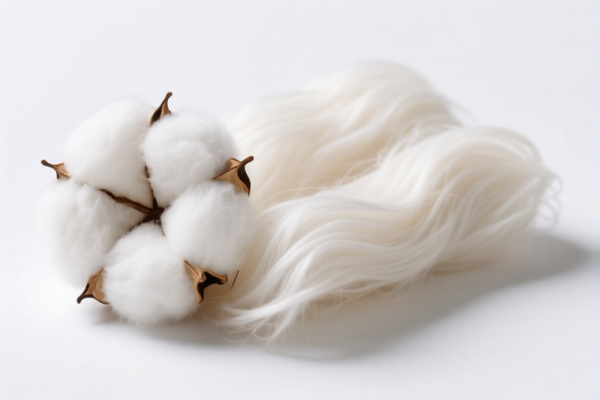
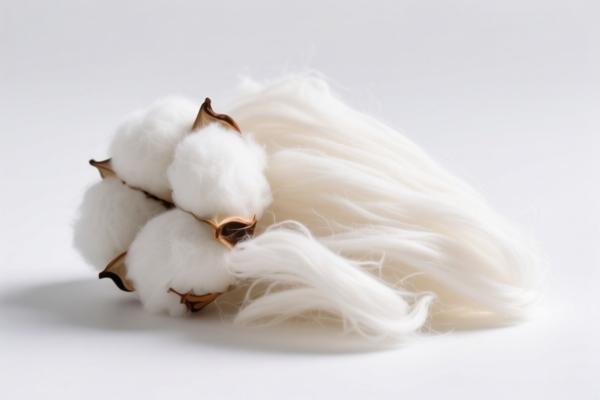
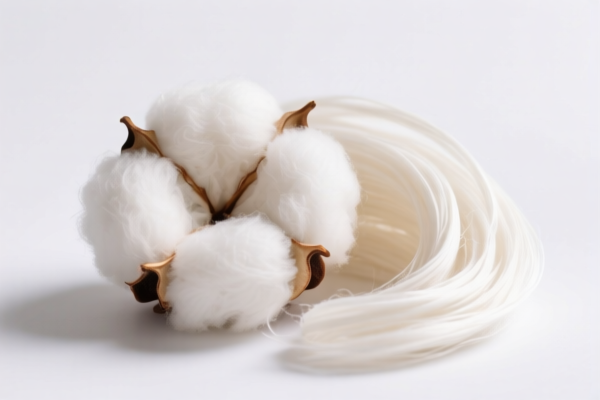
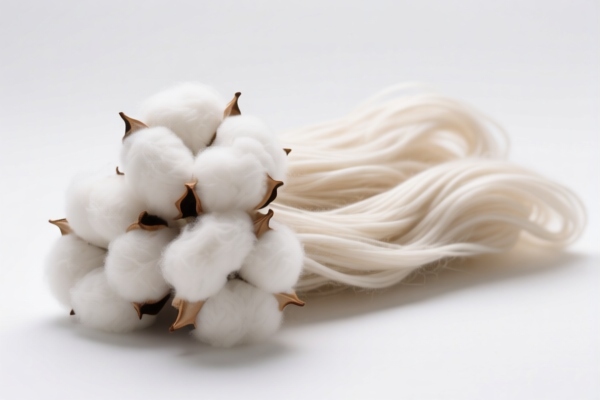
AI Analysis
🧵 Long Fiber Cotton Raw Material
🌐 HS Code Reference & Customs Clearance Guide | 2026 Tariff Analysis | Professional Clearance Strategy 📌 I. Product Definition & Classification: Do You Truly Understand "Long Fiber Cotton"?
Long Fiber Cotton refers to cotton fibers that exceed specific length standards (typically > 1-1/4 inches), processed in their primary raw state. In international trade, its classification hinges on two critical factors: 1. Processing State: Whether the fibers are carded/combed (processed) or not carded/combed (raw/primary). 2. Fiber Characteristics: Specific length intervals and cotton content (>85% is a key threshold).
⚠️ Key Distinction Point: - If the cotton is in its primary form (not carded/combed) with specific length standards → Falls under Chapter 5201. - If the cotton is carded/combed (processed for spinning) → Falls under Chapter 5205. - Crucial Warning: All items in this dataset are subject to significant additional tariffs (Section 301 & IEEPA). Misclassification leads to massive cost discrepancies.
📦 II. HS Code Classification Details (2026 Latest Tariff Schedule)
| HS Code | Product Description | Application Scenario | Processing State |
|---|---|---|---|
5201.00.60.00 |
Long fiber cotton, primary form, meeting fiber length standards | Raw cotton bales, unprocessed, standard long-staple cotton | ❌ Not Carded/Combed |
5201.00.38.00 |
Long fiber cotton, specific fiber length intervals | Specific length ranges (e.g., extra-long staple), raw form | ❌ Not Carded/Combed |
5205.11.10.00 |
Long fiber cotton, >85% cotton content, not carded/combed | Semi-processed or specific raw grades with high cotton purity | ❌ Not Carded/Combed |
5205.12.10.00 |
Long fiber cotton, primary form, not carded/combed | Processed raw cotton, carded/combed stage, generic long fiber | ⚠️ Carded/Combed (Primary) |
5205.12.10.00 |
Long fiber cotton, >85% cotton content, not carded/combed | High-purity processed cotton, specific grade | ⚠️ Carded/Combed (Primary) |
🔍 Focus Reminder: - Codes starting with 5201 are for non-processed (raw) cotton. - Codes starting with 5205 are for processed (carded/combed) cotton. - Tariff Impact: The "122 Clause Tariff" (10%) and "Section 301 Tariff" (25%) apply to ALL these categories if originating from China. Base tariffs vary slightly, but the total burden is heavy.
💰 III. 2026 Latest Tariff Rate Breakdown (Including Additional Taxes)
✅ Applicable Country: United States (US) ✅ Origin: China (CN) ✅ Effective Date: Current (Post-2025 adjustments)
🎯 1. 5201.00.60.00 – Long Fiber Cotton, Primary Form
| Item | Content |
|---|---|
| Base Tariff | 1.5¢/kg (Specific duty) |
| Section 301 Tariff | +25.0% (Ad valorem on CIF value) |
| 122 Clause Tariff | +10.0% (Ad valorem on CIF value) |
| Total Effective Tax | 1.5¢/kg + 35.0% |
| Tax Calculation | (1.5¢ × Weight in kg) + (CIF Value × 0.35) |
| De Minimis Exemption | ❌ Not Eligible (De Minimis does not apply to Section 301/122 duties) |
| Legal Basis | HTSUS 5201.00.60.00 + USITC Footnotes + IEEPA Authorities |
📌 Explanation: - This code applies to raw, unprocessed long-staple cotton. - The tax is a hybrid: A fixed per-kg fee PLUS a high percentage. - Total 35% additional tariff is extremely high, significantly impacting competitiveness.
🎯 2. 5201.00.38.00 – Long Fiber Cotton, Specific Length Intervals
| Item | Content |
|---|---|
| Base Tariff | 31.4¢/kg (Specific duty) |
| Section 301 Tariff | +25.0% (Ad valorem) |
| 122 Clause Tariff | +10.0% (Ad valorem) |
| Total Effective Tax | 31.4¢/kg + 35.0% |
| Tax Calculation | (31.4¢ × Weight in kg) + (CIF Value × 0.35) |
| De Minimis Exemption | ❌ Not Eligible |
| Legal Basis | HTSUS 5201.00.38.00 + USITC Footnotes + IEEPA Authorities |
📌 Note: - This code is for cotton with specific length characteristics (e.g., extra-long staple). - The higher base specific duty (31.4¢ vs 1.5¢) makes this significantly more expensive in absolute terms, even though the percentage surcharge is the same.
🎯 3. 5205.11.10.00 – Long Fiber Cotton, >85% Content, Not Carded
| Item | Content |
|---|---|
| Base Tariff | 3.7% (Ad valorem) |
| Section 301 Tariff | +25.0% (Ad valorem) |
| 122 Clause Tariff | +10.0% (Ad valorem) |
| Total Effective Tax | 38.7% |
| Tax Calculation | CIF Value × 0.387 |
| De Minimis Exemption | ❌ Not Eligible |
| Legal Basis | HTSUS 5205.11.10.00 + USITC Footnotes + IEEPA Authorities |
📌 Explanation: - This code applies to processed (carded/combed) cotton with high purity. - Pure percentage-based tax (38.7%). No specific duty component. - Higher base rate (3.7%) than raw cotton codes.
🎯 4. 5205.12.10.00 – Long Fiber Cotton, Primary Form/Not Carded (Two Variants)
| Item | Content |
|---|---|
| Base Tariff | 5.2% (Ad valorem) |
| Section 301 Tariff | +25.0% (Ad valorem) |
| 122 Clause Tariff | +10.0% (Ad valorem) |
| Total Effective Tax | 40.2% |
| Tax Calculation | CIF Value × 0.402 |
| De Minimis Exemption | ❌ Not Eligible |
| Legal Basis | HTSUS 5205.12.10.00 + USITC Footnotes + IEEPA Authorities |
📌 Note: - Applies to both "primary form" and ">85% content" variants in the data. - Highest total percentage tax (40.2%) among all listed codes. - Requires careful justification of "primary form" vs "processed" to avoid misclassification penalties.
🛠️ IV. Customs Clearance Practical Advice (Avoiding Pitfalls)
✅ 1. Documentation Checklist (Mandatory)
| Document | Required | Description |
|---|---|---|
| ✅ Certificate of Origin | ✔️ | Crucial for proving Chinese origin (triggers tariffs). |
| ✅ Commercial Invoice | ✔️ | Must detail: Fiber length (mm/inches), Cotton content %, Processing state (Carded/Combed vs Raw). |
| ✅ Bill of Lading | ✔️ | Consistent weight and description with invoice. |
| ✅ Laboratory Test Report | ✔️ | Critical: Must verify fiber length and cotton purity. Customs often request this. |
| ✅ Packing List | ✔️ | Clear itemization, no mixed batches of different grades without separate invoices. |
✅ 2. Declaration Tips (Key Mnemonics)
🔥 “Raw vs Processed, Length Matters, Tariffs Bite Hard!”
| Scenario | Correct Declaration | Error |
|---|---|---|
| Raw Cotton Bales (Unprocessed) | 5201.00.xx.xx + "Not Carded/Combed" |
Misdeclare as 5205 → Risk of fraud claims. |
| Processed Cotton (Carded/Combed) | 5205.12.10.00 + "Carded" |
Misdeclare as 5201 → Base rate error + scrutiny. |
| Mixed Batch | Separate invoices per HS Code | Mixed declaration → Delay + Penalties. |
| Specific Length Cotton | 5201.00.38.00 + "Specific Length Interval" |
Generic "Long Fiber" → Incorrect base duty. |
✅ 3. Special Case Handling
| Scenario | Handling Advice |
|---|---|
| Cotton Content < 85% | These codes generally require >85% or specific primary forms. Check other subheadings if content is lower. |
| Short Fiber Cotton | Do NOT use these codes. Short fiber cotton falls under different HS codes (e.g., 5203). Misclassification leads to high penalties. |
| Transshipment from Vietnam/Mexico | Warning: If transshipped from China to avoid tariffs, DO NOT use de minimis. US Customs actively investigates cotton transshipment. High risk of seizure. |
| US Domestic Cotton | If origin is USA, 0% tariffs. Must provide clear proof of US origin (GSO Certificate). |
🌍 V. Global Market Comparison (2026 Latest)
| Country/Region | Recommended HS Code | Tariff (CN Origin) | Certification/Notes |
|---|---|---|---|
| 🇺🇸 USA | 5201.00.60.00 etc. |
35%-40.2% | Heavy Section 301 + 122 Tariffs. De Minimis blocked. |
| 🇨🇳 China | 5201.00.60.00 |
0% (Import) | Domestic trade applies. Export duties may apply. |
| 🇪🇺 EU | 5201.00.60.00 |
0% - 4% | No Section 301. Standard MFN rates apply. |
| 🇮🇳 India | 5201.00.60.00 |
~10% - 15% | Variable. No US-style punitive tariffs. |
| 🇻🇳 Vietnam | 5201.00.60.00 |
0% - 2% | No punitive tariffs. Good for re-export to US if truly transformed. |
📌 Conclusion: - USA is the most expensive market for Chinese cotton due to 35-40% total tariffs. - EU and India offer significantly lower tariff barriers. - Strategy: If targeting the US, consider sourcing from non-China origins (e.g., USA, Brazil, India) or ensure the supply chain is fully transparent to avoid "transshipment" accusations.
📌 VI. Common Errors & Pitfalls (Blood & Tears Lessons)
❌ Error 1: Declaring "Processed Cotton" as "Raw Cotton" (5205 as 5201)
👉 Consequence: Base tariff difference (3.7-5.2% vs 1.5-31.4¢/kg). May seem cheaper initially, but audits will reveal processing marks (carding lines) on fibers. Penalties + Back Taxes.
❌ Error 2: Ignoring the "122 Clause Tariff" (10%) 👉 Consequence: Under-declaring duties by 10%. Interest + Penalties.
❌ Error 3: Assuming De Minimis Applies to Section 301/122 Tariffs 👉 Consequence: Using e-commerce small packages to bypass tariffs. US Customs SEEX algorithm flags cotton shipments. Seizure + Blacklist.
❌ Error 4: Vague Description: "Cotton" 👉 Consequence: Customs will classify based on highest duty or request tests. Delays.
✅ Correct Practice:
"Cotton, Long Fiber, Not Carded or Combed, Cotton Content >85%, Origin: China, Model: RawBale A, Weight: 500kg"
🎯 VII. Conclusion: Precise Classification Saves Costs!
🎯 Remember the Mantra:
🔹 “Raw vs Processed, Choose Wisely. Tariffs are High, Look Twice.” 🔹 “35% to 40% is the Norm. Don’t Let Misclassification Cost You.” 🔹 “De Minimis is Dead for Cotton. Plan Your Logistics.”
📌 Pro Tip:
If your cotton is originating from the USA, Brazil, or Australia, you may qualify for 0% tariffs in the US. Recommendation: Apply for a Tariff Classification Ruling (TCR) from US Customs and Border Protection (CBP) before shipping. This provides legal certainty.
📣 Immediate Action:
📞 Contact a licensed customs broker + Provide Lab Test Reports + Apply for Pre-Ruling 🚀 Let your cotton, clear customs smoothly, maximize profits, avoid delays!
✨ Professional Clearance Starts with Accurate Classification! 💼 Every Percent of Duty Counts!
Customer Reviews
About HS Code Classification
The Harmonized System (HS) is an internationally standardized nomenclature developed by the World Customs Organization (WCO) to classify traded products. Over 200 countries use the HS system as the basis for customs tariffs, trade statistics, and import/export regulations.
Each HS code follows a hierarchical structure:
- Chapter (2 digits) — Broad category of goods (e.g., Chapter 84: Machinery and Mechanical Appliances)
- Heading (4 digits) — More specific grouping within the chapter
- Subheading (6 digits) — Internationally standardized breakdown, used by all WCO member countries
- National subdivisions (8-10 digits) — Country-specific extensions for further classification, such as US HTSUS 10-digit codes
Correct HS code classification is essential for smooth customs clearance, accurate duty payment, and compliance with trade regulations. Misclassification can lead to customs delays, overpayment of duties, or penalties.
When importing from CN to US, the applicable tariff rates may include:
- Most-Favored-Nation (MFN) rate — The standard duty rate applied to WTO members
- General rate — Applied to countries without trade agreements
- Trade remedy duties — Additional tariffs such as Section 301 (anti-dumping), Section 232 (national security), or countervailing duties
The information provided on this page is for reference purposes only. For official classification, please consult with your local customs authority or a licensed customs broker.