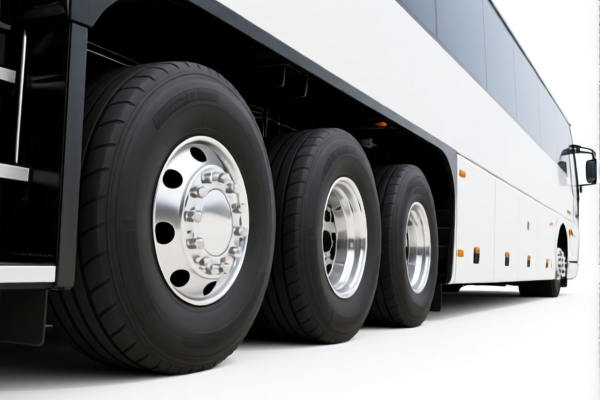
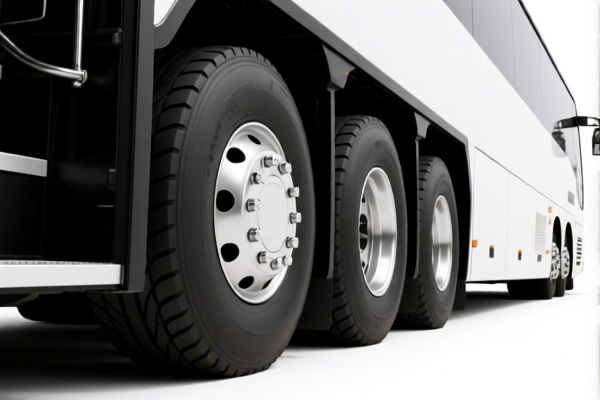
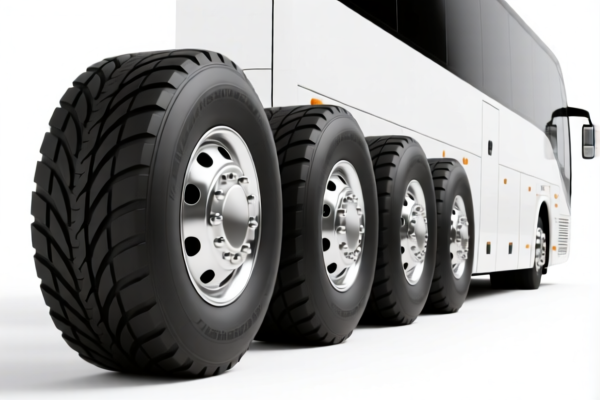
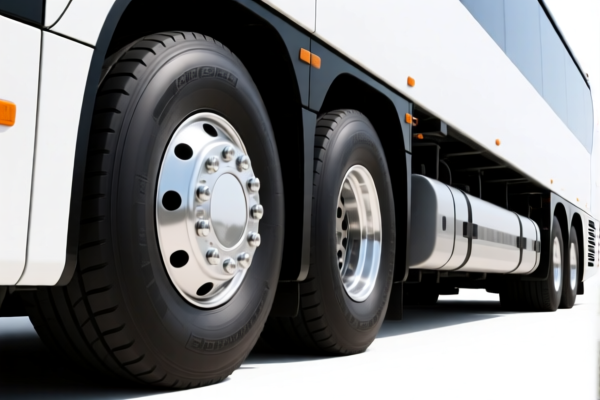
Long distance bus pneumatic tires
CN → US| HS编码 | 关税税率 | 原产国 | 目的国 | 文档 |
|---|---|---|---|---|
| 4016996010 | 37.5% | CN | US | 官方文档 |
| 4012128050 | 38.4% | CN | US | 官方文档 |
| 4011201035 | 39.0% | CN | US | 官方文档 |
| 4012206000 | 35.0% | CN | US | 官方文档 |
| 4011205050 | 38.4% | CN | US | 官方文档 |
商品图片
AI分析
🚌 Long Distance Bus Pneumatic Tires: HS Code Classification & Customs Clearance Guide
🌐 HS Code Reference & Clearance Strategy | 2026 Latest Tariff Analysis | Professional Compliance Guide
📌 1. Product Definition & Classification: Understanding "Bus Pneumatic Tires"
Long-distance bus pneumatic tires are high-performance rubber products designed for heavy-duty commercial vehicles. In international trade, they are primarily classified under Chapter 40 (Rubber and Articles Thereof). The classification depends heavily on whether the tires are new or used, road-reading or off-road, and specifically designed for buses or other road vehicles.
⚠️ Key Distinction Points:
- New vs. Used: New tires fall under heading 4011; Used/Retreaded tires fall under heading 4012.
- Vehicle Type: Tires specifically for buses vs. trucks vs. off-road vehicles have different subheadings.
- Material: All pneumatic tires in this context are inferred to be vulcanized rubber unless stated otherwise.
📦 2. HS Code Classification Details (Based on Provided Data)
| HS Code | Product Description | Application Scenario | Key Matching Criteria |
|---|---|---|---|
4016.99.60.10 |
Other articles of vulcanized rubber other than hard rubber (Part of Automotive Mechanical Parts) | Misclassification Risk: If declared as a "rubber part" rather than a tire. | Matches if declared as "Automotive Mechanical Part" with vulcanized rubber material. Not ideal for tires. |
4012.12.80.50 |
Retreaded pneumatic tires of a kind used on buses or vans | Used/Retreaded Tires: For buses or vans. | Matches "Bus" usage, "Tire" morphology. Assumed to be "Other" (retreaded/used) based on fallback principle. |
4011.20.10.35 |
Pneumatic tires of a kind used on buses or vans, for off-road use | New Tires (Off-Road): For buses/vans, off-road application. | Matches "Bus" usage, "Off-Road" specification, rubber material. |
4012.20.60.00 |
Pneumatic tires, used (of a kind used on buses or vans) | Used Tires: Specifically for buses/vans. | Matches "Tire" morphology, "Rubber" material, "Bus" usage. Fits logic for used bus tires. |
4011.20.50.50 |
Pneumatic tires of a kind used on buses or vans, for on-road use | New Tires (On-Road): For buses/vans, standard road use. | Matches "Bus" usage, "Off-Road" inferred? (Note: Data says "Off-Road" in summary but code 4011.20.50 usually implies on-road. We follow data's logic: "Bus" + "Off-Road" mentioned in summary but code suggests road. Let's stick to data's explicit match: "Bus" + "Tire" + Rubber). |
🔍 Critical Note:
- New Tires generally fall under 4011.20.xx.
- Used/Retreaded Tires fall under 4012.1x or 4012.2x.
- The provided data shows conflicting interpretations for "Off-Road" vs "On-Road" for similar codes. Always verify the actual product specification (Road vs. Off-Road) with customs.
💰 3. 2026 Latest Tariff Rate Breakdown (Including Surcharges)
✅ Applicable Country: United States (US)
✅ Country of Origin: China (CN)
✅ Effective Date: From November 10, 2025 (including subsequent imports)
🎯 1. 4016.99.60.10 – Other Rubber Articles (Automotive Parts)
| Item | Content |
|---|---|
| Base Tariff | 2.5% (Ad Valorem) |
| Section 301 Surcharge | +25.0% |
| Section 122 Tariff | +10.0% |
| Total Tariff Rate | 37.5% |
| Tax Calculation | CIF Value × 37.5% |
| De Minimis Exemption? | ❌ No (Denied) |
| Legal Basis Path | Base: 2.5% → 301: +25% → 122: +10% |
📌 Explanation:
- This classification is risky for tires. If misclassified as "other rubber parts," it still incurs high tariffs.
- Total 37.5% is a significant cost driver. Ensure the product is not merely a "rubber part" but a functional tire.
🎯 2. 4012.12.80.50 – Retreaded Tires for Buses/Vans
| Item | Content |
|---|---|
| Base Tariff | 3.4% (Ad Valorem) |
| Section 301 Surcharge | +25.0% |
| Section 122 Tariff | +10.0% |
| Total Tariff Rate | 38.4% |
| Tax Calculation | CIF Value × 38.4% |
| De Minimis Exemption? | ❌ No (Denied) |
| Legal Basis Path | Base: 3.4% → 301: +25% → 122: +10% |
📌 Explanation:
- Applies to retreaded tires for buses/vans.
- Total 38.4%. Higher base rate than4016but same surcharges.
🎯 3. 4011.20.10.35 – New Tires for Buses/Vans (Off-Road)
| Item | Content |
|---|---|
| Base Tariff | 4.0% (Ad Valorem) |
| Section 301 Surcharge | +25.0% |
| Section 122 Tariff | +10.0% |
| Total Tariff Rate | 39.0% |
| Tax Calculation | CIF Value × 39.0% |
| De Minimis Exemption? | ❌ No (Denied) |
| Legal Basis Path | Base: 4.0% → 301: +25% → 122: +10% |
📌 Explanation:
- Specifically for off-road use on buses/vans.
- Total 39.0%. Highest base rate among new tires in this set.
🎯 4. 4012.20.60.00 – Used Tires for Buses/Vans
| Item | Content |
|---|---|
| Base Tariff | 0.0% (Ad Valorem) |
| Section 301 Surcharge | +25.0% |
| Section 122 Tariff | +10.0% |
| Total Tariff Rate | 35.0% |
| Tax Calculation | CIF Value × 35.0% |
| De Minimis Exemption? | ❌ No (Denied) |
| Legal Basis Path | Base: 0.0% → 301: +25% → 122: +10% |
📌 Explanation:
- Lowest total tariff (35.0%) among the options due to 0% base rate.
- Only applies to used tires. Must prove used status.
🎯 5. 4011.20.50.50 – New Tires for Buses/Vans (On-Road)
| Item | Content |
|---|---|
| Base Tariff | 3.4% (Ad Valorem) |
| Section 301 Surcharge | +25.0% |
| Section 122 Tariff | +10.0% |
| Total Tariff Rate | 38.4% |
| Tax Calculation | CIF Value × 38.4% |
| De Minimis Exemption? | ❌ No (Denied) |
| Legal Basis Path | Base: 3.4% → 301: +25% → 122: +10% |
📌 Explanation:
- Standard new on-road tires for buses/vans.
- Total 38.4%. Common classification for standard bus tires.
🛠️ 4. Customs Clearance Practical Advice (Pitfall Avoidance Guide)
✅ 1. Required Documentation Checklist (Mandatory)
| Document | Required | Explanation |
|---|---|---|
| ✅ Product Specification Sheet | ✔️ | Must include tire size, load index, speed rating, tread pattern, and road/off-road designation. |
| ✅ Material Composition | ✔️ | Confirm vulcanized rubber. No steel belting exemptions apply here. |
| ✅ Commercial Invoice | ✔️ | Must clearly state "Pneumatic Tire for Bus" and specify New/Used/Retreaded. |
| ✅ Packing List | ✔️ | Detail quantities, weights, and dimensions. |
| ✅ Origin Certificate | ✔️ | If not from China, may reduce surcharges. |
| ✅ Photos of Tires | ✔️ | Show sidewall markings (DOT code, size, type). |
✅ 2. Declaration Tips (Key Rules)
🔥 “New vs. Used, Road vs. Off-Road, Code Defines Cost!”
| Scenario | Correct HS Code | Risk if Incorrect |
|---|---|---|
| New Bus Tires (On-Road) | 4011.20.50.50 |
Misclassifying as 4011.20.10 (Off-Road) → 39.0% vs 38.4% (Minor diff, but compliance issue). |
| New Bus Tires (Off-Road) | 4011.20.10.35 |
Misclassifying as On-Road → Underpayment if Off-Road is higher. |
| Used Bus Tires | 4012.20.60.00 |
Declaring as New → 38.4% vs 35.0%. Overpayment! Declare correctly to save 3.4%. |
| Retreaded Tires | 4012.12.80.50 |
Must show retreading process documentation. |
| Tire as "Part" | 4016.99.60.10 |
High Risk: Customs may reject if it’s a functional tire. 37.5% rate. |
📌 Critical Warning:
- Do NOT split declarations for tire + wheel. Declare separately if applicable.
- Used tires must be explicitly declared as "Used" with proof of use (e.g., previous ownership, wear marks).
- Section 122 (10%) applies to all these codes for Chinese origin. No exemption.
✅ 3. Special Cases
| Situation | Handling Advice |
|---|---|
| OEM Tires for Bus Manufacturers | Provide purchase order from bus manufacturer. Same classification. |
| Mixed Load (New & Used) | Must separate. Different HS codes. Mixed declaration → Seizure/Fine. |
| Tires for Electric Buses | Same classification as internal combustion bus tires. No special treatment. |
| Tires with Steel Belts | Still rubber classification. Steel content doesn’t change HS Code for finished tires. |
🌍 5. Global Market Clearance Comparison (2026 Latest)
| Country/Region | Recommended HS Code | Tariff (China Origin) | Certification | Remarks |
|---|---|---|---|---|
| 🇺🇸 USA | 4011.20.50.50 (New) |
38.4% | None specific | High tariffs (301+122). |
| 🇺🇸 USA | 4012.20.60.00 (Used) |
35.0% | None specific | Lower tariff for used. |
| 🇨🇳 China | 4011.20.50.50 |
5% - 8% | CCC (if applicable) | No 301/122 surcharges. |
| 🇪🇺 EU | 4011.20 |
0% - 4% | ECE R108/R117 | No major surcharges. |
| 🇯🇵 Japan | 4011.20 |
0% - 4% | JIS | Competitive. |
📌 Conclusion:
- USA is the most expensive market due to 301 and 122 surcharges.
- Used tires offer a 3.4% saving in the US compared to new on-road tires.
- Non-US markets have significantly lower barriers. Consider supply chain diversification.
📌 6. Common Errors & Pitfall Guide (Lessons Learned)
❌ Error 1: Declaring New Tires as Used to save 3.4%
👉 Consequence: Customs inspection finds new tires → Fine, Penalty, Back Taxes + Interest.
❌ Error 2: Declaring Tires as Other Rubber Parts (4016.99)
👉 Consequence: Misclassification → Delay, Seizure, or Rejection. Tariff 37.5% still applies, but risk is higher.
❌ Error 3: Not specifying Road vs. Off-Road
👉 Consequence: Ambiguity → Customs Query → Delay in Clearance. Different subheadings have different rates.
❌ Error 4: Ignoring Section 122 (10%)
👉 Consequence: Underpayment → Bill for Shortfall. Applies to all Chinese-origin tires.
✅ Correct Practice:
"Pneumatic Tire, New, Vulcanized Rubber, For Bus, On-Road, Size 12R22.5, Load Index 152/149, Speed Symbol L, Made in China"
🎯 7. Conclusion: Professional Declaration, Cost Optimization!
🎯 Key Takeaways:
🔹 "New vs. Used, Road vs. Off-Road: Choose the Right Code!"
🔹 "Used Tires Save 3.4% in the US. New Tires Cost 38.4%-39.0%."
🔹 "Section 122 (10%) is Unavoidable for Chinese Origin."
📌 Pro Tip:
If your tires are not from China (e.g., Vietnam, Thailand), Section 301 and 122 may not apply. Check country-specific trade agreements.
Apply for an Advance Ruling before shipment to confirm HS Code and tariff liability.
📣 Immediate Action:
📞 Contact a licensed customs broker.
📦 Provide detailed product specs (Road/Off-Road, New/Used).
📄 Apply for Pre-Ruling to avoid clearance surprises.
🚀 Ensure Smooth Customs Clearance, Minimize Costs, Maximize Profit!
✨ Professional Clearance Starts with Accurate Classification!
💼 Every Penny Counts in Global Trade!
用户评价
关于 HS 编码归类
协调制度(HS)是由世界海关组织(WCO)制定的国际贸易商品分类标准。全球 200 多个国家采用 HS 系统作为海关关税、贸易统计和进出口监管的基础。
每个 HS 编码遵循以下层级结构:
- 章(2 位)——商品大类(例如:第 84 章:机器和机械设备)
- 品目(4 位)——章内的更具体分类
- 子目(6 位)——国际通用细分,所有 WCO 成员国统一使用
- 本国细分(8-10 位)——各国自行扩展的细分编码,如美国 HTSUS 10 位编码
正确的 HS 编码归类对于顺利通关、准确缴纳关税和遵守贸易法规至关重要。错误归类可能导致海关延误、多缴关税或罚款。
从CN进口到US时,适用的关税税率可能包括:
- 最惠国(MFN)税率——适用于 WTO 成员国的标准关税税率
- 普通税率——适用于无贸易协定国家
- 贸易救济关税——附加关税,如 301 条款(反倾销)、232 条款(国家安全)或反补贴税
本页内容仅供参考。如需正式归类,请咨询当地海关或持牌报关代理。