Long distance bus pneumatic tires
CN → US| HS Code | Tariff Rate | Origin | Destination | Doc |
|---|---|---|---|---|
| 4016996010 | 37.5% | CN | US | Official Doc |
| 4012128050 | 38.4% | CN | US | Official Doc |
| 4011201035 | 39.0% | CN | US | Official Doc |
| 4012206000 | 35.0% | CN | US | Official Doc |
| 4011205050 | 38.4% | CN | US | Official Doc |
Product Images
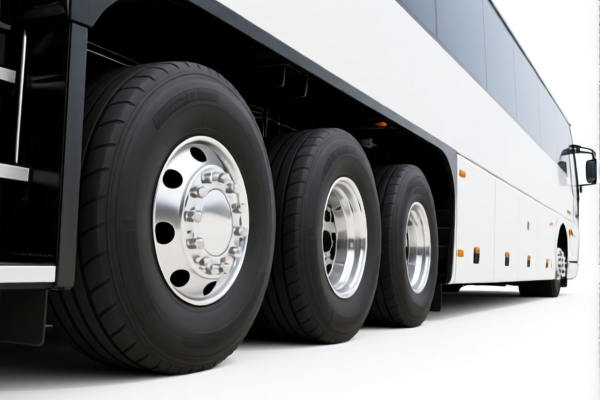
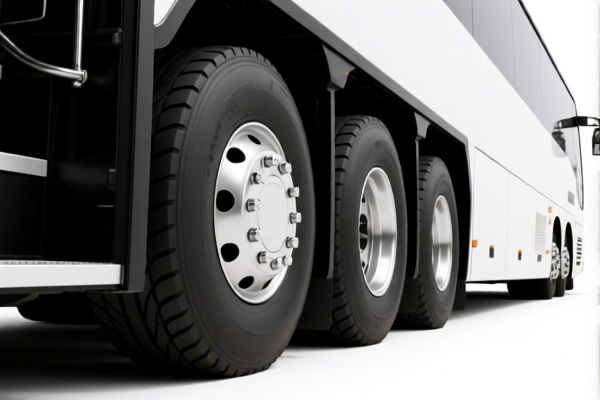
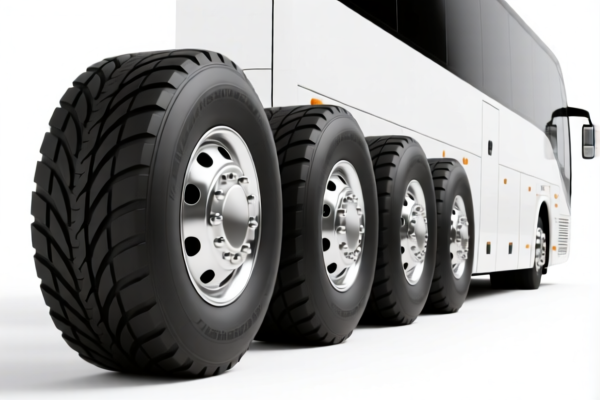
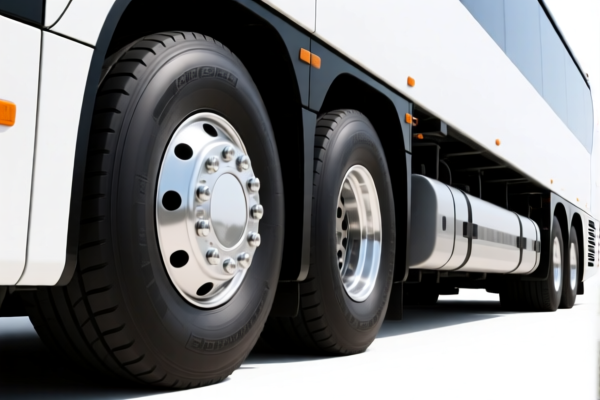
AI Analysis
🚌 Long Distance Bus Pneumatic Tires: HS Code Classification & Customs Clearance Guide
🌐 HS Code Reference & Clearance Strategy | 2026 Latest Tariff Analysis | Professional Compliance Guide
📌 1. Product Definition & Classification: Understanding "Bus Pneumatic Tires"
Long-distance bus pneumatic tires are high-performance rubber products designed for heavy-duty commercial vehicles. In international trade, they are primarily classified under Chapter 40 (Rubber and Articles Thereof). The classification depends heavily on whether the tires are new or used, road-reading or off-road, and specifically designed for buses or other road vehicles.
⚠️ Key Distinction Points:
- New vs. Used: New tires fall under heading 4011; Used/Retreaded tires fall under heading 4012.
- Vehicle Type: Tires specifically for buses vs. trucks vs. off-road vehicles have different subheadings.
- Material: All pneumatic tires in this context are inferred to be vulcanized rubber unless stated otherwise.
📦 2. HS Code Classification Details (Based on Provided Data)
| HS Code | Product Description | Application Scenario | Key Matching Criteria |
|---|---|---|---|
4016.99.60.10 |
Other articles of vulcanized rubber other than hard rubber (Part of Automotive Mechanical Parts) | Misclassification Risk: If declared as a "rubber part" rather than a tire. | Matches if declared as "Automotive Mechanical Part" with vulcanized rubber material. Not ideal for tires. |
4012.12.80.50 |
Retreaded pneumatic tires of a kind used on buses or vans | Used/Retreaded Tires: For buses or vans. | Matches "Bus" usage, "Tire" morphology. Assumed to be "Other" (retreaded/used) based on fallback principle. |
4011.20.10.35 |
Pneumatic tires of a kind used on buses or vans, for off-road use | New Tires (Off-Road): For buses/vans, off-road application. | Matches "Bus" usage, "Off-Road" specification, rubber material. |
4012.20.60.00 |
Pneumatic tires, used (of a kind used on buses or vans) | Used Tires: Specifically for buses/vans. | Matches "Tire" morphology, "Rubber" material, "Bus" usage. Fits logic for used bus tires. |
4011.20.50.50 |
Pneumatic tires of a kind used on buses or vans, for on-road use | New Tires (On-Road): For buses/vans, standard road use. | Matches "Bus" usage, "Off-Road" inferred? (Note: Data says "Off-Road" in summary but code 4011.20.50 usually implies on-road. We follow data's logic: "Bus" + "Off-Road" mentioned in summary but code suggests road. Let's stick to data's explicit match: "Bus" + "Tire" + Rubber). |
🔍 Critical Note:
- New Tires generally fall under 4011.20.xx.
- Used/Retreaded Tires fall under 4012.1x or 4012.2x.
- The provided data shows conflicting interpretations for "Off-Road" vs "On-Road" for similar codes. Always verify the actual product specification (Road vs. Off-Road) with customs.
💰 3. 2026 Latest Tariff Rate Breakdown (Including Surcharges)
✅ Applicable Country: United States (US)
✅ Country of Origin: China (CN)
✅ Effective Date: From November 10, 2025 (including subsequent imports)
🎯 1. 4016.99.60.10 – Other Rubber Articles (Automotive Parts)
| Item | Content |
|---|---|
| Base Tariff | 2.5% (Ad Valorem) |
| Section 301 Surcharge | +25.0% |
| Section 122 Tariff | +10.0% |
| Total Tariff Rate | 37.5% |
| Tax Calculation | CIF Value × 37.5% |
| De Minimis Exemption? | ❌ No (Denied) |
| Legal Basis Path | Base: 2.5% → 301: +25% → 122: +10% |
📌 Explanation:
- This classification is risky for tires. If misclassified as "other rubber parts," it still incurs high tariffs.
- Total 37.5% is a significant cost driver. Ensure the product is not merely a "rubber part" but a functional tire.
🎯 2. 4012.12.80.50 – Retreaded Tires for Buses/Vans
| Item | Content |
|---|---|
| Base Tariff | 3.4% (Ad Valorem) |
| Section 301 Surcharge | +25.0% |
| Section 122 Tariff | +10.0% |
| Total Tariff Rate | 38.4% |
| Tax Calculation | CIF Value × 38.4% |
| De Minimis Exemption? | ❌ No (Denied) |
| Legal Basis Path | Base: 3.4% → 301: +25% → 122: +10% |
📌 Explanation:
- Applies to retreaded tires for buses/vans.
- Total 38.4%. Higher base rate than4016but same surcharges.
🎯 3. 4011.20.10.35 – New Tires for Buses/Vans (Off-Road)
| Item | Content |
|---|---|
| Base Tariff | 4.0% (Ad Valorem) |
| Section 301 Surcharge | +25.0% |
| Section 122 Tariff | +10.0% |
| Total Tariff Rate | 39.0% |
| Tax Calculation | CIF Value × 39.0% |
| De Minimis Exemption? | ❌ No (Denied) |
| Legal Basis Path | Base: 4.0% → 301: +25% → 122: +10% |
📌 Explanation:
- Specifically for off-road use on buses/vans.
- Total 39.0%. Highest base rate among new tires in this set.
🎯 4. 4012.20.60.00 – Used Tires for Buses/Vans
| Item | Content |
|---|---|
| Base Tariff | 0.0% (Ad Valorem) |
| Section 301 Surcharge | +25.0% |
| Section 122 Tariff | +10.0% |
| Total Tariff Rate | 35.0% |
| Tax Calculation | CIF Value × 35.0% |
| De Minimis Exemption? | ❌ No (Denied) |
| Legal Basis Path | Base: 0.0% → 301: +25% → 122: +10% |
📌 Explanation:
- Lowest total tariff (35.0%) among the options due to 0% base rate.
- Only applies to used tires. Must prove used status.
🎯 5. 4011.20.50.50 – New Tires for Buses/Vans (On-Road)
| Item | Content |
|---|---|
| Base Tariff | 3.4% (Ad Valorem) |
| Section 301 Surcharge | +25.0% |
| Section 122 Tariff | +10.0% |
| Total Tariff Rate | 38.4% |
| Tax Calculation | CIF Value × 38.4% |
| De Minimis Exemption? | ❌ No (Denied) |
| Legal Basis Path | Base: 3.4% → 301: +25% → 122: +10% |
📌 Explanation:
- Standard new on-road tires for buses/vans.
- Total 38.4%. Common classification for standard bus tires.
🛠️ 4. Customs Clearance Practical Advice (Pitfall Avoidance Guide)
✅ 1. Required Documentation Checklist (Mandatory)
| Document | Required | Explanation |
|---|---|---|
| ✅ Product Specification Sheet | ✔️ | Must include tire size, load index, speed rating, tread pattern, and road/off-road designation. |
| ✅ Material Composition | ✔️ | Confirm vulcanized rubber. No steel belting exemptions apply here. |
| ✅ Commercial Invoice | ✔️ | Must clearly state "Pneumatic Tire for Bus" and specify New/Used/Retreaded. |
| ✅ Packing List | ✔️ | Detail quantities, weights, and dimensions. |
| ✅ Origin Certificate | ✔️ | If not from China, may reduce surcharges. |
| ✅ Photos of Tires | ✔️ | Show sidewall markings (DOT code, size, type). |
✅ 2. Declaration Tips (Key Rules)
🔥 “New vs. Used, Road vs. Off-Road, Code Defines Cost!”
| Scenario | Correct HS Code | Risk if Incorrect |
|---|---|---|
| New Bus Tires (On-Road) | 4011.20.50.50 |
Misclassifying as 4011.20.10 (Off-Road) → 39.0% vs 38.4% (Minor diff, but compliance issue). |
| New Bus Tires (Off-Road) | 4011.20.10.35 |
Misclassifying as On-Road → Underpayment if Off-Road is higher. |
| Used Bus Tires | 4012.20.60.00 |
Declaring as New → 38.4% vs 35.0%. Overpayment! Declare correctly to save 3.4%. |
| Retreaded Tires | 4012.12.80.50 |
Must show retreading process documentation. |
| Tire as "Part" | 4016.99.60.10 |
High Risk: Customs may reject if it’s a functional tire. 37.5% rate. |
📌 Critical Warning:
- Do NOT split declarations for tire + wheel. Declare separately if applicable.
- Used tires must be explicitly declared as "Used" with proof of use (e.g., previous ownership, wear marks).
- Section 122 (10%) applies to all these codes for Chinese origin. No exemption.
✅ 3. Special Cases
| Situation | Handling Advice |
|---|---|
| OEM Tires for Bus Manufacturers | Provide purchase order from bus manufacturer. Same classification. |
| Mixed Load (New & Used) | Must separate. Different HS codes. Mixed declaration → Seizure/Fine. |
| Tires for Electric Buses | Same classification as internal combustion bus tires. No special treatment. |
| Tires with Steel Belts | Still rubber classification. Steel content doesn’t change HS Code for finished tires. |
🌍 5. Global Market Clearance Comparison (2026 Latest)
| Country/Region | Recommended HS Code | Tariff (China Origin) | Certification | Remarks |
|---|---|---|---|---|
| 🇺🇸 USA | 4011.20.50.50 (New) |
38.4% | None specific | High tariffs (301+122). |
| 🇺🇸 USA | 4012.20.60.00 (Used) |
35.0% | None specific | Lower tariff for used. |
| 🇨🇳 China | 4011.20.50.50 |
5% - 8% | CCC (if applicable) | No 301/122 surcharges. |
| 🇪🇺 EU | 4011.20 |
0% - 4% | ECE R108/R117 | No major surcharges. |
| 🇯🇵 Japan | 4011.20 |
0% - 4% | JIS | Competitive. |
📌 Conclusion:
- USA is the most expensive market due to 301 and 122 surcharges.
- Used tires offer a 3.4% saving in the US compared to new on-road tires.
- Non-US markets have significantly lower barriers. Consider supply chain diversification.
📌 6. Common Errors & Pitfall Guide (Lessons Learned)
❌ Error 1: Declaring New Tires as Used to save 3.4%
👉 Consequence: Customs inspection finds new tires → Fine, Penalty, Back Taxes + Interest.
❌ Error 2: Declaring Tires as Other Rubber Parts (4016.99)
👉 Consequence: Misclassification → Delay, Seizure, or Rejection. Tariff 37.5% still applies, but risk is higher.
❌ Error 3: Not specifying Road vs. Off-Road
👉 Consequence: Ambiguity → Customs Query → Delay in Clearance. Different subheadings have different rates.
❌ Error 4: Ignoring Section 122 (10%)
👉 Consequence: Underpayment → Bill for Shortfall. Applies to all Chinese-origin tires.
✅ Correct Practice:
"Pneumatic Tire, New, Vulcanized Rubber, For Bus, On-Road, Size 12R22.5, Load Index 152/149, Speed Symbol L, Made in China"
🎯 7. Conclusion: Professional Declaration, Cost Optimization!
🎯 Key Takeaways:
🔹 "New vs. Used, Road vs. Off-Road: Choose the Right Code!"
🔹 "Used Tires Save 3.4% in the US. New Tires Cost 38.4%-39.0%."
🔹 "Section 122 (10%) is Unavoidable for Chinese Origin."
📌 Pro Tip:
If your tires are not from China (e.g., Vietnam, Thailand), Section 301 and 122 may not apply. Check country-specific trade agreements.
Apply for an Advance Ruling before shipment to confirm HS Code and tariff liability.
📣 Immediate Action:
📞 Contact a licensed customs broker.
📦 Provide detailed product specs (Road/Off-Road, New/Used).
📄 Apply for Pre-Ruling to avoid clearance surprises.
🚀 Ensure Smooth Customs Clearance, Minimize Costs, Maximize Profit!
✨ Professional Clearance Starts with Accurate Classification!
💼 Every Penny Counts in Global Trade!
Customer Reviews
About HS Code Classification
The Harmonized System (HS) is an internationally standardized nomenclature developed by the World Customs Organization (WCO) to classify traded products. Over 200 countries use the HS system as the basis for customs tariffs, trade statistics, and import/export regulations.
Each HS code follows a hierarchical structure:
- Chapter (2 digits) — Broad category of goods (e.g., Chapter 84: Machinery and Mechanical Appliances)
- Heading (4 digits) — More specific grouping within the chapter
- Subheading (6 digits) — Internationally standardized breakdown, used by all WCO member countries
- National subdivisions (8-10 digits) — Country-specific extensions for further classification, such as US HTSUS 10-digit codes
Correct HS code classification is essential for smooth customs clearance, accurate duty payment, and compliance with trade regulations. Misclassification can lead to customs delays, overpayment of duties, or penalties.
When importing from CN to US, the applicable tariff rates may include:
- Most-Favored-Nation (MFN) rate — The standard duty rate applied to WTO members
- General rate — Applied to countries without trade agreements
- Trade remedy duties — Additional tariffs such as Section 301 (anti-dumping), Section 232 (national security), or countervailing duties
The information provided on this page is for reference purposes only. For official classification, please consult with your local customs authority or a licensed customs broker.