Low Density Polyethylene Elastomer
CN → US| HS编码 | 关税税率 | 原产国 | 目的国 | 文档 |
|---|---|---|---|---|
| 3901909000 | 41.5% | CN | US | 官方文档 |
| 3901901000 | 35.0% | CN | US | 官方文档 |
| 4002800000 | 35.0% | CN | US | 官方文档 |
| 3913901000 | 35.0% | CN | US | 官方文档 |
| 3824995500 | 38.7% | CN | US | 官方文档 |
商品图片
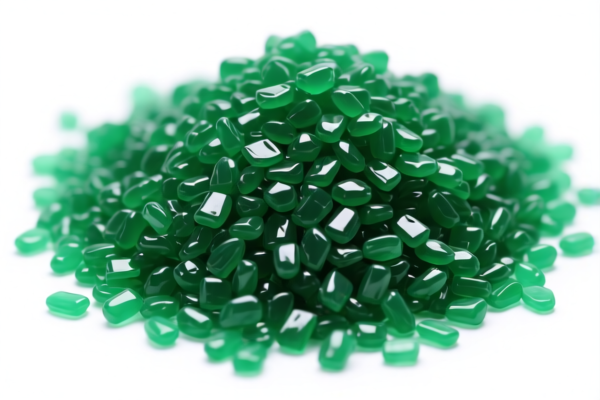
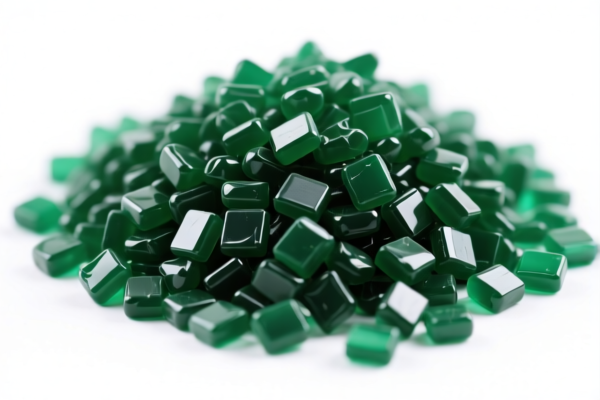
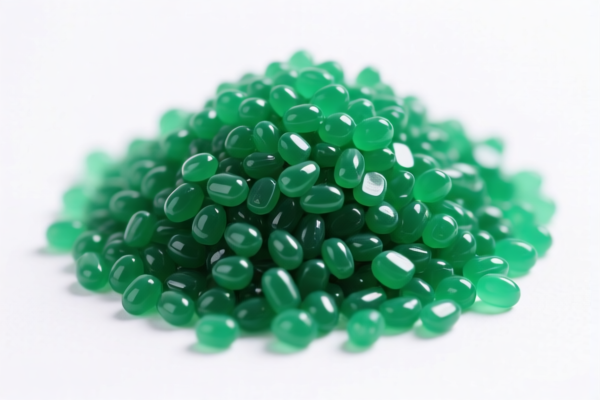
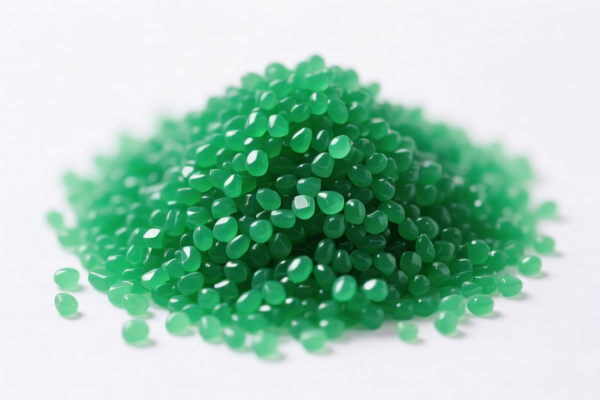
AI分析
🧪 Low Density Polyethylene Elastomer (LDPE Elastomer)
🌐 HS Code Reference & Customs Clearance Guide | 2026 Latest Tariff Analysis | Professional Clearance Strategy
📌 I. Product Definition & Classification: What Exactly is "LDPE Elastomer"?
Low Density Polyethylene Elastomer (often referred to as POE - Polyolefin Elastomer) is a versatile thermoplastic elastomer. In international trade, classification depends heavily on its chemical structure, physical form (primary vs. compound), and intended use.
Key Distinction: * Pure Polymer (Primary Form): If it is strictly a polymer of ethylene with elastomeric properties, it generally falls under Chapter 39 (Plastics). * Synthetic Rubber/Compound: If it is compounded, vulcanized, or specifically categorized under synthetic rubber headings, it may fall under Chapter 40. * Resin/Chemical Product: Low molecular weight variants might be classified as modified natural polymers or other chemical products.
⚠️ Critical Classification Point:
- If it is a pure ethylene polymer in primary form → Chapter 39 (Plastics).
- If it is explicitly defined as synthetic rubber → Chapter 40.
- If it is a low molecular weight petroleum resin → Chapter 38 or 3913.
📦 II. HS Code Classification Details (Based on Provided Data)
| HS Code | Product Description | Application/Logic | Key Characteristic |
|---|---|---|---|
3901.90.90.00 |
Ethylene Polymer (Other) | Primary form of ethylene polymer, not elsewhere specified. | Pure polymer form; Base Tariff 6.5% |
3901.90.10.00 |
Ethylene Polymer (Specific) | Explicitly includes material, form, and use; aligns with ethylene polymer classification. | Consistent with elastomer definition; Base Tariff 0% |
4002.80.00.00 |
Synthetic Rubber | Belongs to synthetic rubber/plastic category; matches heading 4002 material description. | Classified as rubber; Base Tariff 0% |
3913.90.10.00 |
Natural Polymer Modified | Low molecular weight petroleum resin elastomer; falls under modified natural polymers. | Primary form; Base Tariff 0% |
3824.99.55.00 |
Other Chemical Products | Chemical industry product; fits the definition of "other chemical products." | Final chemical product; Base Tariff 3.7% |
🔍 Important Note:
- Classification varies significantly based on whether the product is considered a polymer (Ch. 39) or a rubber/compound (Ch. 40/38).
- Base tariffs range from 0% to 6.5%, but additional duties (USITC + IEEPA) drastically increase the total tax burden.
💰 III. 2026 Latest Tariff Rate Breakdown (Including Add-on Taxes & Policies)
✅ Applicable Country: United States (US)
✅ Country of Origin: China (CN)
✅ Effective Date: From November 10, 2025 (including subsequent imports)
🎯 1. 3901.90.90.00 —— Ethylene Polymer (Other)
| Item | Content |
|---|---|
| Base Tariff | 6.5% (ad valorem) |
| USITC Add-on Tax | +25.0% (Under USITC Footnote for Section 301) |
| IEEPA Add-on Tax | +10.0% (Section 122/Tariff on Chinese Products) |
| Total Tax Rate | 41.5% |
| Tax Calculation | CIF Value × 41.5% |
| De Minimis Exemption | ❌ Not Applicable (denied) |
| Legal Basis Path | Base Tariff: 6.5% → USITC: 25.0% → IEEPA: 10.0% |
📌 Explanation:
- This code attracts the highest base tariff (6.5%) among the listed options.
- Combined with the 25% Section 301 tariff and 10% IEEPA tariff, the total burden is 41.5%.
- Warning: If your product can be classified under3901.90.10.00or4002.80.00.00, you can save 6.5% on the base rate alone.
🎯 2. 3901.90.10.00 —— Ethylene Polymer (Specific)
| Item | Content |
|---|---|
| Base Tariff | 0.0% |
| USITC Add-on Tax | +25.0% |
| IEEPA Add-on Tax | +10.0% |
| Total Tax Rate | 35.0% |
| Tax Calculation | CIF Value × 35.0% |
| De Minimis Exemption | ❌ Not Applicable |
| Legal Basis Path | Base Tariff: 0.0% → USITC: 25.0% → IEEPA: 10.0% |
📌 Optimization Tip:
- If your LDPE Elastomer explicitly meets the criteria for this specific subheading (material, form, use), the base tariff is 0%.
- Savings: Compared to3901.90.90.00, you save 6.5% on the base rate, resulting in a 35.0% total rate vs. 41.5%.
🎯 3. 4002.80.00.00 —— Synthetic Rubber
| Item | Content |
|---|---|
| Base Tariff | 0.0% |
| USITC Add-on Tax | +25.0% |
| IEEPA Add-on Tax | +10.0% |
| Total Tax Rate | 35.0% |
| Tax Calculation | CIF Value × 35.0% |
| De Minimis Exemption | ❌ Not Applicable |
| Legal Basis Path | Base Tariff: 0.0% → USITC: 25.0% → IEEPA: 10.0% |
📌 Strategy:
- Classifying as Synthetic Rubber under Chapter 40 also yields a 0% base tariff.
- This is a viable alternative if the product’s properties (vulcanizability, elasticity) align more closely with rubber definitions than pure plastics.
🎯 4. 3913.90.10.00 —— Modified Natural Polymers (Low MW Resin)
| Item | Content |
|---|---|
| Base Tariff | 0.0% |
| USITC Add-on Tax | +25.0% |
| IEEPA Add-on Tax | +10.0% |
| Total Tax Rate | 35.0% |
| Tax Calculation | CIF Value × 35.0% |
| De Minimis Exemption | ❌ Not Applicable |
📌 Niche Application:
- Only applies if the elastomer is specifically a low molecular weight petroleum resin in primary form.
- Misclassification here could lead to audits if the product is not strictly a "resin" but a full polymer.
🎯 5. 3824.99.55.00 —— Other Chemical Products
| Item | Content |
|---|---|
| Base Tariff | 3.7% |
| USITC Add-on Tax | +25.0% |
| IEEPA Add-on Tax | +10.0% |
| Total Tax Rate | 38.7% |
| Tax Calculation | CIF Value × 38.7% |
| De Minimis Exemption | ❌ Not Applicable |
⚠️ Risk Warning:
- This is a "catch-all" category for chemical products.
- While the base tariff is low (3.7%), the total rate (38.7%) is higher than the 35.0% options.
- Use this only if the product does not fit the specific definitions in Chapters 39 or 40.
🛠️ IV. Customs Clearance Practical Advice (Pitfall Avoidance Guide)
✅ 1. Required Documentation Checklist (No Exceptions)
| Document | Must Provide | Notes |
|---|---|---|
| ✅ Technical Data Sheet | ✔️ | Detail molecular weight, ethylene content, and elastomeric properties. |
| ✅ Formula/Composition | ✔️ | Prove whether it is a pure polymer or a compound. |
| ✅ Product Photos | ✔️ | Show form (pellets, powder, liquid) and packaging. |
| ✅ Third-Party Test Report | ✔️ | ASTM/ISO tests confirming elasticity, melt flow index (MFI). |
| ✅ Commercial Invoice | ✔️ | Must clearly state "Low Density Polyethylene Elastomer" or specific HS description. |
| ✅ Certificate of Origin (CO) | ✔️ | Crucial for proving Chinese origin to apply correct add-on taxes. |
✅ 2. Declaration Strategy (Key Mnemonics)
🔥 "Pure Polymer to Ch39, Rubber if Ch40, Watch the Base Rate!"
| Scenario | Correct Declaration | Wrong Approach |
|---|---|---|
| Pure Ethylene Polymer | 3901.90.10.00 or 3901.90.90.00 |
Misclassifying as 3824 → Higher Base Rate |
| Synthetic Rubber Form | 4002.80.00.00 |
Calling it "Plastic" when it's rubber |
| Low MW Resin | 3913.90.10.00 |
Overcomplicating with 3824 |
| Base Tariff Difference | 0% vs 6.5% | Ignoring this leads to 6.5% extra cost |
✅ 3. Special Handling Tips
| Situation | Handling Advice |
|---|---|
| OEM Custom Elastomers | Provide client specs + chemical structure diagram to support 3901.90.10.00. |
| Mixed Packaging | If elastomer is packed with other chemicals, declare separately to avoid misclassification. |
| Origin Fraud | Do not misdeclare origin to avoid IEEPA 10%. Customs cross-checks CO and production data. |
| Pre-Ruling | Highly Recommended: Apply for an Advance Ruling with US CBP to lock in 3901.90.10.00 or 4002.80.00.00 (35% total) instead of 3901.90.90.00 (41.5%). |
🌍 V. Global Market Comparison (2026 Latest)
| Country/Region | Recommended HS Code | Base Tariff | Add-on Taxes (China) | Total Est. Rate | Notes |
|---|---|---|---|---|---|
| 🇺🇸 USA | 3901.90.10.00 / 4002.80.00.00 |
0% | +25% (USITC) + 10% (IEEPA) | 35.0% | Best option for cost efficiency |
| 🇨🇳 China | 3901.10.00.00 / 4002.80.00.00 |
0-6.5% | None | 0-6.5% | Domestic trade benefits |
| 🇪🇺 EU | 3901.90.00 |
0% | None (if eligible) | 0% | Check EUR.1 Certificate |
| 🇻🇳 Vietnam | 3901.90 |
Varies | N/A | Varies | Potential for supply chain diversification |
📌 Conclusion:
- USA is the most challenging market due to Section 301 (25%) and IEEPA (10%) tariffs.
- Minimizing Base Tariff is key. Choose3901.90.10.00or4002.80.00.00(0% base) over3901.90.90.00(6.5% base).
📌 VI. Common Errors & Pitfalls (Blood & Tears Lessons)
❌ Error 1: Using 3824.99.55.00 without justification
👉 Consequence: Base tariff 3.7% + 35% add-ons = 38.7%. You pay 3.7% more unnecessarily than if classified under Ch39/Ch40 with 0% base.
❌ Error 2: Misclassifying pure polymer as 3901.90.90.00 when 3901.90.10.00 applies
👉 Consequence: Extra 6.5% base tariff = Total 41.5% vs 35.0%. Over 6 years, this is a massive profit drain.
❌ Error 3: Ignoring IEEPA 10% in cost calculations
👉 Consequence: Underquoting landed cost, leading to cash flow issues upon clearance.
✅ Correct Approach:
"Low Density Polyethylene Elastomer, Polymer Form, for Blending/Thermoplastic Use, Model XYZ, SDS Attached"
🎯 VII. Conclusion: Precision Classification Saves Money!
🎯 Remember the Mnemonic:
🔹 "Base Zero is Key, 35% Total is Sweet, 41.5% is Pain, Choose Wisely, Gain Gain!"
🔹 "HS Code Determines Life, 6.5% Difference Matters, Wrong Declaration Leads to Losses!"
📌 Pro Tip:
If your product can be technically argued as Synthetic Rubber (4002.80.00.00) or Specific Ethylene Polymer (3901.90.10.00), INSIST on this classification. The 6.5% base tariff savings is significant.
📣 Immediate Action:
📞 Contact your customs broker + Provide Technical Specs + Apply for Advance Ruling
🚀 Let your LDPE Elastomer clear smoothly, efficiently, and cost-effectively!
✨ Professional Clearance Starts with Accurate Classification!
💼 Every Cent of Cost Should Be Precisely Calculated!
用户评价
关于 HS 编码归类
协调制度(HS)是由世界海关组织(WCO)制定的国际贸易商品分类标准。全球 200 多个国家采用 HS 系统作为海关关税、贸易统计和进出口监管的基础。
每个 HS 编码遵循以下层级结构:
- 章(2 位)——商品大类(例如:第 84 章:机器和机械设备)
- 品目(4 位)——章内的更具体分类
- 子目(6 位)——国际通用细分,所有 WCO 成员国统一使用
- 本国细分(8-10 位)——各国自行扩展的细分编码,如美国 HTSUS 10 位编码
正确的 HS 编码归类对于顺利通关、准确缴纳关税和遵守贸易法规至关重要。错误归类可能导致海关延误、多缴关税或罚款。
从CN进口到US时,适用的关税税率可能包括:
- 最惠国(MFN)税率——适用于 WTO 成员国的标准关税税率
- 普通税率——适用于无贸易协定国家
- 贸易救济关税——附加关税,如 301 条款(反倾销)、232 条款(国家安全)或反补贴税
本页内容仅供参考。如需正式归类,请咨询当地海关或持牌报关代理。