Low Density Polyethylene Elastomer
CN → US| HS Code | Tariff Rate | Origin | Destination | Doc |
|---|---|---|---|---|
| 3901909000 | 41.5% | CN | US | Official Doc |
| 3901901000 | 35.0% | CN | US | Official Doc |
| 4002800000 | 35.0% | CN | US | Official Doc |
| 3913901000 | 35.0% | CN | US | Official Doc |
| 3824995500 | 38.7% | CN | US | Official Doc |
Product Images
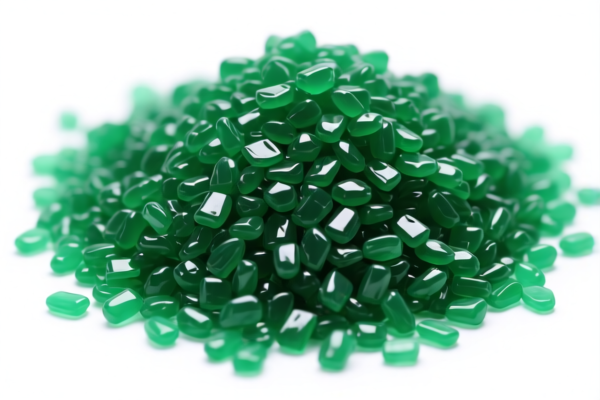
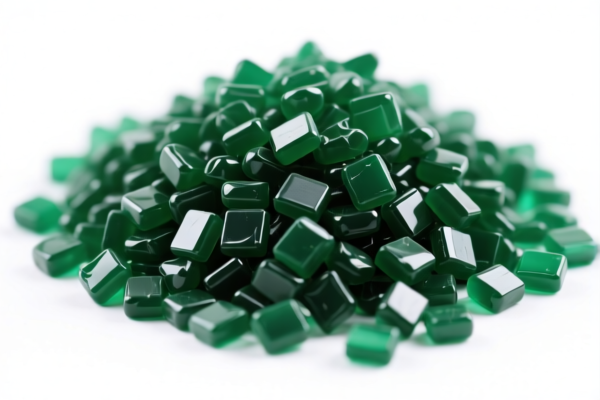
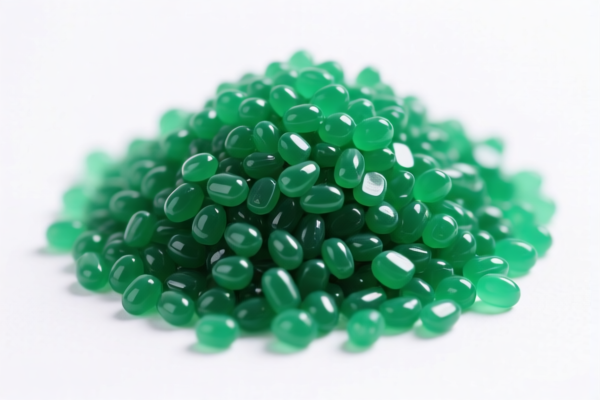

AI Analysis
🧪 Low Density Polyethylene Elastomer (LDPE Elastomer)
🌐 HS Code Reference & Customs Clearance Guide | 2026 Latest Tariff Analysis | Professional Clearance Strategy
📌 I. Product Definition & Classification: What Exactly is "LDPE Elastomer"?
Low Density Polyethylene Elastomer (often referred to as POE - Polyolefin Elastomer) is a versatile thermoplastic elastomer. In international trade, classification depends heavily on its chemical structure, physical form (primary vs. compound), and intended use.
Key Distinction: * Pure Polymer (Primary Form): If it is strictly a polymer of ethylene with elastomeric properties, it generally falls under Chapter 39 (Plastics). * Synthetic Rubber/Compound: If it is compounded, vulcanized, or specifically categorized under synthetic rubber headings, it may fall under Chapter 40. * Resin/Chemical Product: Low molecular weight variants might be classified as modified natural polymers or other chemical products.
⚠️ Critical Classification Point:
- If it is a pure ethylene polymer in primary form → Chapter 39 (Plastics).
- If it is explicitly defined as synthetic rubber → Chapter 40.
- If it is a low molecular weight petroleum resin → Chapter 38 or 3913.
📦 II. HS Code Classification Details (Based on Provided Data)
| HS Code | Product Description | Application/Logic | Key Characteristic |
|---|---|---|---|
3901.90.90.00 |
Ethylene Polymer (Other) | Primary form of ethylene polymer, not elsewhere specified. | Pure polymer form; Base Tariff 6.5% |
3901.90.10.00 |
Ethylene Polymer (Specific) | Explicitly includes material, form, and use; aligns with ethylene polymer classification. | Consistent with elastomer definition; Base Tariff 0% |
4002.80.00.00 |
Synthetic Rubber | Belongs to synthetic rubber/plastic category; matches heading 4002 material description. | Classified as rubber; Base Tariff 0% |
3913.90.10.00 |
Natural Polymer Modified | Low molecular weight petroleum resin elastomer; falls under modified natural polymers. | Primary form; Base Tariff 0% |
3824.99.55.00 |
Other Chemical Products | Chemical industry product; fits the definition of "other chemical products." | Final chemical product; Base Tariff 3.7% |
🔍 Important Note:
- Classification varies significantly based on whether the product is considered a polymer (Ch. 39) or a rubber/compound (Ch. 40/38).
- Base tariffs range from 0% to 6.5%, but additional duties (USITC + IEEPA) drastically increase the total tax burden.
💰 III. 2026 Latest Tariff Rate Breakdown (Including Add-on Taxes & Policies)
✅ Applicable Country: United States (US)
✅ Country of Origin: China (CN)
✅ Effective Date: From November 10, 2025 (including subsequent imports)
🎯 1. 3901.90.90.00 —— Ethylene Polymer (Other)
| Item | Content |
|---|---|
| Base Tariff | 6.5% (ad valorem) |
| USITC Add-on Tax | +25.0% (Under USITC Footnote for Section 301) |
| IEEPA Add-on Tax | +10.0% (Section 122/Tariff on Chinese Products) |
| Total Tax Rate | 41.5% |
| Tax Calculation | CIF Value × 41.5% |
| De Minimis Exemption | ❌ Not Applicable (denied) |
| Legal Basis Path | Base Tariff: 6.5% → USITC: 25.0% → IEEPA: 10.0% |
📌 Explanation:
- This code attracts the highest base tariff (6.5%) among the listed options.
- Combined with the 25% Section 301 tariff and 10% IEEPA tariff, the total burden is 41.5%.
- Warning: If your product can be classified under3901.90.10.00or4002.80.00.00, you can save 6.5% on the base rate alone.
🎯 2. 3901.90.10.00 —— Ethylene Polymer (Specific)
| Item | Content |
|---|---|
| Base Tariff | 0.0% |
| USITC Add-on Tax | +25.0% |
| IEEPA Add-on Tax | +10.0% |
| Total Tax Rate | 35.0% |
| Tax Calculation | CIF Value × 35.0% |
| De Minimis Exemption | ❌ Not Applicable |
| Legal Basis Path | Base Tariff: 0.0% → USITC: 25.0% → IEEPA: 10.0% |
📌 Optimization Tip:
- If your LDPE Elastomer explicitly meets the criteria for this specific subheading (material, form, use), the base tariff is 0%.
- Savings: Compared to3901.90.90.00, you save 6.5% on the base rate, resulting in a 35.0% total rate vs. 41.5%.
🎯 3. 4002.80.00.00 —— Synthetic Rubber
| Item | Content |
|---|---|
| Base Tariff | 0.0% |
| USITC Add-on Tax | +25.0% |
| IEEPA Add-on Tax | +10.0% |
| Total Tax Rate | 35.0% |
| Tax Calculation | CIF Value × 35.0% |
| De Minimis Exemption | ❌ Not Applicable |
| Legal Basis Path | Base Tariff: 0.0% → USITC: 25.0% → IEEPA: 10.0% |
📌 Strategy:
- Classifying as Synthetic Rubber under Chapter 40 also yields a 0% base tariff.
- This is a viable alternative if the product’s properties (vulcanizability, elasticity) align more closely with rubber definitions than pure plastics.
🎯 4. 3913.90.10.00 —— Modified Natural Polymers (Low MW Resin)
| Item | Content |
|---|---|
| Base Tariff | 0.0% |
| USITC Add-on Tax | +25.0% |
| IEEPA Add-on Tax | +10.0% |
| Total Tax Rate | 35.0% |
| Tax Calculation | CIF Value × 35.0% |
| De Minimis Exemption | ❌ Not Applicable |
📌 Niche Application:
- Only applies if the elastomer is specifically a low molecular weight petroleum resin in primary form.
- Misclassification here could lead to audits if the product is not strictly a "resin" but a full polymer.
🎯 5. 3824.99.55.00 —— Other Chemical Products
| Item | Content |
|---|---|
| Base Tariff | 3.7% |
| USITC Add-on Tax | +25.0% |
| IEEPA Add-on Tax | +10.0% |
| Total Tax Rate | 38.7% |
| Tax Calculation | CIF Value × 38.7% |
| De Minimis Exemption | ❌ Not Applicable |
⚠️ Risk Warning:
- This is a "catch-all" category for chemical products.
- While the base tariff is low (3.7%), the total rate (38.7%) is higher than the 35.0% options.
- Use this only if the product does not fit the specific definitions in Chapters 39 or 40.
🛠️ IV. Customs Clearance Practical Advice (Pitfall Avoidance Guide)
✅ 1. Required Documentation Checklist (No Exceptions)
| Document | Must Provide | Notes |
|---|---|---|
| ✅ Technical Data Sheet | ✔️ | Detail molecular weight, ethylene content, and elastomeric properties. |
| ✅ Formula/Composition | ✔️ | Prove whether it is a pure polymer or a compound. |
| ✅ Product Photos | ✔️ | Show form (pellets, powder, liquid) and packaging. |
| ✅ Third-Party Test Report | ✔️ | ASTM/ISO tests confirming elasticity, melt flow index (MFI). |
| ✅ Commercial Invoice | ✔️ | Must clearly state "Low Density Polyethylene Elastomer" or specific HS description. |
| ✅ Certificate of Origin (CO) | ✔️ | Crucial for proving Chinese origin to apply correct add-on taxes. |
✅ 2. Declaration Strategy (Key Mnemonics)
🔥 "Pure Polymer to Ch39, Rubber if Ch40, Watch the Base Rate!"
| Scenario | Correct Declaration | Wrong Approach |
|---|---|---|
| Pure Ethylene Polymer | 3901.90.10.00 or 3901.90.90.00 |
Misclassifying as 3824 → Higher Base Rate |
| Synthetic Rubber Form | 4002.80.00.00 |
Calling it "Plastic" when it's rubber |
| Low MW Resin | 3913.90.10.00 |
Overcomplicating with 3824 |
| Base Tariff Difference | 0% vs 6.5% | Ignoring this leads to 6.5% extra cost |
✅ 3. Special Handling Tips
| Situation | Handling Advice |
|---|---|
| OEM Custom Elastomers | Provide client specs + chemical structure diagram to support 3901.90.10.00. |
| Mixed Packaging | If elastomer is packed with other chemicals, declare separately to avoid misclassification. |
| Origin Fraud | Do not misdeclare origin to avoid IEEPA 10%. Customs cross-checks CO and production data. |
| Pre-Ruling | Highly Recommended: Apply for an Advance Ruling with US CBP to lock in 3901.90.10.00 or 4002.80.00.00 (35% total) instead of 3901.90.90.00 (41.5%). |
🌍 V. Global Market Comparison (2026 Latest)
| Country/Region | Recommended HS Code | Base Tariff | Add-on Taxes (China) | Total Est. Rate | Notes |
|---|---|---|---|---|---|
| 🇺🇸 USA | 3901.90.10.00 / 4002.80.00.00 |
0% | +25% (USITC) + 10% (IEEPA) | 35.0% | Best option for cost efficiency |
| 🇨🇳 China | 3901.10.00.00 / 4002.80.00.00 |
0-6.5% | None | 0-6.5% | Domestic trade benefits |
| 🇪🇺 EU | 3901.90.00 |
0% | None (if eligible) | 0% | Check EUR.1 Certificate |
| 🇻🇳 Vietnam | 3901.90 |
Varies | N/A | Varies | Potential for supply chain diversification |
📌 Conclusion:
- USA is the most challenging market due to Section 301 (25%) and IEEPA (10%) tariffs.
- Minimizing Base Tariff is key. Choose3901.90.10.00or4002.80.00.00(0% base) over3901.90.90.00(6.5% base).
📌 VI. Common Errors & Pitfalls (Blood & Tears Lessons)
❌ Error 1: Using 3824.99.55.00 without justification
👉 Consequence: Base tariff 3.7% + 35% add-ons = 38.7%. You pay 3.7% more unnecessarily than if classified under Ch39/Ch40 with 0% base.
❌ Error 2: Misclassifying pure polymer as 3901.90.90.00 when 3901.90.10.00 applies
👉 Consequence: Extra 6.5% base tariff = Total 41.5% vs 35.0%. Over 6 years, this is a massive profit drain.
❌ Error 3: Ignoring IEEPA 10% in cost calculations
👉 Consequence: Underquoting landed cost, leading to cash flow issues upon clearance.
✅ Correct Approach:
"Low Density Polyethylene Elastomer, Polymer Form, for Blending/Thermoplastic Use, Model XYZ, SDS Attached"
🎯 VII. Conclusion: Precision Classification Saves Money!
🎯 Remember the Mnemonic:
🔹 "Base Zero is Key, 35% Total is Sweet, 41.5% is Pain, Choose Wisely, Gain Gain!"
🔹 "HS Code Determines Life, 6.5% Difference Matters, Wrong Declaration Leads to Losses!"
📌 Pro Tip:
If your product can be technically argued as Synthetic Rubber (4002.80.00.00) or Specific Ethylene Polymer (3901.90.10.00), INSIST on this classification. The 6.5% base tariff savings is significant.
📣 Immediate Action:
📞 Contact your customs broker + Provide Technical Specs + Apply for Advance Ruling
🚀 Let your LDPE Elastomer clear smoothly, efficiently, and cost-effectively!
✨ Professional Clearance Starts with Accurate Classification!
💼 Every Cent of Cost Should Be Precisely Calculated!
Customer Reviews
About HS Code Classification
The Harmonized System (HS) is an internationally standardized nomenclature developed by the World Customs Organization (WCO) to classify traded products. Over 200 countries use the HS system as the basis for customs tariffs, trade statistics, and import/export regulations.
Each HS code follows a hierarchical structure:
- Chapter (2 digits) — Broad category of goods (e.g., Chapter 84: Machinery and Mechanical Appliances)
- Heading (4 digits) — More specific grouping within the chapter
- Subheading (6 digits) — Internationally standardized breakdown, used by all WCO member countries
- National subdivisions (8-10 digits) — Country-specific extensions for further classification, such as US HTSUS 10-digit codes
Correct HS code classification is essential for smooth customs clearance, accurate duty payment, and compliance with trade regulations. Misclassification can lead to customs delays, overpayment of duties, or penalties.
When importing from CN to US, the applicable tariff rates may include:
- Most-Favored-Nation (MFN) rate — The standard duty rate applied to WTO members
- General rate — Applied to countries without trade agreements
- Trade remedy duties — Additional tariffs such as Section 301 (anti-dumping), Section 232 (national security), or countervailing duties
The information provided on this page is for reference purposes only. For official classification, please consult with your local customs authority or a licensed customs broker.