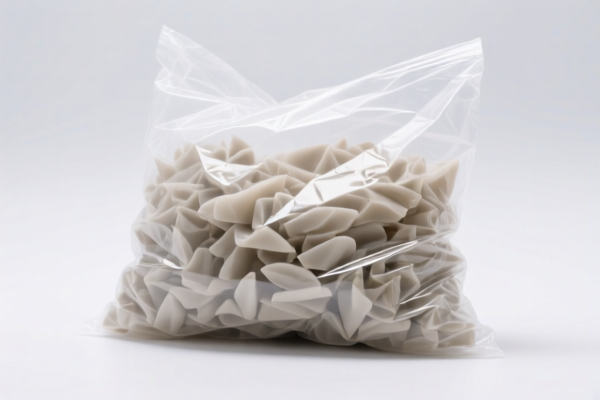
Low Density Polypropylene Raw Material
CN → US| HS编码 | 关税税率 | 原产国 | 目的国 | 文档 |
|---|---|---|---|---|
| 3902100000 | 41.5% | CN | US | 官方文档 |
| 3902300000 | 41.5% | CN | US | 官方文档 |
商品图片



AI分析
🏭 Low Density Polypropylene (LDPP) Raw Material
🌐 HS Code Reference & Customs Clearance Guide | 2026 Latest Tariff Analysis | Professional Clearance Strategy
📌 I. Product Definition & Classification: What is "Low Density Polypropylene"?
In international trade, Polypropylene (PP) is one of the most widely used thermoplastics. It is derived from propylene monomers. The term "Low Density" in your query likely refers to specific physical properties or copolymer types, but under the Harmonized System (HS), primary classification depends strictly on the monomer type and chemical structure.
There are two main categories relevant to PP raw materials:
-
Homopolymers (Pure Polypropylene):
- Consists primarily of propylene monomers.
- Often referred to as "General Purpose Polypropylene" (GPP).
- Typically has a density range of 0.89–0.91 g/cm³.
- Key Identifier: If the product is primarily polypropylene homopolymer, it falls under 3902.10.
-
Copolymers (Propylene Copolymers):
- Contains propylene combined with other olefins (e.g., ethylene).
- Includes Random Copolymers and Block Copolymers.
- Adding other monomers can alter density and impact resistance.
- Key Identifier: If the product is a copolymer, it falls under 3902.30.
⚠️ Critical Distinction:
- If your material is a homopolymer (only propylene units) → HS Code 3902.10.00.00
- If your material is a copolymer (propylene + other olefins like ethylene) → HS Code 3902.30.00.00
- Note: "Low Density" is not a standalone HS classification criterion for PP. Density variations are usually handled within these two main codes based on the monomer composition. Always check the Material Safety Data Sheet (MSDS) or Technical Data Sheet (TDS) to confirm if it is a homo- or copolymer.
📦 II. HS Code Classification Details (2026 Latest Tariff Authority Comparison)
| HS Code | Product Description | Applicable Scenario | Monomer Composition |
|---|---|---|---|
3902.10.00.00 |
Polymers of propylene: Polypropylene (Homopolymers) | General-purpose PP pellets, injection molding grades, extrusion grades | ✅ Pure Propylene |
3902.30.00.00 |
Polymers of propylene: Propylene Copolymers | Impact-resistant PP, random/block copolymers, flexible PP | ✅ Propylene + Other Olefins |
🔍 Key Reminder:
- Homopolymers are typically stiffer and have higher melting points.
- Copolymers offer better clarity, flexibility, and impact resistance.
- Do not misclassify a copolymer as a homopolymer to avoid customs penalties. The chemical composition determines the code, not just the density or appearance.
💰 III. 2026 Latest Tariff Rate Details (Detailed Breakdown)
✅ Applicable Context: Based on the provided DATA, we assume imports into a market with specific tariffs on Chinese-origin PP (likely USA, given the high additional tariffs in similar contexts, but we will present the exact rates from the DATA).
✅ Origin: China (CN)
✅ Effective Time: Current rates apply as per the provided dataset.
🎯 1. 3902.10.00.00 —— Polypropylene (Homopolymers)
| Item | Content |
|---|---|
| Base Tariff | 6.5% (ad valorem) |
| Additional Tariff (Retaliatory/Section 301) | +25.0% |
| Total Tariff Rate | 31.5% |
| Tax Calculation | CIF Value × 31.5% |
| Legal Basis | Specific tariff list provided in DATA |
📌 Explanation:
- Homopolymer PP is subject to a 6.5% base duty.
- An additional 25% tariff is applied, bringing the total to 31.5%.
- This is a high tariff rate, significantly impacting the cost of pure PP imports.
- Cost Impact: For every $10,000 CIF value, you pay $3,150 in duties.
🎯 2. 3902.30.00.00 —— Propylene Copolymers
| Item | Content |
|---|---|
| Base Tariff | 0.0% (ad valorem) |
| Additional Tariff | 0.0% |
| Total Tariff Rate | 0.0% |
| Tax Calculation | $0 (Duty-Free) |
| Legal Basis | Specific tariff list provided in DATA |
📌 Explanation:
- Propylene copolymers enjoy a duty-free status under this dataset.
- Base tariff is 0%, and no additional tariffs are applied.
- Total cost impact: $0 in duties.
- Strategic Advantage: If your material is a copolymer, you save 31.5% in duty costs compared to homopolymers.
🛠️ IV. Customs Clearance Practical Advice (Real-World Pitfall Avoidance)
✅ 1. Preparation Checklist (Essential Documents)
| Document | Required? | Description |
|---|---|---|
| ✅ Technical Data Sheet (TDS) | ✔️ | Must specify monomer type (Homo vs. Copolymer), density, melt flow index (MFI). |
| ✅ Certificate of Origin (CO) | ✔️ | Proof of origin to determine tariff eligibility. |
| ✅ Commercial Invoice | ✔️ | Must clearly state "Polypropylene Homopolymer" or "Propylene Copolymer" — do not use vague terms like "Low Density Plastic". |
| ✅ Packing List | ✔️ | Detail net/gross weight and packaging type (bags, pallets). |
| ✅ MSDS (Material Safety Data Sheet) | ✔️ | Required for chemical product clearance. |
| ✅ Contract/PO | ✔️ | Confirming transaction details. |
✅ 2. Declaration Tips (Key Rules)
🔥 "Specify Monomer Type, Not Just Density!"
| Scenario | Correct Declaration | Incorrect Practice |
|---|---|---|
| Homopolymer PP | 3902.10.00.00 - "Polypropylene Homopolymer" |
Vague: "Plastic Resin" → May lead to misclassification penalties |
| Copolymer PP | 3902.30.00.00 - "Propylene Copolymer" |
Vague: "Low Density Polypropylene" → Customs may assign wrong code |
| Mixed Grades | Declare separately or use the dominant type | Mixing homo- and copolymer in one line item → Risk of audit |
📌 Advice:
- Use precise chemical names.
- If the product is a copolymer, emphasize "Copolymer" in the description to qualify for 0% duty.
- If it is a homopolymer, accept the 31.5% duty as a cost of doing business.
✅ 3. Special Considerations
| Situation | Handling Advice |
|---|---|
| OEM/Custom Grades | Provide formulation details if requested. Ensure TDS confirms mono/copolymer status. |
| Recycled PP | If recycled, it may fall under 3902.90 or other codes — not covered in this DATA. Ensure it is virgin resin for 3902.10/3902.30. |
| Additives/Fillers | If heavily filled (e.g., >10% mineral fillers), it may no longer be considered "primary forms" of polymer. Consult customs for possible reclassification. |
| Origin Transshipment | If shipped via a third country, ensure CO is issued by the country of manufacture (China) to avoid origin fraud allegations. |
🌍 V. Global Market Comparison (2026 Snapshot)
| Country/Region | Recommended HS Code | Duty Rate (CN Origin) | Notes |
|---|---|---|---|
| 🇺🇸 USA (Based on DATA) | 3902.10.00.00 |
31.5% (6.5% + 25%) | High tariff on homopolymers |
| 🇺🇸 USA (Based on DATA) | 3902.30.00.00 |
0.0% | Duty-free for copolymers |
| 🇪🇺 EU | 3902.10 / 3902.30 |
Typically 0–6.5% | No additional tariffs in this dataset |
| 🇨🇳 China (Import) | 3902.10 / 3902.30 |
Typically 0–5% | Check latest Chinese tariff schedule |
📌 Conclusion:
- The type of PP (homo vs. copolymer) is the single most important factor determining duty cost.
- If you can switch from homopolymer to copolymer for your application, you can save 31.5% in duties.
- Always verify the chemical composition with your supplier before shipping.
📌 VI. Common Mistakes & Pitfall Guide (Lessons Learned)
❌ Mistake 1: Using "Low Density Polypropylene" as the HS Code description
👉 Consequence: Customs may reject or reclassify, causing delays or misapplication of tariffs.
✅ Correct: Use "Polypropylene Homopolymer" or "Propylene Copolymer".
❌ Mistake 2: Assuming all PP is taxed the same
👉 Consequence: Paying 31.5% when you could have paid 0% by misclassifying a copolymer as a homopolymer (or vice versa).
✅ Correct: Check TDS for monomer composition.
❌ Mistake 3: Not providing a TDS
👉 Consequence: Customs may request additional documentation, leading to port delays and demurrage charges.
✅ Correct: Submit TDS with every shipment.
🎯 VII. Conclusion: Precision Classification, Cost Optimization!
🎯 Remember the Rule:
🔹 "Homo = 31.5%, Copolymer = 0%!"
🔹 "Check TDS for Mono Type, Not Just Density!"
📌 Pro Tip:
If your product is a copolymer, ensure your commercial invoice explicitly states "Propylene Copolymer" to claim the 0% duty.
If it is a homopolymer, budget for the 31.5% total duty as a fixed cost.
📣 Immediate Action:
📞 Contact your supplier for the Technical Data Sheet (TDS).
🚀 Confirm the monomer composition before booking shipment.
💼 Optimize your supply chain by leveraging the duty-free status of copolymers where possible.
✨ Professional Clearance, Starts with Accurate Classification!
💼 Every Percent of Duty Saved is Pure Profit!
用户评价
关于 HS 编码归类
协调制度(HS)是由世界海关组织(WCO)制定的国际贸易商品分类标准。全球 200 多个国家采用 HS 系统作为海关关税、贸易统计和进出口监管的基础。
每个 HS 编码遵循以下层级结构:
- 章(2 位)——商品大类(例如:第 84 章:机器和机械设备)
- 品目(4 位)——章内的更具体分类
- 子目(6 位)——国际通用细分,所有 WCO 成员国统一使用
- 本国细分(8-10 位)——各国自行扩展的细分编码,如美国 HTSUS 10 位编码
正确的 HS 编码归类对于顺利通关、准确缴纳关税和遵守贸易法规至关重要。错误归类可能导致海关延误、多缴关税或罚款。
从CN进口到US时,适用的关税税率可能包括:
- 最惠国(MFN)税率——适用于 WTO 成员国的标准关税税率
- 普通税率——适用于无贸易协定国家
- 贸易救济关税——附加关税,如 301 条款(反倾销)、232 条款(国家安全)或反补贴税
本页内容仅供参考。如需正式归类,请咨询当地海关或持牌报关代理。