Low Molecular Weight Polyvinyl Chloride Resin
CN → US| HS编码 | 关税税率 | 原产国 | 目的国 | 文档 |
|---|---|---|---|---|
| 3915300000 | 35.0% | CN | US | 官方文档 |
| 3901909000 | 41.5% | CN | US | 官方文档 |
| 3904220000 | 41.5% | CN | US | 官方文档 |
| 3903190000 | 41.5% | CN | US | 官方文档 |
| 3903110000 | 41.5% | CN | US | 官方文档 |
商品图片
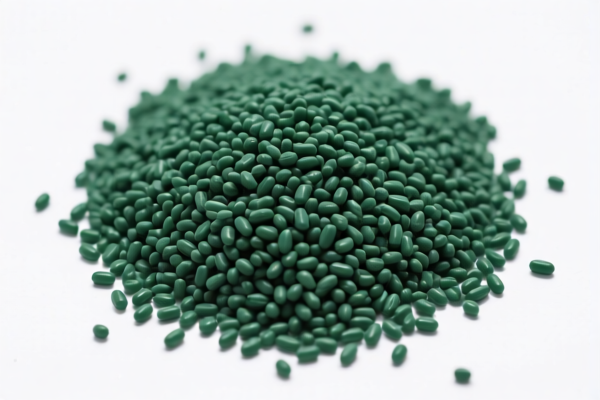

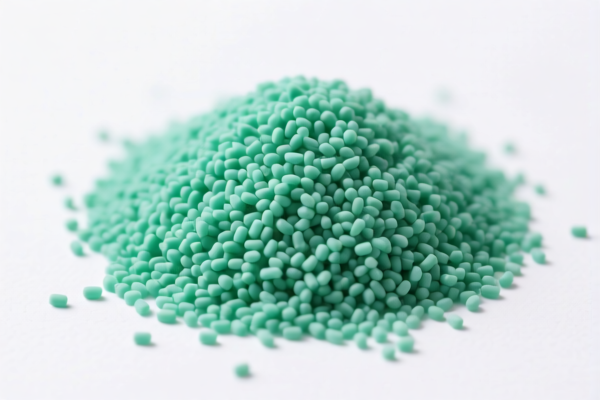
AI分析
🧪 PVC Resin (Low Molecular Weight & Low VOC)
🌐 HS Code Reference & Customs Clearance Guide | 2026 Latest Tariff Analysis | Professional Compliance Strategy
📌 One: Product Definition and Classification: What Exactly is "Low Molecular Weight PVC Resin"?
Polyvinyl Chloride (PVC) Resin is a versatile thermoplastic polymer used globally in construction, packaging, and industrial manufacturing. In international trade, the classification hinges on two critical factors:
1. Chemical Structure: Is it "Polyvinyl Chloride" (PVC) or "Other Chlorinated Polymers"?
2. Physical Form: Is it in its "Primary Form" (raw material/resin)?
⚠️ Key Classification Distinctions:
- If the material is chemically identified strictly as Polyvinyl Chloride → It typically falls under Chapter 3904.
- If declared broadly as Chlorinated Polymers or generic Vinyl Polymers without specific PVC designation → It may fall under Chapter 3901 or 3915.
- "Low Molecular Weight" and "Low VOC" are performance characteristics, not primary classification keys. They do not change the HS code but are critical for customs declarations and environmental compliance.
📦 Two: HS Code Classification Details (2026 Latest Tariff Authority对照)
| HS Code | Product Description | Application Scenario | Chemical Basis |
|---|---|---|---|
3915.30.00.00 |
Waste, scrap, and off-cuts of polyvinyl chloride | Recycled PVC pellets, manufacturing off-cuts, regrind | PVC (Post-production waste/scrap) |
3901.90.90.00 |
Primary forms of other vinyl polymers | Generic chlorinated polymers, non-PVC vinyls | Vinyl Polymer (Generic) |
3904.22.00.00 |
Primary forms of polyvinyl chloride | Standard PVC resin pellets for extrusion/injection | PVC (Primary Form) |
3903.19.00.00 |
Other polystyrene in primary forms | Note: Data includes PS for comparison | Polystyrene (Not PVC) |
3903.11.00.00 |
Expandable polystyrene in primary forms | Note: Data includes PS for comparison | Polystyrene (Expandable) |
🔍 Critical Reminder for PVC:
-3904.22.00.00is the most accurate code for standard PVC Resin in primary form.
-3915.30.00.00is for scrap/waste PVC. Do NOT use this for virgin resin.
-3901.90.90.00is a "catch-all" for vinyl polymers. If your product is clearly PVC,3904is preferred. However, some exporters misdeclare PVC as3901.90.90.00to avoid specific scrutiny, but this carries high risk of reclassification.
- Polystyrene Codes (3903...) are included in the data for context but do not apply to PVC. Do not confuse PVC with PS.
💰 Three: 2026 Latest Tariff Rate Details (Including Surtaxes & Policy Add-ons)
✅ Applicable Country: United States (US)
✅ Country of Origin: China (CN)
✅ Effective Date: November 10, 2025 onwards (for imports after this date)
🎯 1. 3904.22.00.00 —— Polyvinyl Chloride (PVC) Resin, Primary Form
| Item | Content |
|---|---|
| Base Duty Rate | 6.5% (Ad Valorem) |
| Section 301 Surtax | +25% (USITC Footnote related to China-origin PVC) |
| Section 122 Surtax | +10% (Specific administrative surcharge for certain polymer imports) |
| Total Effective Rate | 41.5% |
| Tax Calculation | CIF Value × 41.5% |
| De Minimis Exemption | ❌ Not Eligible (High value, specific chemical goods excluded) |
| Legal Authority Path | USITC:3904.22.00.00 → Section 301: +25% → Section 122: +10% |
📌 Explanation:
- Base 6.5%: Standard Most Favored Nation (MFN) rate for PVC resin.
- +25% Section 301: Trump/Biden administration tariffs on Chinese chemical products.
- +10% Section 122: Recent administrative surcharge affecting specific polymer categories.
- Total 41.5%: This is a high-cost barrier. Profit margins must account for this.
🎯 2. 3901.90.90.00 —— Other Vinyl Polymers (Misclassification Risk)
| Item | Content |
|---|---|
| Base Duty Rate | 6.5% (Ad Valorem) |
| Section 301 Surtax | +25% |
| Section 122 Surtax | +10% |
| Total Effective Rate | 41.5% |
| Tax Calculation | CIF Value × 41.5% |
| De Minimis Exemption | ❌ Not Eligible |
| Legal Authority Path | USITC:3901.90.90.00 → Section 301: +25% → Section 122: +10% |
📌 Warning:
- If you declare PVC as "Other Vinyl Polymers" (3901.90.90.00) to simplify, the tax rate is identical (41.5%).
- Risk: Customs may audit the chemical composition. If found to be PVC, you face penalties for misdeclaration in addition to the tax.
- Recommendation: Use the correct code (3904.22.00.00) to ensure compliance.
🎯 3. 3915.30.00.00 —— PVC Waste/Scrap (If Applicable)
| Item | Content |
|---|---|
| Base Duty Rate | 0.0% (Ad Valorem) |
| Section 301 Surtax | +25% |
| Section 122 Surtax | +10% |
| Total Effective Rate | 35.0% |
| Tax Calculation | CIF Value × 35.0% |
| De Minimis Exemption | ❌ Not Eligible |
| Legal Authority Path | USITC:3915.30.00.00 → Section 301: +25% → Section 122: +10% |
📌 Note:
- This code is only for waste, scrap, and off-cuts.
- If you are exporting virgin resin (even low molecular weight) and use this code, it is illegal misdeclaration.
- Tax Savings?: Theoretically 6.5% lower than virgin PVC, but risks far outweigh benefits.
🛠️ Four: Customs Clearance Practical Advice (Battle-Tested Pitfall Guide)
✅ 1. Required Documentation Checklist (Non-Negotiable)
| Document | Must Provide | Explanation |
|---|---|---|
| ✅ Material Safety Data Sheet (MSDS) | ✔️ | Proves "Low VOC" status and chemical composition (PVC vs. PS vs. Other) |
| ✅ Product Specification Sheet | ✔️ | Must specify: "Polyvinyl Chloride", "Primary Form", "Low Molecular Weight" |
| ✅ Certificate of Origin (CO) | ✔️ | Essential for claiming origin; prevents reclassification |
| ✅ Commercial Invoice | ✔️ | Must match HS Code description exactly. Avoid vague terms like "Plastic Granules" |
| ✅ Packing List | ✔️ | Detail net/gross weight. PVC resin is heavy; accurate weight is crucial for duty calculation |
| ✅ Test Report (VOC Content) | ✔️ | To support "Low VOC" claim if environmentally regulated |
✅ 2. Declaration Tips (Key Mantras)
🔥 "Be Precise: PVC not PS, Resin not Scrap, VOC Low but Tax High!"
| Scenario | Correct Declaration | Incorrect Practice |
|---|---|---|
| Virgin PVC Resin | 3904.22.00.00 PVC Resin, Primary Form, Low VOC |
"Plastic Powder" or "PVC Scrap" |
| Recycled PVC Pellets | 3915.30.00.00 PVC Waste/Scrap |
Virgin PVC code → 41.5% instead of 35% |
| Polymer Mix | Clearly list composition % | "Vinyl Polymer" generic → Audit risk |
| Low Molecular Weight | Mention in specs, not HS Code | Do not change HS code for molecular weight |
📌 Critical Warning:
- Do NOT confuse PVC (3904) with Polystyrene (3903) or Generic Vinyl (3901).
- Polystyrene (3903.19.00.00) is in the data list but does not apply to PVC. Using3903for PVC is a major error.
✅ 3. Special Situations Handling
| Situation | Handling Advice |
|---|---|
| Low VOC Claim | Provide third-party lab reports proving VOC content < threshold. This does not reduce duty but aids in environmental compliance (EPA/FDA if for food contact). |
| Low Molecular Weight | This affects processing (melt flow index), not customs classification. Ensure MSDS reflects accurate MW range. |
| Mixed Containers | If PVC and PS are mixed, do not consolidate under one HS code. Declare separately to avoid misclassification penalties. |
| Origin Non-China | If sourced from Vietnam/Thailand, Section 301 & 122 surcharges may not apply. Verify country of origin! |
🌍 Five: Global Market Clearance Comparison (2026 Latest)
| Country/Region | Recommended HS Code | Base Duty | Surtaxes (CN Origin) | Total Est. Rate | Notes |
|---|---|---|---|---|---|
| 🇺🇸 USA | 3904.22.00.00 |
6.5% | +35% (301+122) | 41.5% | High barriers. Ensure exact PVC declaration. |
| 🇨🇳 China | 3904.22.00.00 |
~6-7% | None | ~7% | No surtaxes. Easy entry. |
| 🇪🇺 EU | 3904.22.00.00 |
6.5% | None | 6.5% | No Section 301/122. VAT varies by country. |
| 🇬🇧 UK | 3904.22.00.00 |
6.5% | None | 6.5% | Post-Brexit rules apply. UKCA mark needed. |
| 🇨🇦 Canada | 3904.22.00.00 |
5-6% | Section 301 not applicable | ~6% | CUSMA benefits if eligible. |
📌 Conclusion:
- USA is the most expensive market due to 35% in surtaxes.
- EU/UK/Canada have significantly lower barriers.
- China has minimal import duties on PVC.
📌 Six: Common Mistakes & Pitfall Guide (Lessons Learned)
❌ Mistake 1: Declaring PVC Resin as 3915.30.00.00 (Scrap) when it is Virgin |
👉 Consequence: Customs flags inconsistency in MSDS. Penalty + 35% tax instead of 41.5%? No, reclassification to 41.5% + fines.
❌ Mistake 2: Using Polystyrene Codes (3903...) for PVC |
👉 Consequence: Immediate audit. Chemical analysis required. Delay in clearance.
❌ Mistake 3: Ignoring "Low VOC" documentation |
👉 Consequence: While not affecting duty, it may lead to rejection by EPA or customer rejection for non-compliance with environmental standards.
❌ Mistake 4: Vague Description "Plastic Granules" |
👉 Consequence: Customs cannot determine HS Code. Leads to maximum discretionary duty or hold.
✅ Correct Practice:
"Polyvinyl Chloride (PVC) Resin, Primary Form, Low Molecular Weight, Low VOC, for Industrial Use, HS Code 3904.22.00.00, Origin China"
🎯 Seven: Conclusion: Precision Declaration, Cost Control, Compliance!
🎯 Remember Mantras:
🔹 "PVC is 3904, Scrap is 3915, Never Mix Them!"
🔹 "US Tariff 41.5%, Plan Margins Accordingly!"
🔹 "MSDS is King, VOC Claim Needs Proof!"
📌 Pro Tip:
If your PVC resin is sourced from Vietnam, India, or Thailand, you avoid the Section 301 (25%) and Section 122 (10%) surcharges.
Action: Check Certificate of Origin carefully. If non-China origin, total duty drops to Base Rate Only (6.5%). This is a massive cost saving!
📣 Immediate Action:
📞 Contact Customs Broker + Provide MSDS + Verify Country of Origin
🚀 Ensure Your PVC Resin Clears US Customs Smoothly, Saves Money, and Avoids Penalties!
✨ Professional Clearance Starts with Accurate Classification!
💼 Your Cost Margins Depend on This 6.5% vs. 41.5% Difference!
用户评价
关于 HS 编码归类
协调制度(HS)是由世界海关组织(WCO)制定的国际贸易商品分类标准。全球 200 多个国家采用 HS 系统作为海关关税、贸易统计和进出口监管的基础。
每个 HS 编码遵循以下层级结构:
- 章(2 位)——商品大类(例如:第 84 章:机器和机械设备)
- 品目(4 位)——章内的更具体分类
- 子目(6 位)——国际通用细分,所有 WCO 成员国统一使用
- 本国细分(8-10 位)——各国自行扩展的细分编码,如美国 HTSUS 10 位编码
正确的 HS 编码归类对于顺利通关、准确缴纳关税和遵守贸易法规至关重要。错误归类可能导致海关延误、多缴关税或罚款。
从CN进口到US时,适用的关税税率可能包括:
- 最惠国(MFN)税率——适用于 WTO 成员国的标准关税税率
- 普通税率——适用于无贸易协定国家
- 贸易救济关税——附加关税,如 301 条款(反倾销)、232 条款(国家安全)或反补贴税
本页内容仅供参考。如需正式归类,请咨询当地海关或持牌报关代理。