Low Molecular Weight Polyvinyl Chloride Resin
CN → US| HS Code | Tariff Rate | Origin | Destination | Doc |
|---|---|---|---|---|
| 3915300000 | 35.0% | CN | US | Official Doc |
| 3901909000 | 41.5% | CN | US | Official Doc |
| 3904220000 | 41.5% | CN | US | Official Doc |
| 3903190000 | 41.5% | CN | US | Official Doc |
| 3903110000 | 41.5% | CN | US | Official Doc |
Product Images
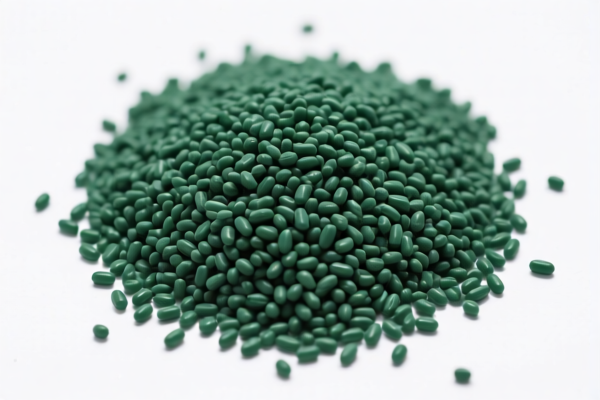

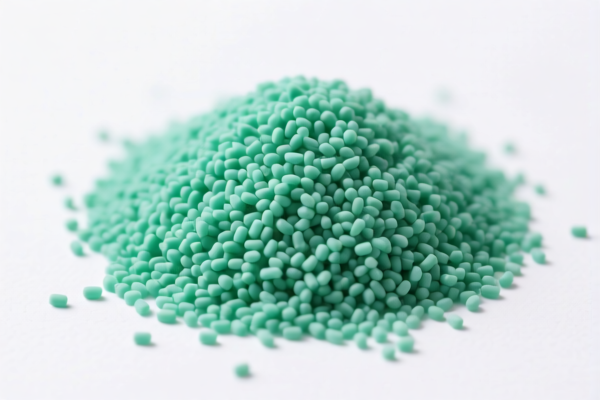
AI Analysis
🧪 PVC Resin (Low Molecular Weight & Low VOC)
🌐 HS Code Reference & Customs Clearance Guide | 2026 Latest Tariff Analysis | Professional Compliance Strategy
📌 One: Product Definition and Classification: What Exactly is "Low Molecular Weight PVC Resin"?
Polyvinyl Chloride (PVC) Resin is a versatile thermoplastic polymer used globally in construction, packaging, and industrial manufacturing. In international trade, the classification hinges on two critical factors:
1. Chemical Structure: Is it "Polyvinyl Chloride" (PVC) or "Other Chlorinated Polymers"?
2. Physical Form: Is it in its "Primary Form" (raw material/resin)?
⚠️ Key Classification Distinctions:
- If the material is chemically identified strictly as Polyvinyl Chloride → It typically falls under Chapter 3904.
- If declared broadly as Chlorinated Polymers or generic Vinyl Polymers without specific PVC designation → It may fall under Chapter 3901 or 3915.
- "Low Molecular Weight" and "Low VOC" are performance characteristics, not primary classification keys. They do not change the HS code but are critical for customs declarations and environmental compliance.
📦 Two: HS Code Classification Details (2026 Latest Tariff Authority对照)
| HS Code | Product Description | Application Scenario | Chemical Basis |
|---|---|---|---|
3915.30.00.00 |
Waste, scrap, and off-cuts of polyvinyl chloride | Recycled PVC pellets, manufacturing off-cuts, regrind | PVC (Post-production waste/scrap) |
3901.90.90.00 |
Primary forms of other vinyl polymers | Generic chlorinated polymers, non-PVC vinyls | Vinyl Polymer (Generic) |
3904.22.00.00 |
Primary forms of polyvinyl chloride | Standard PVC resin pellets for extrusion/injection | PVC (Primary Form) |
3903.19.00.00 |
Other polystyrene in primary forms | Note: Data includes PS for comparison | Polystyrene (Not PVC) |
3903.11.00.00 |
Expandable polystyrene in primary forms | Note: Data includes PS for comparison | Polystyrene (Expandable) |
🔍 Critical Reminder for PVC:
-3904.22.00.00is the most accurate code for standard PVC Resin in primary form.
-3915.30.00.00is for scrap/waste PVC. Do NOT use this for virgin resin.
-3901.90.90.00is a "catch-all" for vinyl polymers. If your product is clearly PVC,3904is preferred. However, some exporters misdeclare PVC as3901.90.90.00to avoid specific scrutiny, but this carries high risk of reclassification.
- Polystyrene Codes (3903...) are included in the data for context but do not apply to PVC. Do not confuse PVC with PS.
💰 Three: 2026 Latest Tariff Rate Details (Including Surtaxes & Policy Add-ons)
✅ Applicable Country: United States (US)
✅ Country of Origin: China (CN)
✅ Effective Date: November 10, 2025 onwards (for imports after this date)
🎯 1. 3904.22.00.00 —— Polyvinyl Chloride (PVC) Resin, Primary Form
| Item | Content |
|---|---|
| Base Duty Rate | 6.5% (Ad Valorem) |
| Section 301 Surtax | +25% (USITC Footnote related to China-origin PVC) |
| Section 122 Surtax | +10% (Specific administrative surcharge for certain polymer imports) |
| Total Effective Rate | 41.5% |
| Tax Calculation | CIF Value × 41.5% |
| De Minimis Exemption | ❌ Not Eligible (High value, specific chemical goods excluded) |
| Legal Authority Path | USITC:3904.22.00.00 → Section 301: +25% → Section 122: +10% |
📌 Explanation:
- Base 6.5%: Standard Most Favored Nation (MFN) rate for PVC resin.
- +25% Section 301: Trump/Biden administration tariffs on Chinese chemical products.
- +10% Section 122: Recent administrative surcharge affecting specific polymer categories.
- Total 41.5%: This is a high-cost barrier. Profit margins must account for this.
🎯 2. 3901.90.90.00 —— Other Vinyl Polymers (Misclassification Risk)
| Item | Content |
|---|---|
| Base Duty Rate | 6.5% (Ad Valorem) |
| Section 301 Surtax | +25% |
| Section 122 Surtax | +10% |
| Total Effective Rate | 41.5% |
| Tax Calculation | CIF Value × 41.5% |
| De Minimis Exemption | ❌ Not Eligible |
| Legal Authority Path | USITC:3901.90.90.00 → Section 301: +25% → Section 122: +10% |
📌 Warning:
- If you declare PVC as "Other Vinyl Polymers" (3901.90.90.00) to simplify, the tax rate is identical (41.5%).
- Risk: Customs may audit the chemical composition. If found to be PVC, you face penalties for misdeclaration in addition to the tax.
- Recommendation: Use the correct code (3904.22.00.00) to ensure compliance.
🎯 3. 3915.30.00.00 —— PVC Waste/Scrap (If Applicable)
| Item | Content |
|---|---|
| Base Duty Rate | 0.0% (Ad Valorem) |
| Section 301 Surtax | +25% |
| Section 122 Surtax | +10% |
| Total Effective Rate | 35.0% |
| Tax Calculation | CIF Value × 35.0% |
| De Minimis Exemption | ❌ Not Eligible |
| Legal Authority Path | USITC:3915.30.00.00 → Section 301: +25% → Section 122: +10% |
📌 Note:
- This code is only for waste, scrap, and off-cuts.
- If you are exporting virgin resin (even low molecular weight) and use this code, it is illegal misdeclaration.
- Tax Savings?: Theoretically 6.5% lower than virgin PVC, but risks far outweigh benefits.
🛠️ Four: Customs Clearance Practical Advice (Battle-Tested Pitfall Guide)
✅ 1. Required Documentation Checklist (Non-Negotiable)
| Document | Must Provide | Explanation |
|---|---|---|
| ✅ Material Safety Data Sheet (MSDS) | ✔️ | Proves "Low VOC" status and chemical composition (PVC vs. PS vs. Other) |
| ✅ Product Specification Sheet | ✔️ | Must specify: "Polyvinyl Chloride", "Primary Form", "Low Molecular Weight" |
| ✅ Certificate of Origin (CO) | ✔️ | Essential for claiming origin; prevents reclassification |
| ✅ Commercial Invoice | ✔️ | Must match HS Code description exactly. Avoid vague terms like "Plastic Granules" |
| ✅ Packing List | ✔️ | Detail net/gross weight. PVC resin is heavy; accurate weight is crucial for duty calculation |
| ✅ Test Report (VOC Content) | ✔️ | To support "Low VOC" claim if environmentally regulated |
✅ 2. Declaration Tips (Key Mantras)
🔥 "Be Precise: PVC not PS, Resin not Scrap, VOC Low but Tax High!"
| Scenario | Correct Declaration | Incorrect Practice |
|---|---|---|
| Virgin PVC Resin | 3904.22.00.00 PVC Resin, Primary Form, Low VOC |
"Plastic Powder" or "PVC Scrap" |
| Recycled PVC Pellets | 3915.30.00.00 PVC Waste/Scrap |
Virgin PVC code → 41.5% instead of 35% |
| Polymer Mix | Clearly list composition % | "Vinyl Polymer" generic → Audit risk |
| Low Molecular Weight | Mention in specs, not HS Code | Do not change HS code for molecular weight |
📌 Critical Warning:
- Do NOT confuse PVC (3904) with Polystyrene (3903) or Generic Vinyl (3901).
- Polystyrene (3903.19.00.00) is in the data list but does not apply to PVC. Using3903for PVC is a major error.
✅ 3. Special Situations Handling
| Situation | Handling Advice |
|---|---|
| Low VOC Claim | Provide third-party lab reports proving VOC content < threshold. This does not reduce duty but aids in environmental compliance (EPA/FDA if for food contact). |
| Low Molecular Weight | This affects processing (melt flow index), not customs classification. Ensure MSDS reflects accurate MW range. |
| Mixed Containers | If PVC and PS are mixed, do not consolidate under one HS code. Declare separately to avoid misclassification penalties. |
| Origin Non-China | If sourced from Vietnam/Thailand, Section 301 & 122 surcharges may not apply. Verify country of origin! |
🌍 Five: Global Market Clearance Comparison (2026 Latest)
| Country/Region | Recommended HS Code | Base Duty | Surtaxes (CN Origin) | Total Est. Rate | Notes |
|---|---|---|---|---|---|
| 🇺🇸 USA | 3904.22.00.00 |
6.5% | +35% (301+122) | 41.5% | High barriers. Ensure exact PVC declaration. |
| 🇨🇳 China | 3904.22.00.00 |
~6-7% | None | ~7% | No surtaxes. Easy entry. |
| 🇪🇺 EU | 3904.22.00.00 |
6.5% | None | 6.5% | No Section 301/122. VAT varies by country. |
| 🇬🇧 UK | 3904.22.00.00 |
6.5% | None | 6.5% | Post-Brexit rules apply. UKCA mark needed. |
| 🇨🇦 Canada | 3904.22.00.00 |
5-6% | Section 301 not applicable | ~6% | CUSMA benefits if eligible. |
📌 Conclusion:
- USA is the most expensive market due to 35% in surtaxes.
- EU/UK/Canada have significantly lower barriers.
- China has minimal import duties on PVC.
📌 Six: Common Mistakes & Pitfall Guide (Lessons Learned)
❌ Mistake 1: Declaring PVC Resin as 3915.30.00.00 (Scrap) when it is Virgin |
👉 Consequence: Customs flags inconsistency in MSDS. Penalty + 35% tax instead of 41.5%? No, reclassification to 41.5% + fines.
❌ Mistake 2: Using Polystyrene Codes (3903...) for PVC |
👉 Consequence: Immediate audit. Chemical analysis required. Delay in clearance.
❌ Mistake 3: Ignoring "Low VOC" documentation |
👉 Consequence: While not affecting duty, it may lead to rejection by EPA or customer rejection for non-compliance with environmental standards.
❌ Mistake 4: Vague Description "Plastic Granules" |
👉 Consequence: Customs cannot determine HS Code. Leads to maximum discretionary duty or hold.
✅ Correct Practice:
"Polyvinyl Chloride (PVC) Resin, Primary Form, Low Molecular Weight, Low VOC, for Industrial Use, HS Code 3904.22.00.00, Origin China"
🎯 Seven: Conclusion: Precision Declaration, Cost Control, Compliance!
🎯 Remember Mantras:
🔹 "PVC is 3904, Scrap is 3915, Never Mix Them!"
🔹 "US Tariff 41.5%, Plan Margins Accordingly!"
🔹 "MSDS is King, VOC Claim Needs Proof!"
📌 Pro Tip:
If your PVC resin is sourced from Vietnam, India, or Thailand, you avoid the Section 301 (25%) and Section 122 (10%) surcharges.
Action: Check Certificate of Origin carefully. If non-China origin, total duty drops to Base Rate Only (6.5%). This is a massive cost saving!
📣 Immediate Action:
📞 Contact Customs Broker + Provide MSDS + Verify Country of Origin
🚀 Ensure Your PVC Resin Clears US Customs Smoothly, Saves Money, and Avoids Penalties!
✨ Professional Clearance Starts with Accurate Classification!
💼 Your Cost Margins Depend on This 6.5% vs. 41.5% Difference!
Customer Reviews
About HS Code Classification
The Harmonized System (HS) is an internationally standardized nomenclature developed by the World Customs Organization (WCO) to classify traded products. Over 200 countries use the HS system as the basis for customs tariffs, trade statistics, and import/export regulations.
Each HS code follows a hierarchical structure:
- Chapter (2 digits) — Broad category of goods (e.g., Chapter 84: Machinery and Mechanical Appliances)
- Heading (4 digits) — More specific grouping within the chapter
- Subheading (6 digits) — Internationally standardized breakdown, used by all WCO member countries
- National subdivisions (8-10 digits) — Country-specific extensions for further classification, such as US HTSUS 10-digit codes
Correct HS code classification is essential for smooth customs clearance, accurate duty payment, and compliance with trade regulations. Misclassification can lead to customs delays, overpayment of duties, or penalties.
When importing from CN to US, the applicable tariff rates may include:
- Most-Favored-Nation (MFN) rate — The standard duty rate applied to WTO members
- General rate — Applied to countries without trade agreements
- Trade remedy duties — Additional tariffs such as Section 301 (anti-dumping), Section 232 (national security), or countervailing duties
The information provided on this page is for reference purposes only. For official classification, please consult with your local customs authority or a licensed customs broker.