Low alkali Refractory Mortar
CN → US| HS编码 | 关税税率 | 原产国 | 目的国 | 文档 |
|---|---|---|---|---|
| 6902905020 | 35.0% | CN | US | 官方文档 |
| 3816002050 | 38.0% | CN | US | 官方文档 |
| 3816002010 | 38.0% | CN | US | 官方文档 |
| 6902905010 | 35.0% | CN | US | 官方文档 |
| 6902901010 | 35.0% | CN | US | 官方文档 |
商品图片
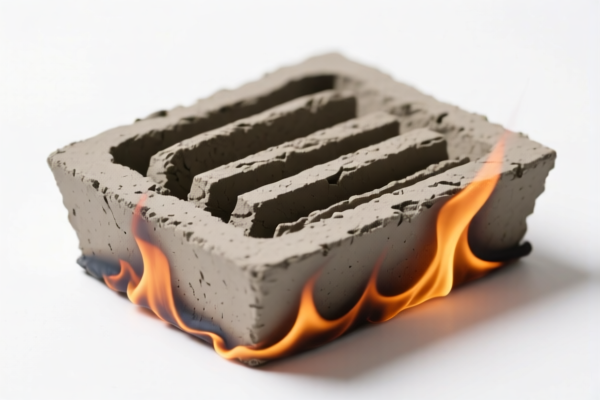
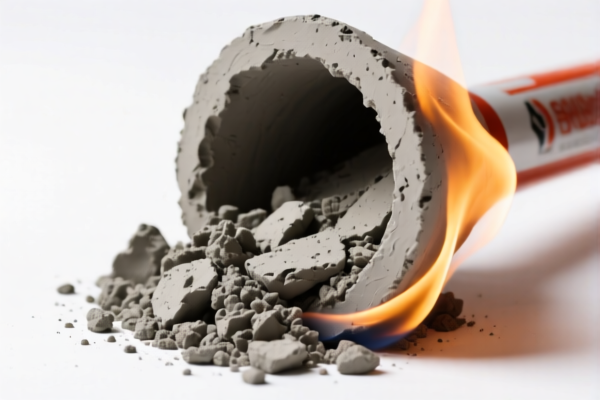
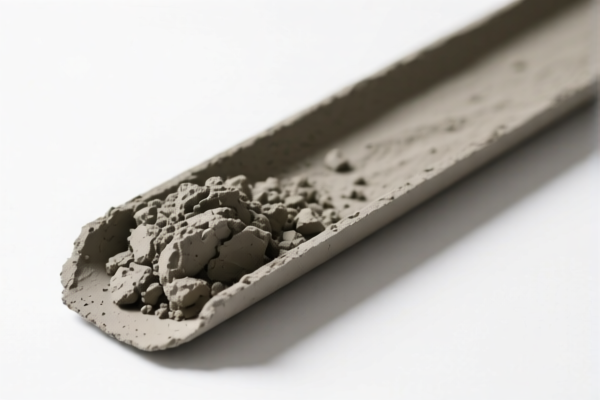

AI分析
🧱 Low Alkali Refractory Mortar & Low Shrinkage Refractory Mud: Strategic Classification & US Customs Clearance Guide
🌐 HS Code Reference & Customs Clearance Guide | 2026 Latest Tariff Analysis | Professional Duty Optimization Strategy
📌 I. Product Definition & Classification: Do You Really Understand "Refractory Materials"?
Refractory Mortar (Low Alkali) and Refractory Mud (Low Shrinkage) are specialized inorganic binding agents used in high-temperature industrial furnaces, kilns, and fireplaces. In international trade, precise classification is critical because minor differences in physical state (powder/mixed vs. brick-like) and composition lead to significantly different tariff rates.
In the provided dataset, two main product types are analyzed: 1. Low Alkali Refractory Mortar: Often classified under Chapter 69 (Ceramics) or Chapter 38 (Miscellaneous Chemical Products), depending on whether it is treated as a finished ceramic accessory or a mixed chemical mortar. 2. Low Shrinkage Refractory Mud: Typically classified under Chapter 69 (Clay-based Ceramic Products) if it mimics the form or function of refractory bricks/blocks.
⚠️ Key Distinction Point:
- If the product is a mixed chemical mortar (powder/granules with additives) not yet formed into a rigid ceramic shape → Consider Chapter 38.
- If the product is clay-based and functions as a substitute for refractory bricks/blocks (e.g., mud/mastic applied as a joint filler) → Consider Chapter 69 (Ceramics).
📦 II. HS Code Classification Details (Based on Provided Data)
| HS Code | Product Description | Application Scenario | Key Classification Logic |
|---|---|---|---|
6902.90.50.20 |
Refractory Mortar (Low Alkali) – Classified as Refractory Ceramic Products | Joint filling in ceramic linings, low-alkali applications | ✅ Chapter 69: Treated as a "Refractory Ceramic Product" similar to bricks. |
3816.00.20.50 |
Refractory Mortar (Low Alkali) – Classified as Other Refractory Mortars | Chemical mortar mixtures, industrial insulation | ✅ Chapter 38: Based on mineral/chemical composition inference; distinct from fired ceramics. |
3816.00.20.10 |
Refractory Mortar (Low Alkali) – Classified as Refractory Cement/Mortar | Industrial refractory cement applications | ✅ Chapter 38: Matches "Refactory cement, mortar and similar refractory compounds." |
6902.90.50.10 |
Refractory Mud (Low Shrinkage) – Clay-based Ceramic Product | Kiln linings, furnace repair using clay mud | ✅ Chapter 69: "Clay-based refractory ceramic product," fits building refractory category. |
6902.90.10.10 |
Refractory Mud (Low Shrinkage) – Clay-based Refractory Brick/Block Substitute | Furnace brick jointing, mud-as-brick alternative | ✅ Chapter 69: "Clay-made refractory brick/block," fits functional and material attributes. |
🔍 Critical Reminder:
- Chapter 69 (6902.90...) generally applies to clay-based refractories. It has a lower base tariff (0%) but still incurs trade war taxes.
- Chapter 38 (3816.00...) applies to chemical/mineral mortars (e.g., calcium aluminate, silicone-based). It has a higher base tariff (3%).
- Misclassification between Chapter 69 and 38 can lead to 0.5% base duty difference, but more importantly, it may trigger customs audits regarding the product's true nature (chemical vs. ceramic).
💰 III. 2026 Latest Tariff Rate Breakdown (Including Additional Taxes & Policy Surcharges)
✅ Applicable Country: United States (US)
✅ Origin: China (CN)
✅ Effective Date: Post-2025 (Inclusive of subsequent imports)
🎯 1. 6902.90.50.20 & 6902.90.50.10 & 6902.90.10.10 —— Refractory Ceramic Products (Clay-Based)
| Item | Details |
|---|---|
| Base Tariff | 0% (ad valorem) |
| Section 301 Tariff (USITC) | +25% (List 3/4 exemptions do not apply to these codes) |
| Section 122 Tariff (IEEPA) | +10% (Specific surcharge for certain Chinese imports) |
| Total Effective Rate | 35.0% |
| Tax Calculation | CIF Value × 35% |
| De Minimis Exemption | ❌ Not Applicable (deny_de_minimis for Section 301 goods) |
| Legal Basis Path | USITC:6902.90... → FOOTNOTE:301 → IEEPA:122 |
📌 Explanation:
- Although the base duty is 0%, the 25% Section 301 tariff applies heavily.
- The 10% Section 122 tariff is an additional layer, bringing the total to 35%.
- These codes are favorable compared to Chapter 38 because of the 0% base rate.
🎯 2. 3816.00.20.50 & 3816.00.20.10 —— Other Refractory Mortars & Cement (Chemical-Based)
| Item | Details |
|---|---|
| Base Tariff | 3.0% (ad valorem) |
| Section 301 Tariff (USITC) | +25% |
| Section 122 Tariff (IEEPA) | +10% |
| Total Effective Rate | 38.0% |
| Tax Calculation | CIF Value × 38% |
| De Minimis Exemption | ❌ Not Applicable |
| Legal Basis Path | USITC:3816.00... → FOOTNOTE:301 → IEEPA:122 |
📌 Note:
- The 3% base tariff adds to the 25% + 10% surcharges, resulting in a 38% total rate.
- This is 3% higher than the Chapter 69 classification.
- Even for small shipments, this 3% base difference compounds on high-value industrial orders.
🛠️ IV. Customs Clearance Practical Advice (Real-World Pitfall Avoidance)
✅ 1. Required Documentation Checklist (Mandatory)
| Document | Must Provide? | Purpose |
|---|---|---|
| ✅ Product Spec Sheet | ✔️ | Must specify chemical composition (e.g., Clay %, Silica %, Alumina %) and alkali content ("Low Alkali" must be substantiated). |
| ✅ Safety Data Sheet (SDS) | ✔️ | To prove non-hazardous chemical nature. |
| ✅ Product Photos | ✔️ | Show texture (powder vs. paste), packaging, and intended application (e.g., applied to furnace bricks). |
| ✅ Statement of Composition | ✔️ | Explicitly state: "Contains X% Clay, Y% Additives. Function: Joint Filling for Refractory Bricks." |
| ✅ Commercial Invoice | ✔️ | Clearly describe as "Refractory Mortar, Low Alkali, for Industrial Furnace Lining." Avoid vague terms like "Cement." |
| ✅ Packing List | ✔️ | Ensure weight matches declared CIF value. |
✅ 2. Declaration Strategy (Key Mantra)
🔥 "Clay = Chapter 69 (0% Base); Chemical = Chapter 38 (3% Base). Be Precise, Avoid Audit!"
| Scenario | Correct Declaration | Error Consequence |
|---|---|---|
| Clay-based mud used for brick joints | 6902.90.10.10 (Clay Refractory) |
If misclassified as 3816, you pay extra 3% base duty + potential back taxes. |
| Chemical cement for high-temp insulation | 3816.00.20.10 (Refractory Cement) |
If misclassified as 6902, Customs may argue it’s not a "ceramic," leading to reclassification + penalties. |
| Low Alkali Mortar | Specify "Low Alkali" in description | Helps justify 6902.90.50.20 if argued as specialized ceramic accessory. |
| Bulk Powder vs. Pre-mixed Paste | Declare actual form | Powder is more likely 3816; pre-mixed paste might be argued as 6902 if clay-heavy. |
✅ 3. Special Considerations
| Situation | Handling Advice |
|---|---|
| High-Value Industrial Orders | Apply for Advance Ruling (Ruling Letter) from CBP. Submit composition analysis to lock in 6902 classification (35% vs 38% savings). |
| Mixed Shipments (Bricks + Mortar) | Declare Mortar separately with its own HS Code. Do not bundle under "Furnace Parts" to avoid ambiguity. |
| "Low Alkali" Claim | Ensure lab reports support "Low Alkali" (<1% Na2O/K2O). If not, Customs may classify under higher-alkali codes with different restrictions. |
| Section 122 Tariff | This 10% tariff is specific. Ensure your supplier confirms the country of origin is China. If transshipped via Vietnam/Malaysia without substantial transformation, risks remain. |
🌍 V. Global Market Comparison (2026 Context)
| Country/Region | Recommended HS Code | Total Tax Rate (China Origin) | Notes |
|---|---|---|---|
| 🇺🇸 USA | 6902.90.50.20 |
35% (Base 0% + 301 25% + 122 10%) | High effective rate due to trade wars. |
| 🇺🇸 USA | 3816.00.20.10 |
38% (Base 3% + 301 25% + 122 10%) | 3% higher base duty. |
| 🇨🇳 China | 6902.90 |
~7-10% | No trade war surcharges domestically. |
| 🇪🇺 EU | 6902.90 |
6.5% | No Section 301/122 equivalents. |
| 🇦🇺 Australia | 6902.90 |
5% | No additional surcharges. |
📌 Conclusion:
- USA is the most expensive market for these goods due to Section 301 (25%) + Section 122 (10%)叠加.
- Choosing6902over3816saves 3% base duty, which is significant for large-volume shipments.
- Documentation proving clay content is the key to securing the lower 35% rate.
📌 VI. Common Mistakes & Pitfalls (Lessons Learned)
❌ Mistake 1: Describing the product simply as "Cement" or "Mortar"
👉 Consequence: Customs may default to 3816 (38% total) or even higher if classified as general chemical.
✅ Fix: Use "Refractory Mortar, Low Alkali, Clay-Based" or "Refractory Mud."
❌ Mistake 2: Ignoring the "Low Alkali" specification
👉 Consequence: May not qualify for specialized ceramic accessory status (6902.90.50.20).
✅ Fix: Provide Lab Test Report showing alkali content < threshold.
❌ Mistake 3: Assuming "Refractory" automatically means 0% base duty
👉 Consequence: Only Chapter 69 refractories have 0% base. Chapter 38 has 3%.
✅ Fix: Verify chemical composition. Is it fired clay (Ch 69) or mixed chemical (Ch 38)?
❌ Mistake 4: Underestimating Section 122 Tariff
👉 Consequence: Many importers forget the 10% IEEPA surcharge, calculating only 25% + base.
✅ Fix: Always add 10% for China-origin goods in these categories.
🎯 VII. Conclusion: Precision in Classification Saves Money!
🎯 Remember the Mantra:
🔹 "Clay is King (0% Base), Chemical is Costly (3% Base)."
🔹 "35% vs 38%: A 3% Gap on $100k Order = $3,000 Savings!"
🔹 "Section 301 (25%) + Section 122 (10%) are Non-Negotiable for China Origin."
📌 Pro Tip:
If your Low Alkali Refractory Mortar is clay-heavy, insist on HS Code 6902.90.50.20 or 6902.90.10.10.
If it is chemical/aluminate-based, accept 3816.00.20.10 but ensure no misclassification penalties.
Always apply for an Advance Ruling if the shipment value exceeds $50,000.
📣 Immediate Action:
📞 Contact your Customs Broker with the Spec Sheet and Lab Report.
📝 Declare: "Refractory Mortar, Low Alkali, Clay-Based, for Industrial Furnace Lining."
🚀 Clear US Customs Smoothly, Control Costs, and Maximize Profit Margins!
✨ Professional Customs Clearance Starts with Accurate Classification!
💼 Every Percentage Point Matters in the Age of Trade Wars!
用户评价
关于 HS 编码归类
协调制度(HS)是由世界海关组织(WCO)制定的国际贸易商品分类标准。全球 200 多个国家采用 HS 系统作为海关关税、贸易统计和进出口监管的基础。
每个 HS 编码遵循以下层级结构:
- 章(2 位)——商品大类(例如:第 84 章:机器和机械设备)
- 品目(4 位)——章内的更具体分类
- 子目(6 位)——国际通用细分,所有 WCO 成员国统一使用
- 本国细分(8-10 位)——各国自行扩展的细分编码,如美国 HTSUS 10 位编码
正确的 HS 编码归类对于顺利通关、准确缴纳关税和遵守贸易法规至关重要。错误归类可能导致海关延误、多缴关税或罚款。
从CN进口到US时,适用的关税税率可能包括:
- 最惠国(MFN)税率——适用于 WTO 成员国的标准关税税率
- 普通税率——适用于无贸易协定国家
- 贸易救济关税——附加关税,如 301 条款(反倾销)、232 条款(国家安全)或反补贴税
本页内容仅供参考。如需正式归类,请咨询当地海关或持牌报关代理。