Low alkali Refractory Mortar
CN → US| HS Code | Tariff Rate | Origin | Destination | Doc |
|---|---|---|---|---|
| 6902905020 | 35.0% | CN | US | Official Doc |
| 3816002050 | 38.0% | CN | US | Official Doc |
| 3816002010 | 38.0% | CN | US | Official Doc |
| 6902905010 | 35.0% | CN | US | Official Doc |
| 6902901010 | 35.0% | CN | US | Official Doc |
Product Images
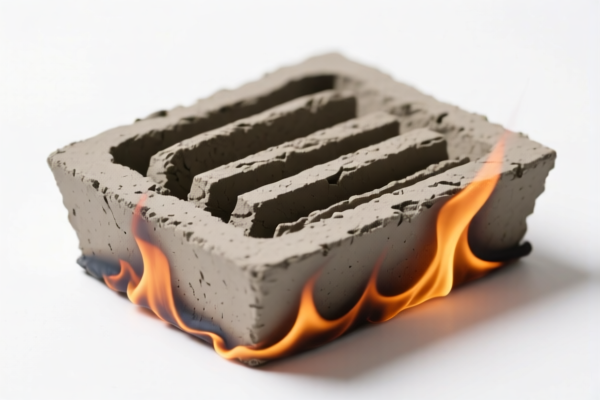
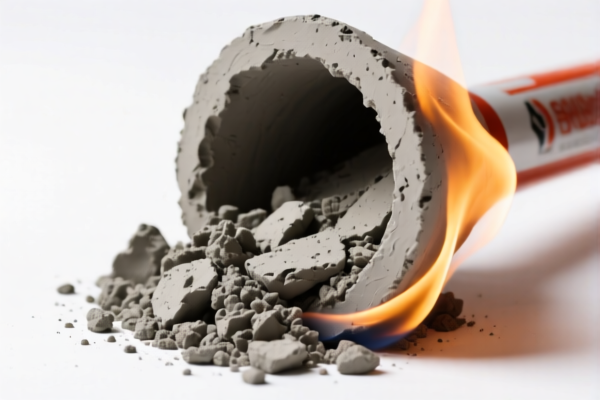
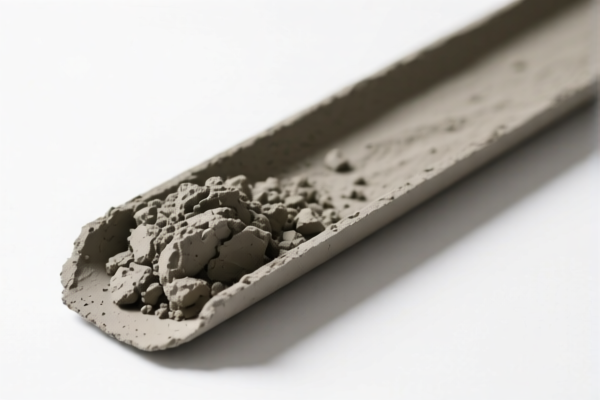

AI Analysis
🧱 Low Alkali Refractory Mortar & Low Shrinkage Refractory Mud: Strategic Classification & US Customs Clearance Guide
🌐 HS Code Reference & Customs Clearance Guide | 2026 Latest Tariff Analysis | Professional Duty Optimization Strategy
📌 I. Product Definition & Classification: Do You Really Understand "Refractory Materials"?
Refractory Mortar (Low Alkali) and Refractory Mud (Low Shrinkage) are specialized inorganic binding agents used in high-temperature industrial furnaces, kilns, and fireplaces. In international trade, precise classification is critical because minor differences in physical state (powder/mixed vs. brick-like) and composition lead to significantly different tariff rates.
In the provided dataset, two main product types are analyzed: 1. Low Alkali Refractory Mortar: Often classified under Chapter 69 (Ceramics) or Chapter 38 (Miscellaneous Chemical Products), depending on whether it is treated as a finished ceramic accessory or a mixed chemical mortar. 2. Low Shrinkage Refractory Mud: Typically classified under Chapter 69 (Clay-based Ceramic Products) if it mimics the form or function of refractory bricks/blocks.
⚠️ Key Distinction Point:
- If the product is a mixed chemical mortar (powder/granules with additives) not yet formed into a rigid ceramic shape → Consider Chapter 38.
- If the product is clay-based and functions as a substitute for refractory bricks/blocks (e.g., mud/mastic applied as a joint filler) → Consider Chapter 69 (Ceramics).
📦 II. HS Code Classification Details (Based on Provided Data)
| HS Code | Product Description | Application Scenario | Key Classification Logic |
|---|---|---|---|
6902.90.50.20 |
Refractory Mortar (Low Alkali) – Classified as Refractory Ceramic Products | Joint filling in ceramic linings, low-alkali applications | ✅ Chapter 69: Treated as a "Refractory Ceramic Product" similar to bricks. |
3816.00.20.50 |
Refractory Mortar (Low Alkali) – Classified as Other Refractory Mortars | Chemical mortar mixtures, industrial insulation | ✅ Chapter 38: Based on mineral/chemical composition inference; distinct from fired ceramics. |
3816.00.20.10 |
Refractory Mortar (Low Alkali) – Classified as Refractory Cement/Mortar | Industrial refractory cement applications | ✅ Chapter 38: Matches "Refactory cement, mortar and similar refractory compounds." |
6902.90.50.10 |
Refractory Mud (Low Shrinkage) – Clay-based Ceramic Product | Kiln linings, furnace repair using clay mud | ✅ Chapter 69: "Clay-based refractory ceramic product," fits building refractory category. |
6902.90.10.10 |
Refractory Mud (Low Shrinkage) – Clay-based Refractory Brick/Block Substitute | Furnace brick jointing, mud-as-brick alternative | ✅ Chapter 69: "Clay-made refractory brick/block," fits functional and material attributes. |
🔍 Critical Reminder:
- Chapter 69 (6902.90...) generally applies to clay-based refractories. It has a lower base tariff (0%) but still incurs trade war taxes.
- Chapter 38 (3816.00...) applies to chemical/mineral mortars (e.g., calcium aluminate, silicone-based). It has a higher base tariff (3%).
- Misclassification between Chapter 69 and 38 can lead to 0.5% base duty difference, but more importantly, it may trigger customs audits regarding the product's true nature (chemical vs. ceramic).
💰 III. 2026 Latest Tariff Rate Breakdown (Including Additional Taxes & Policy Surcharges)
✅ Applicable Country: United States (US)
✅ Origin: China (CN)
✅ Effective Date: Post-2025 (Inclusive of subsequent imports)
🎯 1. 6902.90.50.20 & 6902.90.50.10 & 6902.90.10.10 —— Refractory Ceramic Products (Clay-Based)
| Item | Details |
|---|---|
| Base Tariff | 0% (ad valorem) |
| Section 301 Tariff (USITC) | +25% (List 3/4 exemptions do not apply to these codes) |
| Section 122 Tariff (IEEPA) | +10% (Specific surcharge for certain Chinese imports) |
| Total Effective Rate | 35.0% |
| Tax Calculation | CIF Value × 35% |
| De Minimis Exemption | ❌ Not Applicable (deny_de_minimis for Section 301 goods) |
| Legal Basis Path | USITC:6902.90... → FOOTNOTE:301 → IEEPA:122 |
📌 Explanation:
- Although the base duty is 0%, the 25% Section 301 tariff applies heavily.
- The 10% Section 122 tariff is an additional layer, bringing the total to 35%.
- These codes are favorable compared to Chapter 38 because of the 0% base rate.
🎯 2. 3816.00.20.50 & 3816.00.20.10 —— Other Refractory Mortars & Cement (Chemical-Based)
| Item | Details |
|---|---|
| Base Tariff | 3.0% (ad valorem) |
| Section 301 Tariff (USITC) | +25% |
| Section 122 Tariff (IEEPA) | +10% |
| Total Effective Rate | 38.0% |
| Tax Calculation | CIF Value × 38% |
| De Minimis Exemption | ❌ Not Applicable |
| Legal Basis Path | USITC:3816.00... → FOOTNOTE:301 → IEEPA:122 |
📌 Note:
- The 3% base tariff adds to the 25% + 10% surcharges, resulting in a 38% total rate.
- This is 3% higher than the Chapter 69 classification.
- Even for small shipments, this 3% base difference compounds on high-value industrial orders.
🛠️ IV. Customs Clearance Practical Advice (Real-World Pitfall Avoidance)
✅ 1. Required Documentation Checklist (Mandatory)
| Document | Must Provide? | Purpose |
|---|---|---|
| ✅ Product Spec Sheet | ✔️ | Must specify chemical composition (e.g., Clay %, Silica %, Alumina %) and alkali content ("Low Alkali" must be substantiated). |
| ✅ Safety Data Sheet (SDS) | ✔️ | To prove non-hazardous chemical nature. |
| ✅ Product Photos | ✔️ | Show texture (powder vs. paste), packaging, and intended application (e.g., applied to furnace bricks). |
| ✅ Statement of Composition | ✔️ | Explicitly state: "Contains X% Clay, Y% Additives. Function: Joint Filling for Refractory Bricks." |
| ✅ Commercial Invoice | ✔️ | Clearly describe as "Refractory Mortar, Low Alkali, for Industrial Furnace Lining." Avoid vague terms like "Cement." |
| ✅ Packing List | ✔️ | Ensure weight matches declared CIF value. |
✅ 2. Declaration Strategy (Key Mantra)
🔥 "Clay = Chapter 69 (0% Base); Chemical = Chapter 38 (3% Base). Be Precise, Avoid Audit!"
| Scenario | Correct Declaration | Error Consequence |
|---|---|---|
| Clay-based mud used for brick joints | 6902.90.10.10 (Clay Refractory) |
If misclassified as 3816, you pay extra 3% base duty + potential back taxes. |
| Chemical cement for high-temp insulation | 3816.00.20.10 (Refractory Cement) |
If misclassified as 6902, Customs may argue it’s not a "ceramic," leading to reclassification + penalties. |
| Low Alkali Mortar | Specify "Low Alkali" in description | Helps justify 6902.90.50.20 if argued as specialized ceramic accessory. |
| Bulk Powder vs. Pre-mixed Paste | Declare actual form | Powder is more likely 3816; pre-mixed paste might be argued as 6902 if clay-heavy. |
✅ 3. Special Considerations
| Situation | Handling Advice |
|---|---|
| High-Value Industrial Orders | Apply for Advance Ruling (Ruling Letter) from CBP. Submit composition analysis to lock in 6902 classification (35% vs 38% savings). |
| Mixed Shipments (Bricks + Mortar) | Declare Mortar separately with its own HS Code. Do not bundle under "Furnace Parts" to avoid ambiguity. |
| "Low Alkali" Claim | Ensure lab reports support "Low Alkali" (<1% Na2O/K2O). If not, Customs may classify under higher-alkali codes with different restrictions. |
| Section 122 Tariff | This 10% tariff is specific. Ensure your supplier confirms the country of origin is China. If transshipped via Vietnam/Malaysia without substantial transformation, risks remain. |
🌍 V. Global Market Comparison (2026 Context)
| Country/Region | Recommended HS Code | Total Tax Rate (China Origin) | Notes |
|---|---|---|---|
| 🇺🇸 USA | 6902.90.50.20 |
35% (Base 0% + 301 25% + 122 10%) | High effective rate due to trade wars. |
| 🇺🇸 USA | 3816.00.20.10 |
38% (Base 3% + 301 25% + 122 10%) | 3% higher base duty. |
| 🇨🇳 China | 6902.90 |
~7-10% | No trade war surcharges domestically. |
| 🇪🇺 EU | 6902.90 |
6.5% | No Section 301/122 equivalents. |
| 🇦🇺 Australia | 6902.90 |
5% | No additional surcharges. |
📌 Conclusion:
- USA is the most expensive market for these goods due to Section 301 (25%) + Section 122 (10%)叠加.
- Choosing6902over3816saves 3% base duty, which is significant for large-volume shipments.
- Documentation proving clay content is the key to securing the lower 35% rate.
📌 VI. Common Mistakes & Pitfalls (Lessons Learned)
❌ Mistake 1: Describing the product simply as "Cement" or "Mortar"
👉 Consequence: Customs may default to 3816 (38% total) or even higher if classified as general chemical.
✅ Fix: Use "Refractory Mortar, Low Alkali, Clay-Based" or "Refractory Mud."
❌ Mistake 2: Ignoring the "Low Alkali" specification
👉 Consequence: May not qualify for specialized ceramic accessory status (6902.90.50.20).
✅ Fix: Provide Lab Test Report showing alkali content < threshold.
❌ Mistake 3: Assuming "Refractory" automatically means 0% base duty
👉 Consequence: Only Chapter 69 refractories have 0% base. Chapter 38 has 3%.
✅ Fix: Verify chemical composition. Is it fired clay (Ch 69) or mixed chemical (Ch 38)?
❌ Mistake 4: Underestimating Section 122 Tariff
👉 Consequence: Many importers forget the 10% IEEPA surcharge, calculating only 25% + base.
✅ Fix: Always add 10% for China-origin goods in these categories.
🎯 VII. Conclusion: Precision in Classification Saves Money!
🎯 Remember the Mantra:
🔹 "Clay is King (0% Base), Chemical is Costly (3% Base)."
🔹 "35% vs 38%: A 3% Gap on $100k Order = $3,000 Savings!"
🔹 "Section 301 (25%) + Section 122 (10%) are Non-Negotiable for China Origin."
📌 Pro Tip:
If your Low Alkali Refractory Mortar is clay-heavy, insist on HS Code 6902.90.50.20 or 6902.90.10.10.
If it is chemical/aluminate-based, accept 3816.00.20.10 but ensure no misclassification penalties.
Always apply for an Advance Ruling if the shipment value exceeds $50,000.
📣 Immediate Action:
📞 Contact your Customs Broker with the Spec Sheet and Lab Report.
📝 Declare: "Refractory Mortar, Low Alkali, Clay-Based, for Industrial Furnace Lining."
🚀 Clear US Customs Smoothly, Control Costs, and Maximize Profit Margins!
✨ Professional Customs Clearance Starts with Accurate Classification!
💼 Every Percentage Point Matters in the Age of Trade Wars!
Customer Reviews
About HS Code Classification
The Harmonized System (HS) is an internationally standardized nomenclature developed by the World Customs Organization (WCO) to classify traded products. Over 200 countries use the HS system as the basis for customs tariffs, trade statistics, and import/export regulations.
Each HS code follows a hierarchical structure:
- Chapter (2 digits) — Broad category of goods (e.g., Chapter 84: Machinery and Mechanical Appliances)
- Heading (4 digits) — More specific grouping within the chapter
- Subheading (6 digits) — Internationally standardized breakdown, used by all WCO member countries
- National subdivisions (8-10 digits) — Country-specific extensions for further classification, such as US HTSUS 10-digit codes
Correct HS code classification is essential for smooth customs clearance, accurate duty payment, and compliance with trade regulations. Misclassification can lead to customs delays, overpayment of duties, or penalties.
When importing from CN to US, the applicable tariff rates may include:
- Most-Favored-Nation (MFN) rate — The standard duty rate applied to WTO members
- General rate — Applied to countries without trade agreements
- Trade remedy duties — Additional tariffs such as Section 301 (anti-dumping), Section 232 (national security), or countervailing duties
The information provided on this page is for reference purposes only. For official classification, please consult with your local customs authority or a licensed customs broker.