Massage Waist Belt
CN → US| HS编码 | 关税税率 | 原产国 | 目的国 | 文档 |
|---|---|---|---|---|
| 9019102050 | 10.0% | CN | US | 官方文档 |
| 8509805095 | 14.2% | CN | US | 官方文档 |
| 8509805080 | 14.2% | CN | US | 官方文档 |
| 9019102020 | 10.0% | CN | US | 官方文档 |
商品图片


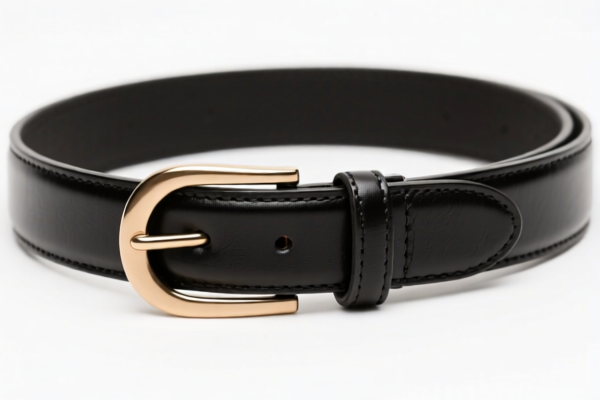
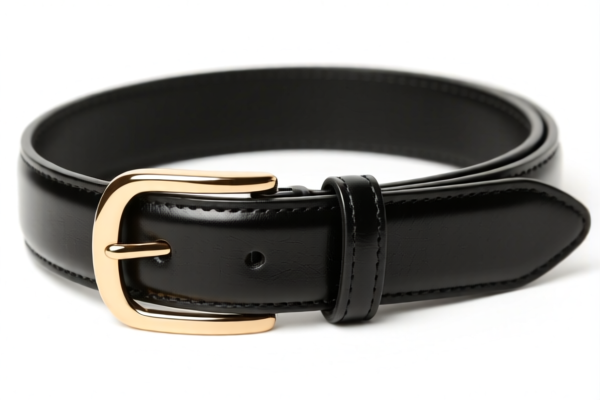
AI分析
🌟 Massage Waist Belt: The Ultimate HS Code & Duty Strategy Guide (2026 Edition)
🌐 HS Code Classification & Duty Decoding | 2026 Tax Regime | Smart Clearance Strategy
📌 I. Product Definition & Classification: Is Your "Waist Belt" Electric or Manual?
The Massage Waist Belt is a versatile health device designed to alleviate back pain, improve circulation, and provide muscle relaxation. In international trade, its classification hinges entirely on power source and functionality:
- Manual/Mechanical Belts: Rely on user movement, pressure, or non-motorized components (e.g., vibration pads without motors).
- Electric/Electric Motor-Driven Belts: Contain an internal motor, battery, or plug-in power supply to generate vibration, kneading, heat, or electrical stimulation.
⚠️ Critical Distinction:
- Non-Electric (Manual) → Classified under 9019.10 (Mechanical Therapy Devices).
- Electric (Motorized) → Classified under 8509 (Electric Domestic Appliances).
Misclassification here can lead to a 10%–15% tariff shock or customs detention!
📦 II. HS Code Classification Matrix (2026 Authorized Reference)
Based on the latest 2026 trade data, here is the precise breakdown for Massage Waist Belts:
| HS Code | Product Description (Summary) | Logic & Classification Basis | Total Tax Rate |
|---|---|---|---|
9019.10.20.50 |
Manual Massage Belt | Classified as Non-Electric massage appliances. Purpose and classification align with mechanical therapy. | 10.0% |
8509.80.50.95 |
Electric Home Appliance Belt | Classified as a Home Appliance with self-contained electric motor. Fits the "Other Appliances" category. | 14.2% |
8509.80.50.80 |
Electro-Mechanical Belt | Classified as a Self-contained electro-mechanical home appliance. Fits the "Other Categories" catch-all logic. | 14.2% |
9019.10.20.20 |
Electric Massage Instrument | Classified as a Massage Instrument. Based on common inference, it is an electric or battery-powered device. | 10.0% |
🔍 Key Insight:
- If your belt has a motor, it usually falls under 8509 (14.2%) OR 9019 (10.0%) depending on specific technical definitions of "Appliance" vs. "Instrument".
- If your belt is purely mechanical (no motor), it falls under 9019 (10.0%).
💰 III. 2026 Tax Rate Breakdown (Detailed Duty Analysis)
✅ Scope: Applies to China-origin goods imported into the US (or similar jurisdictions with Section 122).
✅ Timeline: Current 2026 Tax Regime.
🎯 1. 9019.10.20.50 & 9019.10.20.20 – The 10% Tier
| Item | Content |
|---|---|
| Base Tariff | 0.0% |
| Additional Tariff (Section 122) | +10.0% |
| Total Tax Rate | 10.0% |
| Tax Detail | Base: 0.0%, Additional: 0.0%, Section 122 Clause: 10% |
| Applicable Product | Manual belts (...50) OR Electric/Instrument belts (...20) if deemed "Therapeutic Devices". |
| Legal Basis | Section 122 Tariff (Specific 122-Clause Tax) |
📌 Explanation:
- Base Tariff is 0%: These categories enjoy a duty-free status on the base level.
- Section 122 Surcharge: A specific 10% tariff applies under "Section 122 Clause". This is the only tax charged.
- Strategy: This is the lowest cost entry point (10%).
🎯 2. 8509.80.50.95 & 8509.80.50.80 – The 14.2% Tier
| Item | Content |
|---|---|
| Base Tariff | 4.2% |
| Additional Tariff (Section 122) | +10.0% |
| Total Tax Rate | 14.2% |
| Tax Detail | Base: 4.2%, Additional: 0.0%, Section 122 Clause: 10% |
| Applicable Product | Belts classified as "Electric Home Appliances" with self-contained motors. |
| Legal Basis | Base Tariff (4.2%) + Section 122 Clause (10%) |
📌 Explanation:
- Base Tariff is 4.2%: As "Other Electrical Home Appliances", they carry a base duty.
- Section 122 Surcharge: The 10% surcharge is added on top.
- Result: 14.2% Total.
- Risk: If your product has a motor but is misclassified as "Appliance", you pay 4.2% extra compared to the "Instrument" classification.
🛠️ IV. Customs Clearance实操 Advice (Practical Clearance Strategy)
✅ 1. Preparation Checklist (The "Golden Documents")
| Document | Required? | Why It Matters |
|---|---|---|
| Technical Spec Sheet | ✅ Mandatory | Must explicitly state: "Self-contained Motor: Yes/No", Voltage, Wattage. |
| Circuit Diagram | ✅ Highly Recommended | Proves if it's a simple vibration unit (8509) or a complex medical instrument (9019). |
| Product Photos | ✅ Mandatory | Show the battery compartment, plug, or lack thereof. |
| User Manual | ✅ Mandatory | Clarifies if it's marketed as "Health Care Instrument" (9019) or "Household Appliance" (8509). |
| Commercial Invoice | ✅ Mandatory | Must match the HS Code exactly (e.g., do not write "Appliance" for 9019). |
✅ 2. Declaration Tips (The "Save Tax" Trick)
🔥 Rule of Thumb:
"If it's purely for massage and therapeutic, argue for 9019 (10%). If it's a standard household appliance, 8509 (14.2%) is inevitable."
| Scenario | Correct Classification | Incorrect Classification (Risk) |
|---|---|---|
| Battery-operated, no plug, "Therapeutic" | 9019.10.20.20 (10%) |
8509.80.50.95 (14.2%) → Lose 4.2% |
| Plug-in, standard vibration | 8509.80.50.95 (14.2%) |
9019.10.20.50 (10%) → Customs Audits & Penalties |
| Manual, no motor | 9019.10.20.50 (10%) |
8509 → Impossible (No motor) |
✅ 3. Special Handling for "Section 122" Tax
🚨 Warning: All listed HS Codes above include a Section 122 Tariff (10%).
- Action: Ensure your invoice clearly references the Section 122 Clause to avoid delays.
- Calculation:
- For9019:CIF Value × 10%= Tax Due.
- For8509:CIF Value × (4.2% + 10%)= Tax Due.
🌍 V. Global Market Comparison (2026 Context)
| Region | Recommended HS Code | Total Tax Rate | Key Constraint |
|---|---|---|---|
| 🇺🇸 USA | 9019.10.20.xx |
10.0% | Must prove "Non-Electric" or "Instrument" status. |
| 🇺🇸 USA (Appliance) | 8509.80.50.xx |
14.2% | Standard "Electric Home Appliance" path. |
| 🇪🇺 EU | 9019.10 |
~0% - 6% | CE Certification required; no Section 122 equivalent. |
| 🇨🇦 Canada | 9019.10 |
~0% | Medical device exemption possible. |
📌 Conclusion:
The US market is the most complex. The 10% vs. 14.2% difference is small in absolute terms but significant for high-volume shipments. The key is technical definition.
📌 VI. Common Pitfalls & Avoidance Guide
❌ Pitfall 1: "It has a battery, so it MUST be 8509."
👉 Correction: Battery-powered massage instruments can be 9019 if classified as "Therapeutic Devices".
❌ Pitfall 2: "I'll just call it 'Massage Belt' and let Customs decide."
👉 Correction: Customs will default to the higher tax (14.2%) or demand expensive re-classification. Be Specific!
❌ Pitfall 3: Ignoring the Section 122 Tax.
👉 Correction: The 10% Section 122 Clause applies to ALL these codes. Do not calculate only the base tax!
✅ Pro Tip:
"For 9019, emphasize 'Therapeutic' and 'Non-Appliance' in the description. For 8509, emphasize 'Home Appliance' and 'Motor Function'."
🎯 VII. Final Verdict: How to Ship Smart
-
Step 1: Check if your belt has a motor.
- No Motor → Go straight to
9019.10.20.50(10% Total). - Has Motor → Check marketing docs.
- If "Medical/Therapeutic Instrument" → Try
9019.10.20.20(10% Total). - If "Home Appliance" → Expect
8509.80.50.95/80(14.2% Total).
- If "Medical/Therapeutic Instrument" → Try
- No Motor → Go straight to
-
Step 2: Prepare a Technical Specification Sheet highlighting the "Motor vs. Manual" distinction.
-
Step 3: Calculate duties based on Total Tax Rate (Base + Section 122).
🚀 Final Advice:
"If you want the 10% rate, your product must be defensible as a 'Medical Instrument' (9019). If you are just a 'Home Appliance' (8509), prepare for 14.2%. Do not guess—get a pre-classification ruling!"
✨ Clearance Success Starts with Precision!
💼 Your Profit Margin Depends on the Right HS Code!
用户评价
关于 HS 编码归类
协调制度(HS)是由世界海关组织(WCO)制定的国际贸易商品分类标准。全球 200 多个国家采用 HS 系统作为海关关税、贸易统计和进出口监管的基础。
每个 HS 编码遵循以下层级结构:
- 章(2 位)——商品大类(例如:第 84 章:机器和机械设备)
- 品目(4 位)——章内的更具体分类
- 子目(6 位)——国际通用细分,所有 WCO 成员国统一使用
- 本国细分(8-10 位)——各国自行扩展的细分编码,如美国 HTSUS 10 位编码
正确的 HS 编码归类对于顺利通关、准确缴纳关税和遵守贸易法规至关重要。错误归类可能导致海关延误、多缴关税或罚款。
从CN进口到US时,适用的关税税率可能包括:
- 最惠国(MFN)税率——适用于 WTO 成员国的标准关税税率
- 普通税率——适用于无贸易协定国家
- 贸易救济关税——附加关税,如 301 条款(反倾销)、232 条款(国家安全)或反补贴税
本页内容仅供参考。如需正式归类,请咨询当地海关或持牌报关代理。