Massage Waist Belt
CN → US| HS Code | Tariff Rate | Origin | Destination | Doc |
|---|---|---|---|---|
| 9019102050 | 10.0% | CN | US | Official Doc |
| 8509805095 | 14.2% | CN | US | Official Doc |
| 8509805080 | 14.2% | CN | US | Official Doc |
| 9019102020 | 10.0% | CN | US | Official Doc |
Product Images


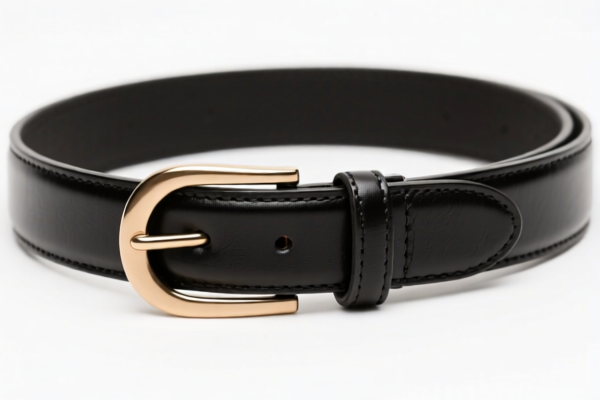
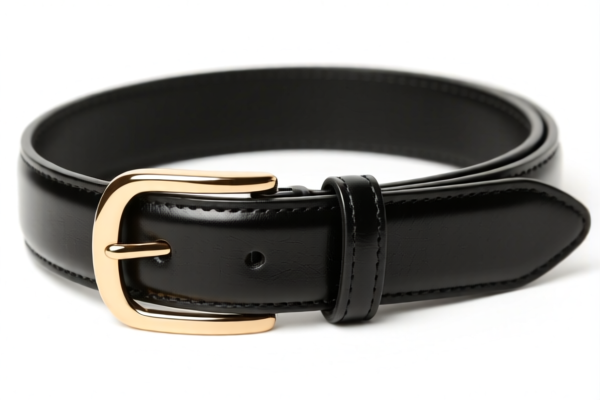
AI Analysis
🌟 Massage Waist Belt: The Ultimate HS Code & Duty Strategy Guide (2026 Edition)
🌐 HS Code Classification & Duty Decoding | 2026 Tax Regime | Smart Clearance Strategy
📌 I. Product Definition & Classification: Is Your "Waist Belt" Electric or Manual?
The Massage Waist Belt is a versatile health device designed to alleviate back pain, improve circulation, and provide muscle relaxation. In international trade, its classification hinges entirely on power source and functionality:
- Manual/Mechanical Belts: Rely on user movement, pressure, or non-motorized components (e.g., vibration pads without motors).
- Electric/Electric Motor-Driven Belts: Contain an internal motor, battery, or plug-in power supply to generate vibration, kneading, heat, or electrical stimulation.
⚠️ Critical Distinction:
- Non-Electric (Manual) → Classified under 9019.10 (Mechanical Therapy Devices).
- Electric (Motorized) → Classified under 8509 (Electric Domestic Appliances).
Misclassification here can lead to a 10%–15% tariff shock or customs detention!
📦 II. HS Code Classification Matrix (2026 Authorized Reference)
Based on the latest 2026 trade data, here is the precise breakdown for Massage Waist Belts:
| HS Code | Product Description (Summary) | Logic & Classification Basis | Total Tax Rate |
|---|---|---|---|
9019.10.20.50 |
Manual Massage Belt | Classified as Non-Electric massage appliances. Purpose and classification align with mechanical therapy. | 10.0% |
8509.80.50.95 |
Electric Home Appliance Belt | Classified as a Home Appliance with self-contained electric motor. Fits the "Other Appliances" category. | 14.2% |
8509.80.50.80 |
Electro-Mechanical Belt | Classified as a Self-contained electro-mechanical home appliance. Fits the "Other Categories" catch-all logic. | 14.2% |
9019.10.20.20 |
Electric Massage Instrument | Classified as a Massage Instrument. Based on common inference, it is an electric or battery-powered device. | 10.0% |
🔍 Key Insight:
- If your belt has a motor, it usually falls under 8509 (14.2%) OR 9019 (10.0%) depending on specific technical definitions of "Appliance" vs. "Instrument".
- If your belt is purely mechanical (no motor), it falls under 9019 (10.0%).
💰 III. 2026 Tax Rate Breakdown (Detailed Duty Analysis)
✅ Scope: Applies to China-origin goods imported into the US (or similar jurisdictions with Section 122).
✅ Timeline: Current 2026 Tax Regime.
🎯 1. 9019.10.20.50 & 9019.10.20.20 – The 10% Tier
| Item | Content |
|---|---|
| Base Tariff | 0.0% |
| Additional Tariff (Section 122) | +10.0% |
| Total Tax Rate | 10.0% |
| Tax Detail | Base: 0.0%, Additional: 0.0%, Section 122 Clause: 10% |
| Applicable Product | Manual belts (...50) OR Electric/Instrument belts (...20) if deemed "Therapeutic Devices". |
| Legal Basis | Section 122 Tariff (Specific 122-Clause Tax) |
📌 Explanation:
- Base Tariff is 0%: These categories enjoy a duty-free status on the base level.
- Section 122 Surcharge: A specific 10% tariff applies under "Section 122 Clause". This is the only tax charged.
- Strategy: This is the lowest cost entry point (10%).
🎯 2. 8509.80.50.95 & 8509.80.50.80 – The 14.2% Tier
| Item | Content |
|---|---|
| Base Tariff | 4.2% |
| Additional Tariff (Section 122) | +10.0% |
| Total Tax Rate | 14.2% |
| Tax Detail | Base: 4.2%, Additional: 0.0%, Section 122 Clause: 10% |
| Applicable Product | Belts classified as "Electric Home Appliances" with self-contained motors. |
| Legal Basis | Base Tariff (4.2%) + Section 122 Clause (10%) |
📌 Explanation:
- Base Tariff is 4.2%: As "Other Electrical Home Appliances", they carry a base duty.
- Section 122 Surcharge: The 10% surcharge is added on top.
- Result: 14.2% Total.
- Risk: If your product has a motor but is misclassified as "Appliance", you pay 4.2% extra compared to the "Instrument" classification.
🛠️ IV. Customs Clearance实操 Advice (Practical Clearance Strategy)
✅ 1. Preparation Checklist (The "Golden Documents")
| Document | Required? | Why It Matters |
|---|---|---|
| Technical Spec Sheet | ✅ Mandatory | Must explicitly state: "Self-contained Motor: Yes/No", Voltage, Wattage. |
| Circuit Diagram | ✅ Highly Recommended | Proves if it's a simple vibration unit (8509) or a complex medical instrument (9019). |
| Product Photos | ✅ Mandatory | Show the battery compartment, plug, or lack thereof. |
| User Manual | ✅ Mandatory | Clarifies if it's marketed as "Health Care Instrument" (9019) or "Household Appliance" (8509). |
| Commercial Invoice | ✅ Mandatory | Must match the HS Code exactly (e.g., do not write "Appliance" for 9019). |
✅ 2. Declaration Tips (The "Save Tax" Trick)
🔥 Rule of Thumb:
"If it's purely for massage and therapeutic, argue for 9019 (10%). If it's a standard household appliance, 8509 (14.2%) is inevitable."
| Scenario | Correct Classification | Incorrect Classification (Risk) |
|---|---|---|
| Battery-operated, no plug, "Therapeutic" | 9019.10.20.20 (10%) |
8509.80.50.95 (14.2%) → Lose 4.2% |
| Plug-in, standard vibration | 8509.80.50.95 (14.2%) |
9019.10.20.50 (10%) → Customs Audits & Penalties |
| Manual, no motor | 9019.10.20.50 (10%) |
8509 → Impossible (No motor) |
✅ 3. Special Handling for "Section 122" Tax
🚨 Warning: All listed HS Codes above include a Section 122 Tariff (10%).
- Action: Ensure your invoice clearly references the Section 122 Clause to avoid delays.
- Calculation:
- For9019:CIF Value × 10%= Tax Due.
- For8509:CIF Value × (4.2% + 10%)= Tax Due.
🌍 V. Global Market Comparison (2026 Context)
| Region | Recommended HS Code | Total Tax Rate | Key Constraint |
|---|---|---|---|
| 🇺🇸 USA | 9019.10.20.xx |
10.0% | Must prove "Non-Electric" or "Instrument" status. |
| 🇺🇸 USA (Appliance) | 8509.80.50.xx |
14.2% | Standard "Electric Home Appliance" path. |
| 🇪🇺 EU | 9019.10 |
~0% - 6% | CE Certification required; no Section 122 equivalent. |
| 🇨🇦 Canada | 9019.10 |
~0% | Medical device exemption possible. |
📌 Conclusion:
The US market is the most complex. The 10% vs. 14.2% difference is small in absolute terms but significant for high-volume shipments. The key is technical definition.
📌 VI. Common Pitfalls & Avoidance Guide
❌ Pitfall 1: "It has a battery, so it MUST be 8509."
👉 Correction: Battery-powered massage instruments can be 9019 if classified as "Therapeutic Devices".
❌ Pitfall 2: "I'll just call it 'Massage Belt' and let Customs decide."
👉 Correction: Customs will default to the higher tax (14.2%) or demand expensive re-classification. Be Specific!
❌ Pitfall 3: Ignoring the Section 122 Tax.
👉 Correction: The 10% Section 122 Clause applies to ALL these codes. Do not calculate only the base tax!
✅ Pro Tip:
"For 9019, emphasize 'Therapeutic' and 'Non-Appliance' in the description. For 8509, emphasize 'Home Appliance' and 'Motor Function'."
🎯 VII. Final Verdict: How to Ship Smart
-
Step 1: Check if your belt has a motor.
- No Motor → Go straight to
9019.10.20.50(10% Total). - Has Motor → Check marketing docs.
- If "Medical/Therapeutic Instrument" → Try
9019.10.20.20(10% Total). - If "Home Appliance" → Expect
8509.80.50.95/80(14.2% Total).
- If "Medical/Therapeutic Instrument" → Try
- No Motor → Go straight to
-
Step 2: Prepare a Technical Specification Sheet highlighting the "Motor vs. Manual" distinction.
-
Step 3: Calculate duties based on Total Tax Rate (Base + Section 122).
🚀 Final Advice:
"If you want the 10% rate, your product must be defensible as a 'Medical Instrument' (9019). If you are just a 'Home Appliance' (8509), prepare for 14.2%. Do not guess—get a pre-classification ruling!"
✨ Clearance Success Starts with Precision!
💼 Your Profit Margin Depends on the Right HS Code!
Customer Reviews
About HS Code Classification
The Harmonized System (HS) is an internationally standardized nomenclature developed by the World Customs Organization (WCO) to classify traded products. Over 200 countries use the HS system as the basis for customs tariffs, trade statistics, and import/export regulations.
Each HS code follows a hierarchical structure:
- Chapter (2 digits) — Broad category of goods (e.g., Chapter 84: Machinery and Mechanical Appliances)
- Heading (4 digits) — More specific grouping within the chapter
- Subheading (6 digits) — Internationally standardized breakdown, used by all WCO member countries
- National subdivisions (8-10 digits) — Country-specific extensions for further classification, such as US HTSUS 10-digit codes
Correct HS code classification is essential for smooth customs clearance, accurate duty payment, and compliance with trade regulations. Misclassification can lead to customs delays, overpayment of duties, or penalties.
When importing from CN to US, the applicable tariff rates may include:
- Most-Favored-Nation (MFN) rate — The standard duty rate applied to WTO members
- General rate — Applied to countries without trade agreements
- Trade remedy duties — Additional tariffs such as Section 301 (anti-dumping), Section 232 (national security), or countervailing duties
The information provided on this page is for reference purposes only. For official classification, please consult with your local customs authority or a licensed customs broker.