Medical Grade Acrylic Sheets
CN → US| HS编码 | 关税税率 | 原产国 | 目的国 | 文档 |
|---|---|---|---|---|
| 3920515090 | 41.5% | CN | US | 官方文档 |
| 3920511000 | 41.0% | CN | US | 官方文档 |
| 3921110000 | 40.3% | CN | US | 官方文档 |
| 3921190090 | 41.5% | CN | US | 官方文档 |
| 3926909989 | 22.8% | CN | US | 官方文档 |
商品图片
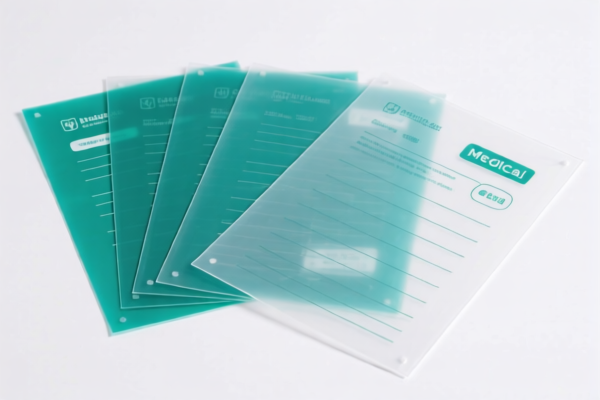
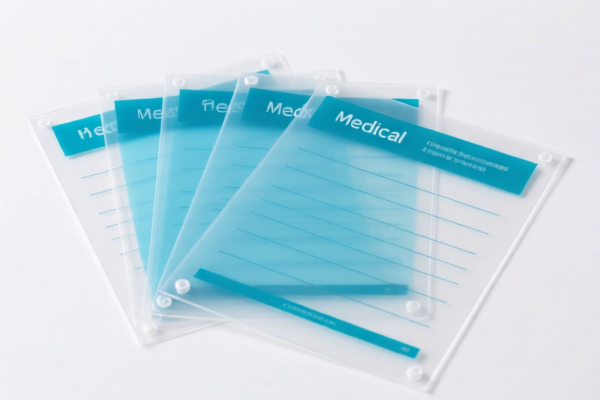
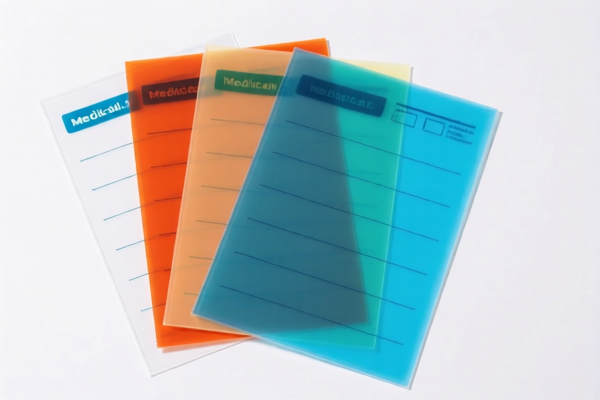
AI分析
🏥 Medical Grade Acrylic Sheets (PMMA)
🌐 HS Code Reference & Customs Clearance Guide | 2026 Latest Tariff Analysis | Professional Clearance Strategy
📌 I. Product Definition & Classification: Do You Truly Understand "Medical Acrylic"?
Acrylic sheets, chemically known as Polymethyl Methacrylate (PMMA), are transparent thermoplastics often used as a lightweight or shatter-resistant alternative to glass. In the medical and laboratory sectors, they are critical for: * Laboratory Equipment: Reagent trays, slide holders, and protective shields. * Medical Devices: Housing for diagnostic equipment, transparent casings, and display covers. * Hospital Infrastructure: Bedside panels, protective barriers, and furniture components.
In international trade, the classification depends heavily on specific intended use, chemical composition details, and physical form.
⚠️ Key Distinction:
- If the product is a general-purpose plastic sheet for packaging or construction → Often 3920/3921;
- If it is a specialized finished article (e.g., specific lab trays or device parts) → May fall under 3926.90 (Articles of plastics).
- Food-grade vs. Medical-grade: While similar in material (PMMA), medical-grade requires stricter biocompatibility certifications, which can influence customs inspection and duty eligibility depending on the country's health product regulations.
📦 II. HS Code Classification Details (Based on Provided Data)
The following HS Codes are derived directly from the provided <DATA>. Please note that while the material is the same (PMMA/Acrylic), the tariff rates vary significantly based on how customs interprets the specific "use" or "sub-category" (e.g., whether it is considered a "basic plate" or a "finished article").
| HS Code | Product Summary (from Data) | Total Tax Rate | Tax Detail Breakdown |
|---|---|---|---|
3920.51.50.90 |
Food-grade Acrylic Sheet: Material is PMMA, form is board/plate. | 41.5% | Base: 6.5% + Trade War: 25.0% + Section 122: 10% |
3920.51.10.00 |
Food-grade Acrylic Sheet: Material is PMMA, form is plate-shaped. | 41.0% | Base: 6.0% + Trade War: 25.0% + Section 122: 10% |
3921.11.00.00 |
Other Plastic Plates/Sheets: Shape fits plate/sheet characteristics, Material is Acrylic. | 40.3% | Base: 5.3% + Trade War: 25.0% + Section 122: 10% |
3921.19.00.90 |
Other Plastic Plates/Sheets: Material is Acrylic, form is plate, not specific microporous sheet. | 41.5% | Base: 6.5% + Trade War: 25.0% + Section 122: 10% |
3926.90.99.89 |
Other Plastic Articles: Material is Acrylic, form is board, used for laboratories etc. | 22.8% | Base: 5.3% + Trade War: 7.5% + Section 122: 10% |
🔍 Critical Observation:
- The lowest tax rate (22.8%) is available if the product is clearly declared as "used for laboratories" or similar specific finished articles under heading 3926.
- The highest tax rates (~41%) apply when the product is classified as a generic plastic plate/sheet (Headings 3920/3921).
- Section 122 Tariff (10%) is consistently applied across all listed codes, likely referring to specific bilateral trade clauses or surtaxes for origin [Country X, likely China given the 301-style breakdown].
💰 III. 2026 Latest Tariff Rate Breakdown (Incl. Surtaxes)
✅ Context: The tax structure indicates a high-tariff environment (likely US-China trade context due to "25% additional" and "Section 122").
✅ Origin: Likely China (CN) based on the 25% "Additional Tariff" (Section 301 style) and 10% "Section 122".
🎯 1. High-Tariff Scenario: 3920.51.50.90 & 3921.19.00.90
Classification: Generic Plastic Plates/Sheets
Total Tax: 41.5%
| Item | Detail |
|---|---|
| Base Tariff | 6.5% (Ad Valorem) |
| Section 301 / Additional Tariff | +25.0% |
| Section 122 Tariff | +10.0% |
| Effective Total Rate | 41.5% |
| Calculation Basis | CIF Value × 41.5% |
| De Minimis Exemption | ❌ Not Eligible (High value, non-exempt category) |
📌 Explanation:
- This rate applies if the acrylic is declared simply as a "sheet" or "plate" without specific medical/lab use context in the HS code description.
- The 25% surcharge is typical for Section 301 goods.
- The 10% Section 122 tariff adds further cost, possibly related to specific diplomatic or trade policy adjustments.
🎯 2. Mid-Tariff Scenario: 3921.11.00.00
Classification: Other Plastic Plates/Sheets (Specific Sub-category)
Total Tax: 40.3%
| Item | Detail |
|---|---|
| Base Tariff | 5.3% |
| Additional Tariff | +25.0% |
| Section 122 Tariff | +10.0% |
| Effective Total Rate | 40.3% |
| Savings vs. High Tier | 1.2% lower than 3920.51.50.90 |
📌 Explanation:
- Slight reduction in base duty (5.3% vs 6.5%) brings the total down slightly.
- Still subject to the full 25% additional and 10% Section 122 tariffs.
🎯 3. Low-Tariff Scenario: 3926.90.99.89
Classification: Other Plastic Articles (e.g., for Laboratory Use)
Total Tax: 22.8% ⭐ BEST OPTION
| Item | Detail |
|---|---|
| Base Tariff | 5.3% |
| Additional Tariff | +7.5% (Significantly Reduced!) |
| Section 122 Tariff | +10.0% |
| Effective Total Rate | 22.8% |
| Savings vs. High Tier | 18.7% lower than generic plates |
📌 Explanation:
- Crucial Insight: The "Additional Tariff" drops from 25.0% to 7.5% for this code.
- This suggests that lab/medical-specific plastic articles may be exempt from the full trade war surcharge, or are classified under a different exemption list.
- Requirement: You MUST prove the product is for laboratory or medical use (e.g., via product description, invoices, or intended use statements).
🛠️ IV. Customs Clearance Practical Advice (Real-World Pitfall Guide)
✅ 1. Documentation Checklist (Non-Negotiable)
| Document | Required? | Purpose |
|---|---|---|
| ✅ Commercial Invoice | ✔️ | Must specify "Medical Grade PMMA" or "Laboratory Use Acrylic Sheet". Avoid vague terms like "Plastic Sheet". |
| ✅ Product Specification Sheet | ✔️ | Show PMMA composition, transparency, thickness, and certifications (e.g., USP Class VI, ISO 10993 for medical compatibility). |
| ✅ Letter of Intended Use | ✔️ | Explicitly state: "These sheets are intended for fabrication of laboratory equipment/medical device housing." This is key to claiming HS 3926.90. |
| ✅ Certificate of Analysis (CoA) | ✔️ | To prove "Medical Grade" vs. "Industrial Grade" if requested. |
| ✅ Packaging List | ✔️ | Ensure no non-declared accessories are included that might trigger reclassification. |
✅ 2. Declaration Strategy (Key Mantra)
🔥 "Don't Just Say 'Sheet', Say 'Lab Use'! Low Tax Awaits!"
| Scenario | Recommended HS Code | Risk if Declared Incorrectly |
|---|---|---|
| Generic Plastic Sheet for Construction | 3920.51.50.90 |
41.5% Tax. No medical benefit. |
| Acrylic Sheet for Lab/Medical Fabrication | 3926.90.99.89 |
22.8% Tax. Save ~18.7%! |
| Microporous Membrane (Not Solid Plate) | 3921.19.00.90 |
41.5% Tax. If it's not microporous, wrong code. |
📌 Warning:
- If you declare3926.90.99.89but the customs officer finds the sheets are for general construction, they will reclassify to3920or3921and penalize you for misdeclaration.
- Ensure your product description on the invoice clearly links the material to medical/lab applications (e.g., "PMMA Sheet, Medical Grade, for Laboratory Equipment Parts").
✅ 3. Special Circumstances
| Situation | Advice |
|---|---|
| OEM Parts for Medical Devices | Declare as "Parts of Medical Devices" if possible, but if it's raw sheet stock, use 3926.90.99.89 with "Lab Use" justification. |
| Food-Grade vs. Medical-Grade | Although both are PMMA, Medical-Grade often requires biocompatibility certs. Highlight this in documentation to avoid suspicion of "industrial" use. |
| Section 122 Tariff | This 10% tariff is applied regardless. Ensure your supplier can provide proof of origin to avoid additional penalties if audits occur. |
🌍 V. Global Market Clearance Comparison (2026 Outlook)
| Market | Recommended HS Code | Est. Tax Rate | Key Requirement |
|---|---|---|---|
| 🇺🇸 USA (Based on Data) | 3926.90.99.89 |
22.8% | Proof of Lab/Medical Use to avoid 25% surcharge. |
| 🇺🇸 USA (Generic Sheet) | 3920.51.50.90 |
41.5% | No exemption; high trade war impact. |
| 🇨🇳 China (Import) | 3920.51.00.00 |
~5-10% | CCC Certification may be required for medical devices. |
| 🇪🇺 EU | 3920.51.00 or 3926.90 |
0-6.5% | REACH Compliance, Medical Device Regulation (MDR) if finished. |
📌 Conclusion for US Importers:
- Aggressively pursue the3926.90.99.89classification if your acrylic sheets are destined for lab/medical applications.
- The 18.7% tax saving is significant and justifies the effort to provide detailed "Intended Use" documentation.
📌 VI. Common Mistakes & Pitfalls (Lessons Learned)
❌ Mistake 1: Declaring as "Plastic Sheet" without specifying use.
👉 Result: Customs defaults to 3920 → 41.5% Tax.
❌ Mistake 2: Using 3926.90 for raw sheets with no medical context.
👉 Result: Audit failure, back taxes, and potential fines for misdeclaration.
❌ Mistake 3: Ignoring Section 122 Tariff.
👉 Result: Underpayment by 10% on all codes. Always budget for this.
✅ Correct Practice:
"Acrylic Sheet, PMMA, Medical Grade, 5mm Thickness, Intended for Laboratory Equipment Fabrication. Compliant with ISO 10993."
🎯 VII. Conclusion: Smart Classification Saves Money!
🎯 Remember the Mantra:
🔹 "Generic Sheet = 41.5% Pain! Lab/Med Use = 22.8% Gain!"
🔹 "Prove the Use, Save the Tax, Avoid the Audit!"
🔹 "Section 122 is Always On – Don't Forget the 10%!"
📌 Pro Tip:
If your acrylic sheets are not from China, check for Free Trade Agreements (FTAs) (e.g., USMCA, UKFTA) that may reduce or eliminate the 25% additional tariff and Section 122 surcharge. Always verify Origin first!
📣 Immediate Action:
📞 Consult a Customs Broker to validate
3926.90.99.89eligibility.
📄 Prepare "Letter of Intended Use" and Medical Compliance Certs.
🚀 Clear Goods Faster, Pay Less Duty, Stay Compliant!
✨ Professional Clearance Starts with Precise Classification!
💼 Every Percentage Point of Tax Saved is Pure Profit!
用户评价
关于 HS 编码归类
协调制度(HS)是由世界海关组织(WCO)制定的国际贸易商品分类标准。全球 200 多个国家采用 HS 系统作为海关关税、贸易统计和进出口监管的基础。
每个 HS 编码遵循以下层级结构:
- 章(2 位)——商品大类(例如:第 84 章:机器和机械设备)
- 品目(4 位)——章内的更具体分类
- 子目(6 位)——国际通用细分,所有 WCO 成员国统一使用
- 本国细分(8-10 位)——各国自行扩展的细分编码,如美国 HTSUS 10 位编码
正确的 HS 编码归类对于顺利通关、准确缴纳关税和遵守贸易法规至关重要。错误归类可能导致海关延误、多缴关税或罚款。
从CN进口到US时,适用的关税税率可能包括:
- 最惠国(MFN)税率——适用于 WTO 成员国的标准关税税率
- 普通税率——适用于无贸易协定国家
- 贸易救济关税——附加关税,如 301 条款(反倾销)、232 条款(国家安全)或反补贴税
本页内容仅供参考。如需正式归类,请咨询当地海关或持牌报关代理。