Medical Grade Acrylic Sheets
CN → US| HS Code | Tariff Rate | Origin | Destination | Doc |
|---|---|---|---|---|
| 3920515090 | 41.5% | CN | US | Official Doc |
| 3920511000 | 41.0% | CN | US | Official Doc |
| 3921110000 | 40.3% | CN | US | Official Doc |
| 3921190090 | 41.5% | CN | US | Official Doc |
| 3926909989 | 22.8% | CN | US | Official Doc |
Product Images
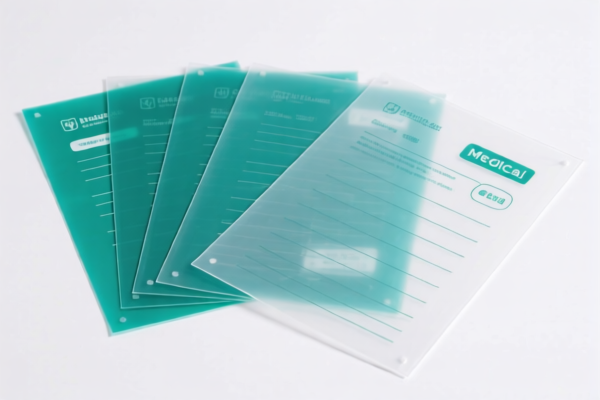
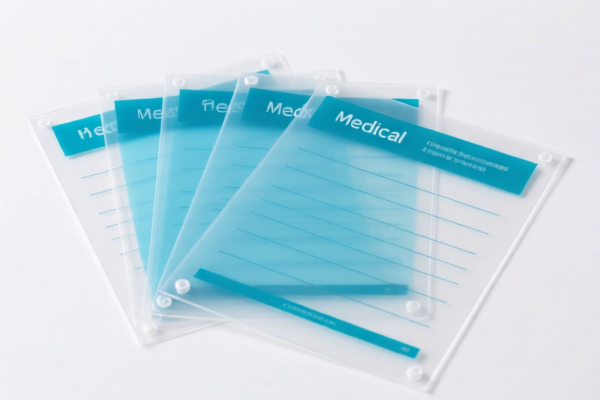
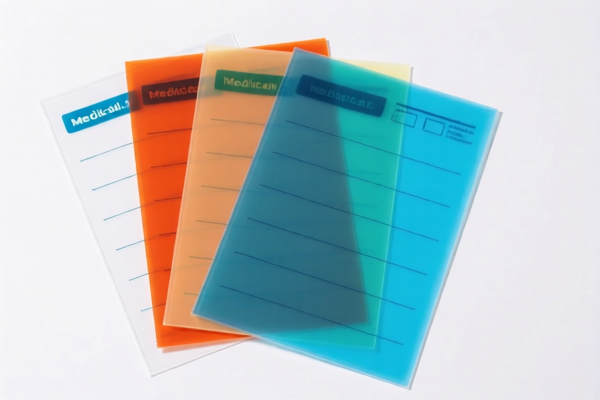
AI Analysis
🏥 Medical Grade Acrylic Sheets (PMMA)
🌐 HS Code Reference & Customs Clearance Guide | 2026 Latest Tariff Analysis | Professional Clearance Strategy
📌 I. Product Definition & Classification: Do You Truly Understand "Medical Acrylic"?
Acrylic sheets, chemically known as Polymethyl Methacrylate (PMMA), are transparent thermoplastics often used as a lightweight or shatter-resistant alternative to glass. In the medical and laboratory sectors, they are critical for: * Laboratory Equipment: Reagent trays, slide holders, and protective shields. * Medical Devices: Housing for diagnostic equipment, transparent casings, and display covers. * Hospital Infrastructure: Bedside panels, protective barriers, and furniture components.
In international trade, the classification depends heavily on specific intended use, chemical composition details, and physical form.
⚠️ Key Distinction:
- If the product is a general-purpose plastic sheet for packaging or construction → Often 3920/3921;
- If it is a specialized finished article (e.g., specific lab trays or device parts) → May fall under 3926.90 (Articles of plastics).
- Food-grade vs. Medical-grade: While similar in material (PMMA), medical-grade requires stricter biocompatibility certifications, which can influence customs inspection and duty eligibility depending on the country's health product regulations.
📦 II. HS Code Classification Details (Based on Provided Data)
The following HS Codes are derived directly from the provided <DATA>. Please note that while the material is the same (PMMA/Acrylic), the tariff rates vary significantly based on how customs interprets the specific "use" or "sub-category" (e.g., whether it is considered a "basic plate" or a "finished article").
| HS Code | Product Summary (from Data) | Total Tax Rate | Tax Detail Breakdown |
|---|---|---|---|
3920.51.50.90 |
Food-grade Acrylic Sheet: Material is PMMA, form is board/plate. | 41.5% | Base: 6.5% + Trade War: 25.0% + Section 122: 10% |
3920.51.10.00 |
Food-grade Acrylic Sheet: Material is PMMA, form is plate-shaped. | 41.0% | Base: 6.0% + Trade War: 25.0% + Section 122: 10% |
3921.11.00.00 |
Other Plastic Plates/Sheets: Shape fits plate/sheet characteristics, Material is Acrylic. | 40.3% | Base: 5.3% + Trade War: 25.0% + Section 122: 10% |
3921.19.00.90 |
Other Plastic Plates/Sheets: Material is Acrylic, form is plate, not specific microporous sheet. | 41.5% | Base: 6.5% + Trade War: 25.0% + Section 122: 10% |
3926.90.99.89 |
Other Plastic Articles: Material is Acrylic, form is board, used for laboratories etc. | 22.8% | Base: 5.3% + Trade War: 7.5% + Section 122: 10% |
🔍 Critical Observation:
- The lowest tax rate (22.8%) is available if the product is clearly declared as "used for laboratories" or similar specific finished articles under heading 3926.
- The highest tax rates (~41%) apply when the product is classified as a generic plastic plate/sheet (Headings 3920/3921).
- Section 122 Tariff (10%) is consistently applied across all listed codes, likely referring to specific bilateral trade clauses or surtaxes for origin [Country X, likely China given the 301-style breakdown].
💰 III. 2026 Latest Tariff Rate Breakdown (Incl. Surtaxes)
✅ Context: The tax structure indicates a high-tariff environment (likely US-China trade context due to "25% additional" and "Section 122").
✅ Origin: Likely China (CN) based on the 25% "Additional Tariff" (Section 301 style) and 10% "Section 122".
🎯 1. High-Tariff Scenario: 3920.51.50.90 & 3921.19.00.90
Classification: Generic Plastic Plates/Sheets
Total Tax: 41.5%
| Item | Detail |
|---|---|
| Base Tariff | 6.5% (Ad Valorem) |
| Section 301 / Additional Tariff | +25.0% |
| Section 122 Tariff | +10.0% |
| Effective Total Rate | 41.5% |
| Calculation Basis | CIF Value × 41.5% |
| De Minimis Exemption | ❌ Not Eligible (High value, non-exempt category) |
📌 Explanation:
- This rate applies if the acrylic is declared simply as a "sheet" or "plate" without specific medical/lab use context in the HS code description.
- The 25% surcharge is typical for Section 301 goods.
- The 10% Section 122 tariff adds further cost, possibly related to specific diplomatic or trade policy adjustments.
🎯 2. Mid-Tariff Scenario: 3921.11.00.00
Classification: Other Plastic Plates/Sheets (Specific Sub-category)
Total Tax: 40.3%
| Item | Detail |
|---|---|
| Base Tariff | 5.3% |
| Additional Tariff | +25.0% |
| Section 122 Tariff | +10.0% |
| Effective Total Rate | 40.3% |
| Savings vs. High Tier | 1.2% lower than 3920.51.50.90 |
📌 Explanation:
- Slight reduction in base duty (5.3% vs 6.5%) brings the total down slightly.
- Still subject to the full 25% additional and 10% Section 122 tariffs.
🎯 3. Low-Tariff Scenario: 3926.90.99.89
Classification: Other Plastic Articles (e.g., for Laboratory Use)
Total Tax: 22.8% ⭐ BEST OPTION
| Item | Detail |
|---|---|
| Base Tariff | 5.3% |
| Additional Tariff | +7.5% (Significantly Reduced!) |
| Section 122 Tariff | +10.0% |
| Effective Total Rate | 22.8% |
| Savings vs. High Tier | 18.7% lower than generic plates |
📌 Explanation:
- Crucial Insight: The "Additional Tariff" drops from 25.0% to 7.5% for this code.
- This suggests that lab/medical-specific plastic articles may be exempt from the full trade war surcharge, or are classified under a different exemption list.
- Requirement: You MUST prove the product is for laboratory or medical use (e.g., via product description, invoices, or intended use statements).
🛠️ IV. Customs Clearance Practical Advice (Real-World Pitfall Guide)
✅ 1. Documentation Checklist (Non-Negotiable)
| Document | Required? | Purpose |
|---|---|---|
| ✅ Commercial Invoice | ✔️ | Must specify "Medical Grade PMMA" or "Laboratory Use Acrylic Sheet". Avoid vague terms like "Plastic Sheet". |
| ✅ Product Specification Sheet | ✔️ | Show PMMA composition, transparency, thickness, and certifications (e.g., USP Class VI, ISO 10993 for medical compatibility). |
| ✅ Letter of Intended Use | ✔️ | Explicitly state: "These sheets are intended for fabrication of laboratory equipment/medical device housing." This is key to claiming HS 3926.90. |
| ✅ Certificate of Analysis (CoA) | ✔️ | To prove "Medical Grade" vs. "Industrial Grade" if requested. |
| ✅ Packaging List | ✔️ | Ensure no non-declared accessories are included that might trigger reclassification. |
✅ 2. Declaration Strategy (Key Mantra)
🔥 "Don't Just Say 'Sheet', Say 'Lab Use'! Low Tax Awaits!"
| Scenario | Recommended HS Code | Risk if Declared Incorrectly |
|---|---|---|
| Generic Plastic Sheet for Construction | 3920.51.50.90 |
41.5% Tax. No medical benefit. |
| Acrylic Sheet for Lab/Medical Fabrication | 3926.90.99.89 |
22.8% Tax. Save ~18.7%! |
| Microporous Membrane (Not Solid Plate) | 3921.19.00.90 |
41.5% Tax. If it's not microporous, wrong code. |
📌 Warning:
- If you declare3926.90.99.89but the customs officer finds the sheets are for general construction, they will reclassify to3920or3921and penalize you for misdeclaration.
- Ensure your product description on the invoice clearly links the material to medical/lab applications (e.g., "PMMA Sheet, Medical Grade, for Laboratory Equipment Parts").
✅ 3. Special Circumstances
| Situation | Advice |
|---|---|
| OEM Parts for Medical Devices | Declare as "Parts of Medical Devices" if possible, but if it's raw sheet stock, use 3926.90.99.89 with "Lab Use" justification. |
| Food-Grade vs. Medical-Grade | Although both are PMMA, Medical-Grade often requires biocompatibility certs. Highlight this in documentation to avoid suspicion of "industrial" use. |
| Section 122 Tariff | This 10% tariff is applied regardless. Ensure your supplier can provide proof of origin to avoid additional penalties if audits occur. |
🌍 V. Global Market Clearance Comparison (2026 Outlook)
| Market | Recommended HS Code | Est. Tax Rate | Key Requirement |
|---|---|---|---|
| 🇺🇸 USA (Based on Data) | 3926.90.99.89 |
22.8% | Proof of Lab/Medical Use to avoid 25% surcharge. |
| 🇺🇸 USA (Generic Sheet) | 3920.51.50.90 |
41.5% | No exemption; high trade war impact. |
| 🇨🇳 China (Import) | 3920.51.00.00 |
~5-10% | CCC Certification may be required for medical devices. |
| 🇪🇺 EU | 3920.51.00 or 3926.90 |
0-6.5% | REACH Compliance, Medical Device Regulation (MDR) if finished. |
📌 Conclusion for US Importers:
- Aggressively pursue the3926.90.99.89classification if your acrylic sheets are destined for lab/medical applications.
- The 18.7% tax saving is significant and justifies the effort to provide detailed "Intended Use" documentation.
📌 VI. Common Mistakes & Pitfalls (Lessons Learned)
❌ Mistake 1: Declaring as "Plastic Sheet" without specifying use.
👉 Result: Customs defaults to 3920 → 41.5% Tax.
❌ Mistake 2: Using 3926.90 for raw sheets with no medical context.
👉 Result: Audit failure, back taxes, and potential fines for misdeclaration.
❌ Mistake 3: Ignoring Section 122 Tariff.
👉 Result: Underpayment by 10% on all codes. Always budget for this.
✅ Correct Practice:
"Acrylic Sheet, PMMA, Medical Grade, 5mm Thickness, Intended for Laboratory Equipment Fabrication. Compliant with ISO 10993."
🎯 VII. Conclusion: Smart Classification Saves Money!
🎯 Remember the Mantra:
🔹 "Generic Sheet = 41.5% Pain! Lab/Med Use = 22.8% Gain!"
🔹 "Prove the Use, Save the Tax, Avoid the Audit!"
🔹 "Section 122 is Always On – Don't Forget the 10%!"
📌 Pro Tip:
If your acrylic sheets are not from China, check for Free Trade Agreements (FTAs) (e.g., USMCA, UKFTA) that may reduce or eliminate the 25% additional tariff and Section 122 surcharge. Always verify Origin first!
📣 Immediate Action:
📞 Consult a Customs Broker to validate
3926.90.99.89eligibility.
📄 Prepare "Letter of Intended Use" and Medical Compliance Certs.
🚀 Clear Goods Faster, Pay Less Duty, Stay Compliant!
✨ Professional Clearance Starts with Precise Classification!
💼 Every Percentage Point of Tax Saved is Pure Profit!
Customer Reviews
About HS Code Classification
The Harmonized System (HS) is an internationally standardized nomenclature developed by the World Customs Organization (WCO) to classify traded products. Over 200 countries use the HS system as the basis for customs tariffs, trade statistics, and import/export regulations.
Each HS code follows a hierarchical structure:
- Chapter (2 digits) — Broad category of goods (e.g., Chapter 84: Machinery and Mechanical Appliances)
- Heading (4 digits) — More specific grouping within the chapter
- Subheading (6 digits) — Internationally standardized breakdown, used by all WCO member countries
- National subdivisions (8-10 digits) — Country-specific extensions for further classification, such as US HTSUS 10-digit codes
Correct HS code classification is essential for smooth customs clearance, accurate duty payment, and compliance with trade regulations. Misclassification can lead to customs delays, overpayment of duties, or penalties.
When importing from CN to US, the applicable tariff rates may include:
- Most-Favored-Nation (MFN) rate — The standard duty rate applied to WTO members
- General rate — Applied to countries without trade agreements
- Trade remedy duties — Additional tariffs such as Section 301 (anti-dumping), Section 232 (national security), or countervailing duties
The information provided on this page is for reference purposes only. For official classification, please consult with your local customs authority or a licensed customs broker.