Medical Plastic Monofilament
CN → US| HS编码 | 关税税率 | 原产国 | 目的国 | 文档 |
|---|---|---|---|---|
| 5404198080 | 41.9% | CN | US | 官方文档 |
| 5404198040 | 41.9% | CN | US | 官方文档 |
| 3916905000 | 40.8% | CN | US | 官方文档 |
| 3916903000 | 41.5% | CN | US | 官方文档 |
| 3916903000 | 41.5% | CN | US | 官方文档 |
商品图片
AI分析
🏥 Medical Plastic Monofilament (Suture Materials & Filaments)
🌐 HS Code Reference & Customs Clearance Guide | 2026 Latest Tariff Analysis | Strategic Compliance for Medical Plastics
📌 I. Product Definition & Classification: What is "Medical Plastic Monofilament"?
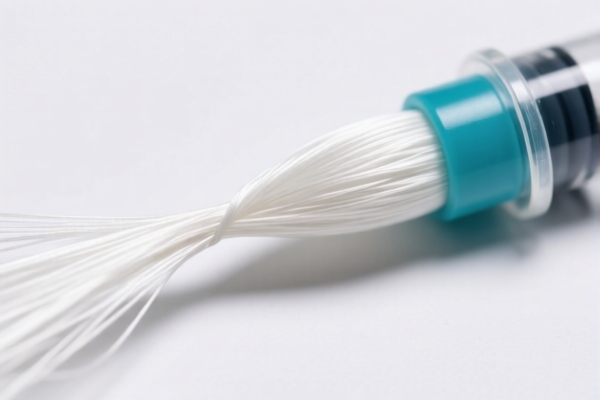
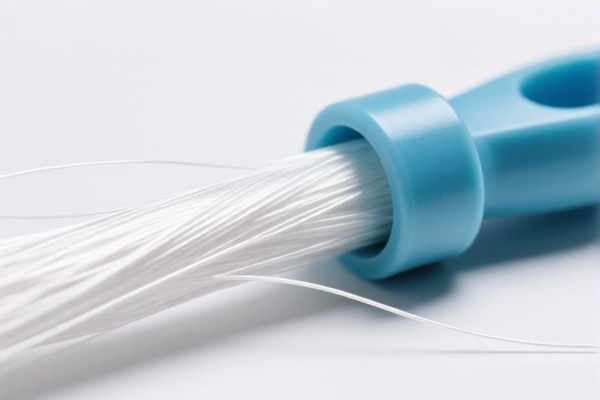
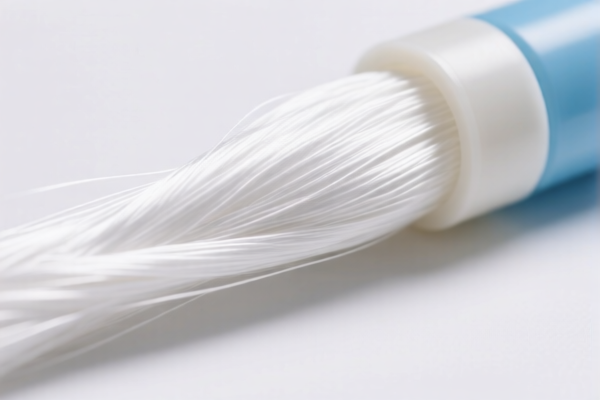
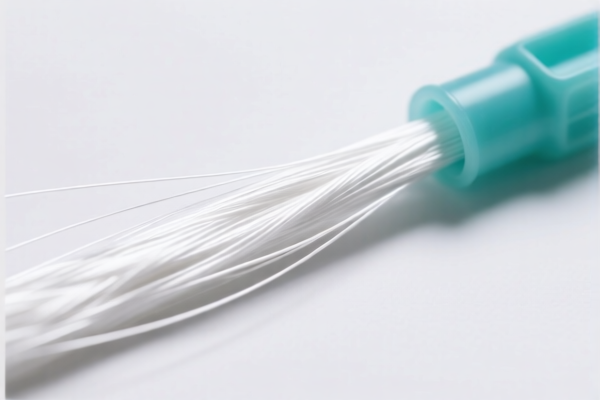
In the context of international trade and medical supplies, Medical Plastic Monofilament typically refers to non-absorbable synthetic sutures, surgical filaments, or specialized plastic wires made from polymers (such as Polyester, Nylon, PTFE, or Polypropylene). These are distinct from natural fiber sutures (silk, cotton) and multi-filament braided sutures.
In international trade classification, they are primarily categorized under Chapter 39 (Plastics and articles thereof) or Chapter 54 (Man-made filaments). The key distinction lies in whether they are classified as "articles of plastic" (finished or semi-finished goods) or "man-made filaments" (raw material state).
⚠️ Critical Distinction Point:
- If the product is a finished suture (sterilized, packaged, ready for surgical use) or semi-finished plastic monofilament for specific medical applications, it often falls under Chapter 39.
- If the product is general-purpose synthetic monofilament (e.g., fishing line, industrial wire, or generic plastic filament not specifically designed as a medical device), it falls under Chapter 54.
- Note: The data provided below reflects specific HS codes associated with "Plastic Monofilament" as per your input, focusing on the tariff structure for US imports from China.
📦 II. HS Code Classification Details (Based on Provided Data)
| HS Code | Product Description | Classification Logic | Total Tax Rate (US/CN) |
|---|---|---|---|
5404.19.80.80 |
Plastic monofilament, material: plastic, form: monofilament, classified as synthetic monofilament, non-polyester or non-nylon. | Falls under Chapter 54 (Man-made filaments). Specific subheading for other synthetic monofilaments excluding common polyesters/nylons. | 41.9% |
5404.19.80.40 |
Plastic monofilament, form meets monofilament definition, material belongs to plastic category, may include polyester fibers or other synthetic materials. | Also Chapter 54. Broader definition allowing for polyester or other synthetics within the "other" category. | 41.9% |
3916.90.50.00 |
Plastic monofilament, material: plastic, form: monofilament, meets the definition of plastic monofilament under this code. | Falls under Chapter 39 (Plastics). Classified as rods, sticks, and profiles of plastics, specifically monofilaments. | 40.8% |
3916.90.30.00 |
Plastic monofilament, material: plastic, form: monofilament, consistent with the classification definition for plastic monofilament. | Falls under Chapter 39. Another subheading for plastic monofilaments, often used for specific polymer types or forms. | 41.5% |
3916.90.30.00 |
Plastic monofilament, material: plastic, form: monofilament, fully consistent with the classification requirements for plastic monofilament. | Duplicate entry in data, same classification logic as above. | 41.5% |
🔍 Key Insight:
- The primary difference between 3916 and 5404 is the legal basis: Chapter 39 treats them as "articles of plastic," while Chapter 54 treats them as "man-made filaments."
- 3916.90.50.00 offers the lowest total tax rate (40.8%) among the options, making it potentially the most cost-effective if the product meets its specific criteria.
- 5404 codes are generally used for synthetic fiber filaments, while 3916 is broader for plastic profiles.
💰 III. 2026 Latest Tariff Rate Breakdown (Including Additional Duties)
✅ Applicable Country: United States (US)
✅ Country of Origin: China (CN)
✅ Effective Date: November 10, 2025 (and subsequent imports)
🎯 1. 5404.19.80.80 & 5404.19.80.40 —— Synthetic Monofilament (Non-Polyester/Nylon & Others)
| Item | Content |
|---|---|
| Base Duty Rate | 6.9% (ad valorem) |
| Section 301 Duty | +25.0% (USITC Footnote 9903.88.01) |
| Section 122 Duty (IEEPA) | +10% (Targeting Chinese/HK products, effective from Nov 10, 2025) |
| Total Effective Rate | 41.9% |
| Tax Calculation | CIF Value × 41.9% |
| De Minimis Exemption | ❌ Not Eligible (deny_de_minimis) |
| Legal Basis Path | IEEPA:9903.01.25 → USITC:5404.19.80.80 → FOOTNOTE:9903.88.01 |
📌 Explanation:
- The 6.9% is the standard MFN (Most Favored Nation) tariff.
- The 25% is the additional tariff under Section 301 of the Trade Act of 1974.
- The 10% is the additional tariff under the International Emergency Economic Powers Act (IEEPA), specifically targeting certain Chinese goods.
- Total: 41.9%. This is a high tariff category, requiring precise classification to avoid errors.
🎯 2. 3916.90.50.00 —— Plastic Monofilament (Chapter 39)
| Item | Content |
|---|---|
| Base Duty Rate | 5.8% (ad valorem) |
| Section 301 Duty | +25.0% |
| Section 122 Duty (IEEPA) | +10% |
| Total Effective Rate | 40.8% |
| Tax Calculation | CIF Value × 40.8% |
| De Minimis Exemption | ❌ Not Eligible |
| Legal Basis Path | IEEPA:9903.01.25 → USITC:3916.90.50.00 → FOOTNOTE:9903.88.01 |
📌 Explanation:
- This code has a slightly lower base duty (5.8% vs. 6.9%), resulting in a lower total tax rate (40.8%).
- If your medical plastic monofilament qualifies as a "plastic article" rather than a "man-made filament," this code saves 1.1% on the total value.
🎯 3. 3916.90.30.00 —— Plastic Monofilament (Chapter 39, Other Subheading)
| Item | Content |
|---|---|
| Base Duty Rate | 6.5% (ad valorem) |
| Section 301 Duty | +25.0% |
| Section 122 Duty (IEEPA) | +10% |
| Total Effective Rate | 41.5% |
| Tax Calculation | CIF Value × 41.5% |
| De Minimis Exemption | ❌ Not Eligible |
| Legal Basis Path | IEEPA:9903.01.25 → USITC:3916.90.30.00 → FOOTNOTE:9903.88.01 |
📌 Note:
- This code falls between the other two in terms of tax burden.
- Choose this if the monofilament fits the specific description of this subheading but not3916.90.50.00.
🛠️ IV. Customs Clearance Operational Advice (Practical Pitfall Guide)
✅ 1. Preparation Checklist (Non-negotiable)
| Document | Required | Description |
|---|---|---|
| ✅ Product Specification Sheet | ✔️ | Must include material composition (e.g., PET, Nylon, PTFE), diameter, tensile strength, sterilization method. |
| ✅ Material Safety Data Sheet (MSDS) | ✔️ | Especially if the plastic contains any additives or coatings. |
| ✅ Certificate of Origin (CO) | ✔️ | Required to prove Chinese origin for tariff calculation. |
| ✅ Commercial Invoice | ✔️ | Must clearly state "Medical Plastic Monofilament" or "Synthetic Suture Material." Avoid vague terms like "Plastic Wire." |
| ✅ Packing List | ✔️ | Detail net/gross weight, number of units, and packaging type. |
| ✅ FDA Registration (if applicable) | ✔️ | If classified as a medical device (suture), FDA registration number may be required for entry. |
✅ 2. Declaration Strategy (Key Mantras)
🔥 "Material First, Form Second, Purpose Third!"
| Scenario | Correct Declaration | Incorrect Practice |
|---|---|---|
| Finished Sterilized Sutures | Declare as 5404.19.80.80 or 3916.90.50.00 with full description including "Sterilized." |
Declaring as "Plastic Rods" → Misclassification risk. |
| Raw Plastic Filament for Manufacturing | Declare as 3916.90.50.00 (if general plastic) or 5404.19.80.40 (if synthetic fiber). |
Declaring as "Surgical Instruments" → Wrong chapter, high penalty. |
| Multi-filament Braided Sutures | ❌ Not applicable to these codes. | Attempting to classify braided sutures as monofilament → Rejection. |
| Nylon/Polyester Monofilament | Use 5404.19.80.80 (if non-polyester/nylon exclusion applies) or check for specific polyester codes. |
Using 5404.19.80.80 for polyester → Incorrect, as this code specifies "non-polyester or non-nylon." |
✅ 3. Special Cases Handling
| Situation | Handling Advice |
|---|---|
| OEM Medical Devices | Provide customer contract and design specs to prove it's a medical product, not a generic industrial filament. |
| Mixed Shipments | If a container has both monofilament and braided sutures, separate declarations are required. Do not bundle. |
| Small Samples (De Minimis) | ❌ No exemption. All these codes are deny_de_minimis. Even small shipments are subject to the full 40-42% duty. |
| Material Change | If switching from Nylon to PTFE, the HS code may change from 5404 to 3916 or vice versa. Recalculate taxes accordingly. |
🌍 V. Global Market Comparison (2026 Latest)
| Country/Region | Recommended HS Code | Duty Rate | Certification | Notes |
|---|---|---|---|---|
| 🇺🇸 USA | 3916.90.50.00 (Best) |
40.8% | FDA + RoHS | High duties due to Section 301 & 122. |
| 🇨🇳 China | 3916.90.50.00 |
5-6% | CCC (if applicable) | No additional tariffs for domestic use. |
| 🇪🇺 EU | 3916.90.50.00 |
0-4% | CE + MDR | Low duty, but strict medical device regulations. |
| 🇦🇺 Australia | 3916.90.50.00 |
5% | TGA + RCM | Moderate duty, requires TGA listing. |
| 🇯🇵 Japan | 3916.90.50.00 |
0-5% | PMDA | Low duty, strict quality standards. |
📌 Conclusion:
- The US market is the most expensive due to additional tariffs.
- Chapter 39 (3916.90.50.00) offers the lowest duty rate (40.8%) among the provided options.
- If possible, consider supply chain diversification (e.g., Vietnam, Mexico) to mitigate US tariffs, as some countries may have duty-free access under USMCA or other trade agreements.
📌 VI. Common Errors & Pitfall Guide (Lessons Learned)
❌ Error 1: Classifying braided sutures as monofilament.
👉 Consequence: Customs will reject the entry, classify it incorrectly, and charge higher duties + penalties.
❌ Error 2: Ignoring the "Non-Polyester/Nylon" requirement in 5404.19.80.80.
👉 Consequence: If the product is actually polyester, this code is invalid, leading to misdeclaration penalties.
❌ Error 3: Assuming De Minimis applies to small medical shipments.
👉 Consequence: All these codes are deny_de_minimis. Even a $100 sample will incur ~$40 in duties.
❌ Error 4: Vague description "Plastic Wire" on Invoice.
👉 Consequence: Customs officer may impose the highest possible duty rate due to uncertainty.
✅ Correct Declaration Example:
"Sterilized Surgical Suture Material, Non-Absorbable, Monofilament, PTFE (Polytetrafluoroethylene), Diameter 0.5mm, Packaged for Medical Use. HS Code: 3916.90.50.00"
🎯 VII. Conclusion: Precision Classification for Cost Efficiency
🎯 Key Takeaways:
🔹 "Chapter 39 vs. 54 Matters":
3916.90.50.00(40.8%) is cheaper than5404codes (41.9%).
🔹 "No De Minimis": Small shipments are NOT exempt. Factor in ~41% duty for all imports.
🔹 "Material Specificity": Ensure your product description matches the HS code criteria (e.g., "non-polyester" for 5404.19.80.80).
🔹 "Medical Device Status": If classified as a medical device, ensure FDA compliance is documented alongside customs paperwork.
📌 Pro Tip:
For large volume imports, consider applying for a Customs Binding Ruling from CBP to confirm the HS code and duty rate before shipping. This provides legal certainty and prevents costly disputes at the border.
📣 Immediate Action:
📞 Consult with a licensed customs broker.
📄 Provide material composition details (PTFE, Nylon, Polyester, etc.).
🚀 Optimize your HS code choice to save 1.1% on every shipment!
✨ Professional Clearance Starts with Accurate Classification!
💼 Every Percent Saved is Pure Profit!
用户评价
关于 HS 编码归类
协调制度(HS)是由世界海关组织(WCO)制定的国际贸易商品分类标准。全球 200 多个国家采用 HS 系统作为海关关税、贸易统计和进出口监管的基础。
每个 HS 编码遵循以下层级结构:
- 章(2 位)——商品大类(例如:第 84 章:机器和机械设备)
- 品目(4 位)——章内的更具体分类
- 子目(6 位)——国际通用细分,所有 WCO 成员国统一使用
- 本国细分(8-10 位)——各国自行扩展的细分编码,如美国 HTSUS 10 位编码
正确的 HS 编码归类对于顺利通关、准确缴纳关税和遵守贸易法规至关重要。错误归类可能导致海关延误、多缴关税或罚款。
从CN进口到US时,适用的关税税率可能包括:
- 最惠国(MFN)税率——适用于 WTO 成员国的标准关税税率
- 普通税率——适用于无贸易协定国家
- 贸易救济关税——附加关税,如 301 条款(反倾销)、232 条款(国家安全)或反补贴税
本页内容仅供参考。如需正式归类,请咨询当地海关或持牌报关代理。