Medical Plastic Monofilament
CN → US| HS Code | Tariff Rate | Origin | Destination | Doc |
|---|---|---|---|---|
| 5404198080 | 41.9% | CN | US | Official Doc |
| 5404198040 | 41.9% | CN | US | Official Doc |
| 3916905000 | 40.8% | CN | US | Official Doc |
| 3916903000 | 41.5% | CN | US | Official Doc |
| 3916903000 | 41.5% | CN | US | Official Doc |
Product Images
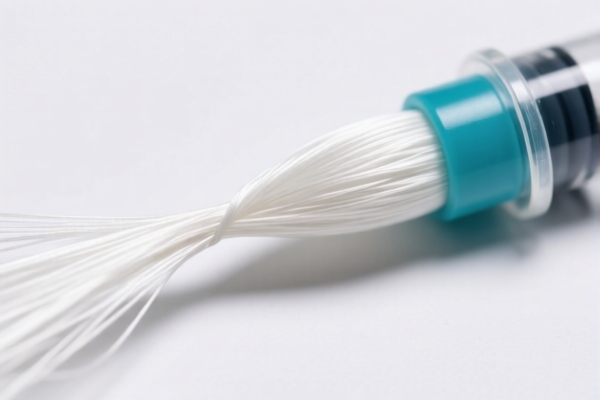
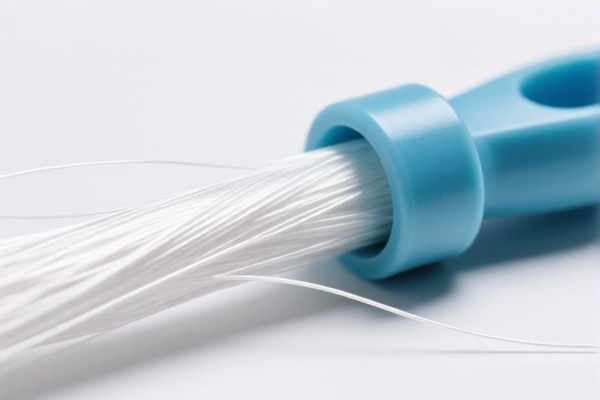
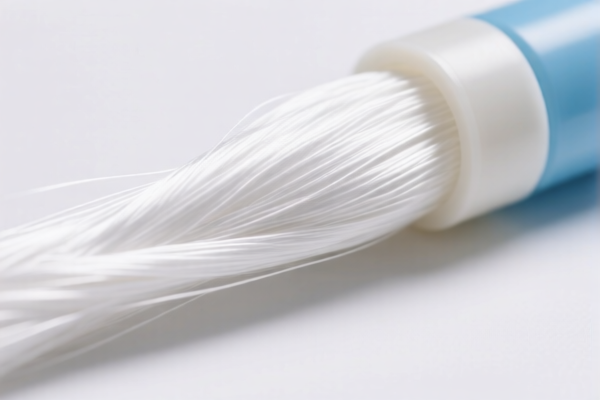
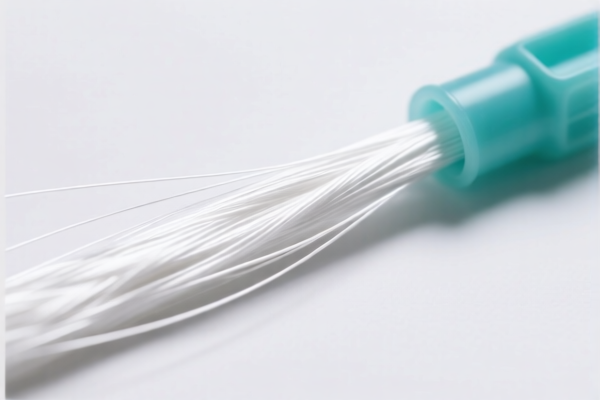
AI Analysis
🏥 Medical Plastic Monofilament (Suture Materials & Filaments)
🌐 HS Code Reference & Customs Clearance Guide | 2026 Latest Tariff Analysis | Strategic Compliance for Medical Plastics
📌 I. Product Definition & Classification: What is "Medical Plastic Monofilament"?
In the context of international trade and medical supplies, Medical Plastic Monofilament typically refers to non-absorbable synthetic sutures, surgical filaments, or specialized plastic wires made from polymers (such as Polyester, Nylon, PTFE, or Polypropylene). These are distinct from natural fiber sutures (silk, cotton) and multi-filament braided sutures.
In international trade classification, they are primarily categorized under Chapter 39 (Plastics and articles thereof) or Chapter 54 (Man-made filaments). The key distinction lies in whether they are classified as "articles of plastic" (finished or semi-finished goods) or "man-made filaments" (raw material state).
⚠️ Critical Distinction Point:
- If the product is a finished suture (sterilized, packaged, ready for surgical use) or semi-finished plastic monofilament for specific medical applications, it often falls under Chapter 39.
- If the product is general-purpose synthetic monofilament (e.g., fishing line, industrial wire, or generic plastic filament not specifically designed as a medical device), it falls under Chapter 54.
- Note: The data provided below reflects specific HS codes associated with "Plastic Monofilament" as per your input, focusing on the tariff structure for US imports from China.
📦 II. HS Code Classification Details (Based on Provided Data)
| HS Code | Product Description | Classification Logic | Total Tax Rate (US/CN) |
|---|---|---|---|
5404.19.80.80 |
Plastic monofilament, material: plastic, form: monofilament, classified as synthetic monofilament, non-polyester or non-nylon. | Falls under Chapter 54 (Man-made filaments). Specific subheading for other synthetic monofilaments excluding common polyesters/nylons. | 41.9% |
5404.19.80.40 |
Plastic monofilament, form meets monofilament definition, material belongs to plastic category, may include polyester fibers or other synthetic materials. | Also Chapter 54. Broader definition allowing for polyester or other synthetics within the "other" category. | 41.9% |
3916.90.50.00 |
Plastic monofilament, material: plastic, form: monofilament, meets the definition of plastic monofilament under this code. | Falls under Chapter 39 (Plastics). Classified as rods, sticks, and profiles of plastics, specifically monofilaments. | 40.8% |
3916.90.30.00 |
Plastic monofilament, material: plastic, form: monofilament, consistent with the classification definition for plastic monofilament. | Falls under Chapter 39. Another subheading for plastic monofilaments, often used for specific polymer types or forms. | 41.5% |
3916.90.30.00 |
Plastic monofilament, material: plastic, form: monofilament, fully consistent with the classification requirements for plastic monofilament. | Duplicate entry in data, same classification logic as above. | 41.5% |
🔍 Key Insight:
- The primary difference between 3916 and 5404 is the legal basis: Chapter 39 treats them as "articles of plastic," while Chapter 54 treats them as "man-made filaments."
- 3916.90.50.00 offers the lowest total tax rate (40.8%) among the options, making it potentially the most cost-effective if the product meets its specific criteria.
- 5404 codes are generally used for synthetic fiber filaments, while 3916 is broader for plastic profiles.
💰 III. 2026 Latest Tariff Rate Breakdown (Including Additional Duties)
✅ Applicable Country: United States (US)
✅ Country of Origin: China (CN)
✅ Effective Date: November 10, 2025 (and subsequent imports)
🎯 1. 5404.19.80.80 & 5404.19.80.40 —— Synthetic Monofilament (Non-Polyester/Nylon & Others)
| Item | Content |
|---|---|
| Base Duty Rate | 6.9% (ad valorem) |
| Section 301 Duty | +25.0% (USITC Footnote 9903.88.01) |
| Section 122 Duty (IEEPA) | +10% (Targeting Chinese/HK products, effective from Nov 10, 2025) |
| Total Effective Rate | 41.9% |
| Tax Calculation | CIF Value × 41.9% |
| De Minimis Exemption | ❌ Not Eligible (deny_de_minimis) |
| Legal Basis Path | IEEPA:9903.01.25 → USITC:5404.19.80.80 → FOOTNOTE:9903.88.01 |
📌 Explanation:
- The 6.9% is the standard MFN (Most Favored Nation) tariff.
- The 25% is the additional tariff under Section 301 of the Trade Act of 1974.
- The 10% is the additional tariff under the International Emergency Economic Powers Act (IEEPA), specifically targeting certain Chinese goods.
- Total: 41.9%. This is a high tariff category, requiring precise classification to avoid errors.
🎯 2. 3916.90.50.00 —— Plastic Monofilament (Chapter 39)
| Item | Content |
|---|---|
| Base Duty Rate | 5.8% (ad valorem) |
| Section 301 Duty | +25.0% |
| Section 122 Duty (IEEPA) | +10% |
| Total Effective Rate | 40.8% |
| Tax Calculation | CIF Value × 40.8% |
| De Minimis Exemption | ❌ Not Eligible |
| Legal Basis Path | IEEPA:9903.01.25 → USITC:3916.90.50.00 → FOOTNOTE:9903.88.01 |
📌 Explanation:
- This code has a slightly lower base duty (5.8% vs. 6.9%), resulting in a lower total tax rate (40.8%).
- If your medical plastic monofilament qualifies as a "plastic article" rather than a "man-made filament," this code saves 1.1% on the total value.
🎯 3. 3916.90.30.00 —— Plastic Monofilament (Chapter 39, Other Subheading)
| Item | Content |
|---|---|
| Base Duty Rate | 6.5% (ad valorem) |
| Section 301 Duty | +25.0% |
| Section 122 Duty (IEEPA) | +10% |
| Total Effective Rate | 41.5% |
| Tax Calculation | CIF Value × 41.5% |
| De Minimis Exemption | ❌ Not Eligible |
| Legal Basis Path | IEEPA:9903.01.25 → USITC:3916.90.30.00 → FOOTNOTE:9903.88.01 |
📌 Note:
- This code falls between the other two in terms of tax burden.
- Choose this if the monofilament fits the specific description of this subheading but not3916.90.50.00.
🛠️ IV. Customs Clearance Operational Advice (Practical Pitfall Guide)
✅ 1. Preparation Checklist (Non-negotiable)
| Document | Required | Description |
|---|---|---|
| ✅ Product Specification Sheet | ✔️ | Must include material composition (e.g., PET, Nylon, PTFE), diameter, tensile strength, sterilization method. |
| ✅ Material Safety Data Sheet (MSDS) | ✔️ | Especially if the plastic contains any additives or coatings. |
| ✅ Certificate of Origin (CO) | ✔️ | Required to prove Chinese origin for tariff calculation. |
| ✅ Commercial Invoice | ✔️ | Must clearly state "Medical Plastic Monofilament" or "Synthetic Suture Material." Avoid vague terms like "Plastic Wire." |
| ✅ Packing List | ✔️ | Detail net/gross weight, number of units, and packaging type. |
| ✅ FDA Registration (if applicable) | ✔️ | If classified as a medical device (suture), FDA registration number may be required for entry. |
✅ 2. Declaration Strategy (Key Mantras)
🔥 "Material First, Form Second, Purpose Third!"
| Scenario | Correct Declaration | Incorrect Practice |
|---|---|---|
| Finished Sterilized Sutures | Declare as 5404.19.80.80 or 3916.90.50.00 with full description including "Sterilized." |
Declaring as "Plastic Rods" → Misclassification risk. |
| Raw Plastic Filament for Manufacturing | Declare as 3916.90.50.00 (if general plastic) or 5404.19.80.40 (if synthetic fiber). |
Declaring as "Surgical Instruments" → Wrong chapter, high penalty. |
| Multi-filament Braided Sutures | ❌ Not applicable to these codes. | Attempting to classify braided sutures as monofilament → Rejection. |
| Nylon/Polyester Monofilament | Use 5404.19.80.80 (if non-polyester/nylon exclusion applies) or check for specific polyester codes. |
Using 5404.19.80.80 for polyester → Incorrect, as this code specifies "non-polyester or non-nylon." |
✅ 3. Special Cases Handling
| Situation | Handling Advice |
|---|---|
| OEM Medical Devices | Provide customer contract and design specs to prove it's a medical product, not a generic industrial filament. |
| Mixed Shipments | If a container has both monofilament and braided sutures, separate declarations are required. Do not bundle. |
| Small Samples (De Minimis) | ❌ No exemption. All these codes are deny_de_minimis. Even small shipments are subject to the full 40-42% duty. |
| Material Change | If switching from Nylon to PTFE, the HS code may change from 5404 to 3916 or vice versa. Recalculate taxes accordingly. |
🌍 V. Global Market Comparison (2026 Latest)
| Country/Region | Recommended HS Code | Duty Rate | Certification | Notes |
|---|---|---|---|---|
| 🇺🇸 USA | 3916.90.50.00 (Best) |
40.8% | FDA + RoHS | High duties due to Section 301 & 122. |
| 🇨🇳 China | 3916.90.50.00 |
5-6% | CCC (if applicable) | No additional tariffs for domestic use. |
| 🇪🇺 EU | 3916.90.50.00 |
0-4% | CE + MDR | Low duty, but strict medical device regulations. |
| 🇦🇺 Australia | 3916.90.50.00 |
5% | TGA + RCM | Moderate duty, requires TGA listing. |
| 🇯🇵 Japan | 3916.90.50.00 |
0-5% | PMDA | Low duty, strict quality standards. |
📌 Conclusion:
- The US market is the most expensive due to additional tariffs.
- Chapter 39 (3916.90.50.00) offers the lowest duty rate (40.8%) among the provided options.
- If possible, consider supply chain diversification (e.g., Vietnam, Mexico) to mitigate US tariffs, as some countries may have duty-free access under USMCA or other trade agreements.
📌 VI. Common Errors & Pitfall Guide (Lessons Learned)
❌ Error 1: Classifying braided sutures as monofilament.
👉 Consequence: Customs will reject the entry, classify it incorrectly, and charge higher duties + penalties.
❌ Error 2: Ignoring the "Non-Polyester/Nylon" requirement in 5404.19.80.80.
👉 Consequence: If the product is actually polyester, this code is invalid, leading to misdeclaration penalties.
❌ Error 3: Assuming De Minimis applies to small medical shipments.
👉 Consequence: All these codes are deny_de_minimis. Even a $100 sample will incur ~$40 in duties.
❌ Error 4: Vague description "Plastic Wire" on Invoice.
👉 Consequence: Customs officer may impose the highest possible duty rate due to uncertainty.
✅ Correct Declaration Example:
"Sterilized Surgical Suture Material, Non-Absorbable, Monofilament, PTFE (Polytetrafluoroethylene), Diameter 0.5mm, Packaged for Medical Use. HS Code: 3916.90.50.00"
🎯 VII. Conclusion: Precision Classification for Cost Efficiency
🎯 Key Takeaways:
🔹 "Chapter 39 vs. 54 Matters":
3916.90.50.00(40.8%) is cheaper than5404codes (41.9%).
🔹 "No De Minimis": Small shipments are NOT exempt. Factor in ~41% duty for all imports.
🔹 "Material Specificity": Ensure your product description matches the HS code criteria (e.g., "non-polyester" for 5404.19.80.80).
🔹 "Medical Device Status": If classified as a medical device, ensure FDA compliance is documented alongside customs paperwork.
📌 Pro Tip:
For large volume imports, consider applying for a Customs Binding Ruling from CBP to confirm the HS code and duty rate before shipping. This provides legal certainty and prevents costly disputes at the border.
📣 Immediate Action:
📞 Consult with a licensed customs broker.
📄 Provide material composition details (PTFE, Nylon, Polyester, etc.).
🚀 Optimize your HS code choice to save 1.1% on every shipment!
✨ Professional Clearance Starts with Accurate Classification!
💼 Every Percent Saved is Pure Profit!
Customer Reviews
About HS Code Classification
The Harmonized System (HS) is an internationally standardized nomenclature developed by the World Customs Organization (WCO) to classify traded products. Over 200 countries use the HS system as the basis for customs tariffs, trade statistics, and import/export regulations.
Each HS code follows a hierarchical structure:
- Chapter (2 digits) — Broad category of goods (e.g., Chapter 84: Machinery and Mechanical Appliances)
- Heading (4 digits) — More specific grouping within the chapter
- Subheading (6 digits) — Internationally standardized breakdown, used by all WCO member countries
- National subdivisions (8-10 digits) — Country-specific extensions for further classification, such as US HTSUS 10-digit codes
Correct HS code classification is essential for smooth customs clearance, accurate duty payment, and compliance with trade regulations. Misclassification can lead to customs delays, overpayment of duties, or penalties.
When importing from CN to US, the applicable tariff rates may include:
- Most-Favored-Nation (MFN) rate — The standard duty rate applied to WTO members
- General rate — Applied to countries without trade agreements
- Trade remedy duties — Additional tariffs such as Section 301 (anti-dumping), Section 232 (national security), or countervailing duties
The information provided on this page is for reference purposes only. For official classification, please consult with your local customs authority or a licensed customs broker.