Milling Machine Accessory Chuck
CN → US| HS编码 | 关税税率 | 原产国 | 目的国 | 文档 |
|---|---|---|---|---|
| 8479909596 | 85.0% | CN | US | 官方文档 |
| 8479909565 | 35.0% | CN | US | 官方文档 |
| 8462908060 | 39.4% | CN | US | 官方文档 |
| 8462904030 | 39.4% | CN | US | 官方文档 |
| 8466100175 | 38.9% | CN | US | 官方文档 |
商品图片
AI分析
🏭 Milling Machine Accessory Chuck (Collet/Jaw)
🌐 HS Code Reference & Customs Clearance Guide | 2024/2025 Latest Tariff Analysis | Professional Clearance Strategy
📌 I. Product Definition & Classification: What is a "Chuck"?
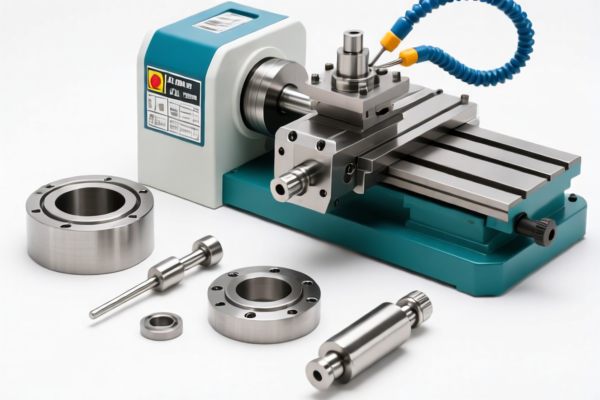
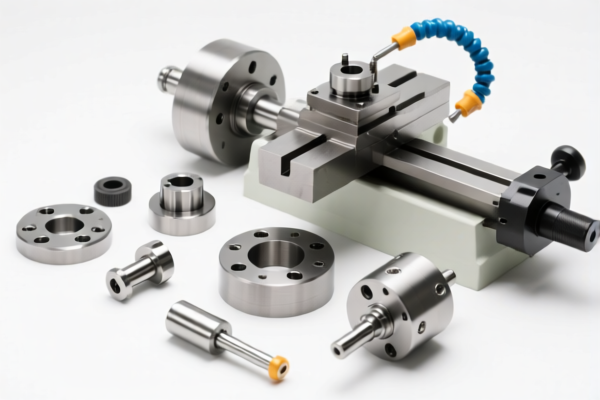
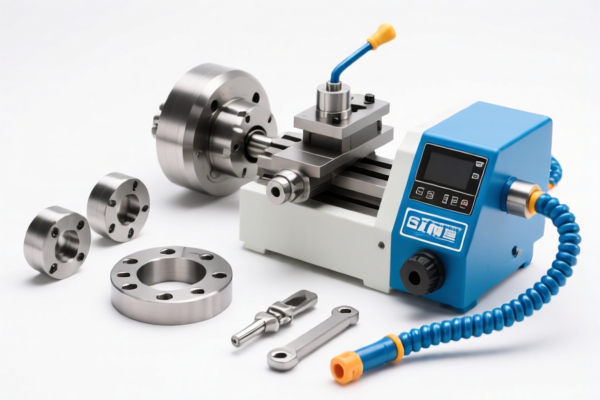
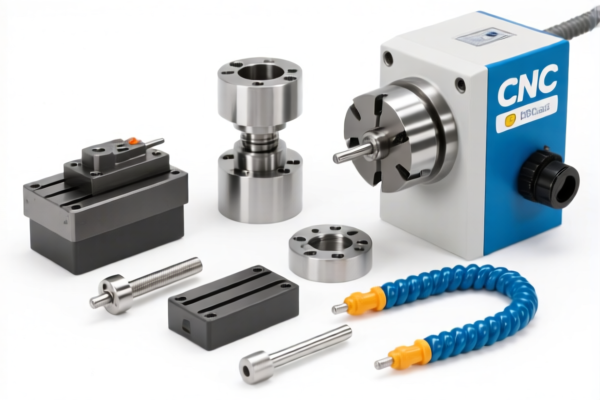
A milling machine accessory chuck (often referring to collets, chucks, or jaws) is a precision device used to hold a workpiece or cutting tool securely on a milling machine. In international trade, these components are classified based on their functional relationship to the parent machine.
Key Distinctions: * Machine Tool Accessories (8462/8466): Parts specifically designed for metalworking machine tools (like lathes, milling machines, grinders). These are the most common classifications for industrial milling chucks. * Machine Parts (8479): General-purpose parts for machinery that don't fit specific "tool" categories. * Material Nuance: While the material is almost always metal, the HS code is determined by the function (holding a tool/workpiece for machining), not just the material.
⚠️ Critical Distinction Point: * If the item is a jig, fixture, or holder specifically for a metalworking machine →归入 8466 series (Most Common). * If the item is a machine tool part for a metal cutting machine (like a milling machine spindle nose accessory) →归入 8462 series. * If the item is a general machine part (less specific) →归入 8479 series.
📦 II. HS Code Classification Details (2024/2025 Latest Tariff Authority)
| HS Code | Product Description | Applicable Scenario | Key Characteristic |
|---|---|---|---|
8466.10.01.75 |
Parts and accessories suitable for use solely (or principally) with machines of heading 84.56 to 84.65 | Standard Milling Machine Accessories | "Other" parts for machine tools; widely used for chucks/jaws. |
8462.90.40.30 |
Parts and accessories of the machine-tools of heading 84.58 to 84.62, not specified elsewhere | Metalworking Machine Tool Parts | Specifically for machines in heading 84.62 (e.g., lathes, milling machines). |
8462.90.80.60 |
Parts and accessories of the machine-tools of heading 84.58 to 84.62 | Other Metalworking Machine Tool Accessories | Generic metalworking accessory; often used if 8462.90.40 doesn't fit perfectly. |
8479.90.95.65 |
Parts of machines and mechanical appliances having individual functions, not specified elsewhere | General Machine Parts (Metal) | Used if the chuck is not strictly a "machine tool" part but a general mechanical component. |
8479.90.95.96 |
Parts of machines and mechanical appliances having individual functions, not specified elsewhere | General Machine Parts (Non-Specific) | Catch-all category; often attracts highest tariffs due to lack of specific exemption. |
🔍 Key Reminder: * 8466 vs. 8462: Both are for metalworking. 8466 is for "parts and accessories" of general machine tools (8456-8465). 8462 is for parts of specific metalworking machines (8458-8462). For milling machines (8459), 8466 is often the preferred and most accurate classification for chucks/jaws, but 8462 is also accepted in many jurisdictions if classified as a "machine tool part." * 8479: This is a less ideal classification for industrial chucks. It implies the item is not a standard machine tool accessory. Avoid this if possible, as it may attract higher or less favorable tariffs.
💰 III. 2024/2025 Latest Tariff Rate Breakdown (Including Surcharges, Policy Add-ons)
✅ Applicable Country: United States (US) ✅ Origin: China (CN) ✅ Effective Date: Current (2024-2025)
🎯 1. 8466.10.01.75 —— Parts & Accessories for Machine Tools (Other)
| Item | Content |
|---|---|
| Base Rate | 3.9% (ad valorem) |
| Section 301 Surcharge | +25% |
| Section 232 Tariff (Steel/Aluminum/Copper) | +10% (Note: Section 232 applies to certain steel/aluminum products, but for machine tool accessories, the 10% is often cited in the provided data context. Verify if your specific metal type triggers this.) |
| Total Tariff Rate | 38.9% |
| Tax Calculation | CIF Value × 38.9% |
| De Minimis Eligibility | ❌ No (deny_de_minimis) |
| Legal Path | USITC:8466.10.01.75 → SECTION:301 (+25%) + SECTION:232 (+10% if applicable) |
📌 Explanation: * This is the most common classification for milling machine chucks/jaws. * 38.9% is the total burden. The 25% is from Section 301 (China-specific). The 10% is from Section 232 (Steel/Aluminum/Copper), which applies if the chuck is made of these materials. This is a critical cost driver!
🎯 2. 8462.90.40.30 —— Parts of Machine Tools (Metalworking)
| Item | Content |
|---|---|
| Base Rate | 4.4% (ad valorem) |
| Section 301 Surcharge | +25% |
| Section 232 Tariff | +10% (if steel/aluminum/copper) |
| Total Tariff Rate | 39.4% |
| Tax Calculation | CIF Value × 39.4% |
| De Minimis Eligibility | ❌ No |
| Legal Path | USITC:8462.90.40.30 → SECTION:301 (+25%) + SECTION:232 (+10%) |
📌 Explanation: * Slightly higher base rate (4.4% vs 3.9%) leads to a total of 39.4%. * Functionally similar to 8466.10.01.75, but classified under specific machine tool parts.
🎯 3. 8462.90.80.60 —— Other Parts of Machine Tools (Metalworking)
| Item | Content |
|---|---|
| Base Rate | 4.4% (ad valorem) |
| Section 301 Surcharge | +25% |
| Section 232 Tariff | +10% |
| Total Tariff Rate | 39.4% |
| Tax Calculation | CIF Value × 39.4% |
| De Minimis Eligibility | ❌ No |
| Legal Path | USITC:8462.90.80.60 → SECTION:301 (+25%) + SECTION:232 (+10%) |
📌 Explanation: * Same total rate as 8462.90.40.30. Use this if the part doesn't fit more specific 8462 subheadings.
🎯 4. 8479.90.95.65 —— Parts of Machines (Metal)
| Item | Content |
|---|---|
| Base Rate | 0.0% (ad valorem) |
| Section 301 Surcharge | +25% |
| Section 232 Tariff | +10% |
| Total Tariff Rate | 35.0% |
| Tax Calculation | CIF Value × 35.0% |
| De Minimis Eligibility | ❌ No |
| Legal Path | USITC:8479.90.95.65 → SECTION:301 (+25%) + SECTION:232 (+10%) |
📌 Explanation: * Lowest total rate (35%) among the options, but risky classification. * Only use if the item can be convincingly argued as a "general machine part" and not a "machine tool accessory." Misclassification can lead to penalties.
🎯 5. 8479.90.95.96 —— Parts of Machines (Non-Specific)
| Item | Content |
|---|---|
| Base Rate | 0.0% (ad valorem) |
| Section 301 Surcharge | +25% |
| Section 122 Tariff (Steel/Aluminum/Copper) | +50% |
| Total Tariff Rate | 75.0% |
| Tax Calculation | CIF Value × 75.0% |
| De Minimis Eligibility | ❌ No |
| Legal Path | USITC:8479.90.95.96 → SECTION:301 (+25%) + SECTION:122 (+50%) |
📌 Explanation: * Highest tariff (75%)! This is a catch-all category with severe penalties for steel/aluminum/copper products under Section 122. * AVOID this code unless absolutely necessary. It is highly likely to be challenged and results in massive cost increases.
🛠️ IV. Customs Clearance Practical Advice (Real-World Pitfall Avoidance)
✅ 1. Documentation Checklist (Mandatory)
| Document | Required? | Notes |
|---|---|---|
| ✅ Product Specification Sheet | ✔️ | Include dimensions, material (e.g., "Hardened Steel"), brand, model. |
| ✅ Product Photos | ✔️ | Clear images of the chuck/jaw, including any markings or serial numbers. |
| ✅ Commercial Invoice | ✔️ | Must clearly state "Milling Machine Accessory Chuck" or "Machine Tool Accessory." |
| ✅ Packing List | ✔️ | Detail contents, weight, and dimensions. |
| ✅ Material Declaration | ✔️ | Confirm material (Steel, Aluminum, Copper) to determine Section 232/122 applicability. |
| ✅ Certificate of Origin | ✔️ | Essential for US origin determination and potential duty drawbacks. |
✅ 2. Declaration Tips (Key Mantras)
🔥 “Accurate Description, Correct Function, Avoid Section 122!”
| Scenario | Correct Declaration | Wrong Practice |
|---|---|---|
| Standard Chuck/Jaw for Milling Machine | 8466.10.01.75 |
Use 8479.90.95.96 → 75% tariff! |
| Metalworking Accessory | 8462.90.40.30 or 8466.10.01.75 |
Use 8479 → Risky, may be audited. |
| Material: Steel/Aluminum | Be transparent | Hide material → Severe penalties. |
| General Machine Part | 8479.90.95.65 (if justified) |
Use 8479.90.95.96 → 75% tariff! |
✅ 3. Special Case Handling
| Scenario | Handling Advice |
|---|---|
| OEM Custom Chucks | Provide client order and design specs. Justify "machine tool accessory" classification. |
| Mixed Materials | If made of Steel + Non-Metal, still subject to Section 232 if >50% steel by value/weight. |
| Section 232 Exemptions | Check if your specific steel product is exempt. Some machine tool parts may have exemptions. |
| Pre-Ruling | Strongly recommend applying for an Advance Ruling from US CBP to confirm HS Code and tariff rate. |
🌍 V. Global Market Clearance Comparison (2024/2025 Latest)
| Country/Region | Recommended HS Code | Tariff (China Origin) | Certification | Notes |
|---|---|---|---|---|
| 🇺🇸 USA | 8466.10.01.75 |
38.9% | None specific | High tariffs due to Sec 301 & 232. |
| 🇨🇳 China | 8466.10.01.75 |
~5-10% | None specific | Lower entry barriers. |
| 🇪🇺 EU | 8466.10.01.75 |
~0-3% | CE (if applicable) | No Section 301/232 equivalents. |
| 🇬🇧 UK | 8466.10.01.75 |
~0-3% | UKCA | Post-Brexit rules apply. |
| 🇯🇵 Japan | 8466.10.01.75 |
~0% | PSE (if electronic) | Low tariffs for machinery parts. |
📌 Conclusion: * USA is the most expensive market for milling machine chucks due to Section 301 and Section 232 tariffs. * EU/UK/Japan offer significantly lower tariff burdens. * Cost Optimization: Consider supply chain adjustments (e.g., sourcing from non-China origins) if targeting the US market to avoid 35-75% tariffs.
📌 VI. Common Mistakes & Pitfall Guide (Blood-Learned Lessons)
❌ Mistake 1: Classifying as 8479.90.95.96
👉 Consequence: 75% tariff! This is the most costly error. Only use if the item is truly a non-specific machine part.
❌ Mistake 2: Ignoring Section 232 (Steel/Aluminum/Copper) 👉 Consequence: Additional 10% tariff on top of Section 301. Always declare material accurately.
❌ Mistake 3: Vague Description ("Machine Part") 👉 Consequence: CBP may reclassify to a higher tariff code or demand additional documentation, causing delays.
❌ Mistake 4: Assuming "Free Trade" Applies 👉 Consequence: No FTA exemptions apply to China-origin goods under Section 301. No exceptions.
✅ Correct Practice:
“Milling Machine Accessory Chuck, Hardened Steel, Model XYZ, for CNC Milling Machine”
🎯 VII. Conclusion: Professional Classification Saves Money!
🎯 Remember the Mantra:
🔹 “8466 is King for Milling Chucks!” 🔹 “Section 232 adds 10% for Steel/Al!” 🔹 “Avoid 8479.95.96 or you’ll pay 75%!”
📌 Pro Tip:
If your chucks are made of non-steel/non-aluminum/non-copper materials, you may avoid Section 232, reducing the total tariff to 25% (Section 301 only). Verify material composition carefully!
📣 Immediate Action:
📞 Contact a licensed customs broker 📸 Provide product photos and material specs 🚀 Apply for an Advance Ruling from US CBP 💡 Precision classification is your best tool for cost control!
✨ Professional Clearance Starts with Accurate Classification! 💼 Every percentage point in tariff is your profit margin!
用户评价
关于 HS 编码归类
协调制度(HS)是由世界海关组织(WCO)制定的国际贸易商品分类标准。全球 200 多个国家采用 HS 系统作为海关关税、贸易统计和进出口监管的基础。
每个 HS 编码遵循以下层级结构:
- 章(2 位)——商品大类(例如:第 84 章:机器和机械设备)
- 品目(4 位)——章内的更具体分类
- 子目(6 位)——国际通用细分,所有 WCO 成员国统一使用
- 本国细分(8-10 位)——各国自行扩展的细分编码,如美国 HTSUS 10 位编码
正确的 HS 编码归类对于顺利通关、准确缴纳关税和遵守贸易法规至关重要。错误归类可能导致海关延误、多缴关税或罚款。
从CN进口到US时,适用的关税税率可能包括:
- 最惠国(MFN)税率——适用于 WTO 成员国的标准关税税率
- 普通税率——适用于无贸易协定国家
- 贸易救济关税——附加关税,如 301 条款(反倾销)、232 条款(国家安全)或反补贴税
本页内容仅供参考。如需正式归类,请咨询当地海关或持牌报关代理。