Milling Machine Accessory Chuck
CN → US| HS Code | Tariff Rate | Origin | Destination | Doc |
|---|---|---|---|---|
| 8479909596 | 85.0% | CN | US | Official Doc |
| 8479909565 | 35.0% | CN | US | Official Doc |
| 8462908060 | 39.4% | CN | US | Official Doc |
| 8462904030 | 39.4% | CN | US | Official Doc |
| 8466100175 | 38.9% | CN | US | Official Doc |
Product Images
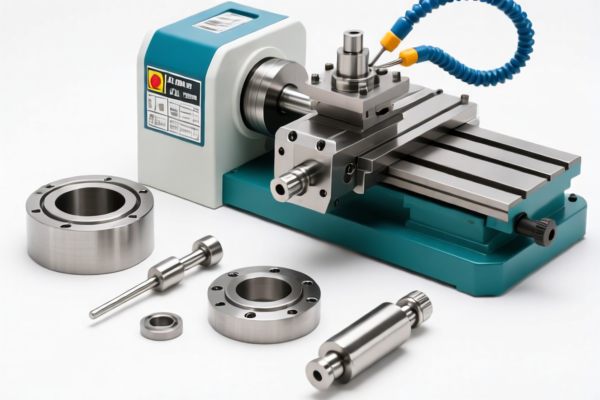
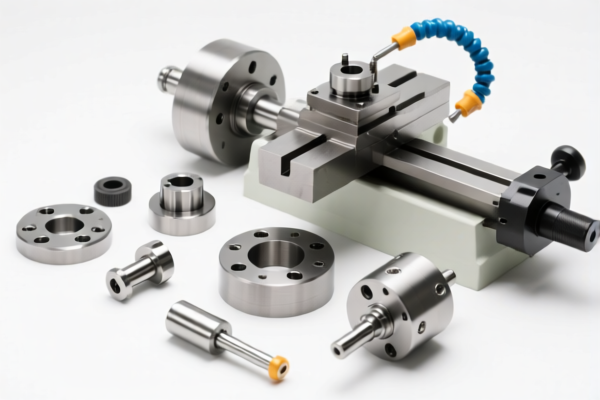
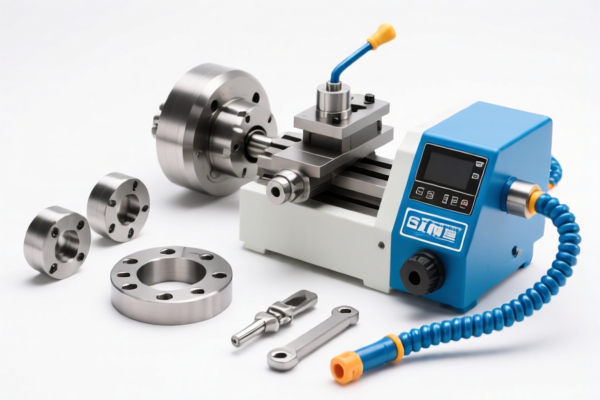
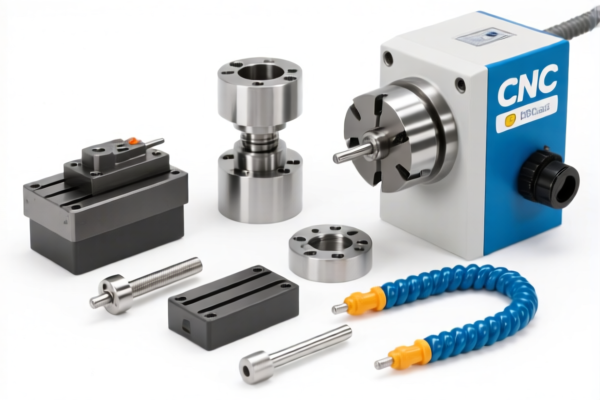
AI Analysis
🏭 Milling Machine Accessory Chuck (Collet/Jaw)
🌐 HS Code Reference & Customs Clearance Guide | 2024/2025 Latest Tariff Analysis | Professional Clearance Strategy
📌 I. Product Definition & Classification: What is a "Chuck"?
A milling machine accessory chuck (often referring to collets, chucks, or jaws) is a precision device used to hold a workpiece or cutting tool securely on a milling machine. In international trade, these components are classified based on their functional relationship to the parent machine.
Key Distinctions: * Machine Tool Accessories (8462/8466): Parts specifically designed for metalworking machine tools (like lathes, milling machines, grinders). These are the most common classifications for industrial milling chucks. * Machine Parts (8479): General-purpose parts for machinery that don't fit specific "tool" categories. * Material Nuance: While the material is almost always metal, the HS code is determined by the function (holding a tool/workpiece for machining), not just the material.
⚠️ Critical Distinction Point: * If the item is a jig, fixture, or holder specifically for a metalworking machine →归入 8466 series (Most Common). * If the item is a machine tool part for a metal cutting machine (like a milling machine spindle nose accessory) →归入 8462 series. * If the item is a general machine part (less specific) →归入 8479 series.
📦 II. HS Code Classification Details (2024/2025 Latest Tariff Authority)
| HS Code | Product Description | Applicable Scenario | Key Characteristic |
|---|---|---|---|
8466.10.01.75 |
Parts and accessories suitable for use solely (or principally) with machines of heading 84.56 to 84.65 | Standard Milling Machine Accessories | "Other" parts for machine tools; widely used for chucks/jaws. |
8462.90.40.30 |
Parts and accessories of the machine-tools of heading 84.58 to 84.62, not specified elsewhere | Metalworking Machine Tool Parts | Specifically for machines in heading 84.62 (e.g., lathes, milling machines). |
8462.90.80.60 |
Parts and accessories of the machine-tools of heading 84.58 to 84.62 | Other Metalworking Machine Tool Accessories | Generic metalworking accessory; often used if 8462.90.40 doesn't fit perfectly. |
8479.90.95.65 |
Parts of machines and mechanical appliances having individual functions, not specified elsewhere | General Machine Parts (Metal) | Used if the chuck is not strictly a "machine tool" part but a general mechanical component. |
8479.90.95.96 |
Parts of machines and mechanical appliances having individual functions, not specified elsewhere | General Machine Parts (Non-Specific) | Catch-all category; often attracts highest tariffs due to lack of specific exemption. |
🔍 Key Reminder: * 8466 vs. 8462: Both are for metalworking. 8466 is for "parts and accessories" of general machine tools (8456-8465). 8462 is for parts of specific metalworking machines (8458-8462). For milling machines (8459), 8466 is often the preferred and most accurate classification for chucks/jaws, but 8462 is also accepted in many jurisdictions if classified as a "machine tool part." * 8479: This is a less ideal classification for industrial chucks. It implies the item is not a standard machine tool accessory. Avoid this if possible, as it may attract higher or less favorable tariffs.
💰 III. 2024/2025 Latest Tariff Rate Breakdown (Including Surcharges, Policy Add-ons)
✅ Applicable Country: United States (US) ✅ Origin: China (CN) ✅ Effective Date: Current (2024-2025)
🎯 1. 8466.10.01.75 —— Parts & Accessories for Machine Tools (Other)
| Item | Content |
|---|---|
| Base Rate | 3.9% (ad valorem) |
| Section 301 Surcharge | +25% |
| Section 232 Tariff (Steel/Aluminum/Copper) | +10% (Note: Section 232 applies to certain steel/aluminum products, but for machine tool accessories, the 10% is often cited in the provided data context. Verify if your specific metal type triggers this.) |
| Total Tariff Rate | 38.9% |
| Tax Calculation | CIF Value × 38.9% |
| De Minimis Eligibility | ❌ No (deny_de_minimis) |
| Legal Path | USITC:8466.10.01.75 → SECTION:301 (+25%) + SECTION:232 (+10% if applicable) |
📌 Explanation: * This is the most common classification for milling machine chucks/jaws. * 38.9% is the total burden. The 25% is from Section 301 (China-specific). The 10% is from Section 232 (Steel/Aluminum/Copper), which applies if the chuck is made of these materials. This is a critical cost driver!
🎯 2. 8462.90.40.30 —— Parts of Machine Tools (Metalworking)
| Item | Content |
|---|---|
| Base Rate | 4.4% (ad valorem) |
| Section 301 Surcharge | +25% |
| Section 232 Tariff | +10% (if steel/aluminum/copper) |
| Total Tariff Rate | 39.4% |
| Tax Calculation | CIF Value × 39.4% |
| De Minimis Eligibility | ❌ No |
| Legal Path | USITC:8462.90.40.30 → SECTION:301 (+25%) + SECTION:232 (+10%) |
📌 Explanation: * Slightly higher base rate (4.4% vs 3.9%) leads to a total of 39.4%. * Functionally similar to 8466.10.01.75, but classified under specific machine tool parts.
🎯 3. 8462.90.80.60 —— Other Parts of Machine Tools (Metalworking)
| Item | Content |
|---|---|
| Base Rate | 4.4% (ad valorem) |
| Section 301 Surcharge | +25% |
| Section 232 Tariff | +10% |
| Total Tariff Rate | 39.4% |
| Tax Calculation | CIF Value × 39.4% |
| De Minimis Eligibility | ❌ No |
| Legal Path | USITC:8462.90.80.60 → SECTION:301 (+25%) + SECTION:232 (+10%) |
📌 Explanation: * Same total rate as 8462.90.40.30. Use this if the part doesn't fit more specific 8462 subheadings.
🎯 4. 8479.90.95.65 —— Parts of Machines (Metal)
| Item | Content |
|---|---|
| Base Rate | 0.0% (ad valorem) |
| Section 301 Surcharge | +25% |
| Section 232 Tariff | +10% |
| Total Tariff Rate | 35.0% |
| Tax Calculation | CIF Value × 35.0% |
| De Minimis Eligibility | ❌ No |
| Legal Path | USITC:8479.90.95.65 → SECTION:301 (+25%) + SECTION:232 (+10%) |
📌 Explanation: * Lowest total rate (35%) among the options, but risky classification. * Only use if the item can be convincingly argued as a "general machine part" and not a "machine tool accessory." Misclassification can lead to penalties.
🎯 5. 8479.90.95.96 —— Parts of Machines (Non-Specific)
| Item | Content |
|---|---|
| Base Rate | 0.0% (ad valorem) |
| Section 301 Surcharge | +25% |
| Section 122 Tariff (Steel/Aluminum/Copper) | +50% |
| Total Tariff Rate | 75.0% |
| Tax Calculation | CIF Value × 75.0% |
| De Minimis Eligibility | ❌ No |
| Legal Path | USITC:8479.90.95.96 → SECTION:301 (+25%) + SECTION:122 (+50%) |
📌 Explanation: * Highest tariff (75%)! This is a catch-all category with severe penalties for steel/aluminum/copper products under Section 122. * AVOID this code unless absolutely necessary. It is highly likely to be challenged and results in massive cost increases.
🛠️ IV. Customs Clearance Practical Advice (Real-World Pitfall Avoidance)
✅ 1. Documentation Checklist (Mandatory)
| Document | Required? | Notes |
|---|---|---|
| ✅ Product Specification Sheet | ✔️ | Include dimensions, material (e.g., "Hardened Steel"), brand, model. |
| ✅ Product Photos | ✔️ | Clear images of the chuck/jaw, including any markings or serial numbers. |
| ✅ Commercial Invoice | ✔️ | Must clearly state "Milling Machine Accessory Chuck" or "Machine Tool Accessory." |
| ✅ Packing List | ✔️ | Detail contents, weight, and dimensions. |
| ✅ Material Declaration | ✔️ | Confirm material (Steel, Aluminum, Copper) to determine Section 232/122 applicability. |
| ✅ Certificate of Origin | ✔️ | Essential for US origin determination and potential duty drawbacks. |
✅ 2. Declaration Tips (Key Mantras)
🔥 “Accurate Description, Correct Function, Avoid Section 122!”
| Scenario | Correct Declaration | Wrong Practice |
|---|---|---|
| Standard Chuck/Jaw for Milling Machine | 8466.10.01.75 |
Use 8479.90.95.96 → 75% tariff! |
| Metalworking Accessory | 8462.90.40.30 or 8466.10.01.75 |
Use 8479 → Risky, may be audited. |
| Material: Steel/Aluminum | Be transparent | Hide material → Severe penalties. |
| General Machine Part | 8479.90.95.65 (if justified) |
Use 8479.90.95.96 → 75% tariff! |
✅ 3. Special Case Handling
| Scenario | Handling Advice |
|---|---|
| OEM Custom Chucks | Provide client order and design specs. Justify "machine tool accessory" classification. |
| Mixed Materials | If made of Steel + Non-Metal, still subject to Section 232 if >50% steel by value/weight. |
| Section 232 Exemptions | Check if your specific steel product is exempt. Some machine tool parts may have exemptions. |
| Pre-Ruling | Strongly recommend applying for an Advance Ruling from US CBP to confirm HS Code and tariff rate. |
🌍 V. Global Market Clearance Comparison (2024/2025 Latest)
| Country/Region | Recommended HS Code | Tariff (China Origin) | Certification | Notes |
|---|---|---|---|---|
| 🇺🇸 USA | 8466.10.01.75 |
38.9% | None specific | High tariffs due to Sec 301 & 232. |
| 🇨🇳 China | 8466.10.01.75 |
~5-10% | None specific | Lower entry barriers. |
| 🇪🇺 EU | 8466.10.01.75 |
~0-3% | CE (if applicable) | No Section 301/232 equivalents. |
| 🇬🇧 UK | 8466.10.01.75 |
~0-3% | UKCA | Post-Brexit rules apply. |
| 🇯🇵 Japan | 8466.10.01.75 |
~0% | PSE (if electronic) | Low tariffs for machinery parts. |
📌 Conclusion: * USA is the most expensive market for milling machine chucks due to Section 301 and Section 232 tariffs. * EU/UK/Japan offer significantly lower tariff burdens. * Cost Optimization: Consider supply chain adjustments (e.g., sourcing from non-China origins) if targeting the US market to avoid 35-75% tariffs.
📌 VI. Common Mistakes & Pitfall Guide (Blood-Learned Lessons)
❌ Mistake 1: Classifying as 8479.90.95.96
👉 Consequence: 75% tariff! This is the most costly error. Only use if the item is truly a non-specific machine part.
❌ Mistake 2: Ignoring Section 232 (Steel/Aluminum/Copper) 👉 Consequence: Additional 10% tariff on top of Section 301. Always declare material accurately.
❌ Mistake 3: Vague Description ("Machine Part") 👉 Consequence: CBP may reclassify to a higher tariff code or demand additional documentation, causing delays.
❌ Mistake 4: Assuming "Free Trade" Applies 👉 Consequence: No FTA exemptions apply to China-origin goods under Section 301. No exceptions.
✅ Correct Practice:
“Milling Machine Accessory Chuck, Hardened Steel, Model XYZ, for CNC Milling Machine”
🎯 VII. Conclusion: Professional Classification Saves Money!
🎯 Remember the Mantra:
🔹 “8466 is King for Milling Chucks!” 🔹 “Section 232 adds 10% for Steel/Al!” 🔹 “Avoid 8479.95.96 or you’ll pay 75%!”
📌 Pro Tip:
If your chucks are made of non-steel/non-aluminum/non-copper materials, you may avoid Section 232, reducing the total tariff to 25% (Section 301 only). Verify material composition carefully!
📣 Immediate Action:
📞 Contact a licensed customs broker 📸 Provide product photos and material specs 🚀 Apply for an Advance Ruling from US CBP 💡 Precision classification is your best tool for cost control!
✨ Professional Clearance Starts with Accurate Classification! 💼 Every percentage point in tariff is your profit margin!
Customer Reviews
About HS Code Classification
The Harmonized System (HS) is an internationally standardized nomenclature developed by the World Customs Organization (WCO) to classify traded products. Over 200 countries use the HS system as the basis for customs tariffs, trade statistics, and import/export regulations.
Each HS code follows a hierarchical structure:
- Chapter (2 digits) — Broad category of goods (e.g., Chapter 84: Machinery and Mechanical Appliances)
- Heading (4 digits) — More specific grouping within the chapter
- Subheading (6 digits) — Internationally standardized breakdown, used by all WCO member countries
- National subdivisions (8-10 digits) — Country-specific extensions for further classification, such as US HTSUS 10-digit codes
Correct HS code classification is essential for smooth customs clearance, accurate duty payment, and compliance with trade regulations. Misclassification can lead to customs delays, overpayment of duties, or penalties.
When importing from CN to US, the applicable tariff rates may include:
- Most-Favored-Nation (MFN) rate — The standard duty rate applied to WTO members
- General rate — Applied to countries without trade agreements
- Trade remedy duties — Additional tariffs such as Section 301 (anti-dumping), Section 232 (national security), or countervailing duties
The information provided on this page is for reference purposes only. For official classification, please consult with your local customs authority or a licensed customs broker.