Mini Massager
CN → US| HS编码 | 关税税率 | 原产国 | 目的国 | 文档 |
|---|---|---|---|---|
| 9019102050 | 10.0% | CN | US | 官方文档 |
| 9019102020 | 10.0% | CN | US | 官方文档 |
| 8509801000 | 10.0% | CN | US | 官方文档 |
| 8509805095 | 14.2% | CN | US | 官方文档 |
| 9019102050 | 10.0% | CN | US | 官方文档 |
商品图片
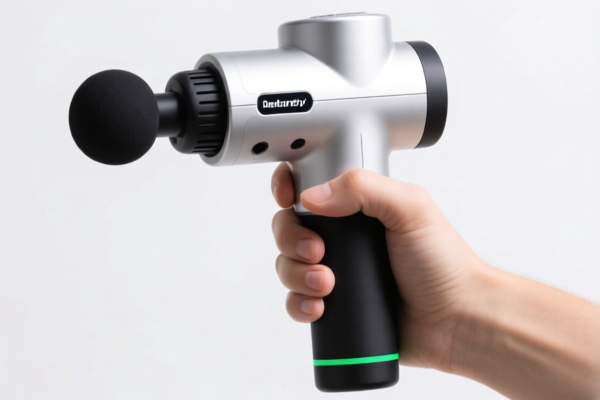
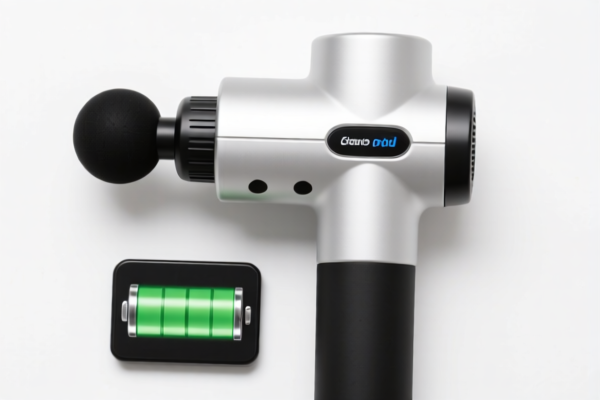
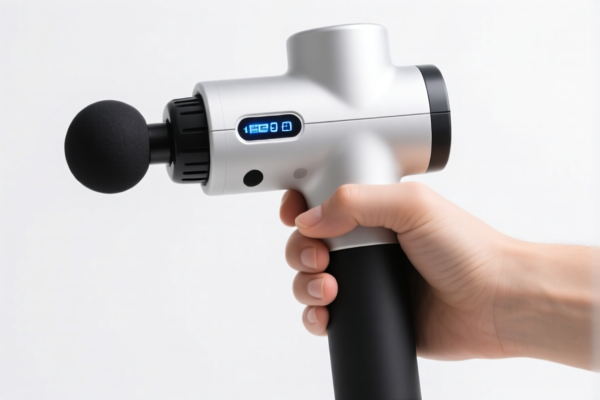
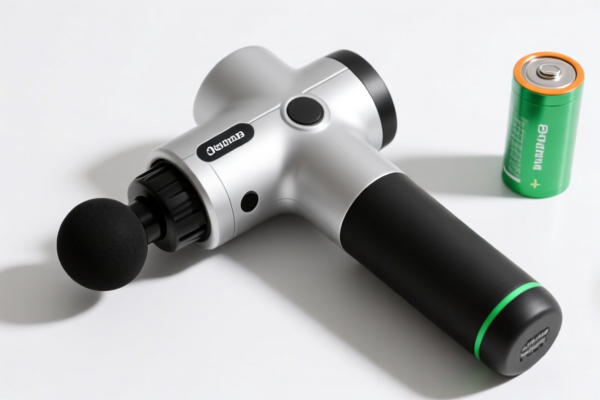
AI分析
💆♀️ Mini Massager (Portable Massage Devices)
🌐 HS Code Reference & Customs Clearance Guide | 2026 Latest Tariff Analysis | Professional Clearance Strategy
📌 I. Product Definition & Classification: Do You Really Understand "Mini Massagers"?
A Mini Massager is a portable, handheld device designed for muscle relaxation, pain relief, or physical therapy. In international trade, these devices generally fall into two main categories based on their primary function and technical structure:
- Medical/Therapeutic Instruments (Chapter 90): Devices primarily used for medical or therapeutic purposes, such as physiotherapy equipment. These are often classified under heading 9019.
- Household Electrical Appliances (Chapter 85): Consumer-grade massage devices used for general wellness or relaxation at home. These are often classified under heading 8509 (Household electric appliances).
⚠️ Key Distinction Point:
- If the device is explicitly marketed as a medical device or has specific therapeutic claims → Likely 9019
- If the device is for general household wellness, beauty, or relaxation → Likely 8509
- Crucial Note: The classification heavily depends on the specific design, controls, and intended use as declared in the commercial invoice and product manual.
📦 II. HS Code Classification Details (Based on Provided Data)
The following HS Codes are derived from the provided dataset for "Mini Massager" products. All codes listed below apply to goods originating from China importing into the United States (based on the specific tariff structures mentioned, such as Section 301/IEEPA).
| HS Code | Product Description | Summary/Logic | Total Tax Rate |
|---|---|---|---|
9019.10.20.50 |
Massager HS Code, use for massage, no obvious material or power conflict | Matches usage with encoding category; based on catch-all principle | 10.0% |
9019.10.20.20 |
Massager HS Code, use for massage instrument | Based on catch-all inference principle | 10.0% |
8509.80.10.00 |
Massage Apparatus HS Code, belongs to household electric mechanical apparatus | Functional attribute match | 10.0% |
8509.80.50.95 |
Massage Apparatus HS Code, belongs to household electrical appliance category | Fits other category use descriptions | 14.2% |
9019.10.20.50 |
Massage Apparatus HS Code, use and code category fully match | Based on catch-all category principle | 10.0% |
🔍 Key Insight:
- The most common classification for "Mini Massagers" in this dataset is 9019.10.20.50 or 8509.80.10.00, both resulting in a 10.0% total tax rate.
- One variant (8509.80.50.95) carries a higher rate of 14.2%, likely due to different sub-heading nuances or specific material/power definitions not detailed in the summary.
- Avoid8509.80.50.95if possible to save 4.2% in base tariffs, unless the product's specific features strictly require this classification.
💰 III. 2026 Latest Tariff Rate Breakdown (Detailed)
✅ Applicable Country: United States (US)
✅ Country of Origin: China (CN)
✅ Effective Time: Current rates apply (including Section 301 and IEEPA measures)
🎯 1. Primary Classification: 9019.10.20.50 & 8509.80.10.00
(Most Common for Mini Massagers)
| Item | Content |
|---|---|
| Base Tariff | 0.0% (For 9019) / 0.0% (For 8509.10) |
| Section 301 / Additional Tariff | +10% (Specifically noted as "122 Clause Tariff 10%" in data) |
| Other Add-ons | 0% |
| Total Tax Rate | 10.0% |
| Tax Calculation | CIF Value × 10% |
| De Minimis Eligibility | ❌ No (Generally, Section 301/IEEPA goods are excluded from de minimis exemptions if value thresholds are met or if specifically restricted) |
| Legal Basis Path | USITC:9019.10.20.50 or USITC:8509.80.10.00 → IEEPA:10% |
📌 Explanation:
- The 0% base tariff reflects the standard Most Favored Nation (MFN) rate for these medical/household electrical categories.
- The 10% total comes entirely from the additional tariffs (referred to as "122 Clause" or Section 301/IEEPA in the data).
- This is a significant cost that must be factored into pricing strategies for US-bound mini massagers.
🎯 2. Secondary Classification: 8509.80.50.95
(Higher Cost Variant)
| Item | Content |
|---|---|
| Base Tariff | 4.2% |
| Section 301 / Additional Tariff | 0.0% (Note: Data shows 0% additional, implying it may not be subject to the same specific 122 clause, or the 10% is already embedded or excluded based on specific sub-heading rules) |
| IEEPA / Other Add-ons | +10% (Listed in tax_detail as "122 Clause Tariff 10%") |
| Total Tax Rate | 14.2% |
| Tax Calculation | CIF Value × 14.2% |
| De Minimis Eligibility | ❌ No |
| Legal Basis Path | USITC:8509.80.50.95 → IEEPA:10% |
📌 Note:
- This code has a 4.2% base tariff that the others do not have.
- It also appears to carry a 10% additional tariff (as pertax_detail), leading to the 14.2% total.
- Recommendation: Prefer9019.10.20.50or8509.80.10.00to avoid the extra 4.2% base duty, assuming product features allow it.
🛠️ IV. Customs Clearance Practical Advice (Real-World Pitfall Avoidance Guide)
✅ 1. Documentation Checklist (Mandatory)
| Document | Required | Description |
|---|---|---|
| ✅ Product Specification Sheet | ✔️ | Must detail: Dimensions, power source (battery/AC), voltage, frequency, material composition |
| ✅ User Manual | ✔️ | Must clearly state intended use (e.g., "for relaxation" vs. "medical therapy") |
| ✅ Commercial Invoice | ✔️ | Must list: HS Code, Country of Origin (China), Unit Price, Total Value, Brand, Model Number |
| ✅ Packing List | ✔️ | Items per box, gross/net weight, carton dimensions |
| ✅ Certificate of Origin (CO) | ✔️ | Proof of Chinese origin to determine tariff applicability |
| ✅ Safety Certifications | ✔️ | FCC (for electronics), UL/ETL (if applicable for safety), RoHS (for materials) |
✅ 2. Declaration Tips (Critical Keywords)
🔥 “Declare Function, Clarify Origin, Match Code, Avoid Disputes!”
| Scenario | Correct Declaration | Incorrect Practice |
|---|---|---|
| General Wellness Massager | "Electric Handheld Massager for Home Use, Model XYZ" | "Medical Device" (if not certified) → May trigger FDA review |
| Medical Therapy Massager | "Physiotherapy Instrument for Muscle Relief, Class II Device" | "Beauty Tool" → Misclassification risk |
| Battery-Powered Device | Specify "Lithium Battery Installed" | Omitting battery info → Shipment Rejection/Refusal |
| Origin Declaration | "Made in China" | "Assembled in China" (if parts are foreign) → Origin Fraud Risk |
✅ 3. Special Situation Handling
| Situation | Handling Advice |
|---|---|
| OEM/White Label Products | Provide OEM agreement + design drawings. Ensure the brand owner is clearly identified. |
| Combined Shipments | If massagers are packed with other goods (e.g., cables, cases), declare all items separately. Do not hide items in "accessories" if they have significant value. |
| FDA Regulation | If the device claims to treat specific medical conditions (e.g., "treats arthritis"), it may require FDA 510(k) clearance. For general relaxation, it usually does not. |
| Lithium Batteries | Must be declared as UN3481 (Lithium Ion) or UN3090 (Lithium Metal) with proper MSDS and Dangerous Goods Declaration if applicable. |
🌍 V. Global Market Comparison (2026 Latest)
| Country/Region | Recommended HS Code | Tariff (China Origin) | Certification Requirements | Notes |
|---|---|---|---|---|
| 🇺🇸 United States | 9019.10.20.50 / 8509.80.10.00 |
10.0% | FCC, UL, FDA (if medical) | High compliance cost; Section 301 applies |
| 🇨🇳 China | 9019.10.20.50 |
0% - 5% | CCC (if electrical) | Lower entry barrier for domestic sales |
| 🇪🇺 European Union | 9019.10.20.50 |
4.5% | CE, RoHS, REACH | No Section 301 equivalent, but strict CE marking |
| 🇬🇧 United Kingdom | 9019.10.20.50 |
4.5% | UKCA, RoHS | Post-Brexit rules apply |
| 🇦🇺 Australia | 9019.10.20.50 |
5% | RCM, ACCC | No major additional tariffs |
📌 Conclusion:
- The US market is the most challenging due to the 10% additional tariff on top of base rates.
- EU/UK offer lower tariffs but stricter CE/UKCA certification requirements.
- China remains competitive for domestic sales or re-export if transshipped (though origin rules apply).
📌 VI. Common Errors & Pitfalls (Lessons Learned)
❌ Error 1: Declaring a "Mini Massager" as "Other Electrical Appliances" without specifying use
👉 Consequence: Customs may reclassify to a higher duty rate or demand additional documentation.
❌ Error 2: Omitting "Lithium Battery" information
👉 Consequence: Shipment detained or returned by carrier due to safety regulations.
❌ Error 3: Using vague descriptions like "Health Device"
👉 Consequence: Triggers FDA review if medical claims are inferred. Use "Wellness" or "Relaxation" instead.
❌ Error 4: Incorrect Origin Declaration
👉 Consequence: Penalties and back-dated tariffs if "Made in China" is misdeclared as "Made in Vietnam" (transshipment fraud).
✅ Correct Declaration Example:
"Electric Handheld Mini Massager, Model ABC, AC 100-240V, 50/60Hz, for Muscle Relaxation, FCC Certified, Made in China, HS Code: 9019.10.20.50"
🎯 VII. Conclusion: Professional Declaration, Cost Efficiency, Risk Mitigation
🎯 Remember the Golden Rules:
🔹 "Function Dictates Code, Origin Dictates Duty"
🔹 "10% Additional Tax is Real – Plan Accordingly"
🔹 "Batteries Need Special Handling – Declare Clearly"
📌 Pro Tip:
If you are exporting Mini Massagers to the US, consider:
1. Applying for an Exclusion from Section 301 tariffs (if applicable, though rare for consumer electronics).
2. Optimizing Supply Chain: Explore assembling final products in Vietnam, Mexico, or Thailand to potentially avoid Chinese-origin tariffs (if substantial transformation occurs).
3. Pre-Clearance: Use Customs Brokerage Services to pre-classify your product and obtain a Binding Ruling if volume is high.
📣 Immediate Action:
📞 Contact a Licensed Customs Broker
📄 Prepare FCC & UL Certificates
🚀 Ensure Accurate HS Code Declaration to Avoid Delays
✨ Professional Clearance Starts with Precise Classification!
💼 Every Percentage Point Matters in International Trade!
用户评价
关于 HS 编码归类
协调制度(HS)是由世界海关组织(WCO)制定的国际贸易商品分类标准。全球 200 多个国家采用 HS 系统作为海关关税、贸易统计和进出口监管的基础。
每个 HS 编码遵循以下层级结构:
- 章(2 位)——商品大类(例如:第 84 章:机器和机械设备)
- 品目(4 位)——章内的更具体分类
- 子目(6 位)——国际通用细分,所有 WCO 成员国统一使用
- 本国细分(8-10 位)——各国自行扩展的细分编码,如美国 HTSUS 10 位编码
正确的 HS 编码归类对于顺利通关、准确缴纳关税和遵守贸易法规至关重要。错误归类可能导致海关延误、多缴关税或罚款。
从CN进口到US时,适用的关税税率可能包括:
- 最惠国(MFN)税率——适用于 WTO 成员国的标准关税税率
- 普通税率——适用于无贸易协定国家
- 贸易救济关税——附加关税,如 301 条款(反倾销)、232 条款(国家安全)或反补贴税
本页内容仅供参考。如需正式归类,请咨询当地海关或持牌报关代理。