Mink Fur Material
CN → US| HS编码 | 关税税率 | 原产国 | 目的国 | 文档 |
|---|---|---|---|---|
| 4302110020 | 37.1% | CN | US | 官方文档 |
| 4302110010 | 37.1% | CN | US | 官方文档 |
| 4303100030 | 39.0% | CN | US | 官方文档 |
| 4301100020 | 17.5% | CN | US | 官方文档 |
商品图片
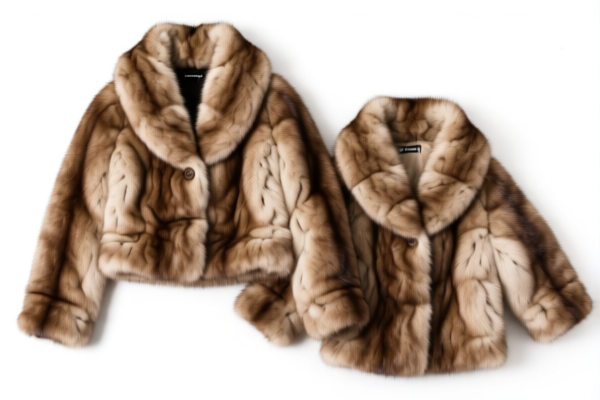
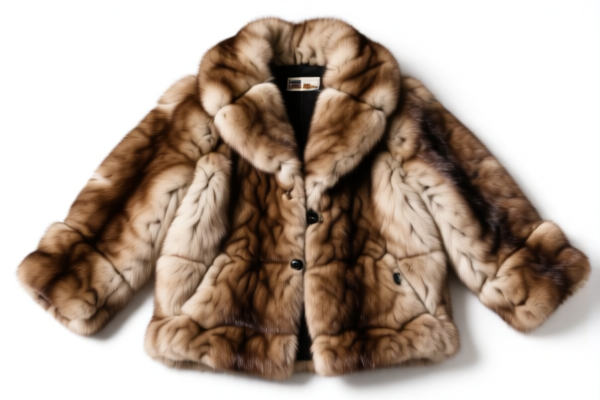
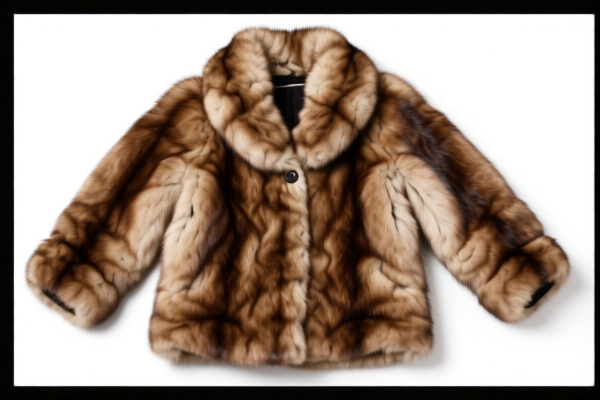
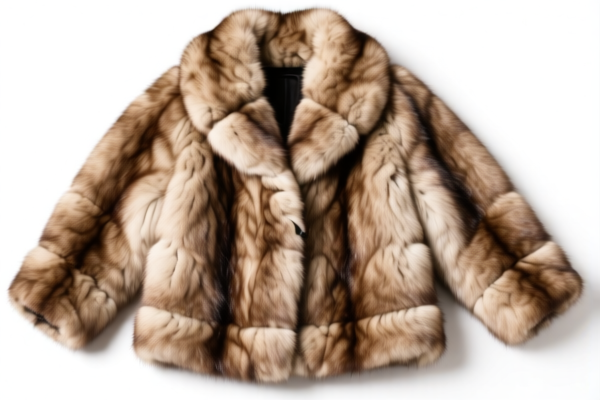
AI分析
🦊 Mink Fur Material: HS Code Classification & Customs Clearance Guide | 2026 Tariff Analysis
🌐 HS Code Reference & Customs Strategy | Full Tariff Breakdown | Professional Compliance Guide
📌 Part 1: Product Definition & Classification – Do You Really Understand "Mink Fur"?
Mink fur is a premium natural material widely used in high-end fashion, luxury accessories, and decorative textiles. In international trade, it is strictly categorized based on its state of processing and form:
- Raw/Unworked Mink Pelts: Whole skins or fragments/slices that have undergone basic preservation (salted, dried) but no further manufacturing.
- Processed/Manufactured Mink Fur: Skins that have been dressed, tanned, or assembled into specific products.
- Semi-Processed Mink Fur: Skins that are in an intermediate state, often classified separately based on specific material limits.
⚠️ Critical Distinction Point:
- If the pelt is raw, whole, or in simple fragments → Classified under 4301.10.00.20 (Lowest Tax).
- If the pelt is basic processed/trimmed but not a finished article → Classified under 4302.11.00.10 / .20 (Medium Tax).
- If it is a finished mink fur product/garment component → Classified under 4303.10.00.30 (Highest Tax).
📦 Part 2: HS Code Classification Details (2026 Latest Tariff Reference)
| HS Code | Product Description | Application Scenario | State of Processing |
|---|---|---|---|
4301.10.00.20 |
Mink Fur (Raw/Original Category) | Whole skins, slices, or fragments; basic preservation only. | ✅ Raw/Unworked |
4302.11.00.10 |
Mink Fur (Processed) | Dressed, tanned, or processed skins; specific material limits apply. | ⚙️ Processed |
4302.11.00.20 |
Mink Fur (Other Mink Fur Category) | Other forms of mink fur fitting the "other" category; specific morphology. | ⚙️ Processed |
4303.10.00.30 |
Articles of Mink Fur (Finished Products) | Core material limited to mink; includes finished fur articles or specific components. | 🏭 Manufactured |
🔍 Key Reminder:
- "Raw" (4301) attracts the lowest base duty because it requires minimal processing.
- "Processed" (4302) involves tanning/dressing, increasing the base duty.
- "Articles" (4303) implies a higher level of manufacturing, resulting in the highest base duty.
- All categories are subject to significant additional tariffs due to US-China trade policies.
💰 Part 3: 2026 Latest Tariff Rate Details (Including Surtaxes & Policy Surcharges)
✅ Applicable Country: United States (US)
✅ Origin: China (CN)
✅ Effective Date: Current policies include Section 301 & Section 122 surcharges.
🎯 1. 4301.10.00.20 —— Mink Fur (Raw/Original Category)
| Item | Content |
|---|---|
| Base Duty Rate | 0.0% (ad valorem) |
| Section 301 Surtax | +7.5% (Specific to this subheading) |
| Section 122 Surcharge | +10% (Counter-measure tariff) |
| Total Tax Rate | 17.5% |
| Tax Calculation | CIF Value × 17.5% |
| De Minimis Exemption | ❌ Not Applicable |
| Legal Basis Path | HS:4301.10.00.20 → Sec301:7.5% → Sec122:10% |
📌 Explanation:
- This is the most favorable classification for mink fur materials.
- The 0% base duty reflects the raw state of the goods.
- However, the 17.5% total tax is still significant due to the 7.5% Section 301 and 10% Section 122 surcharges.
- Crucial: Must ensure the goods are truly "raw" (whole skins, slices) and not "processed" to qualify for this lower rate.
🎯 2. 4302.11.00.10 & 4302.11.00.20 —— Mink Fur (Processed)
| Item | Content |
|---|---|
| Base Duty Rate | 2.1% (ad valorem) |
| Section 301 Surtax | +25.0% (Standard Section 301 rate) |
| Section 122 Surcharge | +10% (Counter-measure tariff) |
| Total Tax Rate | 37.1% |
| Tax Calculation | CIF Value × 37.1% |
| De Minimis Exemption | ❌ Not Applicable |
| Legal Basis Path | HS:4302.11.00.10/.20 → Sec301:25% → Sec122:10% |
📌 Explanation:
- Both...00.10and...00.20share the same tax rate of 37.1%.
- The difference lies in the specific description:
-.10: Specific processed form/morphology.
-.20: "Other" mink fur forms.
- The 2.1% base duty is higher than raw fur.
- The 25% Section 301 surcharge is significantly higher than the 7.5% applied to raw fur.
- Risk: Misclassifying processed fur as raw fur to get 17.5% instead of 37.1% is a high-risk compliance error.
🎯 3. 4303.10.00.30 —— Articles of Mink Fur (Finished Products)
| Item | Content |
|---|---|
| Base Duty Rate | 4.0% (ad valorem) |
| Section 301 Surtax | +25.0% (Standard Section 301 rate) |
| Section 122 Surcharge | +10% (Counter-measure tariff) |
| Total Tax Rate | 39.0% |
| Tax Calculation | CIF Value × 39.0% |
| De Minimis Exemption | ❌ Not Applicable |
| Legal Basis Path | HS:4303.10.00.30 → Sec301:25% → Sec122:10% |
📌 Explanation:
- This is the highest tax category.
- The 4.0% base duty reflects the manufacturing value add.
- Like the processed fur, it bears the 25% Section 301 and 10% Section 122 surcharges.
- Applies to finished fur articles or components clearly intended for final use, not just skins.
🛠️ Part 4: Customs Clearance Practical Advice (Real-World Pitfall Guide)
✅ 1. Documentation Checklist (Essential)
| Document | Required? | Notes |
|---|---|---|
| ✅ Commercial Invoice | ✔️ | Must clearly state "Mink Fur" and specify state of processing (Raw, Processed, or Article). |
| ✅ Packing List | ✔️ | Detail weight, quantity, and packaging. |
| ✅ Product Photos | ✔️ | Clear images showing the fur's condition (whole, sliced, dressed, etc.) to support HS classification. |
| ✅ CITES Permit | ✔️ | Critical: Mink is often regulated. Verify if CITES documentation is required for import into the US. |
| ✅ Proof of Origin | ✔️ | To confirm China origin for accurate surcharge application. |
| ✅ Description of Goods | ✔️ | Use precise language: e.g., "Raw Mink Skins, Whole" vs. "Dressed Mink Skins" vs. "Mink Fur Garment". |
✅ 2. Classification Strategy (Key Mnemonic)
🔥 “Raw is Cheapest, Processed is Middle, Finished is Most!”
| Scenario | Correct HS Code | Tax Rate | Reason |
|---|---|---|---|
| Whole/Dried/Salted Skins | 4301.10.00.20 |
17.5% | Raw/Unprocessed state qualifies for lower base duty & lower Section 301. |
| Dressed/Tanned Skins | 4302.11.00.10 / .20 |
37.1% | Processed state incurs higher base duty & higher Section 301 (25%). |
| Finished Fur Articles | 4303.10.00.30 |
39.0% | Manufactured goods attract highest base duty & standard Section 301. |
📌 Warning:
- Do NOT attempt to misclassify "Dressed Skins" as "Raw Skins" to save 19.6% tax. Customs will inspect morphology.
- Do NOT classify "Finished Garments" as "Skins" to save tax.
- Accurate Description is your best defense.
✅ 3. Special Circumstances
| Situation | Handling Advice |
|---|---|
| Fragmented/Sliced Fur | Ensure it fits the definition of "fragments/slices" under 4301.10.00.20 to get the lower tax. If too processed, it may fall under 4302. |
| Mink Fur Trim on Other Items | If the main character is another material, it might not be classified under Chapter 43. Consult a specialist. |
| CITES Compliance | Mink is often farmed, but verify if the specific origin/variety requires CITES permits. Lack of permit can lead to seizure. |
| Section 122 Specifics | The 10% Section 122 surcharge is a counter-measure. It applies to most Chinese-origin goods. Factor this into all cost calculations. |
🌍 Part 5: Global Market Comparison (2026 Update)
| Market | Recommended HS Code | Estimated Duty | Notes |
|---|---|---|---|
| 🇺🇸 USA | 4301.10.00.20 (Raw) / 4302.11.00.10 (Processed) |
17.5% - 39.0% | High surcharges (301 + 122). Strict classification. |
| 🇨🇳 China | 4301.10.00.20 / 4302.11.00.10 |
Varies by base rate | No Section 301/122. Lower overall cost for exports. |
| 🇪🇺 EU | 4302 / 4303 |
0% - 5% (Base) | No Section 301/122. Check EU animal product regulations. |
| 🇬🇧 UK | 4302 / 4303 |
0% - 5% (Base) | Post-Brexit rules apply. Verify UK CA certificates. |
📌 Conclusion:
- The USA imposes the highest effective tariff due to additional surcharges.
- Accurate classification between Raw (4301) and Processed (4302) is critical to save up to 19.6% in taxes.
- CITES compliance is non-negotiable for mink products.
📌 Part 6: Common Mistakes & Pitfall Guide
❌ Mistake 1: Classifying Dressed Skins as Raw Skins to get 17.5% instead of 37.1%.
👉 Consequence: Customs audit, back taxes, penalties, and potential seizure.
❌ Mistake 2: Ignoring CITES requirements.
👉 Consequence: Shipment held at customs, fines, or destruction.
❌ Mistake 3: Using vague descriptions like "Fur Material" without specifying state of processing.
👉 Consequence: Customs may assign the highest duty (39.0%) or delay clearance.
❌ Mistake 4: Forgetting to include Section 122 (10%) in cost calculations.
👉 Consequence: Underestimated landed cost, lost profit margins.
✅ Correct Practice:
"Mink Fur, Raw, Whole Skins, Preserved, For Manufacturing, CITES Compliant"
OR
"Dressed Mink Skins, Processed, For Garment Making"
🎯 Part 7: Conclusion – Precision Classification Saves Money!
🎯 Remember the Mnemonic:
🔹 "Raw 17.5, Processed 37.1, Finished 39.0"
🔹 "State of Processing is King, CITES is Law"
📌 Pro Tip:
If you are importing into the US, always verify if the specific mink product qualifies for the lower Section 301 rate (7.5%) under 4301.10.00.20. If it is processed, expect the higher rate.
Consult a customs broker for a Pre-Ruling if you are unsure about the classification between Raw and Processed.
📣 Immediate Action:
📞 Contact a licensed customs broker.
📸 Provide clear photos of the fur's condition.
📄 Ensure CITES documentation is in order.
🚀 Clear customs smoothly, avoid penalties, and protect your margins!
✨ Professional Customs Clearance Starts with Accurate Classification!
💼 Every Percentage Point in Duty Matters!
用户评价
关于 HS 编码归类
协调制度(HS)是由世界海关组织(WCO)制定的国际贸易商品分类标准。全球 200 多个国家采用 HS 系统作为海关关税、贸易统计和进出口监管的基础。
每个 HS 编码遵循以下层级结构:
- 章(2 位)——商品大类(例如:第 84 章:机器和机械设备)
- 品目(4 位)——章内的更具体分类
- 子目(6 位)——国际通用细分,所有 WCO 成员国统一使用
- 本国细分(8-10 位)——各国自行扩展的细分编码,如美国 HTSUS 10 位编码
正确的 HS 编码归类对于顺利通关、准确缴纳关税和遵守贸易法规至关重要。错误归类可能导致海关延误、多缴关税或罚款。
从CN进口到US时,适用的关税税率可能包括:
- 最惠国(MFN)税率——适用于 WTO 成员国的标准关税税率
- 普通税率——适用于无贸易协定国家
- 贸易救济关税——附加关税,如 301 条款(反倾销)、232 条款(国家安全)或反补贴税
本页内容仅供参考。如需正式归类,请咨询当地海关或持牌报关代理。