Mink Fur Material
CN → US| HS Code | Tariff Rate | Origin | Destination | Doc |
|---|---|---|---|---|
| 4302110020 | 37.1% | CN | US | Official Doc |
| 4302110010 | 37.1% | CN | US | Official Doc |
| 4303100030 | 39.0% | CN | US | Official Doc |
| 4301100020 | 17.5% | CN | US | Official Doc |
Product Images
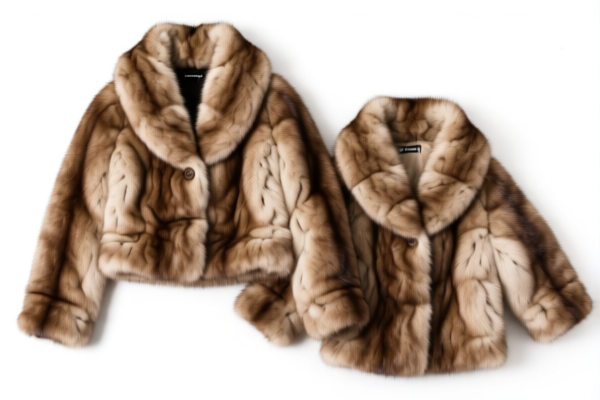
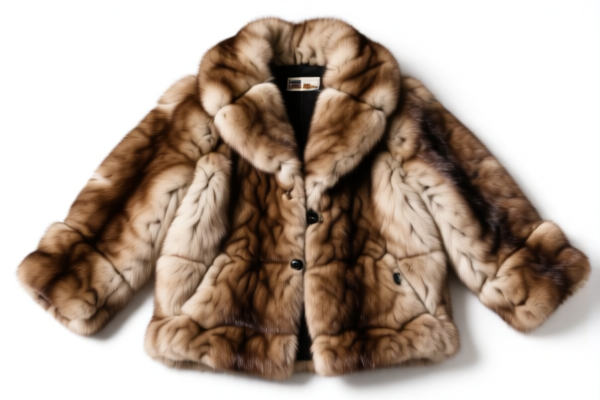
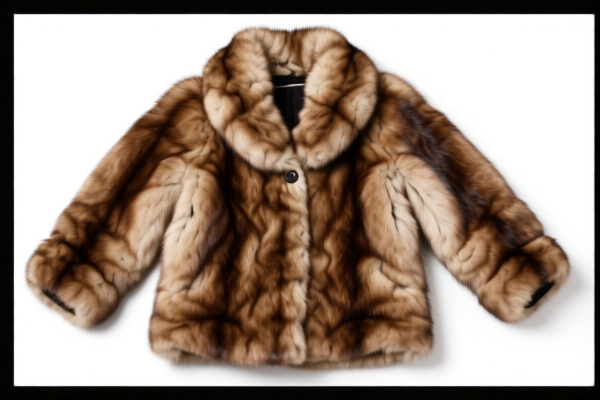
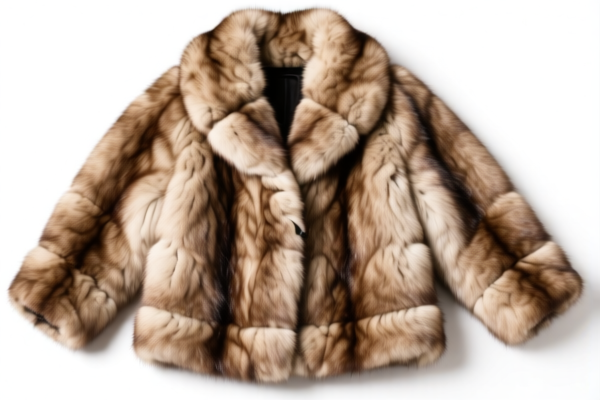
AI Analysis
🦊 Mink Fur Material: HS Code Classification & Customs Clearance Guide | 2026 Tariff Analysis
🌐 HS Code Reference & Customs Strategy | Full Tariff Breakdown | Professional Compliance Guide
📌 Part 1: Product Definition & Classification – Do You Really Understand "Mink Fur"?
Mink fur is a premium natural material widely used in high-end fashion, luxury accessories, and decorative textiles. In international trade, it is strictly categorized based on its state of processing and form:
- Raw/Unworked Mink Pelts: Whole skins or fragments/slices that have undergone basic preservation (salted, dried) but no further manufacturing.
- Processed/Manufactured Mink Fur: Skins that have been dressed, tanned, or assembled into specific products.
- Semi-Processed Mink Fur: Skins that are in an intermediate state, often classified separately based on specific material limits.
⚠️ Critical Distinction Point:
- If the pelt is raw, whole, or in simple fragments → Classified under 4301.10.00.20 (Lowest Tax).
- If the pelt is basic processed/trimmed but not a finished article → Classified under 4302.11.00.10 / .20 (Medium Tax).
- If it is a finished mink fur product/garment component → Classified under 4303.10.00.30 (Highest Tax).
📦 Part 2: HS Code Classification Details (2026 Latest Tariff Reference)
| HS Code | Product Description | Application Scenario | State of Processing |
|---|---|---|---|
4301.10.00.20 |
Mink Fur (Raw/Original Category) | Whole skins, slices, or fragments; basic preservation only. | ✅ Raw/Unworked |
4302.11.00.10 |
Mink Fur (Processed) | Dressed, tanned, or processed skins; specific material limits apply. | ⚙️ Processed |
4302.11.00.20 |
Mink Fur (Other Mink Fur Category) | Other forms of mink fur fitting the "other" category; specific morphology. | ⚙️ Processed |
4303.10.00.30 |
Articles of Mink Fur (Finished Products) | Core material limited to mink; includes finished fur articles or specific components. | 🏭 Manufactured |
🔍 Key Reminder:
- "Raw" (4301) attracts the lowest base duty because it requires minimal processing.
- "Processed" (4302) involves tanning/dressing, increasing the base duty.
- "Articles" (4303) implies a higher level of manufacturing, resulting in the highest base duty.
- All categories are subject to significant additional tariffs due to US-China trade policies.
💰 Part 3: 2026 Latest Tariff Rate Details (Including Surtaxes & Policy Surcharges)
✅ Applicable Country: United States (US)
✅ Origin: China (CN)
✅ Effective Date: Current policies include Section 301 & Section 122 surcharges.
🎯 1. 4301.10.00.20 —— Mink Fur (Raw/Original Category)
| Item | Content |
|---|---|
| Base Duty Rate | 0.0% (ad valorem) |
| Section 301 Surtax | +7.5% (Specific to this subheading) |
| Section 122 Surcharge | +10% (Counter-measure tariff) |
| Total Tax Rate | 17.5% |
| Tax Calculation | CIF Value × 17.5% |
| De Minimis Exemption | ❌ Not Applicable |
| Legal Basis Path | HS:4301.10.00.20 → Sec301:7.5% → Sec122:10% |
📌 Explanation:
- This is the most favorable classification for mink fur materials.
- The 0% base duty reflects the raw state of the goods.
- However, the 17.5% total tax is still significant due to the 7.5% Section 301 and 10% Section 122 surcharges.
- Crucial: Must ensure the goods are truly "raw" (whole skins, slices) and not "processed" to qualify for this lower rate.
🎯 2. 4302.11.00.10 & 4302.11.00.20 —— Mink Fur (Processed)
| Item | Content |
|---|---|
| Base Duty Rate | 2.1% (ad valorem) |
| Section 301 Surtax | +25.0% (Standard Section 301 rate) |
| Section 122 Surcharge | +10% (Counter-measure tariff) |
| Total Tax Rate | 37.1% |
| Tax Calculation | CIF Value × 37.1% |
| De Minimis Exemption | ❌ Not Applicable |
| Legal Basis Path | HS:4302.11.00.10/.20 → Sec301:25% → Sec122:10% |
📌 Explanation:
- Both...00.10and...00.20share the same tax rate of 37.1%.
- The difference lies in the specific description:
-.10: Specific processed form/morphology.
-.20: "Other" mink fur forms.
- The 2.1% base duty is higher than raw fur.
- The 25% Section 301 surcharge is significantly higher than the 7.5% applied to raw fur.
- Risk: Misclassifying processed fur as raw fur to get 17.5% instead of 37.1% is a high-risk compliance error.
🎯 3. 4303.10.00.30 —— Articles of Mink Fur (Finished Products)
| Item | Content |
|---|---|
| Base Duty Rate | 4.0% (ad valorem) |
| Section 301 Surtax | +25.0% (Standard Section 301 rate) |
| Section 122 Surcharge | +10% (Counter-measure tariff) |
| Total Tax Rate | 39.0% |
| Tax Calculation | CIF Value × 39.0% |
| De Minimis Exemption | ❌ Not Applicable |
| Legal Basis Path | HS:4303.10.00.30 → Sec301:25% → Sec122:10% |
📌 Explanation:
- This is the highest tax category.
- The 4.0% base duty reflects the manufacturing value add.
- Like the processed fur, it bears the 25% Section 301 and 10% Section 122 surcharges.
- Applies to finished fur articles or components clearly intended for final use, not just skins.
🛠️ Part 4: Customs Clearance Practical Advice (Real-World Pitfall Guide)
✅ 1. Documentation Checklist (Essential)
| Document | Required? | Notes |
|---|---|---|
| ✅ Commercial Invoice | ✔️ | Must clearly state "Mink Fur" and specify state of processing (Raw, Processed, or Article). |
| ✅ Packing List | ✔️ | Detail weight, quantity, and packaging. |
| ✅ Product Photos | ✔️ | Clear images showing the fur's condition (whole, sliced, dressed, etc.) to support HS classification. |
| ✅ CITES Permit | ✔️ | Critical: Mink is often regulated. Verify if CITES documentation is required for import into the US. |
| ✅ Proof of Origin | ✔️ | To confirm China origin for accurate surcharge application. |
| ✅ Description of Goods | ✔️ | Use precise language: e.g., "Raw Mink Skins, Whole" vs. "Dressed Mink Skins" vs. "Mink Fur Garment". |
✅ 2. Classification Strategy (Key Mnemonic)
🔥 “Raw is Cheapest, Processed is Middle, Finished is Most!”
| Scenario | Correct HS Code | Tax Rate | Reason |
|---|---|---|---|
| Whole/Dried/Salted Skins | 4301.10.00.20 |
17.5% | Raw/Unprocessed state qualifies for lower base duty & lower Section 301. |
| Dressed/Tanned Skins | 4302.11.00.10 / .20 |
37.1% | Processed state incurs higher base duty & higher Section 301 (25%). |
| Finished Fur Articles | 4303.10.00.30 |
39.0% | Manufactured goods attract highest base duty & standard Section 301. |
📌 Warning:
- Do NOT attempt to misclassify "Dressed Skins" as "Raw Skins" to save 19.6% tax. Customs will inspect morphology.
- Do NOT classify "Finished Garments" as "Skins" to save tax.
- Accurate Description is your best defense.
✅ 3. Special Circumstances
| Situation | Handling Advice |
|---|---|
| Fragmented/Sliced Fur | Ensure it fits the definition of "fragments/slices" under 4301.10.00.20 to get the lower tax. If too processed, it may fall under 4302. |
| Mink Fur Trim on Other Items | If the main character is another material, it might not be classified under Chapter 43. Consult a specialist. |
| CITES Compliance | Mink is often farmed, but verify if the specific origin/variety requires CITES permits. Lack of permit can lead to seizure. |
| Section 122 Specifics | The 10% Section 122 surcharge is a counter-measure. It applies to most Chinese-origin goods. Factor this into all cost calculations. |
🌍 Part 5: Global Market Comparison (2026 Update)
| Market | Recommended HS Code | Estimated Duty | Notes |
|---|---|---|---|
| 🇺🇸 USA | 4301.10.00.20 (Raw) / 4302.11.00.10 (Processed) |
17.5% - 39.0% | High surcharges (301 + 122). Strict classification. |
| 🇨🇳 China | 4301.10.00.20 / 4302.11.00.10 |
Varies by base rate | No Section 301/122. Lower overall cost for exports. |
| 🇪🇺 EU | 4302 / 4303 |
0% - 5% (Base) | No Section 301/122. Check EU animal product regulations. |
| 🇬🇧 UK | 4302 / 4303 |
0% - 5% (Base) | Post-Brexit rules apply. Verify UK CA certificates. |
📌 Conclusion:
- The USA imposes the highest effective tariff due to additional surcharges.
- Accurate classification between Raw (4301) and Processed (4302) is critical to save up to 19.6% in taxes.
- CITES compliance is non-negotiable for mink products.
📌 Part 6: Common Mistakes & Pitfall Guide
❌ Mistake 1: Classifying Dressed Skins as Raw Skins to get 17.5% instead of 37.1%.
👉 Consequence: Customs audit, back taxes, penalties, and potential seizure.
❌ Mistake 2: Ignoring CITES requirements.
👉 Consequence: Shipment held at customs, fines, or destruction.
❌ Mistake 3: Using vague descriptions like "Fur Material" without specifying state of processing.
👉 Consequence: Customs may assign the highest duty (39.0%) or delay clearance.
❌ Mistake 4: Forgetting to include Section 122 (10%) in cost calculations.
👉 Consequence: Underestimated landed cost, lost profit margins.
✅ Correct Practice:
"Mink Fur, Raw, Whole Skins, Preserved, For Manufacturing, CITES Compliant"
OR
"Dressed Mink Skins, Processed, For Garment Making"
🎯 Part 7: Conclusion – Precision Classification Saves Money!
🎯 Remember the Mnemonic:
🔹 "Raw 17.5, Processed 37.1, Finished 39.0"
🔹 "State of Processing is King, CITES is Law"
📌 Pro Tip:
If you are importing into the US, always verify if the specific mink product qualifies for the lower Section 301 rate (7.5%) under 4301.10.00.20. If it is processed, expect the higher rate.
Consult a customs broker for a Pre-Ruling if you are unsure about the classification between Raw and Processed.
📣 Immediate Action:
📞 Contact a licensed customs broker.
📸 Provide clear photos of the fur's condition.
📄 Ensure CITES documentation is in order.
🚀 Clear customs smoothly, avoid penalties, and protect your margins!
✨ Professional Customs Clearance Starts with Accurate Classification!
💼 Every Percentage Point in Duty Matters!
Customer Reviews
About HS Code Classification
The Harmonized System (HS) is an internationally standardized nomenclature developed by the World Customs Organization (WCO) to classify traded products. Over 200 countries use the HS system as the basis for customs tariffs, trade statistics, and import/export regulations.
Each HS code follows a hierarchical structure:
- Chapter (2 digits) — Broad category of goods (e.g., Chapter 84: Machinery and Mechanical Appliances)
- Heading (4 digits) — More specific grouping within the chapter
- Subheading (6 digits) — Internationally standardized breakdown, used by all WCO member countries
- National subdivisions (8-10 digits) — Country-specific extensions for further classification, such as US HTSUS 10-digit codes
Correct HS code classification is essential for smooth customs clearance, accurate duty payment, and compliance with trade regulations. Misclassification can lead to customs delays, overpayment of duties, or penalties.
When importing from CN to US, the applicable tariff rates may include:
- Most-Favored-Nation (MFN) rate — The standard duty rate applied to WTO members
- General rate — Applied to countries without trade agreements
- Trade remedy duties — Additional tariffs such as Section 301 (anti-dumping), Section 232 (national security), or countervailing duties
The information provided on this page is for reference purposes only. For official classification, please consult with your local customs authority or a licensed customs broker.