Modacrylic Workwear Fabric
CN → US| HS编码 | 关税税率 | 原产国 | 目的国 | 文档 |
|---|---|---|---|---|
| 5407912010 | 49.9% | CN | US | 官方文档 |
| 5407922010 | 49.9% | CN | US | 官方文档 |
商品图片
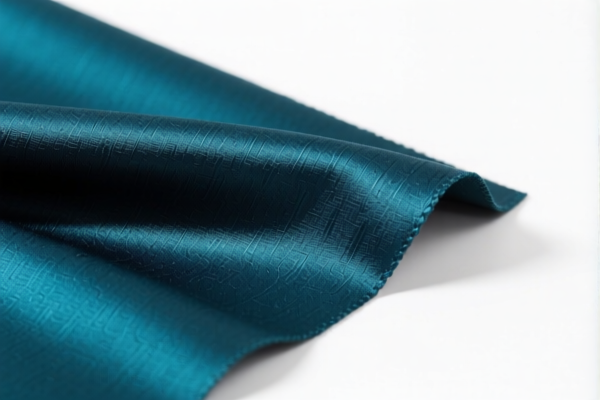
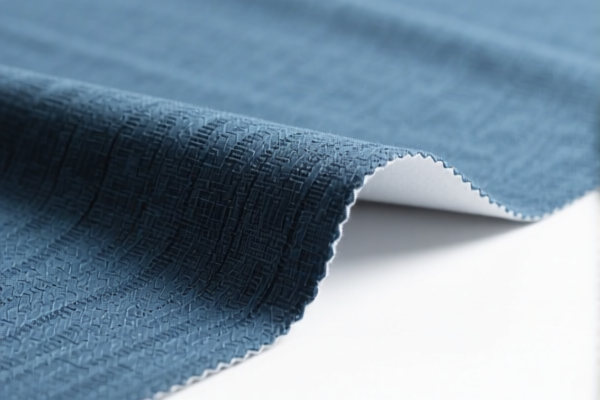
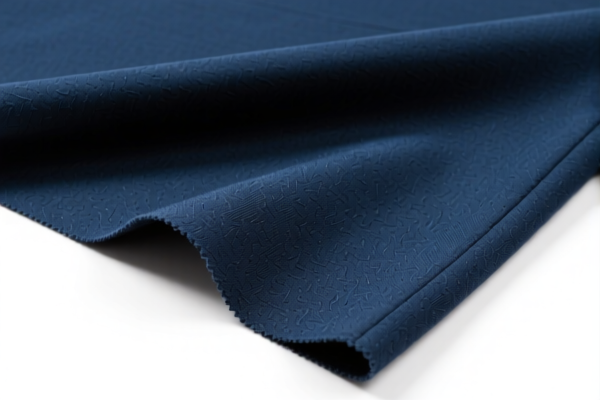

AI分析
👷♂️ Modacrylic Workwear Fabric (Industrial Protective Textiles)
🌐 HS Code Reference & Clearance Guide | 2026 Latest Tariff Analysis | Professional Compliance Strategy
📌 I. Product Definition & Classification: What Exactly is "Modacrylic Workwear Fabric"?
Modacrylic Fabric is a specialized synthetic textile composed primarily of modacrylic fibers (copolymer of acrylonitrile and vinyl chloride or other comonomers). Unlike standard acrylics, modacrylics are engineered for inherent flame resistance (IFR), self-extinguishing properties, and resistance to chemicals and UV degradation.
In international trade, these fabrics are classified under Chapter 54 (Man-made filaments) because modacrylic fibers are typically extruded as continuous filaments before being woven. They are distinct from "stitched" or "padded" protective clothing (which would fall under Chapter 61/62) because this product is the raw woven material used to manufacture the final workwear.
⚠️ Key Distinction Point:
- If the fabric is unbleached or bleached (natural color or white/gray base) → It falls under 5407.91.xx.xx.
- If the fabric is dyed (colored for branding, high-visibility, or aesthetic purposes) → It falls under 5407.92.xx.xx.
- Crucial: Do not confuse with "woven fabrics of synthetic staple fibers" (Chapter 55). Modacrylic used in workwear is usually filament yarn, not staple fiber, unless explicitly stated otherwise.
📦 II. HS Code Classification Details (2026 Latest Tariff Authority Match)
Based on the provided <DATA>, we have two specific HS codes for Woven Fabrics of Synthetic Filament Yarn. Both fall under Heading 5407.
| HS Code | Product Description | Key Characteristics | Status |
|---|---|---|---|
5407.91.20.10 |
Woven fabrics of synthetic filament yarn... Unbleached or Bleached: Other Mixed mainly or solely with artificial filaments (620) | Base fabric, ready for dyeing or finishing. Often used for industrial liners, under-layer protection, or simple protective garments where color is not critical. | ✅ Unbleached/Bleached |
5407.92.20.10 |
Woven fabrics of synthetic filament yarn... Dyed: Other Mixed mainly or solely with artificial filaments or metalized yarn (620) | Finished, colored fabric. Common in high-visibility workwear (orange/yellow), branded safety gear, or fabrics with reflective strips (metalized yarn). | ✅ Dyed |
🔍 Important Note on "Mixed with Artificial Filaments":
The<DATA>specifies that these codes apply to fabrics mixed mainly or solely with artificial filaments (e.g., polyester, viscose, or other modacrylic blends). If the fabric is 100% modacrylic without blending with other man-made filaments, it may still fall here if classified under "Other," but the presence of metalized yarn (for reflective strips) explicitly triggers the5407.92.20.10code for dyed versions.
💰 III. 2026 Latest Tariff Rate Breakdown (Zero Duty Advantage)
✅ Applicable Country: United States (US)
✅ Origin: China (CN) (Assumed based on typical global supply chain context; verify origin)
✅ Effective Time: 2026 (Current Data Snapshot)
🎯 1. 5407.91.20.10 —— Unbleached/Bleached Modacrylic Woven Fabric
| Item | Content |
|---|---|
| Base Tariff Rate | 0.0% (ad valorem) |
| Additional Duties (Section 301/IEEPA) | 0.0% |
| Total Tax Rate | 0.0% |
| Tax Calculation | CIF Value × 0% = $0 |
| De Minimis Eligibility | N/A (Usually bulk fabric shipments exceed de minimis thresholds, but duty is 0% regardless) |
| Legal Basis Path | HTSUS:5407.91.20.10 → No Additional Footnotes Applied |
📌 Explanation:
- This code currently enjoys zero duty status.
- No Section 301 tariffs (25%) or IEEPA additional duties apply to this specific subheading of synthetic filament woven fabrics in the provided dataset.
- This makes unbleached/bleached modacrylic fabric a highly cost-effective import category compared to many other textile or chemical products.
🎯 2. 5407.92.20.10 —— Dyed Modacrylic Woven Fabric (with/without metalized yarn)
| Item | Content |
|---|---|
| Base Tariff Rate | 0.0% (ad valorem) |
| Additional Duties (Section 301/IEEPA) | 0.0% |
| Total Tax Rate | 0.0% |
| Tax Calculation | CIF Value × 0% = $0 |
| De Minimis Eligibility | N/A |
| Legal Basis Path | HTSUS:5407.92.20.10 → No Additional Footnotes Applied |
📌 Explanation:
- Similar to the unbleached version, dyed modacrylic fabrics also have 0% total duty.
- The inclusion of metalized yarn (for safety reflectivity) does not trigger higher tariffs in this specific HS code breakdown.
- Cost Advantage: Despite being a "finished, colored" product, it retains the same 0% duty rate as the raw material, offering significant margin protection for manufacturers.
🛠️ IV. Clearance Practical Advice (Risk Mitigation Guide)
✅ 1. Required Documentation Checklist (Non-Negotiable)
| Document | Must Provide? | Explanation |
|---|---|---|
| ✅ Product Specification Sheet | ✔️ | Must detail: Fiber composition (e.g., 80% Modacrylic, 20% Polyester), weight (gsm), width, and weave type. |
| ✅ Flame Resistance Certificate | ✔️ | Crucial for "Workwear" classification. Prove IFIR (Inherent Flame Resistance) to distinguish from coated/ treated fabrics which may have different HS codes. |
| ✅ Commercial Invoice | ✔️ | Clearly state: "Woven Fabric, Modacrylic Blend, Unbleached/Dyed." Avoid vague terms like "Safety Cloth." |
| ✅ Packing List | ✔️ | Detail roll length, weight, and dimensions. |
| ✅ Origin Certificate (if applicable) | ✔️ | To prove US free trade agreement eligibility (if any) or just for customs verification. |
| ✅ Material Safety Data Sheet (MSDS) | ✔️ | Often requested for synthetic fibers to confirm chemical composition (no restricted azo dyes if dyed). |
✅ 2. Declaration Tips (Critical Keywords)
🔥 “Fiber Content is King: State % Clearly, Avoid Ambiguity!”
| Scenario | Correct Declaration | Wrong Declaration |
|---|---|---|
| Unbleached Fabric | Woven fabric, synthetic filament yarn, 70% modacrylic/30% polyester, unbleached |
Workwear material |
| Dyed Fabric with Reflective Strips | Woven fabric, dyed, synthetic filament, mixed with metalized yarn, for safety clothing |
Reflective cloth or Safety fabric |
| Mixed with Artificial Filaments | Explicitly state: Mixed mainly with artificial filaments |
Omit fiber blend details |
⚠️ Common Pitfall:
- Do NOT describe the product as "Safety Clothing" or "PPE Gear" if it is just fabric.
- If you declare it as "Clothing," it will be routed to Chapter 61/62, potentially triggering different duties and requiring CBP (Customs and Border Protection) examination for compliance with OSHA/NIOSH standards.
- Correct Approach: Declare as Fabric (Chapter 54). The end-use (workwear) is secondary; the material and form (woven fabric) dictate the HS code.
✅ 3. Special Scenarios
| Scenario | Handling Advice |
|---|---|
| Fabric with Coating | If the fabric has a PVC or rubber coating for waterproofing, it may shift to Chapter 59 (Impregnated, coated, covered, or laminated textile fabrics). Verify if the coating is integral or surface-level. The provided codes assume plain woven fabric. |
| Metalized Yarn Presence | If the fabric contains metallic threads for visibility, ensure it is declared under 5407.92.20.10 (Dyed/Metalized). This is the most accurate code for high-vis workwear fabric. |
| Modacrylic vs. Acrylic | Ensure your supplier specifies Modacrylic (high flame resistance) and not standard Acrylic. While both are synthetic filaments, Modacrylic has distinct chemical properties that may affect classification if challenged. |
🌍 V. Global Market Comparison (2026 Context)
| Country/Region | Recommended HS Code | Tariff Rate | Certification | Remarks |
|---|---|---|---|---|
| 🇺🇸 USA | 5407.91.20.10 / 5407.92.20.10 |
0% | CPSIA (if for children), but mainly OSHA compliance for employer use | Zero Duty Advantage |
| 🇨🇳 China | 5407.91 / 5407.92 |
~5-7% | None | Higher duty than US for exports |
| 🇪🇺 EU | 5407.91 / 5407.92 |
0% (GSP) or 4-6% | REACH, OEKO-TEX | Check for EU REACH compliance on dyes |
| 🇬🇧 UK | 5407.91 / 5407.92 |
0% | UKCA | Post-Brexit rules apply |
📌 Conclusion:
- The USA offers a 0% duty rate for these specific modacrylic woven fabrics, making it a strategic import destination for cost savings.
- China and EU may impose standard duties, so the US advantage is significant for US-based manufacturers sourcing modacrylic fabric.
📌 VI. Common Errors & Pitfall Guide (Lessons Learned)
❌ Error 1: Declaring as "Safety Clothing" instead of "Fabric"
👉 Consequence: Misclassification under Chapter 62/63. May face 20-30% duty instead of 0%, plus potential OSHA compliance delays.
❌ Error 2: Ignoring the "Mixed with Artificial Filaments" clause
👉 Consequence: If the fabric is 100% modacrylic and not mixed, customs may reject 5407.91.20.10 and request a different subheading. Be precise about fiber blend.
❌ Error 3: Confusing "Dyed" with "Printed"
👉 Consequence: 5407.92 covers dyed fabrics. If the fabric has a printed pattern (not just color), it may fall under 5407.93 (Printed). Ensure your description matches "Dyed" or "Printed" accurately.
✅ Correct Declaration Example:
"Woven fabric, synthetic filament yarn, modacrylic blend, dyed orange, suitable for workwear, mixed with artificial filaments"
🎯 VII. Conclusion: Precision Leads to Profit
🎯 Key Takeaways:
🔹 "0% Duty is Real": Both unbleached and dyed modacrylic woven fabrics under
5407.91.20.10and5407.92.20.10have 0% total duty in the US.
🔹 "Fabric, Not Clothing": Declare as Woven Fabric, not PPE, to avoid Chapter 62/63 duties and compliance hurdles.
🔹 "Specify Fiber Blend": Explicitly mention "Mixed with artificial filaments" to align with the HS code description.
📌 Pro Tip:
If you are importing high-visibility fabric with metalized yarn, always use 5407.92.20.10. This code explicitly accounts for metalized yarn, ensuring no misclassification penalties.
📣 Immediate Action:
📞 Contact your freight forwarder to confirm the "mixed with artificial filaments" component in your fabric's spec sheet.
🚀 Prepare accurate commercial invoices with clear fiber content details to secure the 0% duty rate.
✨ Professional clearance starts with accurate classification!
💼 Your savings start with a 0% duty rate!
用户评价
关于 HS 编码归类
协调制度(HS)是由世界海关组织(WCO)制定的国际贸易商品分类标准。全球 200 多个国家采用 HS 系统作为海关关税、贸易统计和进出口监管的基础。
每个 HS 编码遵循以下层级结构:
- 章(2 位)——商品大类(例如:第 84 章:机器和机械设备)
- 品目(4 位)——章内的更具体分类
- 子目(6 位)——国际通用细分,所有 WCO 成员国统一使用
- 本国细分(8-10 位)——各国自行扩展的细分编码,如美国 HTSUS 10 位编码
正确的 HS 编码归类对于顺利通关、准确缴纳关税和遵守贸易法规至关重要。错误归类可能导致海关延误、多缴关税或罚款。
从CN进口到US时,适用的关税税率可能包括:
- 最惠国(MFN)税率——适用于 WTO 成员国的标准关税税率
- 普通税率——适用于无贸易协定国家
- 贸易救济关税——附加关税,如 301 条款(反倾销)、232 条款(国家安全)或反补贴税
本页内容仅供参考。如需正式归类,请咨询当地海关或持牌报关代理。