Modacrylic Workwear Fabric
CN → US| HS Code | Tariff Rate | Origin | Destination | Doc |
|---|---|---|---|---|
| 5407912010 | 49.9% | CN | US | Official Doc |
| 5407922010 | 49.9% | CN | US | Official Doc |
Product Images
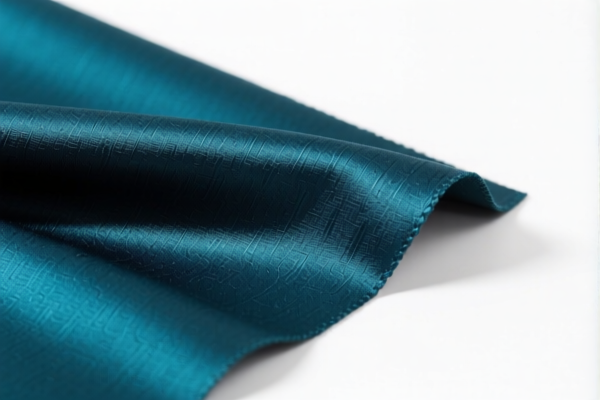
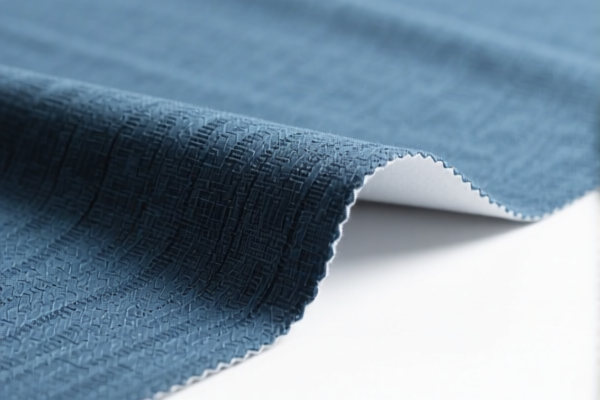
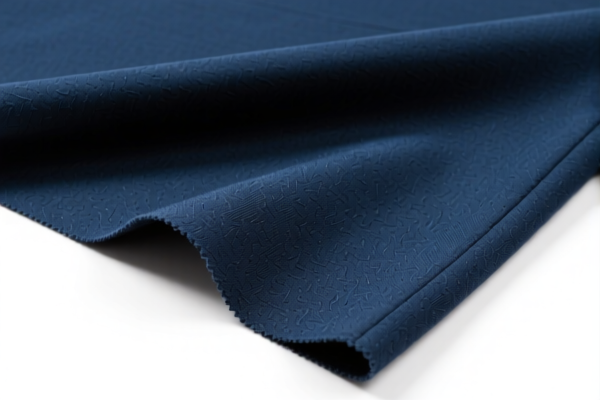

AI Analysis
👷♂️ Modacrylic Workwear Fabric (Industrial Protective Textiles)
🌐 HS Code Reference & Clearance Guide | 2026 Latest Tariff Analysis | Professional Compliance Strategy
📌 I. Product Definition & Classification: What Exactly is "Modacrylic Workwear Fabric"?
Modacrylic Fabric is a specialized synthetic textile composed primarily of modacrylic fibers (copolymer of acrylonitrile and vinyl chloride or other comonomers). Unlike standard acrylics, modacrylics are engineered for inherent flame resistance (IFR), self-extinguishing properties, and resistance to chemicals and UV degradation.
In international trade, these fabrics are classified under Chapter 54 (Man-made filaments) because modacrylic fibers are typically extruded as continuous filaments before being woven. They are distinct from "stitched" or "padded" protective clothing (which would fall under Chapter 61/62) because this product is the raw woven material used to manufacture the final workwear.
⚠️ Key Distinction Point:
- If the fabric is unbleached or bleached (natural color or white/gray base) → It falls under 5407.91.xx.xx.
- If the fabric is dyed (colored for branding, high-visibility, or aesthetic purposes) → It falls under 5407.92.xx.xx.
- Crucial: Do not confuse with "woven fabrics of synthetic staple fibers" (Chapter 55). Modacrylic used in workwear is usually filament yarn, not staple fiber, unless explicitly stated otherwise.
📦 II. HS Code Classification Details (2026 Latest Tariff Authority Match)
Based on the provided <DATA>, we have two specific HS codes for Woven Fabrics of Synthetic Filament Yarn. Both fall under Heading 5407.
| HS Code | Product Description | Key Characteristics | Status |
|---|---|---|---|
5407.91.20.10 |
Woven fabrics of synthetic filament yarn... Unbleached or Bleached: Other Mixed mainly or solely with artificial filaments (620) | Base fabric, ready for dyeing or finishing. Often used for industrial liners, under-layer protection, or simple protective garments where color is not critical. | ✅ Unbleached/Bleached |
5407.92.20.10 |
Woven fabrics of synthetic filament yarn... Dyed: Other Mixed mainly or solely with artificial filaments or metalized yarn (620) | Finished, colored fabric. Common in high-visibility workwear (orange/yellow), branded safety gear, or fabrics with reflective strips (metalized yarn). | ✅ Dyed |
🔍 Important Note on "Mixed with Artificial Filaments":
The<DATA>specifies that these codes apply to fabrics mixed mainly or solely with artificial filaments (e.g., polyester, viscose, or other modacrylic blends). If the fabric is 100% modacrylic without blending with other man-made filaments, it may still fall here if classified under "Other," but the presence of metalized yarn (for reflective strips) explicitly triggers the5407.92.20.10code for dyed versions.
💰 III. 2026 Latest Tariff Rate Breakdown (Zero Duty Advantage)
✅ Applicable Country: United States (US)
✅ Origin: China (CN) (Assumed based on typical global supply chain context; verify origin)
✅ Effective Time: 2026 (Current Data Snapshot)
🎯 1. 5407.91.20.10 —— Unbleached/Bleached Modacrylic Woven Fabric
| Item | Content |
|---|---|
| Base Tariff Rate | 0.0% (ad valorem) |
| Additional Duties (Section 301/IEEPA) | 0.0% |
| Total Tax Rate | 0.0% |
| Tax Calculation | CIF Value × 0% = $0 |
| De Minimis Eligibility | N/A (Usually bulk fabric shipments exceed de minimis thresholds, but duty is 0% regardless) |
| Legal Basis Path | HTSUS:5407.91.20.10 → No Additional Footnotes Applied |
📌 Explanation:
- This code currently enjoys zero duty status.
- No Section 301 tariffs (25%) or IEEPA additional duties apply to this specific subheading of synthetic filament woven fabrics in the provided dataset.
- This makes unbleached/bleached modacrylic fabric a highly cost-effective import category compared to many other textile or chemical products.
🎯 2. 5407.92.20.10 —— Dyed Modacrylic Woven Fabric (with/without metalized yarn)
| Item | Content |
|---|---|
| Base Tariff Rate | 0.0% (ad valorem) |
| Additional Duties (Section 301/IEEPA) | 0.0% |
| Total Tax Rate | 0.0% |
| Tax Calculation | CIF Value × 0% = $0 |
| De Minimis Eligibility | N/A |
| Legal Basis Path | HTSUS:5407.92.20.10 → No Additional Footnotes Applied |
📌 Explanation:
- Similar to the unbleached version, dyed modacrylic fabrics also have 0% total duty.
- The inclusion of metalized yarn (for safety reflectivity) does not trigger higher tariffs in this specific HS code breakdown.
- Cost Advantage: Despite being a "finished, colored" product, it retains the same 0% duty rate as the raw material, offering significant margin protection for manufacturers.
🛠️ IV. Clearance Practical Advice (Risk Mitigation Guide)
✅ 1. Required Documentation Checklist (Non-Negotiable)
| Document | Must Provide? | Explanation |
|---|---|---|
| ✅ Product Specification Sheet | ✔️ | Must detail: Fiber composition (e.g., 80% Modacrylic, 20% Polyester), weight (gsm), width, and weave type. |
| ✅ Flame Resistance Certificate | ✔️ | Crucial for "Workwear" classification. Prove IFIR (Inherent Flame Resistance) to distinguish from coated/ treated fabrics which may have different HS codes. |
| ✅ Commercial Invoice | ✔️ | Clearly state: "Woven Fabric, Modacrylic Blend, Unbleached/Dyed." Avoid vague terms like "Safety Cloth." |
| ✅ Packing List | ✔️ | Detail roll length, weight, and dimensions. |
| ✅ Origin Certificate (if applicable) | ✔️ | To prove US free trade agreement eligibility (if any) or just for customs verification. |
| ✅ Material Safety Data Sheet (MSDS) | ✔️ | Often requested for synthetic fibers to confirm chemical composition (no restricted azo dyes if dyed). |
✅ 2. Declaration Tips (Critical Keywords)
🔥 “Fiber Content is King: State % Clearly, Avoid Ambiguity!”
| Scenario | Correct Declaration | Wrong Declaration |
|---|---|---|
| Unbleached Fabric | Woven fabric, synthetic filament yarn, 70% modacrylic/30% polyester, unbleached |
Workwear material |
| Dyed Fabric with Reflective Strips | Woven fabric, dyed, synthetic filament, mixed with metalized yarn, for safety clothing |
Reflective cloth or Safety fabric |
| Mixed with Artificial Filaments | Explicitly state: Mixed mainly with artificial filaments |
Omit fiber blend details |
⚠️ Common Pitfall:
- Do NOT describe the product as "Safety Clothing" or "PPE Gear" if it is just fabric.
- If you declare it as "Clothing," it will be routed to Chapter 61/62, potentially triggering different duties and requiring CBP (Customs and Border Protection) examination for compliance with OSHA/NIOSH standards.
- Correct Approach: Declare as Fabric (Chapter 54). The end-use (workwear) is secondary; the material and form (woven fabric) dictate the HS code.
✅ 3. Special Scenarios
| Scenario | Handling Advice |
|---|---|
| Fabric with Coating | If the fabric has a PVC or rubber coating for waterproofing, it may shift to Chapter 59 (Impregnated, coated, covered, or laminated textile fabrics). Verify if the coating is integral or surface-level. The provided codes assume plain woven fabric. |
| Metalized Yarn Presence | If the fabric contains metallic threads for visibility, ensure it is declared under 5407.92.20.10 (Dyed/Metalized). This is the most accurate code for high-vis workwear fabric. |
| Modacrylic vs. Acrylic | Ensure your supplier specifies Modacrylic (high flame resistance) and not standard Acrylic. While both are synthetic filaments, Modacrylic has distinct chemical properties that may affect classification if challenged. |
🌍 V. Global Market Comparison (2026 Context)
| Country/Region | Recommended HS Code | Tariff Rate | Certification | Remarks |
|---|---|---|---|---|
| 🇺🇸 USA | 5407.91.20.10 / 5407.92.20.10 |
0% | CPSIA (if for children), but mainly OSHA compliance for employer use | Zero Duty Advantage |
| 🇨🇳 China | 5407.91 / 5407.92 |
~5-7% | None | Higher duty than US for exports |
| 🇪🇺 EU | 5407.91 / 5407.92 |
0% (GSP) or 4-6% | REACH, OEKO-TEX | Check for EU REACH compliance on dyes |
| 🇬🇧 UK | 5407.91 / 5407.92 |
0% | UKCA | Post-Brexit rules apply |
📌 Conclusion:
- The USA offers a 0% duty rate for these specific modacrylic woven fabrics, making it a strategic import destination for cost savings.
- China and EU may impose standard duties, so the US advantage is significant for US-based manufacturers sourcing modacrylic fabric.
📌 VI. Common Errors & Pitfall Guide (Lessons Learned)
❌ Error 1: Declaring as "Safety Clothing" instead of "Fabric"
👉 Consequence: Misclassification under Chapter 62/63. May face 20-30% duty instead of 0%, plus potential OSHA compliance delays.
❌ Error 2: Ignoring the "Mixed with Artificial Filaments" clause
👉 Consequence: If the fabric is 100% modacrylic and not mixed, customs may reject 5407.91.20.10 and request a different subheading. Be precise about fiber blend.
❌ Error 3: Confusing "Dyed" with "Printed"
👉 Consequence: 5407.92 covers dyed fabrics. If the fabric has a printed pattern (not just color), it may fall under 5407.93 (Printed). Ensure your description matches "Dyed" or "Printed" accurately.
✅ Correct Declaration Example:
"Woven fabric, synthetic filament yarn, modacrylic blend, dyed orange, suitable for workwear, mixed with artificial filaments"
🎯 VII. Conclusion: Precision Leads to Profit
🎯 Key Takeaways:
🔹 "0% Duty is Real": Both unbleached and dyed modacrylic woven fabrics under
5407.91.20.10and5407.92.20.10have 0% total duty in the US.
🔹 "Fabric, Not Clothing": Declare as Woven Fabric, not PPE, to avoid Chapter 62/63 duties and compliance hurdles.
🔹 "Specify Fiber Blend": Explicitly mention "Mixed with artificial filaments" to align with the HS code description.
📌 Pro Tip:
If you are importing high-visibility fabric with metalized yarn, always use 5407.92.20.10. This code explicitly accounts for metalized yarn, ensuring no misclassification penalties.
📣 Immediate Action:
📞 Contact your freight forwarder to confirm the "mixed with artificial filaments" component in your fabric's spec sheet.
🚀 Prepare accurate commercial invoices with clear fiber content details to secure the 0% duty rate.
✨ Professional clearance starts with accurate classification!
💼 Your savings start with a 0% duty rate!
Customer Reviews
About HS Code Classification
The Harmonized System (HS) is an internationally standardized nomenclature developed by the World Customs Organization (WCO) to classify traded products. Over 200 countries use the HS system as the basis for customs tariffs, trade statistics, and import/export regulations.
Each HS code follows a hierarchical structure:
- Chapter (2 digits) — Broad category of goods (e.g., Chapter 84: Machinery and Mechanical Appliances)
- Heading (4 digits) — More specific grouping within the chapter
- Subheading (6 digits) — Internationally standardized breakdown, used by all WCO member countries
- National subdivisions (8-10 digits) — Country-specific extensions for further classification, such as US HTSUS 10-digit codes
Correct HS code classification is essential for smooth customs clearance, accurate duty payment, and compliance with trade regulations. Misclassification can lead to customs delays, overpayment of duties, or penalties.
When importing from CN to US, the applicable tariff rates may include:
- Most-Favored-Nation (MFN) rate — The standard duty rate applied to WTO members
- General rate — Applied to countries without trade agreements
- Trade remedy duties — Additional tariffs such as Section 301 (anti-dumping), Section 232 (national security), or countervailing duties
The information provided on this page is for reference purposes only. For official classification, please consult with your local customs authority or a licensed customs broker.