Modak Acrylic Blended Multi Ply Yarn Industrial Grade
CN → US| HS编码 | 关税税率 | 原产国 | 目的国 | 文档 |
|---|---|---|---|---|
| 5509692000 | 44.0% | CN | US | 官方文档 |
| 5507000000 | 40.0% | CN | US | 官方文档 |
| 5509694000 | 45.0% | CN | US | 官方文档 |
| 5402499140 | 43.0% | CN | US | 官方文档 |
| 5509692000 | 44.0% | CN | US | 官方文档 |
商品图片
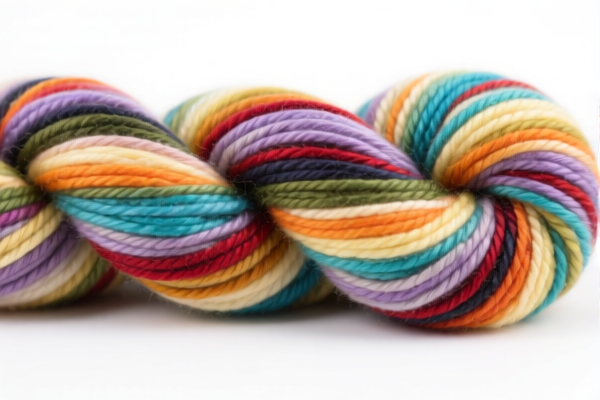
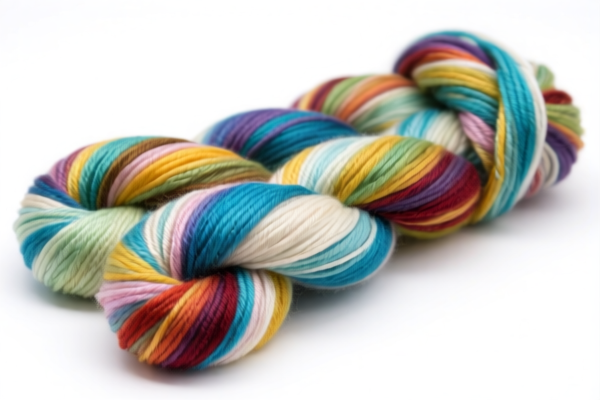
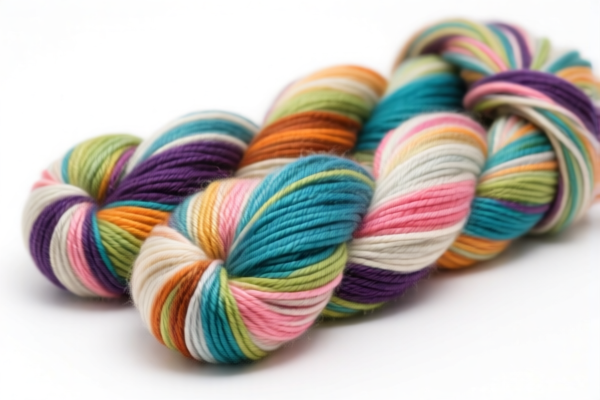
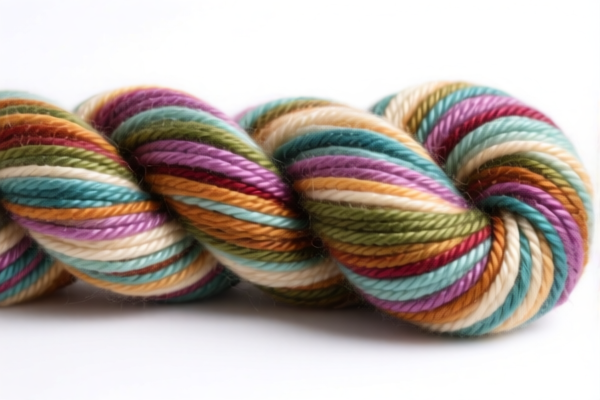
AI分析
🧵 Modakrylic Blended Multi-Ply Yarn (Industrial Grade): HS Code Classification & Tariff Deep Dive
🌐 HS Code Reference & Customs Clearance Guide | 2026 Latest Tariff Analysis | Professional-Level Compliance Strategy
📌 I. Product Definition & Classification: Do You Truly Understand "Acrylic Blended Yarn"?
Modakrylic yarn is a specialized synthetic fiber blending acrylic fibers with modacrylic fibers. Unlike standard acrylic, modacrylic offers superior flame resistance and self-extinguishing properties, making it critical for industrial applications requiring safety standards.
In international trade, this product is categorized based on two key factors: 1. Composition: Is it pure synthetic short fibers spun, or a blend of synthetic fibers? 2. Form: Is it single-ply, multi-ply (twisted together), or non-retail (industrial bulk)?
⚠️ Key Distinction Point:
- If classified under 5507, it is treated as synthetic staple fibers spun into yarn (single or multi-ply, but defined by the spinning process of short fibers).
- If classified under 5509, it is treated as woven fabric yarns or blended yarns where the specific blending ratio and ply structure dictate the subheading.
- Industrial Grade implies non-retail packaging and large bulk quantities, which affects duty exemptions but not the HS code itself (USITC codes remain 8-digit).
📦 II. HS Code Classification Details (2026 Latest Tariff Authority Cross-Reference)
Based on the provided data for "Modakrylic Acrylic Blended Multi-Ply Yarn (Industrial Grade)", here are the precise HS codes and their logical derivations:
| HS Code | Product Description | Logical Derivation from Data | Applicability Scenario |
|---|---|---|---|
5509.69.20.00 |
Acrylic blended multi-ply yarn (Industrial Grade) | Material is explicitly stated as "Acrylic Blended"; Form is "Yarn"; Usage is "Industrial". | Primary Classification: Most accurate fit for blended acrylic yarns intended for industrial weaving/knitting. |
5507.00.00.00 |
Synthetic Staple Fiber Yarn (Spun) | Material is "Acrylic"; Form is "Yarn"; Defined as "Synthetic Staple Fibers After Spinning". | Secondary Classification: Used if customs view the modacrylic component as secondary to the spinning definition of staple fibers. |
5509.69.40.00 |
Blended Fiber Yarn (Multi-Ply) | Material fits "Acrylic"; Form is "Multi-Ply"; Category is "Mixed Fiber Yarn". | Alternative Blended Code: Specifically for yarns where multiple synthetic fibers are blended, classified under mixed fiber subheadings. |
5402.49.91.40 |
Synthetic Fiber Multi-Ply Yarn (Non-Retail) | Material inferred as "Synthetic Fiber"; Form is "Multi-Ply Yarn"; Industrial grade implies "Non-Retail". | High-Risk Classification: Used if the "acrylic blend" is deemed insufficient for Chapter 55, forcing classification under Chapter 54 (Synthetic Filament Yarn). |
🔍 Critical Reminder:
-5509.69.20.00and5507.00.00.00appear multiple times in the source data with slight descriptive variations, indicating strong contention between these two codes.
-5402.49.91.40carries a higher base duty (8%) and higher total tax (43%) than the 5507 code, suggesting it is a less favorable classification for acrylic blends.
-5509.69.40.00has the highest base duty (10%), making it the most expensive classification among the options.
💰 III. 2026 Latest Tariff Rate Breakdown (Including Surcharges & Policy Add-ons)
✅ Applicable Country: United States (US)
✅ Origin: China (CN)
✅ Effective Date: 2025 onwards (Subject to current trade policies)
🎯 1. 5509.69.20.00 —— Acrylic Blended Multi-Ply Yarn (Industrial)
| Item | Detail |
|---|---|
| Base Duty Rate | 9.0% |
| Section 301 Surcharge | +25.0% |
| Section 122 Surcharge | +10.0% |
| Total Effective Rate | 44.0% |
| Tax Calculation | CIF Value × 44% |
| De Minimis Exemption | ❌ Not Eligible (Industrial grade > $800 threshold; 301/122 taxes apply to all values) |
| Legal Basis Path | HTSUS:5509.69.20.00 → Section 301: Footnote 9903.02 → Section 122: Executive Order |
📌 Explanation:
- This is the most common classification for acrylic blends.
- The 44% total tax is very high, significantly impacting profit margins.
- Section 122 (often related to national security or specific trade remedies) adds an extra 10% on top of the standard 301 tariff.
🎯 2. 5507.00.00.00 —— Synthetic Staple Fiber Yarn (Spun)
| Item | Detail |
|---|---|
| Base Duty Rate | 5.0% |
| Section 301 Surcharge | +25.0% |
| Section 122 Surcharge | +10.0% |
| Total Effective Rate | 40.0% |
| Tax Calculation | CIF Value × 40% |
| De Minimis Exemption | ❌ Not Eligible |
| Legal Basis Path | HTSUS:5507.00.00.00 → Section 301: Footnote 9903.02 → Section 122: Executive Order |
📌 Explanation:
- This code offers the lowest total tax (40%) among all listed options.
- It requires proving that the product is primarily "synthetic staple fibers" spun into yarn.
- Strategy: If your modacrylic content is low or the spinning process defines the product, push for this code to save 4% compared to 5509.69.20.00.
🎯 3. 5509.69.40.00 —— Mixed Fiber Yarn (Multi-Ply)
| Item | Detail |
|---|---|
| Base Duty Rate | 10.0% |
| Section 301 Surcharge | +25.0% |
| Section 122 Surcharge | +10.0% |
| Total Effective Rate | 45.0% |
| Tax Calculation | CIF Value × 45% |
| De Minimis Exemption | ❌ Not Eligible |
| Legal Basis Path | HTSUS:5509.69.40.00 → Section 301: Footnote 9903.02 → Section 122: Executive Order |
📌 Explanation:
- This is the highest tax rate (45%).
- Avoid this classification unless your yarn is a complex mix of multiple synthetic types (e.g., acrylic + polyester + nylon) and cannot fit under 5509.69.20.00.
🎯 4. 5402.49.91.40 —— Synthetic Filament Yarn (Multi-Ply, Non-Retail)
| Item | Detail |
|---|---|
| Base Duty Rate | 8.0% |
| Section 301 Surcharge | +25.0% |
| Section 122 Surcharge | +10.0% |
| Total Effective Rate | 43.0% |
| Tax Calculation | CIF Value × 43% |
| De Minimis Exemption | ❌ Not Eligible |
| Legal Basis Path | HTSUS:5402.49.91.40 → Section 301: Footnote 9903.02 → Section 122: Executive Order |
📌 Explanation:
- This code assumes the product is "Filament Yarn" (continuous fiber) rather than "Staple Fiber" (short fiber spun into yarn).
- Risk: Modacrylic/Acrylic blends are typically staple fibers spun, not filaments. Misclassification here could lead to customs audits and penalties for incorrect HS code.
- Tax is 43%, slightly better than 5509.69.20.00 (44%) but worse than 5507 (40%).
🛠️ IV. Customs Clearance Practical Advice (Battle-Tested Pitfall Avoidance)
✅ 1. Essential Documentation Checklist (No Shortcuts)
| Document | Required? | Notes |
|---|---|---|
| ✅ Technical Spec Sheet | ✔️ | Must detail fiber content % (e.g., 60% Acrylic, 40% Modacrylic) and yarn count. |
| ✅ Spinning Process Description | ✔️ | Crucial for distinguishing between Chapter 54 (Filament) and Chapter 55 (Staple/Blended). |
| ✅ Product Photos (Bulk & Close-up) | ✔️ | Show yarn texture, twist direction, and lack of retail packaging. |
| ✅ Commercial Invoice | ✔️ | Clearly state "Industrial Grade, Non-Retail" and CIF Value. |
| ✅ Bill of Lading | ✔️ | Ensure weight and volume match invoice. |
| ✅ Import Security Filing (ISF) | ✔️ | File 24 hours before loading (for ocean freight). |
✅ 2. Declaration Strategy (Key Mantra)
🔥 "Blended Acrylic is 5509, Staple Spun is 5507, Filament is 5402. Don't Guess, Just Prove!"
| Scenario | Correct HS Code | Why? |
|---|---|---|
| Yarn is spun from short fibers (Acrylic + Modacrylic) | 5507.00.00.00 or 5509.69.20.00 |
Both Chapters 55 cover synthetic staple fibers. 5507 is for spun; 5509 is for blended/woven yarns. |
| Yarn is continuous filament (not spun) | 5402.49.91.40 |
Chapter 54 covers synthetic filament yarns. Only use if you have proof of continuous filament. |
| Product has retail packaging (<250g) | Not Applicable | Industrial grade implies bulk. Retail packaging changes duty rates and regulations. |
| Mixed with Non-Synthetic Fibers (e.g., Cotton) | Check Blend % | If >50% synthetic, still Chapter 55. If <50%, may change classification entirely. |
✅ 3. Special Case Handling
| Situation | Handling Advice |
|---|---|
| OEM Custom Yarn | Provide client specifications and fiber blend ratios. Do not generalize as "Acrylic Yarn." |
| Flame-Retardant Claim | Highlight "Modacrylic" content. This may qualify for special industrial categories, but not tariff reductions under current 301/122 rules. |
| Uncertain Fiber Type | Conduct a lab test (microscopy/solubility) to prove staple vs. filament. Incorrect classification leads to liquidated damages. |
| Previous Rulings | Check for US CBP Ruling Letters on similar modacrylic yarns. Precedents can support your classification. |
🌍 V. Global Customs Comparison (2026 Latest)
| Country/Region | Recommended HS Code | Base Duty | Surcharges (China Origin) | Total Effective Rate | Notes |
|---|---|---|---|---|---|
| 🇺🇸 USA | 5507.00.00.00 |
5.0% | +35% (301 + 122) | 40.0% | Lowest tax option. |
| 🇪🇺 EU | 5509.69.20.00 |
6.5% | 0% (No Section 301/122) | 6.5% | Much lower tax. CE/REACH compliance needed. |
| 🇨🇳 China | 5509.69.20.00 |
8.0% | 0% | 8.0% | Low duty for import into China. |
| 🇬🇧 UK | 5509.69.20.00 |
6.5% | 0% | 6.5% | Post-Brexit rules apply. |
| 🇯🇵 Japan | 5509.69.20.00 |
5.3% | 0% | 5.3% | JETRO certification may help. |
📌 Conclusion:
- USA is the most expensive market due to Section 301 and Section 122 tariffs.
- EU/UK/JP offer significantly lower duties (5-8%), but require strict environmental and safety certifications.
- Strategy: If selling to the US, aggressively pursue5507.00.00.00for the 4% savings. If selling to EU, focus on compliance rather than tariff optimization.
📌 VI. Common Mistakes & Pitfall Avoidance (Blood-Learned Lessons)
❌ Mistake 1: Classifying Blended Acrylic Yarn as Cotton Yarn (5205)
👉 Consequence: Severe penalty for false declaration. Acrylic is synthetic, not natural fiber.
❌ Mistake 2: Using 5402.49.91.40 for Staple Fiber Yarn
👉 Consequence: Customs will reclassify to Chapter 55, charging higher base duty (9-10%) + penalties.
❌ Mistake 3: Ignoring Section 122 in addition to Section 301
👉 Consequence: Underestimating tax by 10%. Total tax is not just 301 (25%) + Base (5-9%), but +10% more.
❌ Mistake 4: Failing to Declare "Industrial Grade"
👉 Consequence: Customs may assume retail packaging, triggering different duty rates and import restrictions.
✅ Correct Action:
"Modacrylic Acrylic Blended Multi-Ply Yarn, Industrial Grade, Non-Retail Packaging, 60% Acrylic/40% Modacrylic, Staple Fiber Spun, CIF $X"
🎯 VII. Conclusion: Precision Classification Saves Millions!
🎯 Remember the Mantra:
🔹 "Staple Spun is 5507 (40%), Blended is 5509 (44-45%), Filament is 5402 (43%). Don't Mix Them!"
🔹 "301 + 122 = 35% Extra Tax. Plan Your Budget Accordingly!"
📌 Pro Tip:
If your modacrylic yarn is destined for military or safety gear, check for US Defense Production Act (DPA) exceptions, though unlikely to waive 301/122 tariffs.
Recommendation: Apply for a Binding Ruling from US CBP before shipment to lock in 5507.00.00.00 for the lowest tax.
📣 Immediate Action:
📞 Consult a Licensed Customs Broker + Provide Fiber Blend Report + Request HS Code Pre-Ruling
🚀 Ensure Smooth Customs Clearance, Minimize Duties, and Maximize Profits!
✨ Professional Customs Clearance Starts with Accurate Classification!
💼 Every Percent of Tax Saved is Pure Profit!
用户评价
关于 HS 编码归类
协调制度(HS)是由世界海关组织(WCO)制定的国际贸易商品分类标准。全球 200 多个国家采用 HS 系统作为海关关税、贸易统计和进出口监管的基础。
每个 HS 编码遵循以下层级结构:
- 章(2 位)——商品大类(例如:第 84 章:机器和机械设备)
- 品目(4 位)——章内的更具体分类
- 子目(6 位)——国际通用细分,所有 WCO 成员国统一使用
- 本国细分(8-10 位)——各国自行扩展的细分编码,如美国 HTSUS 10 位编码
正确的 HS 编码归类对于顺利通关、准确缴纳关税和遵守贸易法规至关重要。错误归类可能导致海关延误、多缴关税或罚款。
从CN进口到US时,适用的关税税率可能包括:
- 最惠国(MFN)税率——适用于 WTO 成员国的标准关税税率
- 普通税率——适用于无贸易协定国家
- 贸易救济关税——附加关税,如 301 条款(反倾销)、232 条款(国家安全)或反补贴税
本页内容仅供参考。如需正式归类,请咨询当地海关或持牌报关代理。