Modal Short Fiber Blended Multi ply Yarn
CN → US| HS编码 | 关税税率 | 原产国 | 目的国 | 文档 |
|---|---|---|---|---|
| 5509992000 | 44.0% | CN | US | 官方文档 |
| 5509994000 | 45.6% | CN | US | 官方文档 |
| 5505200000 | 35.0% | CN | US | 官方文档 |
| 5402690100 | 42.5% | CN | US | 官方文档 |
| 5505100040 | 35.0% | CN | US | 官方文档 |
商品图片
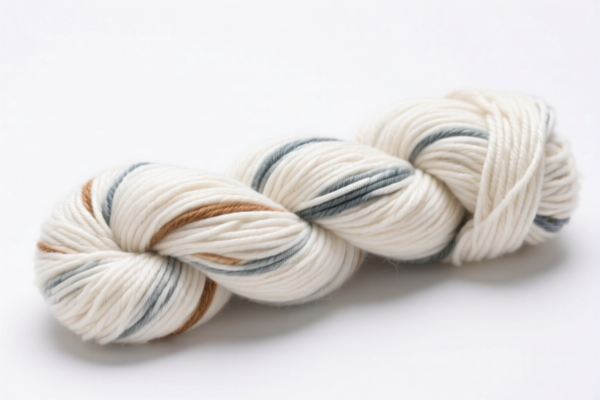
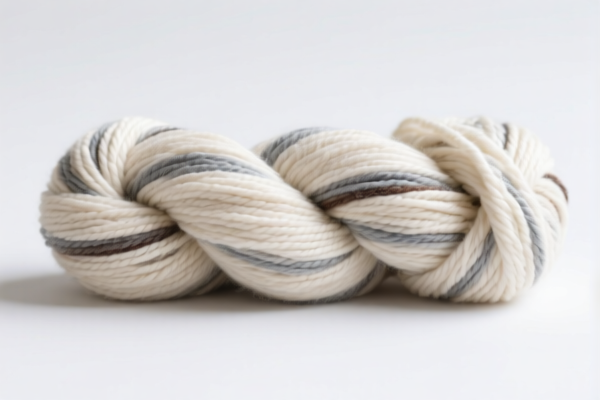
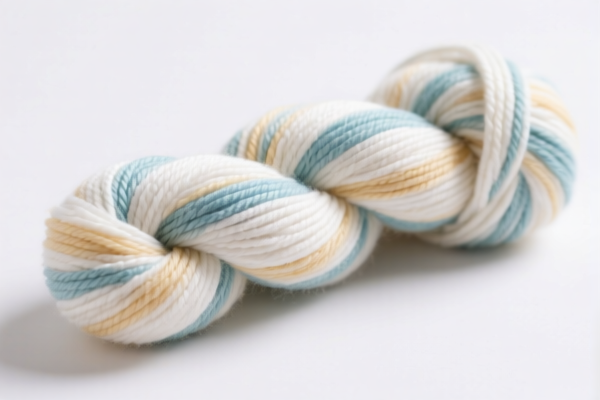
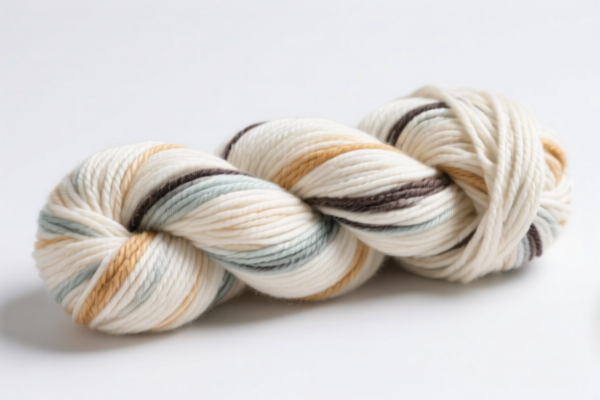
AI分析
🧵 Modal Short Fiber Blended Multi-ply Yarn (莫代尔混纺短纤多股纱线)
🌐 HS Code Reference & Clearance Guide | 2026 Latest Tariff Analysis | Professional Clearance Strategy
📌 1. Product Definition & Classification: Do You Really Know "Modal Blended Yarn"?
Modal yarn, derived from regenerated cellulose fibers (specifically beech tree pulp), is classified as a man-made short staple fiber or man-made filament, depending on its processing form. When exported to the US from China, the classification depends heavily on the structural form (single yarn vs. multi-ply/twisted) and the blend ratio.
Key Distinction Points:
* Short Fiber Yarn (Staple): If the modal is processed into short staples and spun with other short fibers (e.g., polyester, cotton) → Falls under Chapter 55 (Man-made staple fibers).
* Filament/Multi-ply Yarn: If the modal is a continuous filament or twisted into multi-ply structures → Falls under Chapter 54 (Man-made filaments) or specific Chapter 55 headings for "Other".
* "Cabled" vs. "Single": The term "Multi-ply" or "Cabled" (绞合) in the provided data suggests twisted structures, which can shift classification between 5505.10, 5505.20, 5509.99, and 5402.69.
⚠️ Critical Note:
- Modal = Regenerated Cellulose: Legally considered a "Man-made Fiber" in HS Code terms.
- "Blended" Matters: If modal is mixed with natural fibers (e.g., cotton), it may still fall under Chapter 55 if the man-made content is predominant or meets specific blend criteria.
- "Short Fiber" vs. "Filament": This is the biggest risk area. Misclassifying a filament as a short fiber (or vice versa) leads to incorrect HS Codes and severe penalties.
📦 2. HS Code Classification Details (2026 Latest Tariff Data)
Based on the provided <DATA>, here are the specific HS Codes for Modal Blended Yarn and their corresponding tax structures. Note that while "Multi-ply" usually implies twisting, the provided data maps specific structures to specific codes.
| HS Code | Product Description (Summary from Data) | Structural Feature | Total Tax Rate (US/China) |
|---|---|---|---|
5509.99.20.00 |
Modal blended yarn; considered a man-made fiber category; matches "primarily or solely with man-made staple fibers"; Form: Single Yarn. | Single Yarn (Spun) | 44.0% |
5509.99.40.00 |
Modal blended yarn; Modal is a man-made fiber (cellulose); matches "primarily or solely with man-made filaments"; Form: Yarn. | Filament/General Yarn | 45.6% |
5505.20.00.00 |
Modal blended cabled yarn; Modal is a man-made fiber (regenerated cellulose); Form: Yarn; matches man-made fiber category. | Cabled/Twisted (Staple) | 35.0% |
5402.69.01.00 |
Modal blended cabled yarn; Modal treated as man-made filament category; Form: Multi-ply/Twisted Structure; matches multi-ply or twisted filament yarn. | Multi-ply/Twisted (Filament) | 42.5% |
5505.10.00.40 |
Modal blended cabled yarn; Form: Yarn; Modal is a man-made fiber (regenerated cellulose); consistent with synthetic fiber component attributes. | Cabled/Twisted (Staple/Blend) | 35.0% |
🔍 Key Insight from Data:
- Highest Tax (45.6%):5509.99.40.00– Often applied to general filament blends.
- Lowest Tax (35.0%):5505.20.00.00&5505.10.00.40– Specifically for cabled/twisted yarns made from staple fibers.
- Intermediate Tax (42.5%):5402.69.01.00– For multi-ply/twisted filament yarns.
💰 3. 2026 Tariff Rate Breakdown (Including Surcharges)
✅ Applicable Country: United States (US)
✅ Origin: China (CN)
✅ Effective Date: Post-2025 (Including subsequent imports)
The total tax rates provided in the data are calculated as follows:
🎯 1. 5509.99.20.00 & 5509.99.40.00 – Modal Blended Staple/Filament Yarn
| Item | Content |
|---|---|
| Base Tariff | 9.0% (for .20) / 10.6% (for .40) |
| Section 301 Surcharge (Add-on Tariff) | +25.0% |
| Section 122 Surcharge | +10.0% |
| Total Tax Rate | 44.0% (for .20) / 45.6% (for .40) |
| Calculation Basis | CIF Value × Total Rate |
| De Minimis Exemption | ❌ Not Applicable (High value goods subject to Section 301) |
| Legal Path | USITC:5509.99.20.00 → Section 301 Footnote → Section 122 |
📌 Explanation:
- The Base Tariff is the standard Most Favored Nation (MFN) rate.
- Section 301 (+25%) is the major US trade war tariff on Chinese goods.
- Section 122 (+10%) is a specific surcharge applied to certain textile imports.
- Total Impact: Nearly half the CIF value goes to tariffs.
🎯 2. 5505.20.00.00 & 5505.10.00.40 – Modal Blended Cabled Yarn (Staple/Short Fiber)
| Item | Content |
|---|---|
| Base Tariff | 0.0% |
| Section 301 Surcharge | +25.0% |
| Section 122 Surcharge | +10.0% |
| Total Tax Rate | 35.0% |
| Calculation Basis | CIF Value × 35% |
| De Minimis Exemption | ❌ Not Applicable |
| Legal Path | USITC:5505.20.00.00 → Section 301 → Section 122 |
📌 Note:
- The 0% base tariff makes these codes significantly cheaper than5509codes.
- However, this only applies if the yarn is correctly classified as cabled/twisted staple fiber.
- Risk: If the yarn is actually filament-based, declaring it under5505to get 35% instead of 45.6% is high-risk smuggling behavior.
🎯 3. 5402.69.01.00 – Modal Blended Multi-ply Yarn (Filament)
| Item | Content |
|---|---|
| Base Tariff | 7.5% |
| Section 301 Surcharge | +25.0% |
| Section 122 Surcharge | +10.0% |
| Total Tax Rate | 42.5% |
| Calculation Basis | CIF Value × 42.5% |
| De Minimis Exemption | ❌ Not Applicable |
| Legal Path | USITC:5402.69.01.00 → Section 301 → Section 122 |
📌 Note:
- This code sits in the middle. It applies to multi-ply/twisted filament yarns.
- If you declare a filament yarn as "staple" (5505) to get 35%, you face severe penalties if audited.
🛠️ 4. Clearance Practical Advice (Actionable Pitfall Avoidance)
✅ 1. Documentation Checklist (Non-Negotiable)
| Document | Required? | Explanation |
|---|---|---|
| ✅ Product Specification Sheet | ✔️ | Must specify: Fiber type (Modal/Cellulose), Blend Ratio (e.g., 50% Modal/50% Poly), Yarn Count, Twist Direction, Single vs. Multi-ply/Cabled. |
| ✅ Photos of Yarn Cross-Section | ✔️ | Critical to distinguish Staple Fiber (cut ends visible) vs. Filament (continuous smooth ends). |
| ✅ Commercial Invoice | ✔️ | Must clearly state "Modal Blended Yarn" and exact HS Code. Avoid vague terms like "Textile Yarn". |
| ✅ Bill of Lading (B/L) | ✔️ | Consistent with invoice. |
| ✅ Certificate of Origin | ✔️ | To prove Chinese origin (subject to Section 301). |
| ✅ Third-Party Test Report | ✔️ | Recommended to verify fiber composition and structure. |
✅ 2. Declaration Strategy (Key Mnemonics)
🔥 "Staple is Cabled, Filament is Multi-ply; Misclassify and Pay Double!"
| Scenario | Correct HS Code | Risk of Misclassification |
|---|---|---|
| Spun Yarn from Short Staples (Single ply) | 5509.99.20.00 (44.0%) |
If declared as Filament (5509.99.40.00), tax increases to 45.6%. Low risk, but check blend. |
| Spun Yarn (Cabled/Twisted) | 5505.20.00.00 (35.0%) |
High Savings! But must prove it's staple fiber. If filament, penalty + back taxes. |
| Filament Yarn (Multi-ply/Twisted) | 5402.69.01.00 (42.5%) |
Do NOT declare as 5505 to save 7.5%. Customs labs can test this easily. |
| General Filament Yarn (Single/Simple) | 5509.99.40.00 (45.6%) |
Highest tax category. Ensure it's not cabled. |
✅ 3. Special Handling Cases
| Case | Recommendation |
|---|---|
| OEM Custom Yarn | Provide buyer's spec sheet. Ensure "Modal" is defined as Regenerated Cellulose. |
| Blend with Cotton | If modal + cotton, check if it still fits 5509. Usually yes, if modal is the defining character. |
| Blind Shipment | Avoid. High tax rates require clear documentation to avoid delays at US ports. |
| Pre-Ruling | STRONGLY RECOMMENDED. File an APIS (Advanced Pricing Information) or Request a Customs Ruling before shipping to confirm 5505 vs 5509. |
🌍 5. Global Market Comparison (2026)
| Country/Region | Recommended HS Code | Tariff (Approx.) | Notes |
|---|---|---|---|
| 🇺🇸 USA | 5505.20.00.00 (if cabled staple) |
35.0% | Includes 301+122. Lowest effective rate for staple. |
| 🇺🇸 USA | 5509.99.40.00 (general filament) |
45.6% | Highest rate. Avoid if possible by correct structural classification. |
| 🇨🇳 China | 5509.99.20.00 |
5-10% | No 301/122. Import duty only. |
| 🇪🇺 EU | 5509 or 5505 |
0-6% | No Section 301. Standard EU tariff. |
| 🇻🇳 Vietnam | N/A | Varies | Not a direct export market for this data, but possible transshipment (risky for 301). |
📌 Conclusion:
- USA is the most expensive market due to 301 and 122 tariffs.
- Classification Accuracy is Key: The difference between 35.0% and 45.6% is 10.6% of CIF value. On a $1M shipment, that’s $106,000.
- Prove the Structure: To get the 35% rate, you must prove the yarn is cabled/twisted staple fiber (5505), not filament (5402or5509filament).
📌 6. Common Errors & Pitfalls (Lessons Learned)
❌ Error 1: Declaring Filament yarn as Staple yarn to get 35% instead of 45.6%.
👉 Consequence: Customs laboratory test fails → Back taxes + 25% penalty + potential fraud charges.
❌ Error 2: Ignoring Section 122.
👉 Consequence: Invoice lists only "Duty" and "301", but Customs adds 122 automatically → Unexpected charges at port.
❌ Error 3: Vague Description "Modal Yarn".
👉 Consequence: Customs assigns highest default rate (often 5509.99.40.00 at 45.6%) due to uncertainty.
❌ Error 4: Not specifying Single vs. Multi-ply/Cabled.
👉 Consequence: Misclassification between 5505.10 (Cabled) and 5509.20 (Single) → Rate difference of 10.6%.
✅ Correct Action:
"Modal-Blended Cabled Staple Yarn, 50/50 Blend, 20s, Single Ply Twisted into 2-Ply, HS 5505.20.00.00"
🎯 7. Conclusion: Precision Saves Profit!
🎯 Remember:
🔹 "Cabled Staple = 35% (Savings!)"
🔹 "Filament/Multi-ply Filament = 42.5%"
🔹 "General/Single Filament = 45.6% (Highest!)"
📌 Pro Tip:
Before shipping, send yarn photos and technical specs to your customs broker. Ask for a Pre-Ruling on
5505.20.00.00vs5509.99.20.00. A few hundred dollars in ruling fees can save thousands in tariffs.
📣 Immediate Action:
📞 Contact Broker → Provide Yarn Structure Proof → Apply for Pre-Ruling → Ship with Confidence
✨ Professional Clearance Starts with Accurate Classification!
💼 Every Percentage Point Counts in Tariff Planning!
用户评价
关于 HS 编码归类
协调制度(HS)是由世界海关组织(WCO)制定的国际贸易商品分类标准。全球 200 多个国家采用 HS 系统作为海关关税、贸易统计和进出口监管的基础。
每个 HS 编码遵循以下层级结构:
- 章(2 位)——商品大类(例如:第 84 章:机器和机械设备)
- 品目(4 位)——章内的更具体分类
- 子目(6 位)——国际通用细分,所有 WCO 成员国统一使用
- 本国细分(8-10 位)——各国自行扩展的细分编码,如美国 HTSUS 10 位编码
正确的 HS 编码归类对于顺利通关、准确缴纳关税和遵守贸易法规至关重要。错误归类可能导致海关延误、多缴关税或罚款。
从CN进口到US时,适用的关税税率可能包括:
- 最惠国(MFN)税率——适用于 WTO 成员国的标准关税税率
- 普通税率——适用于无贸易协定国家
- 贸易救济关税——附加关税,如 301 条款(反倾销)、232 条款(国家安全)或反补贴税
本页内容仅供参考。如需正式归类,请咨询当地海关或持牌报关代理。