Modal Short Fiber Blended Multi ply Yarn
CN → US| HS Code | Tariff Rate | Origin | Destination | Doc |
|---|---|---|---|---|
| 5509992000 | 44.0% | CN | US | Official Doc |
| 5509994000 | 45.6% | CN | US | Official Doc |
| 5505200000 | 35.0% | CN | US | Official Doc |
| 5402690100 | 42.5% | CN | US | Official Doc |
| 5505100040 | 35.0% | CN | US | Official Doc |
Product Images
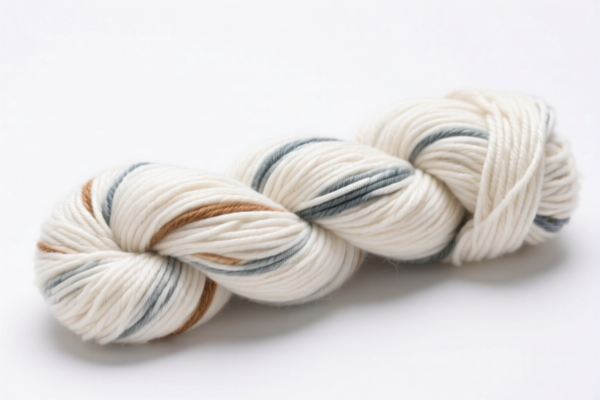
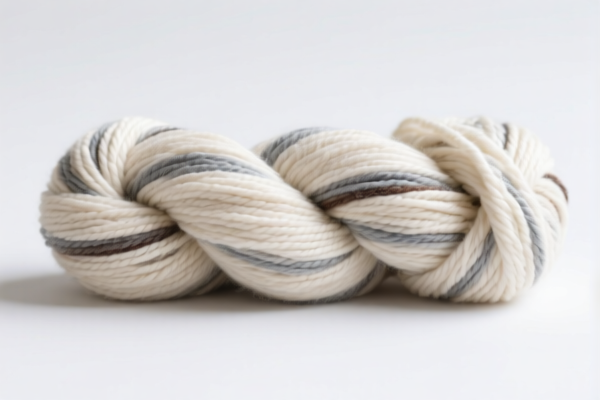
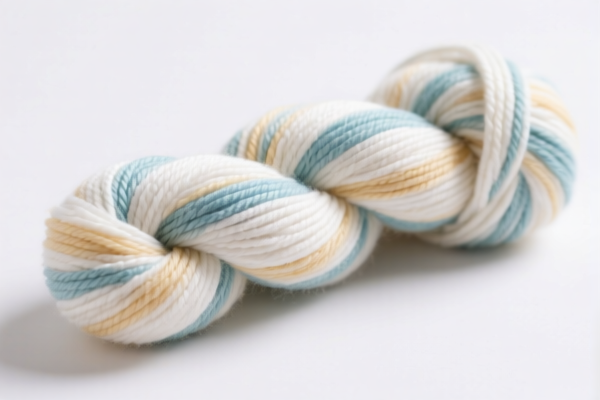
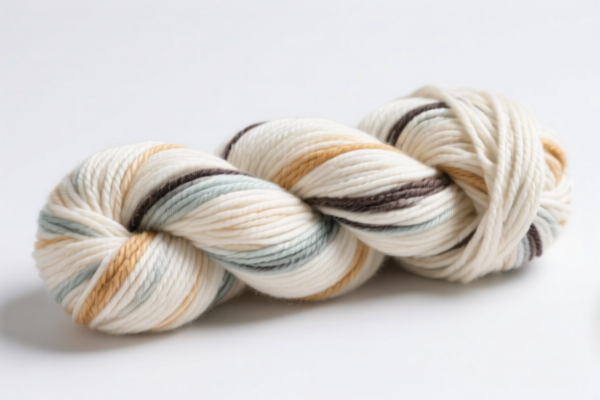
AI Analysis
🧵 Modal Short Fiber Blended Multi-ply Yarn (莫代尔混纺短纤多股纱线)
🌐 HS Code Reference & Clearance Guide | 2026 Latest Tariff Analysis | Professional Clearance Strategy
📌 1. Product Definition & Classification: Do You Really Know "Modal Blended Yarn"?
Modal yarn, derived from regenerated cellulose fibers (specifically beech tree pulp), is classified as a man-made short staple fiber or man-made filament, depending on its processing form. When exported to the US from China, the classification depends heavily on the structural form (single yarn vs. multi-ply/twisted) and the blend ratio.
Key Distinction Points:
* Short Fiber Yarn (Staple): If the modal is processed into short staples and spun with other short fibers (e.g., polyester, cotton) → Falls under Chapter 55 (Man-made staple fibers).
* Filament/Multi-ply Yarn: If the modal is a continuous filament or twisted into multi-ply structures → Falls under Chapter 54 (Man-made filaments) or specific Chapter 55 headings for "Other".
* "Cabled" vs. "Single": The term "Multi-ply" or "Cabled" (绞合) in the provided data suggests twisted structures, which can shift classification between 5505.10, 5505.20, 5509.99, and 5402.69.
⚠️ Critical Note:
- Modal = Regenerated Cellulose: Legally considered a "Man-made Fiber" in HS Code terms.
- "Blended" Matters: If modal is mixed with natural fibers (e.g., cotton), it may still fall under Chapter 55 if the man-made content is predominant or meets specific blend criteria.
- "Short Fiber" vs. "Filament": This is the biggest risk area. Misclassifying a filament as a short fiber (or vice versa) leads to incorrect HS Codes and severe penalties.
📦 2. HS Code Classification Details (2026 Latest Tariff Data)
Based on the provided <DATA>, here are the specific HS Codes for Modal Blended Yarn and their corresponding tax structures. Note that while "Multi-ply" usually implies twisting, the provided data maps specific structures to specific codes.
| HS Code | Product Description (Summary from Data) | Structural Feature | Total Tax Rate (US/China) |
|---|---|---|---|
5509.99.20.00 |
Modal blended yarn; considered a man-made fiber category; matches "primarily or solely with man-made staple fibers"; Form: Single Yarn. | Single Yarn (Spun) | 44.0% |
5509.99.40.00 |
Modal blended yarn; Modal is a man-made fiber (cellulose); matches "primarily or solely with man-made filaments"; Form: Yarn. | Filament/General Yarn | 45.6% |
5505.20.00.00 |
Modal blended cabled yarn; Modal is a man-made fiber (regenerated cellulose); Form: Yarn; matches man-made fiber category. | Cabled/Twisted (Staple) | 35.0% |
5402.69.01.00 |
Modal blended cabled yarn; Modal treated as man-made filament category; Form: Multi-ply/Twisted Structure; matches multi-ply or twisted filament yarn. | Multi-ply/Twisted (Filament) | 42.5% |
5505.10.00.40 |
Modal blended cabled yarn; Form: Yarn; Modal is a man-made fiber (regenerated cellulose); consistent with synthetic fiber component attributes. | Cabled/Twisted (Staple/Blend) | 35.0% |
🔍 Key Insight from Data:
- Highest Tax (45.6%):5509.99.40.00– Often applied to general filament blends.
- Lowest Tax (35.0%):5505.20.00.00&5505.10.00.40– Specifically for cabled/twisted yarns made from staple fibers.
- Intermediate Tax (42.5%):5402.69.01.00– For multi-ply/twisted filament yarns.
💰 3. 2026 Tariff Rate Breakdown (Including Surcharges)
✅ Applicable Country: United States (US)
✅ Origin: China (CN)
✅ Effective Date: Post-2025 (Including subsequent imports)
The total tax rates provided in the data are calculated as follows:
🎯 1. 5509.99.20.00 & 5509.99.40.00 – Modal Blended Staple/Filament Yarn
| Item | Content |
|---|---|
| Base Tariff | 9.0% (for .20) / 10.6% (for .40) |
| Section 301 Surcharge (Add-on Tariff) | +25.0% |
| Section 122 Surcharge | +10.0% |
| Total Tax Rate | 44.0% (for .20) / 45.6% (for .40) |
| Calculation Basis | CIF Value × Total Rate |
| De Minimis Exemption | ❌ Not Applicable (High value goods subject to Section 301) |
| Legal Path | USITC:5509.99.20.00 → Section 301 Footnote → Section 122 |
📌 Explanation:
- The Base Tariff is the standard Most Favored Nation (MFN) rate.
- Section 301 (+25%) is the major US trade war tariff on Chinese goods.
- Section 122 (+10%) is a specific surcharge applied to certain textile imports.
- Total Impact: Nearly half the CIF value goes to tariffs.
🎯 2. 5505.20.00.00 & 5505.10.00.40 – Modal Blended Cabled Yarn (Staple/Short Fiber)
| Item | Content |
|---|---|
| Base Tariff | 0.0% |
| Section 301 Surcharge | +25.0% |
| Section 122 Surcharge | +10.0% |
| Total Tax Rate | 35.0% |
| Calculation Basis | CIF Value × 35% |
| De Minimis Exemption | ❌ Not Applicable |
| Legal Path | USITC:5505.20.00.00 → Section 301 → Section 122 |
📌 Note:
- The 0% base tariff makes these codes significantly cheaper than5509codes.
- However, this only applies if the yarn is correctly classified as cabled/twisted staple fiber.
- Risk: If the yarn is actually filament-based, declaring it under5505to get 35% instead of 45.6% is high-risk smuggling behavior.
🎯 3. 5402.69.01.00 – Modal Blended Multi-ply Yarn (Filament)
| Item | Content |
|---|---|
| Base Tariff | 7.5% |
| Section 301 Surcharge | +25.0% |
| Section 122 Surcharge | +10.0% |
| Total Tax Rate | 42.5% |
| Calculation Basis | CIF Value × 42.5% |
| De Minimis Exemption | ❌ Not Applicable |
| Legal Path | USITC:5402.69.01.00 → Section 301 → Section 122 |
📌 Note:
- This code sits in the middle. It applies to multi-ply/twisted filament yarns.
- If you declare a filament yarn as "staple" (5505) to get 35%, you face severe penalties if audited.
🛠️ 4. Clearance Practical Advice (Actionable Pitfall Avoidance)
✅ 1. Documentation Checklist (Non-Negotiable)
| Document | Required? | Explanation |
|---|---|---|
| ✅ Product Specification Sheet | ✔️ | Must specify: Fiber type (Modal/Cellulose), Blend Ratio (e.g., 50% Modal/50% Poly), Yarn Count, Twist Direction, Single vs. Multi-ply/Cabled. |
| ✅ Photos of Yarn Cross-Section | ✔️ | Critical to distinguish Staple Fiber (cut ends visible) vs. Filament (continuous smooth ends). |
| ✅ Commercial Invoice | ✔️ | Must clearly state "Modal Blended Yarn" and exact HS Code. Avoid vague terms like "Textile Yarn". |
| ✅ Bill of Lading (B/L) | ✔️ | Consistent with invoice. |
| ✅ Certificate of Origin | ✔️ | To prove Chinese origin (subject to Section 301). |
| ✅ Third-Party Test Report | ✔️ | Recommended to verify fiber composition and structure. |
✅ 2. Declaration Strategy (Key Mnemonics)
🔥 "Staple is Cabled, Filament is Multi-ply; Misclassify and Pay Double!"
| Scenario | Correct HS Code | Risk of Misclassification |
|---|---|---|
| Spun Yarn from Short Staples (Single ply) | 5509.99.20.00 (44.0%) |
If declared as Filament (5509.99.40.00), tax increases to 45.6%. Low risk, but check blend. |
| Spun Yarn (Cabled/Twisted) | 5505.20.00.00 (35.0%) |
High Savings! But must prove it's staple fiber. If filament, penalty + back taxes. |
| Filament Yarn (Multi-ply/Twisted) | 5402.69.01.00 (42.5%) |
Do NOT declare as 5505 to save 7.5%. Customs labs can test this easily. |
| General Filament Yarn (Single/Simple) | 5509.99.40.00 (45.6%) |
Highest tax category. Ensure it's not cabled. |
✅ 3. Special Handling Cases
| Case | Recommendation |
|---|---|
| OEM Custom Yarn | Provide buyer's spec sheet. Ensure "Modal" is defined as Regenerated Cellulose. |
| Blend with Cotton | If modal + cotton, check if it still fits 5509. Usually yes, if modal is the defining character. |
| Blind Shipment | Avoid. High tax rates require clear documentation to avoid delays at US ports. |
| Pre-Ruling | STRONGLY RECOMMENDED. File an APIS (Advanced Pricing Information) or Request a Customs Ruling before shipping to confirm 5505 vs 5509. |
🌍 5. Global Market Comparison (2026)
| Country/Region | Recommended HS Code | Tariff (Approx.) | Notes |
|---|---|---|---|
| 🇺🇸 USA | 5505.20.00.00 (if cabled staple) |
35.0% | Includes 301+122. Lowest effective rate for staple. |
| 🇺🇸 USA | 5509.99.40.00 (general filament) |
45.6% | Highest rate. Avoid if possible by correct structural classification. |
| 🇨🇳 China | 5509.99.20.00 |
5-10% | No 301/122. Import duty only. |
| 🇪🇺 EU | 5509 or 5505 |
0-6% | No Section 301. Standard EU tariff. |
| 🇻🇳 Vietnam | N/A | Varies | Not a direct export market for this data, but possible transshipment (risky for 301). |
📌 Conclusion:
- USA is the most expensive market due to 301 and 122 tariffs.
- Classification Accuracy is Key: The difference between 35.0% and 45.6% is 10.6% of CIF value. On a $1M shipment, that’s $106,000.
- Prove the Structure: To get the 35% rate, you must prove the yarn is cabled/twisted staple fiber (5505), not filament (5402or5509filament).
📌 6. Common Errors & Pitfalls (Lessons Learned)
❌ Error 1: Declaring Filament yarn as Staple yarn to get 35% instead of 45.6%.
👉 Consequence: Customs laboratory test fails → Back taxes + 25% penalty + potential fraud charges.
❌ Error 2: Ignoring Section 122.
👉 Consequence: Invoice lists only "Duty" and "301", but Customs adds 122 automatically → Unexpected charges at port.
❌ Error 3: Vague Description "Modal Yarn".
👉 Consequence: Customs assigns highest default rate (often 5509.99.40.00 at 45.6%) due to uncertainty.
❌ Error 4: Not specifying Single vs. Multi-ply/Cabled.
👉 Consequence: Misclassification between 5505.10 (Cabled) and 5509.20 (Single) → Rate difference of 10.6%.
✅ Correct Action:
"Modal-Blended Cabled Staple Yarn, 50/50 Blend, 20s, Single Ply Twisted into 2-Ply, HS 5505.20.00.00"
🎯 7. Conclusion: Precision Saves Profit!
🎯 Remember:
🔹 "Cabled Staple = 35% (Savings!)"
🔹 "Filament/Multi-ply Filament = 42.5%"
🔹 "General/Single Filament = 45.6% (Highest!)"
📌 Pro Tip:
Before shipping, send yarn photos and technical specs to your customs broker. Ask for a Pre-Ruling on
5505.20.00.00vs5509.99.20.00. A few hundred dollars in ruling fees can save thousands in tariffs.
📣 Immediate Action:
📞 Contact Broker → Provide Yarn Structure Proof → Apply for Pre-Ruling → Ship with Confidence
✨ Professional Clearance Starts with Accurate Classification!
💼 Every Percentage Point Counts in Tariff Planning!
Customer Reviews
About HS Code Classification
The Harmonized System (HS) is an internationally standardized nomenclature developed by the World Customs Organization (WCO) to classify traded products. Over 200 countries use the HS system as the basis for customs tariffs, trade statistics, and import/export regulations.
Each HS code follows a hierarchical structure:
- Chapter (2 digits) — Broad category of goods (e.g., Chapter 84: Machinery and Mechanical Appliances)
- Heading (4 digits) — More specific grouping within the chapter
- Subheading (6 digits) — Internationally standardized breakdown, used by all WCO member countries
- National subdivisions (8-10 digits) — Country-specific extensions for further classification, such as US HTSUS 10-digit codes
Correct HS code classification is essential for smooth customs clearance, accurate duty payment, and compliance with trade regulations. Misclassification can lead to customs delays, overpayment of duties, or penalties.
When importing from CN to US, the applicable tariff rates may include:
- Most-Favored-Nation (MFN) rate — The standard duty rate applied to WTO members
- General rate — Applied to countries without trade agreements
- Trade remedy duties — Additional tariffs such as Section 301 (anti-dumping), Section 232 (national security), or countervailing duties
The information provided on this page is for reference purposes only. For official classification, please consult with your local customs authority or a licensed customs broker.