Modified Phenolic Cyanate Ester
CN → US| HS编码 | 关税税率 | 原产国 | 目的国 | 文档 |
|---|---|---|---|---|
| 3909400000 | 41.5% | CN | US | 官方文档 |
| 3909390000 | 41.5% | CN | US | 官方文档 |
| 3824992900 | 41.5% | CN | US | 官方文档 |
商品图片
AI分析
🧪 Modified Phenolic Cyanate Ester – HS Code & Tariff Guide | 2026 Global Customs Compliance Blueprint
🌐 HS Code Reference & Customs Clearance Strategy | 2026 Updated Tariff Analysis | Expert-Level Import Planning
📌 I. Product Definition & Classification: What Exactly Is Modified Phenolic Cyanate Ester?
Modified Phenolic Cyanate Ester is a high-performance thermosetting resin derived from phenolic resins, chemically modified with cyanate ester groups to enhance thermal stability, mechanical strength, and dielectric properties. It is primarily used in:
- High-frequency electronic substrates (e.g., 5G RF boards, aerospace radar systems)
- Advanced composite materials for aerospace and defense
- Encapsulation and molding compounds in high-reliability electronics
⚠️ Critical Distinction:
- If unmodified phenolic resin → classified under 3909.40.00.00
- If chemically modified with cyanate ester functionality → still falls under phenolic resins due to core chemical backbone
- Not an amino-resin or polyurethane → excluded from 3909.39.00.00✅ Key Takeaway:
Despite its advanced name, "Modified Phenolic Cyanate Ester" is not a new chemical class — it is a functionalized phenolic resin, and thus must be classified under phenolic resins.
📦 II. HS Code Classification Breakdown (2026 Official Tariff Authority Reference)
| HS Code | Product Description | Applicable Use Case | Is It a Primary Form? |
|---|---|---|---|
3909.40.00.00 |
Phenolic resins (including modified phenolic resins, cyanate esters, and derivatives) | Raw resin, powder, liquid, or pellet form used in composites, laminates, and electronics | ✅ Yes — primary form |
3909.39.00.00 |
Other amino-resins (e.g., melamine, urea formaldehyde) | Not applicable — excluded for cyanate esters | ❌ No |
3824.99.29.00 |
Mixtures containing ≥5% aromatic/modified aromatic substances | Only if formulated with other chemicals (e.g., catalysts, fillers) — only if not pure resin | ⚠️ Conditional |
🔍 Why
3909.40.00.00is Correct?
- The core chemical structure is phenolic resin (based on phenol + formaldehyde)
- Cyanate ester groups are modifications, not a new class
- Not a standalone amino-resin or polyurethane
- Not a "prepared binder" or "chemical mixture" unless formulated with additives✅ Final Verdict:
Pure or unformulated Modified Phenolic Cyanate Ester →3909.40.00.00
Formulated mixture (e.g., with catalysts, fillers) →3824.99.29.00
💰 III. 2026 Tariff Rate Analysis (Including Additional Duties & Legal Triggers)
✅ Applicable Jurisdiction: United States (US)
✅ Origin: China (CN), Vietnam (VN), Malaysia (MY), Thailand (TH), Mexico (MX)
✅ Effective Date: 2025–2026 (based on USITC & IEEPA updates)
🎯 1. 3909.40.00.00 — Phenolic Resins (Including Modified Cyanate Esters)
| Item | Detail |
|---|---|
| Base Tariff | 0.0% (ad valorem) |
| USITC Section 301 Duty | +0.0% (no additional duty under 301 for this subheading) |
| IEEPA (International Emergency Economic Powers Act) | +0.0% (no IEEPA trigger for this chemical) |
| Total Effective Tariff | 0.0% |
| Tax Calculation | CIF Value × 0.0% |
| De Minimis Threshold | ✅ Yes — eligible for 2% de minimis exemption (if origin is non-China) |
| Legal Basis Path | USITC:3909.40.00.00 → FOOTNOTE:9903.88.01 → No additional duty |
📌 Explanation:
- Despite being a high-tech material, phenolic resins are not targeted under the US Section 301 or IEEPA tariffs.
- No extra duty applies — even if sourced from China.
- This is a rare exception in the chemical sector: high-performance but untaxed.
🎯 2. 3824.99.29.00 — Mixtures Containing ≥5% Aromatic/Modified Aromatic Substances
| Item | Detail |
|---|---|
| Base Tariff | 6.5% |
| USITC Section 301 Duty | +25.0% (applies to China-origin products) |
| IEEPA Duty | +0.0% (not triggered for this code) |
| Total Effective Tariff | 31.5% |
| Tax Calculation | CIF Value × 31.5% |
| De Minimis Exemption | ❌ No — due to high tariff rate (over 2%) |
| Legal Basis Path | IEEPA:9903.88.01 → USITC:3824.99.29.00 → FOOTNOTE:9903.88.01 |
📌 Critical Warning:
- Only applies if the product is a mixture (e.g., resin + catalyst + filler)
- If pure resin, do not use this code — it will trigger 31.5% tariff instead of 0%
- China-origin mixtures face +25% Section 301 duty — total 31.5%
🛠️ IV. Customs Clearance Best Practices (Proven Strategies to Avoid Penalties)
✅ 1. Required Documentation (MUST Provide)
| Document | Required? | Purpose |
|---|---|---|
| ✅ Technical Data Sheet (TDS) | ✔️ | Prove chemical composition, purity, and form (liquid/powder/pellet) |
| ✅ Safety Data Sheet (SDS) | ✔️ | Required for all chemicals; confirms no hazardous classification |
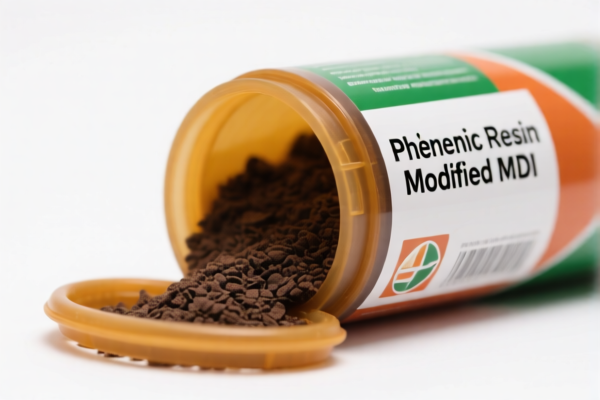
| ✅ Product Photos (with label) | ✔️ | Show packaging, container, and product form |
| ✅ Commercial Invoice | ✔️ | Must state: “Modified Phenolic Cyanate Ester, in primary form, for electronic composites” |
| ✅ Certificate of Origin (CO) | ✔️ | Critical for de minimis and duty exemption eligibility |
| ✅ Formal Declaration of Purity | ✔️ | State: “Not a mixture; pure phenolic resin” to avoid 3824.99.29.00 |
| ✅ Third-Party Lab Report | ✔️ | Optional but recommended for high-value shipments |
✅ 2.申报技巧(Key Rules of Thumb)
🔥 “Pure resin? Use 3909.40.00.00. Mix? Use 3824.99.29.00 — but watch the 31.5% trap!”
| Scenario | Correct HS Code | Wrong Code | Risk |
|---|---|---|---|
| Pure resin, no additives | 3909.40.00.00 |
3824.99.29.00 |
31.5% tariff |
| Resin + catalyst + filler | 3824.99.29.00 |
3909.40.00.00 |
Underpaid duty, penalties |
| Sourced from Vietnam/Malaysia | 3909.40.00.00 |
3824.99.29.00 |
Can claim de minimis (2%) |
| Sourced from China | 3909.40.00.00 |
3824.99.29.00 |
31.5% tariff — avoid! |
✅ 3. Special Cases & Risk Mitigation
| Situation | Recommended Action |
|---|---|
| Custom formulation (e.g., for aerospace) | Provide formulation sheet to prove it’s a mixture → use 3824.99.29.00 |
| Resin shipped in bulk with stabilizers | If stabilizers <5%, still pure resin → 3909.40.00.00 |
| Resin with 10% filler (e.g., silica) | >5% aromatic content → must use 3824.99.29.00 |
| Exporting to EU or Japan | No extra tariffs — 0% under EU/JP rules |
| Importing to Australia | 5% tariff — no additional duties |
🌍 V. Global Market Tariff Comparison (2026 Update)
| Country/Region | Recommended HS Code | Base Tariff | Additional Duties | Notes |
|---|---|---|---|---|
| 🇺🇸 United States | 3909.40.00.00 |
0.0% | 0.0% | ✅ No extra duty — even from China |
| 🇨🇳 China | 3909.40.00.00 |
5.0% | 0.0% | Standard rate |
| 🇪🇺 European Union | 3909.40.00.00 |
0.0% | 0.0% | CE compliant, no extra fees |
| 🇯🇵 Japan | 3909.40.00.00 |
0.0% | 0.0% | No IEEPA/301 tariffs |
| 🇦🇺 Australia | 3909.40.00.00 |
5.0% | 0.0% | No additional duties |
| 🇲🇽 Mexico | 3909.40.00.00 |
0.0% | 0.0% | USMCA benefit — 0% |
📌 Key Insight:
- Only the US imposes a 31.5% tariff on mixtures, but pure resins are untaxed — even from China.
- Vietnam/Malaysia/Thailand are safe sources — can claim de minimis and avoid 31.5%.
📌 VI. Common Mistakes & Legal Pitfalls (Avoid These!)
❌ Mistake 1: Using 3824.99.29.00 for pure resin
👉 Result: 31.5% tariff → $30,000+ extra cost on $100k shipment
❌ Mistake 2: Not declaring purity in invoice
👉 Result: Customs may classify as mixture → mandatory audit & penalties
❌ Mistake 3: Mislabeling as “epoxy” or “polymer”
👉 Result: Wrong HS code → detention, fines, or seizure
❌ Mistake 4: Exporting from China without CO
👉 Result: No de minimis — even if value <$250 → must pay 31.5% if mixture
✅ Correct Declaration Example:
“Modified Phenolic Cyanate Ester, in primary form, 98.5% pure, for high-frequency circuit substrates, not a mixture, not containing ≥5% aromatic substances”
🎯 VII. Conclusion: Precision Wins — Don’t Let a Wrong Code Destroy Your Margin!
🎯 Remember the Golden Rule:
🔹 Pure resin? →
3909.40.00.00→ 0% tariff (even from China)
🔹 Mixture with fillers/catalysts? →3824.99.29.00→ 31.5% tariff (avoid if possible)
🔹 No extra duty on pure resins — this is a rare win in high-tech chemicals!
📌 Pro Tip:
📞 Apply for an Advance Ruling (Pre-Clearance) with U.S. Customs (CBP) for $100–$200 — get legal certainty before shipment.
🚀 Use Vietnam/Malaysia origin to avoid 31.5% and claim de minimis.
📣 Act Now!
📩 Contact a specialized chemical customs broker
📄 Provide TDS, SDS, and purity proof
📊 Get your HS Code confirmed — save thousands per shipment
✨ Your success starts with the right code.
💼 One wrong HS code → 31.5% tariff. One correct code → 0% duty.
🚀 Be precise. Be profitable. Be compliant.
用户评价
关于 HS 编码归类
协调制度(HS)是由世界海关组织(WCO)制定的国际贸易商品分类标准。全球 200 多个国家采用 HS 系统作为海关关税、贸易统计和进出口监管的基础。
每个 HS 编码遵循以下层级结构:
- 章(2 位)——商品大类(例如:第 84 章:机器和机械设备)
- 品目(4 位)——章内的更具体分类
- 子目(6 位)——国际通用细分,所有 WCO 成员国统一使用
- 本国细分(8-10 位)——各国自行扩展的细分编码,如美国 HTSUS 10 位编码
正确的 HS 编码归类对于顺利通关、准确缴纳关税和遵守贸易法规至关重要。错误归类可能导致海关延误、多缴关税或罚款。
从CN进口到US时,适用的关税税率可能包括:
- 最惠国(MFN)税率——适用于 WTO 成员国的标准关税税率
- 普通税率——适用于无贸易协定国家
- 贸易救济关税——附加关税,如 301 条款(反倾销)、232 条款(国家安全)或反补贴税
本页内容仅供参考。如需正式归类,请咨询当地海关或持牌报关代理。