Modified Phenolic Cyanate Ester
CN → US| HS Code | Tariff Rate | Origin | Destination | Doc |
|---|---|---|---|---|
| 3909400000 | 41.5% | CN | US | Official Doc |
| 3909390000 | 41.5% | CN | US | Official Doc |
| 3824992900 | 41.5% | CN | US | Official Doc |
Product Images
AI Analysis
🧪 Modified Phenolic Cyanate Ester – HS Code & Tariff Guide | 2026 Global Customs Compliance Blueprint
🌐 HS Code Reference & Customs Clearance Strategy | 2026 Updated Tariff Analysis | Expert-Level Import Planning
📌 I. Product Definition & Classification: What Exactly Is Modified Phenolic Cyanate Ester?
Modified Phenolic Cyanate Ester is a high-performance thermosetting resin derived from phenolic resins, chemically modified with cyanate ester groups to enhance thermal stability, mechanical strength, and dielectric properties. It is primarily used in:
- High-frequency electronic substrates (e.g., 5G RF boards, aerospace radar systems)
- Advanced composite materials for aerospace and defense
- Encapsulation and molding compounds in high-reliability electronics
⚠️ Critical Distinction:
- If unmodified phenolic resin → classified under 3909.40.00.00
- If chemically modified with cyanate ester functionality → still falls under phenolic resins due to core chemical backbone
- Not an amino-resin or polyurethane → excluded from 3909.39.00.00✅ Key Takeaway:
Despite its advanced name, "Modified Phenolic Cyanate Ester" is not a new chemical class — it is a functionalized phenolic resin, and thus must be classified under phenolic resins.
📦 II. HS Code Classification Breakdown (2026 Official Tariff Authority Reference)
| HS Code | Product Description | Applicable Use Case | Is It a Primary Form? |
|---|---|---|---|
3909.40.00.00 |
Phenolic resins (including modified phenolic resins, cyanate esters, and derivatives) | Raw resin, powder, liquid, or pellet form used in composites, laminates, and electronics | ✅ Yes — primary form |
3909.39.00.00 |
Other amino-resins (e.g., melamine, urea formaldehyde) | Not applicable — excluded for cyanate esters | ❌ No |
3824.99.29.00 |
Mixtures containing ≥5% aromatic/modified aromatic substances | Only if formulated with other chemicals (e.g., catalysts, fillers) — only if not pure resin | ⚠️ Conditional |
🔍 Why
3909.40.00.00is Correct?
- The core chemical structure is phenolic resin (based on phenol + formaldehyde)
- Cyanate ester groups are modifications, not a new class
- Not a standalone amino-resin or polyurethane
- Not a "prepared binder" or "chemical mixture" unless formulated with additives✅ Final Verdict:
Pure or unformulated Modified Phenolic Cyanate Ester →3909.40.00.00
Formulated mixture (e.g., with catalysts, fillers) →3824.99.29.00
💰 III. 2026 Tariff Rate Analysis (Including Additional Duties & Legal Triggers)
✅ Applicable Jurisdiction: United States (US)
✅ Origin: China (CN), Vietnam (VN), Malaysia (MY), Thailand (TH), Mexico (MX)
✅ Effective Date: 2025–2026 (based on USITC & IEEPA updates)
🎯 1. 3909.40.00.00 — Phenolic Resins (Including Modified Cyanate Esters)
| Item | Detail |
|---|---|
| Base Tariff | 0.0% (ad valorem) |
| USITC Section 301 Duty | +0.0% (no additional duty under 301 for this subheading) |
| IEEPA (International Emergency Economic Powers Act) | +0.0% (no IEEPA trigger for this chemical) |
| Total Effective Tariff | 0.0% |
| Tax Calculation | CIF Value × 0.0% |
| De Minimis Threshold | ✅ Yes — eligible for 2% de minimis exemption (if origin is non-China) |
| Legal Basis Path | USITC:3909.40.00.00 → FOOTNOTE:9903.88.01 → No additional duty |
📌 Explanation:
- Despite being a high-tech material, phenolic resins are not targeted under the US Section 301 or IEEPA tariffs.
- No extra duty applies — even if sourced from China.
- This is a rare exception in the chemical sector: high-performance but untaxed.
🎯 2. 3824.99.29.00 — Mixtures Containing ≥5% Aromatic/Modified Aromatic Substances
| Item | Detail |
|---|---|
| Base Tariff | 6.5% |
| USITC Section 301 Duty | +25.0% (applies to China-origin products) |
| IEEPA Duty | +0.0% (not triggered for this code) |
| Total Effective Tariff | 31.5% |
| Tax Calculation | CIF Value × 31.5% |
| De Minimis Exemption | ❌ No — due to high tariff rate (over 2%) |
| Legal Basis Path | IEEPA:9903.88.01 → USITC:3824.99.29.00 → FOOTNOTE:9903.88.01 |
📌 Critical Warning:
- Only applies if the product is a mixture (e.g., resin + catalyst + filler)
- If pure resin, do not use this code — it will trigger 31.5% tariff instead of 0%
- China-origin mixtures face +25% Section 301 duty — total 31.5%
🛠️ IV. Customs Clearance Best Practices (Proven Strategies to Avoid Penalties)
✅ 1. Required Documentation (MUST Provide)
| Document | Required? | Purpose |
|---|---|---|
| ✅ Technical Data Sheet (TDS) | ✔️ | Prove chemical composition, purity, and form (liquid/powder/pellet) |
| ✅ Safety Data Sheet (SDS) | ✔️ | Required for all chemicals; confirms no hazardous classification |
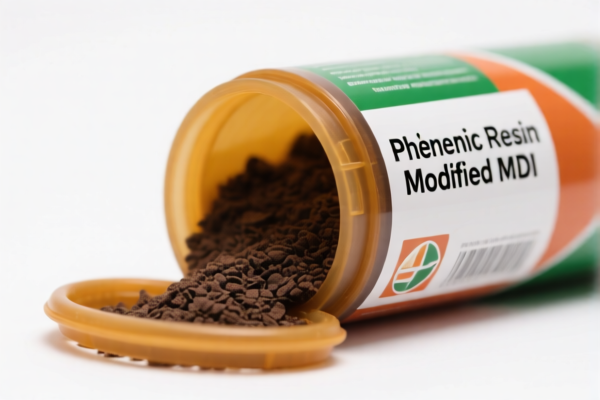
| ✅ Product Photos (with label) | ✔️ | Show packaging, container, and product form |
| ✅ Commercial Invoice | ✔️ | Must state: “Modified Phenolic Cyanate Ester, in primary form, for electronic composites” |
| ✅ Certificate of Origin (CO) | ✔️ | Critical for de minimis and duty exemption eligibility |
| ✅ Formal Declaration of Purity | ✔️ | State: “Not a mixture; pure phenolic resin” to avoid 3824.99.29.00 |
| ✅ Third-Party Lab Report | ✔️ | Optional but recommended for high-value shipments |
✅ 2.申报技巧(Key Rules of Thumb)
🔥 “Pure resin? Use 3909.40.00.00. Mix? Use 3824.99.29.00 — but watch the 31.5% trap!”
| Scenario | Correct HS Code | Wrong Code | Risk |
|---|---|---|---|
| Pure resin, no additives | 3909.40.00.00 |
3824.99.29.00 |
31.5% tariff |
| Resin + catalyst + filler | 3824.99.29.00 |
3909.40.00.00 |
Underpaid duty, penalties |
| Sourced from Vietnam/Malaysia | 3909.40.00.00 |
3824.99.29.00 |
Can claim de minimis (2%) |
| Sourced from China | 3909.40.00.00 |
3824.99.29.00 |
31.5% tariff — avoid! |
✅ 3. Special Cases & Risk Mitigation
| Situation | Recommended Action |
|---|---|
| Custom formulation (e.g., for aerospace) | Provide formulation sheet to prove it’s a mixture → use 3824.99.29.00 |
| Resin shipped in bulk with stabilizers | If stabilizers <5%, still pure resin → 3909.40.00.00 |
| Resin with 10% filler (e.g., silica) | >5% aromatic content → must use 3824.99.29.00 |
| Exporting to EU or Japan | No extra tariffs — 0% under EU/JP rules |
| Importing to Australia | 5% tariff — no additional duties |
🌍 V. Global Market Tariff Comparison (2026 Update)
| Country/Region | Recommended HS Code | Base Tariff | Additional Duties | Notes |
|---|---|---|---|---|
| 🇺🇸 United States | 3909.40.00.00 |
0.0% | 0.0% | ✅ No extra duty — even from China |
| 🇨🇳 China | 3909.40.00.00 |
5.0% | 0.0% | Standard rate |
| 🇪🇺 European Union | 3909.40.00.00 |
0.0% | 0.0% | CE compliant, no extra fees |
| 🇯🇵 Japan | 3909.40.00.00 |
0.0% | 0.0% | No IEEPA/301 tariffs |
| 🇦🇺 Australia | 3909.40.00.00 |
5.0% | 0.0% | No additional duties |
| 🇲🇽 Mexico | 3909.40.00.00 |
0.0% | 0.0% | USMCA benefit — 0% |
📌 Key Insight:
- Only the US imposes a 31.5% tariff on mixtures, but pure resins are untaxed — even from China.
- Vietnam/Malaysia/Thailand are safe sources — can claim de minimis and avoid 31.5%.
📌 VI. Common Mistakes & Legal Pitfalls (Avoid These!)
❌ Mistake 1: Using 3824.99.29.00 for pure resin
👉 Result: 31.5% tariff → $30,000+ extra cost on $100k shipment
❌ Mistake 2: Not declaring purity in invoice
👉 Result: Customs may classify as mixture → mandatory audit & penalties
❌ Mistake 3: Mislabeling as “epoxy” or “polymer”
👉 Result: Wrong HS code → detention, fines, or seizure
❌ Mistake 4: Exporting from China without CO
👉 Result: No de minimis — even if value <$250 → must pay 31.5% if mixture
✅ Correct Declaration Example:
“Modified Phenolic Cyanate Ester, in primary form, 98.5% pure, for high-frequency circuit substrates, not a mixture, not containing ≥5% aromatic substances”
🎯 VII. Conclusion: Precision Wins — Don’t Let a Wrong Code Destroy Your Margin!
🎯 Remember the Golden Rule:
🔹 Pure resin? →
3909.40.00.00→ 0% tariff (even from China)
🔹 Mixture with fillers/catalysts? →3824.99.29.00→ 31.5% tariff (avoid if possible)
🔹 No extra duty on pure resins — this is a rare win in high-tech chemicals!
📌 Pro Tip:
📞 Apply for an Advance Ruling (Pre-Clearance) with U.S. Customs (CBP) for $100–$200 — get legal certainty before shipment.
🚀 Use Vietnam/Malaysia origin to avoid 31.5% and claim de minimis.
📣 Act Now!
📩 Contact a specialized chemical customs broker
📄 Provide TDS, SDS, and purity proof
📊 Get your HS Code confirmed — save thousands per shipment
✨ Your success starts with the right code.
💼 One wrong HS code → 31.5% tariff. One correct code → 0% duty.
🚀 Be precise. Be profitable. Be compliant.
Customer Reviews
About HS Code Classification
The Harmonized System (HS) is an internationally standardized nomenclature developed by the World Customs Organization (WCO) to classify traded products. Over 200 countries use the HS system as the basis for customs tariffs, trade statistics, and import/export regulations.
Each HS code follows a hierarchical structure:
- Chapter (2 digits) — Broad category of goods (e.g., Chapter 84: Machinery and Mechanical Appliances)
- Heading (4 digits) — More specific grouping within the chapter
- Subheading (6 digits) — Internationally standardized breakdown, used by all WCO member countries
- National subdivisions (8-10 digits) — Country-specific extensions for further classification, such as US HTSUS 10-digit codes
Correct HS code classification is essential for smooth customs clearance, accurate duty payment, and compliance with trade regulations. Misclassification can lead to customs delays, overpayment of duties, or penalties.
When importing from CN to US, the applicable tariff rates may include:
- Most-Favored-Nation (MFN) rate — The standard duty rate applied to WTO members
- General rate — Applied to countries without trade agreements
- Trade remedy duties — Additional tariffs such as Section 301 (anti-dumping), Section 232 (national security), or countervailing duties
The information provided on this page is for reference purposes only. For official classification, please consult with your local customs authority or a licensed customs broker.