Mop
CN → US| HS编码 | 关税税率 | 原产国 | 目的国 | 文档 |
|---|---|---|---|---|
| 4421999880 | 38.3% | CN | US | 官方文档 |
| 3926909989 | 22.8% | CN | US | 官方文档 |
| 3926901000 | 20.9% | CN | US | 官方文档 |
| 9603908030 | 20.3% | CN | US | 官方文档 |
| 4421919880 | 38.3% | CN | US | 官方文档 |
商品图片
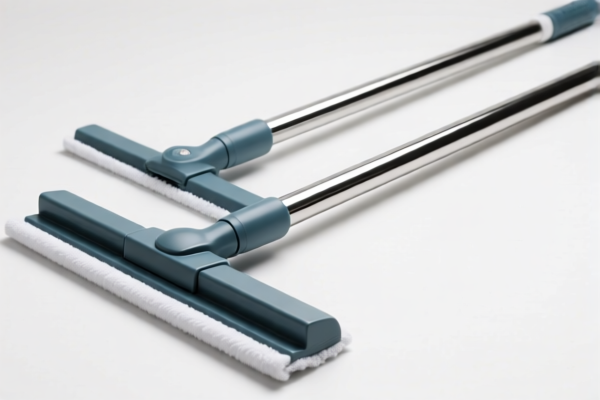
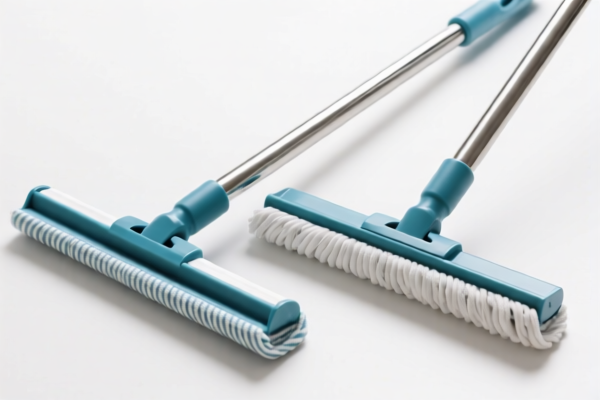
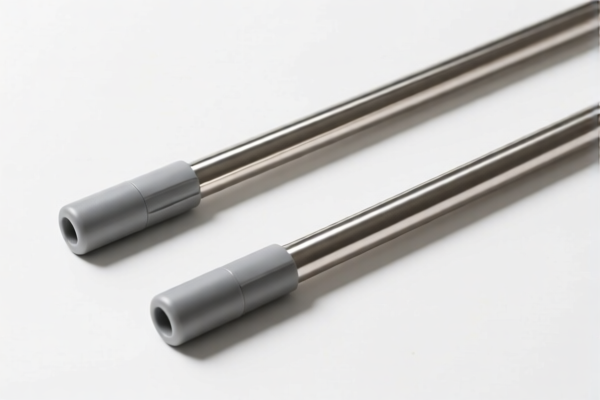
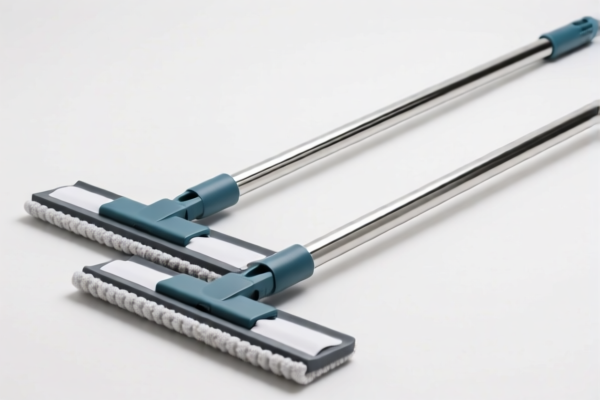
AI分析
🧹 Mop (Small Mop / Cleaning Tool)
🌐 HS Code Reference & Customs Clearance Guide | 2024/2025 Latest Tariff Analysis | Professional Clearance Strategy
📌 I. Product Definition & Classification: Do You Really Understand "Mops"?
A mop is an essential cleaning tool used for wet or dry cleaning of floors. In international trade, its classification depends heavily on the material (plastic vs. wood/bamboo) and the form (complete head vs. separate parts). The data provided analyzes five potential HS Codes based on logical inferences regarding material composition (plastic, wood, fiber) and usage.
⚠️ Key Distinction Point:
- If the mop handle/head is primarily Wood/Bamboo → Likely falls under Chapter 44 (Wood).
- If the mop handle/head is primarily Plastic → Likely falls under Chapter 39 (Plastics) or Chapter 96 (Miscellaneous Manufactured Articles).
- Crucial Note: The classification significantly impacts the total tax burden due to differing "Section 301" (25%) and "Section 122" (10%) penalties.
📦 II. HS Code Classification Details (Latest Tariff Authority Comparison)
| HS Code | Product Description | Inference Basis | Primary Material |
|---|---|---|---|
4421.99.98.80 |
Other wood articles (not elsewhere specified) | Inferred as wooden handle + fiber head; classified as wood product | 🌳 Wood |
3926.90.99.89 |
Other plastic articles (not elsewhere specified) | Inferred as plastic handle/head; "catch-all" for plastic cleaning tools | 🧱 Plastic |
3926.90.10.00 |
Other plastic articles (cleaning tools) | Inferred as plastic/fiber cleaning tool; specific sub-category for cleaning | 🧱 Plastic |
9603.90.80.30 |
Other brushes (including brooms); width limits apply | Inferred by use (mop) and form (narrow width); no material conflict | 🧹 Mixed/Fiber |
4421.91.98.80 |
Other bamboo articles (not elsewhere specified) | Inferred as bamboo/wood handle; "catch-all" for bamboo products | 🎋 Bamboo/Wood |
🔍 重点提醒:
- Wood/Bamboo Mops (4421...): High tariff risk due to 25% Section 301 duties.
- Plastic Mops (3926...): Moderate tariff risk, typically 7.5% Section 301.
- Brush/Tool Category (9603...): Often offers the lowest combined rate if classified correctly by form/width.
💰 III. 2024/2025 Latest Tariff Rate Breakdown (Including Additional Taxes & Policies)
✅ Applicable Country: United States (US)
✅ Origin: China (CN)
✅ Applicable Time: Current Rates (Subject to Change)
🎯 1. 4421.99.98.80 & 4421.91.98.80 —— Wood/Bamboo Articles (High Risk)
| Item | Content |
|---|---|
| Base Tariff | 3.3% (ad valorem) |
| Section 301 Additional Duty | +25.0% (Due to Trade Remedies/Section 301) |
| Section 122 Duty | +10.0% (Specific trade policy add-on) |
| Total Tax Rate | 38.3% |
| Tax Calculation | CIF Value × 38.3% |
| De Minimis Exemption | ❌ Not Eligible (High duty rates often exclude small package exemptions or require strict declaration) |
| Legal Basis Path | USITC:4421.99.98.80 → SECTION_301:25% → SECTION_122:10% |
📌 Explanation:
- These codes fall under Chapter 44 (Wood).
- The 25% is the standard Section 301 penalty on Chinese wood products.
- The 10% is an additional Section 122 tariff.
- Total 38.3% is very high. Avoid this classification if a plastic alternative exists.
🎯 2. 3926.90.99.89 —— Plastic Articles (Catch-All)
| Item | Content |
|---|---|
| Base Tariff | 5.3% |
| Section 301 Additional Duty | +7.5% (Reduced Section 301 rate for some plastics) |
| Section 122 Duty | +10.0% |
| Total Tax Rate | 22.8% |
| Tax Calculation | CIF Value × 22.8% |
| De Minimis Exemption | ❌ Not Eligible |
| Legal Basis Path | USITC:3926.90.99.89 → SECTION_301:7.5% → SECTION_122:10% |
📌 Explanation:
- Falls under Chapter 39 (Plastics).
- Plastic articles often enjoy a lower Section 301 rate (7.5%) compared to wood (25%).
- Total 22.8% is significantly lower than wood options.
🎯 3. 3926.90.10.00 —— Plastic Cleaning Tools
| Item | Content |
|---|---|
| Base Tariff | 3.4% |
| Section 301 Additional Duty | +7.5% |
| Section 122 Duty | +10.0% |
| Total Tax Rate | 20.9% |
| Tax Calculation | CIF Value × 20.9% |
| De Minimis Exemption | ❌ Not Eligible |
| Legal Basis Path | USITC:3926.90.10.00 → SECTION_301:7.5% → SECTION_122:10% |
📌 Explanation:
- More specific sub-category for plastic cleaning tools.
- Total 20.9% is the lowest rate among plastic classifications. Highly recommended if the product is predominantly plastic.
🎯 4. 9603.90.80.30 —— Other Brushes/Cleaning Tools (Best Rate)
| Item | Content |
|---|---|
| Base Tariff | 2.8% |
| Section 301 Additional Duty | +7.5% |
| Section 122 Duty | +10.0% |
| Total Tax Rate | 20.3% |
| Tax Calculation | CIF Value × 20.3% |
| De Minimis Exemption | ❌ Not Eligible |
| Legal Basis Path | USITC:9603.90.80.30 → SECTION_301:7.5% → SECTION_122:10% |
📌 Explanation:
- Classified under Chapter 96 (Miscellaneous Manufactured Articles) as a "brush" or cleaning implement.
- Total 20.3% is the absolute lowest tariff rate in this dataset.
- Condition: Must meet "width limits" or specific form factors (e.g., small hand mops, specific brush shapes).
- Recommendation: This is the optimal classification for small mops if they can be argued as "brush-like" or "cleaning tools" rather than just "plastic parts."
🛠️ IV. Customs Clearance Practical Advice (实战避坑指南)
✅ 1. Preparation Checklist (Non-Negotiable)
| Document | Required | Description |
|---|---|---|
| ✅ Product Specifications | ✔️ | Detailed material composition (e.g., "PP Plastic Handle, Polyester Head") |
| ✅ Photos | ✔️ | Clear images of the entire mop, handle joint, and head material |
| ✅ Commercial Invoice | ✔️ | Must clearly state "Mop" or "Cleaning Tool," NOT just "Plastic Part" |
| ✅ Bill of Lading/Packing List | ✔️ | Weight and dimensions are critical for "width" arguments under 9603 |
| ✅ Material Declaration | ✔️ | Explicitly state % of wood vs. plastic to avoid misclassification audits |
✅ 2. Declaration Strategy (Key Mnemonic)
🔥 “Wood Pays More, Plastic Saves Less, Brush Shape Wins Best!”
| Scenario | Recommended HS Code | Reason |
|---|---|---|
| Full Wooden/Bamboo Mop | 4421.99.98.80 |
Inevitable high tax (38.3%) due to wood origin. |
| Plastic Handle + Fiber Head | 3926.90.10.00 or 9603.90.80.30 |
Aim for 9603 (20.3%) if shape allows; otherwise 3926.90.10.00 (20.9%). |
| Small Hand Mop (Narrow) | 9603.90.80.30 |
Best Option: Justify as "brush-like cleaning tool" with width constraints. |
| Generic Plastic Cleaning Part | 3926.90.99.89 |
Last resort if specific cleaning tool codes don't apply. |
✅ 3. Special Case Handling
| Situation | Handling Advice |
|---|---|
| Mixed Materials (Wood Handle + Plastic Head) | Declare as Wood Product (4421...) if wood is the essential character. Avoids plastic codes but incurs 38.3% tax. |
| Small Hand Mops (<20cm Width) | Strongly argue for 9603.90.80.30. Emphasize "brush" functionality and narrow width to qualify for the lowest rate (20.3%). |
| Bundle Sales (Mop + Bucket) | Declare Mop Separately. Do not bundle with bucket to avoid complex classification. Bucket may have different duties. |
| OEM Private Label | Ensure supplier declares correct material %. If supplier says "Plastic" but it's 80% Wood, customs may reclassify and fine you. |
🌍 V. Global Market Comparison (US Focus)
| Market | Recommended HS Code | Est. Total Tax (China Origin) | Notes |
|---|---|---|---|
| 🇺🇸 USA | 9603.90.80.30 |
20.3% | Best rate if width/form criteria met. |
| 🇺🇸 USA | 4421.99.98.80 |
38.3% | Avoid if possible. High penalty on wood. |
| 🇨🇳 China | 9603.21.00.00 |
~10-15% | Lower domestic import duties, no Section 301. |
| 🇪🇺 EU | 9603.30.00.00 |
0-3% | Mops often duty-free or low tariff in EU. No Section 301. |
| 🇬🇧 UK | 9603.30.00.00 |
0-4% | Post-Brexit tariffs vary, generally favorable. |
📌 Conclusion:
- USA is the highest cost market for mops due to Section 301 and Section 122 duties.
- Strategic Shift: For US exports, prioritize Plastic (3926) or Brush-style (9603) classifications to save ~15-18% in taxes compared to Wood.
- Supplier Negotiation: Request suppliers to use Plastic components where possible to qualify for3926or9603.
📌 VI. Common Errors & Pitfalls (Blood & Tears Lessons)
❌ Error 1: Declaring a Wooden Mop as 3926 (Plastic)
👉 Consequence: Customs audit reveals wood content → Reclassification to 4421 → Back taxes + Penalty (38.3% vs 20.3%).
❌ Error 2: Ignoring "Section 122" 10% Duty
👉 Consequence: Underestimating costs. Many traders only look at Base + 301, forgetting the extra 10%. Total is always Higher.
❌ Error 3: Misclassifying "Mop" as "Parts"
👉 Consequence: If declared as "Plastic Part," it may fall under 3926.90.99.89 (22.8%) instead of the optimized 9603 (20.3%) or 3926.90.10.00 (20.9%). Precision matters.
✅ Correct Practice:
“Small Hand Mop, 12-inch width, Plastic Handle, Polyester Fiber Head, for Household Floor Cleaning”
Recommended Code:9603.90.80.30(20.3%)
🎯 VII. Conclusion: Professional Declaration, Cost Saving!
🎯 Remember the Golden Rules:
🔹 “Wood is Expensive (38.3%), Plastic is Moderate (20-22%), Brush-Shape is Cheapest (20.3%).”
🔹 “Section 122 adds 10% to EVERYTHING. Always include it in calculations.”
🔹 “For US Market, avoid Wood Mops unless you have no choice.”
📌 Pro Tip:
- If your mop is small and narrow, argue strongly for
9603.90.80.30.- If your mop is large and wooden, consider design changes (e.g., plastic handle) to shift to
3926or9603.- Always request a Pre-Ruling or consult a customs broker for mixed-material products.
📣 Take Action Now:
📞 Contact a licensed customs broker.
📦 Provide detailed material breakdown (Wood vs. Plastic %).
🚀 Optimize your supply chain to favor Plastic or Brush-style mops for the US market.
✨ Professional Customs Clearance Starts with Accurate Classification!
💼 Every Percent Saved is Pure Profit!
用户评价
关于 HS 编码归类
协调制度(HS)是由世界海关组织(WCO)制定的国际贸易商品分类标准。全球 200 多个国家采用 HS 系统作为海关关税、贸易统计和进出口监管的基础。
每个 HS 编码遵循以下层级结构:
- 章(2 位)——商品大类(例如:第 84 章:机器和机械设备)
- 品目(4 位)——章内的更具体分类
- 子目(6 位)——国际通用细分,所有 WCO 成员国统一使用
- 本国细分(8-10 位)——各国自行扩展的细分编码,如美国 HTSUS 10 位编码
正确的 HS 编码归类对于顺利通关、准确缴纳关税和遵守贸易法规至关重要。错误归类可能导致海关延误、多缴关税或罚款。
从CN进口到US时,适用的关税税率可能包括:
- 最惠国(MFN)税率——适用于 WTO 成员国的标准关税税率
- 普通税率——适用于无贸易协定国家
- 贸易救济关税——附加关税,如 301 条款(反倾销)、232 条款(国家安全)或反补贴税
本页内容仅供参考。如需正式归类,请咨询当地海关或持牌报关代理。