Mop
CN → US| HS Code | Tariff Rate | Origin | Destination | Doc |
|---|---|---|---|---|
| 4421999880 | 38.3% | CN | US | Official Doc |
| 3926909989 | 22.8% | CN | US | Official Doc |
| 3926901000 | 20.9% | CN | US | Official Doc |
| 9603908030 | 20.3% | CN | US | Official Doc |
| 4421919880 | 38.3% | CN | US | Official Doc |
Product Images
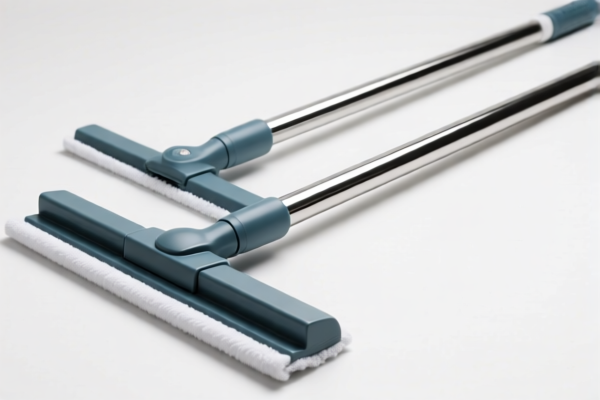
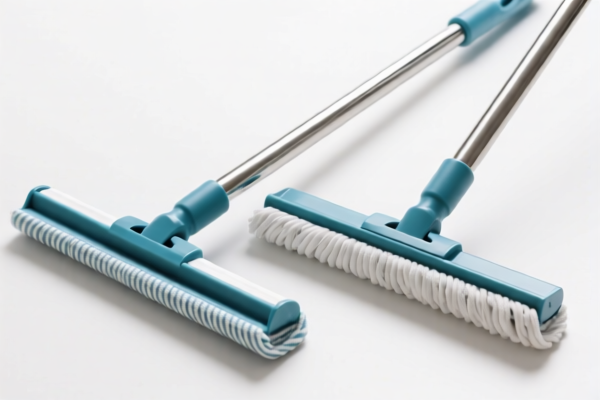
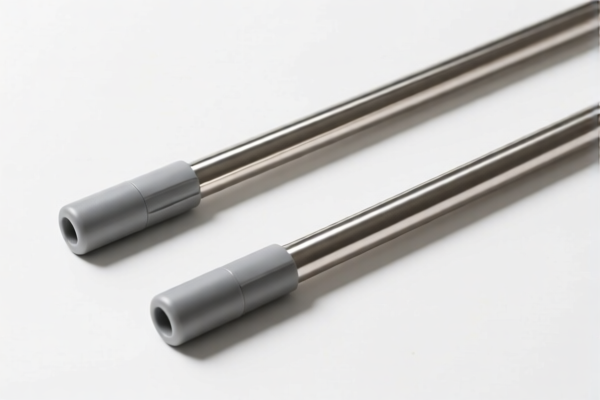
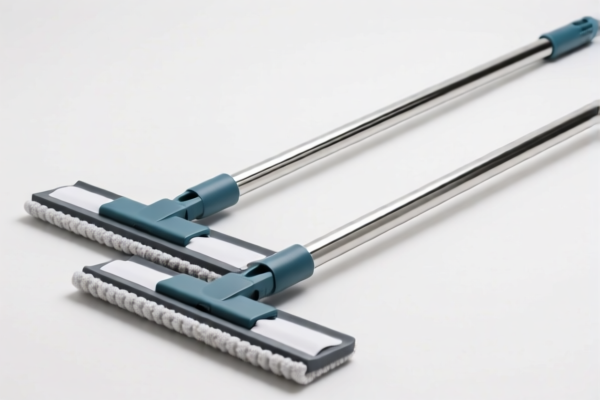
AI Analysis
🧹 Mop (Small Mop / Cleaning Tool)
🌐 HS Code Reference & Customs Clearance Guide | 2024/2025 Latest Tariff Analysis | Professional Clearance Strategy
📌 I. Product Definition & Classification: Do You Really Understand "Mops"?
A mop is an essential cleaning tool used for wet or dry cleaning of floors. In international trade, its classification depends heavily on the material (plastic vs. wood/bamboo) and the form (complete head vs. separate parts). The data provided analyzes five potential HS Codes based on logical inferences regarding material composition (plastic, wood, fiber) and usage.
⚠️ Key Distinction Point:
- If the mop handle/head is primarily Wood/Bamboo → Likely falls under Chapter 44 (Wood).
- If the mop handle/head is primarily Plastic → Likely falls under Chapter 39 (Plastics) or Chapter 96 (Miscellaneous Manufactured Articles).
- Crucial Note: The classification significantly impacts the total tax burden due to differing "Section 301" (25%) and "Section 122" (10%) penalties.
📦 II. HS Code Classification Details (Latest Tariff Authority Comparison)
| HS Code | Product Description | Inference Basis | Primary Material |
|---|---|---|---|
4421.99.98.80 |
Other wood articles (not elsewhere specified) | Inferred as wooden handle + fiber head; classified as wood product | 🌳 Wood |
3926.90.99.89 |
Other plastic articles (not elsewhere specified) | Inferred as plastic handle/head; "catch-all" for plastic cleaning tools | 🧱 Plastic |
3926.90.10.00 |
Other plastic articles (cleaning tools) | Inferred as plastic/fiber cleaning tool; specific sub-category for cleaning | 🧱 Plastic |
9603.90.80.30 |
Other brushes (including brooms); width limits apply | Inferred by use (mop) and form (narrow width); no material conflict | 🧹 Mixed/Fiber |
4421.91.98.80 |
Other bamboo articles (not elsewhere specified) | Inferred as bamboo/wood handle; "catch-all" for bamboo products | 🎋 Bamboo/Wood |
🔍 重点提醒:
- Wood/Bamboo Mops (4421...): High tariff risk due to 25% Section 301 duties.
- Plastic Mops (3926...): Moderate tariff risk, typically 7.5% Section 301.
- Brush/Tool Category (9603...): Often offers the lowest combined rate if classified correctly by form/width.
💰 III. 2024/2025 Latest Tariff Rate Breakdown (Including Additional Taxes & Policies)
✅ Applicable Country: United States (US)
✅ Origin: China (CN)
✅ Applicable Time: Current Rates (Subject to Change)
🎯 1. 4421.99.98.80 & 4421.91.98.80 —— Wood/Bamboo Articles (High Risk)
| Item | Content |
|---|---|
| Base Tariff | 3.3% (ad valorem) |
| Section 301 Additional Duty | +25.0% (Due to Trade Remedies/Section 301) |
| Section 122 Duty | +10.0% (Specific trade policy add-on) |
| Total Tax Rate | 38.3% |
| Tax Calculation | CIF Value × 38.3% |
| De Minimis Exemption | ❌ Not Eligible (High duty rates often exclude small package exemptions or require strict declaration) |
| Legal Basis Path | USITC:4421.99.98.80 → SECTION_301:25% → SECTION_122:10% |
📌 Explanation:
- These codes fall under Chapter 44 (Wood).
- The 25% is the standard Section 301 penalty on Chinese wood products.
- The 10% is an additional Section 122 tariff.
- Total 38.3% is very high. Avoid this classification if a plastic alternative exists.
🎯 2. 3926.90.99.89 —— Plastic Articles (Catch-All)
| Item | Content |
|---|---|
| Base Tariff | 5.3% |
| Section 301 Additional Duty | +7.5% (Reduced Section 301 rate for some plastics) |
| Section 122 Duty | +10.0% |
| Total Tax Rate | 22.8% |
| Tax Calculation | CIF Value × 22.8% |
| De Minimis Exemption | ❌ Not Eligible |
| Legal Basis Path | USITC:3926.90.99.89 → SECTION_301:7.5% → SECTION_122:10% |
📌 Explanation:
- Falls under Chapter 39 (Plastics).
- Plastic articles often enjoy a lower Section 301 rate (7.5%) compared to wood (25%).
- Total 22.8% is significantly lower than wood options.
🎯 3. 3926.90.10.00 —— Plastic Cleaning Tools
| Item | Content |
|---|---|
| Base Tariff | 3.4% |
| Section 301 Additional Duty | +7.5% |
| Section 122 Duty | +10.0% |
| Total Tax Rate | 20.9% |
| Tax Calculation | CIF Value × 20.9% |
| De Minimis Exemption | ❌ Not Eligible |
| Legal Basis Path | USITC:3926.90.10.00 → SECTION_301:7.5% → SECTION_122:10% |
📌 Explanation:
- More specific sub-category for plastic cleaning tools.
- Total 20.9% is the lowest rate among plastic classifications. Highly recommended if the product is predominantly plastic.
🎯 4. 9603.90.80.30 —— Other Brushes/Cleaning Tools (Best Rate)
| Item | Content |
|---|---|
| Base Tariff | 2.8% |
| Section 301 Additional Duty | +7.5% |
| Section 122 Duty | +10.0% |
| Total Tax Rate | 20.3% |
| Tax Calculation | CIF Value × 20.3% |
| De Minimis Exemption | ❌ Not Eligible |
| Legal Basis Path | USITC:9603.90.80.30 → SECTION_301:7.5% → SECTION_122:10% |
📌 Explanation:
- Classified under Chapter 96 (Miscellaneous Manufactured Articles) as a "brush" or cleaning implement.
- Total 20.3% is the absolute lowest tariff rate in this dataset.
- Condition: Must meet "width limits" or specific form factors (e.g., small hand mops, specific brush shapes).
- Recommendation: This is the optimal classification for small mops if they can be argued as "brush-like" or "cleaning tools" rather than just "plastic parts."
🛠️ IV. Customs Clearance Practical Advice (实战避坑指南)
✅ 1. Preparation Checklist (Non-Negotiable)
| Document | Required | Description |
|---|---|---|
| ✅ Product Specifications | ✔️ | Detailed material composition (e.g., "PP Plastic Handle, Polyester Head") |
| ✅ Photos | ✔️ | Clear images of the entire mop, handle joint, and head material |
| ✅ Commercial Invoice | ✔️ | Must clearly state "Mop" or "Cleaning Tool," NOT just "Plastic Part" |
| ✅ Bill of Lading/Packing List | ✔️ | Weight and dimensions are critical for "width" arguments under 9603 |
| ✅ Material Declaration | ✔️ | Explicitly state % of wood vs. plastic to avoid misclassification audits |
✅ 2. Declaration Strategy (Key Mnemonic)
🔥 “Wood Pays More, Plastic Saves Less, Brush Shape Wins Best!”
| Scenario | Recommended HS Code | Reason |
|---|---|---|
| Full Wooden/Bamboo Mop | 4421.99.98.80 |
Inevitable high tax (38.3%) due to wood origin. |
| Plastic Handle + Fiber Head | 3926.90.10.00 or 9603.90.80.30 |
Aim for 9603 (20.3%) if shape allows; otherwise 3926.90.10.00 (20.9%). |
| Small Hand Mop (Narrow) | 9603.90.80.30 |
Best Option: Justify as "brush-like cleaning tool" with width constraints. |
| Generic Plastic Cleaning Part | 3926.90.99.89 |
Last resort if specific cleaning tool codes don't apply. |
✅ 3. Special Case Handling
| Situation | Handling Advice |
|---|---|
| Mixed Materials (Wood Handle + Plastic Head) | Declare as Wood Product (4421...) if wood is the essential character. Avoids plastic codes but incurs 38.3% tax. |
| Small Hand Mops (<20cm Width) | Strongly argue for 9603.90.80.30. Emphasize "brush" functionality and narrow width to qualify for the lowest rate (20.3%). |
| Bundle Sales (Mop + Bucket) | Declare Mop Separately. Do not bundle with bucket to avoid complex classification. Bucket may have different duties. |
| OEM Private Label | Ensure supplier declares correct material %. If supplier says "Plastic" but it's 80% Wood, customs may reclassify and fine you. |
🌍 V. Global Market Comparison (US Focus)
| Market | Recommended HS Code | Est. Total Tax (China Origin) | Notes |
|---|---|---|---|
| 🇺🇸 USA | 9603.90.80.30 |
20.3% | Best rate if width/form criteria met. |
| 🇺🇸 USA | 4421.99.98.80 |
38.3% | Avoid if possible. High penalty on wood. |
| 🇨🇳 China | 9603.21.00.00 |
~10-15% | Lower domestic import duties, no Section 301. |
| 🇪🇺 EU | 9603.30.00.00 |
0-3% | Mops often duty-free or low tariff in EU. No Section 301. |
| 🇬🇧 UK | 9603.30.00.00 |
0-4% | Post-Brexit tariffs vary, generally favorable. |
📌 Conclusion:
- USA is the highest cost market for mops due to Section 301 and Section 122 duties.
- Strategic Shift: For US exports, prioritize Plastic (3926) or Brush-style (9603) classifications to save ~15-18% in taxes compared to Wood.
- Supplier Negotiation: Request suppliers to use Plastic components where possible to qualify for3926or9603.
📌 VI. Common Errors & Pitfalls (Blood & Tears Lessons)
❌ Error 1: Declaring a Wooden Mop as 3926 (Plastic)
👉 Consequence: Customs audit reveals wood content → Reclassification to 4421 → Back taxes + Penalty (38.3% vs 20.3%).
❌ Error 2: Ignoring "Section 122" 10% Duty
👉 Consequence: Underestimating costs. Many traders only look at Base + 301, forgetting the extra 10%. Total is always Higher.
❌ Error 3: Misclassifying "Mop" as "Parts"
👉 Consequence: If declared as "Plastic Part," it may fall under 3926.90.99.89 (22.8%) instead of the optimized 9603 (20.3%) or 3926.90.10.00 (20.9%). Precision matters.
✅ Correct Practice:
“Small Hand Mop, 12-inch width, Plastic Handle, Polyester Fiber Head, for Household Floor Cleaning”
Recommended Code:9603.90.80.30(20.3%)
🎯 VII. Conclusion: Professional Declaration, Cost Saving!
🎯 Remember the Golden Rules:
🔹 “Wood is Expensive (38.3%), Plastic is Moderate (20-22%), Brush-Shape is Cheapest (20.3%).”
🔹 “Section 122 adds 10% to EVERYTHING. Always include it in calculations.”
🔹 “For US Market, avoid Wood Mops unless you have no choice.”
📌 Pro Tip:
- If your mop is small and narrow, argue strongly for
9603.90.80.30.- If your mop is large and wooden, consider design changes (e.g., plastic handle) to shift to
3926or9603.- Always request a Pre-Ruling or consult a customs broker for mixed-material products.
📣 Take Action Now:
📞 Contact a licensed customs broker.
📦 Provide detailed material breakdown (Wood vs. Plastic %).
🚀 Optimize your supply chain to favor Plastic or Brush-style mops for the US market.
✨ Professional Customs Clearance Starts with Accurate Classification!
💼 Every Percent Saved is Pure Profit!
Customer Reviews
About HS Code Classification
The Harmonized System (HS) is an internationally standardized nomenclature developed by the World Customs Organization (WCO) to classify traded products. Over 200 countries use the HS system as the basis for customs tariffs, trade statistics, and import/export regulations.
Each HS code follows a hierarchical structure:
- Chapter (2 digits) — Broad category of goods (e.g., Chapter 84: Machinery and Mechanical Appliances)
- Heading (4 digits) — More specific grouping within the chapter
- Subheading (6 digits) — Internationally standardized breakdown, used by all WCO member countries
- National subdivisions (8-10 digits) — Country-specific extensions for further classification, such as US HTSUS 10-digit codes
Correct HS code classification is essential for smooth customs clearance, accurate duty payment, and compliance with trade regulations. Misclassification can lead to customs delays, overpayment of duties, or penalties.
When importing from CN to US, the applicable tariff rates may include:
- Most-Favored-Nation (MFN) rate — The standard duty rate applied to WTO members
- General rate — Applied to countries without trade agreements
- Trade remedy duties — Additional tariffs such as Section 301 (anti-dumping), Section 232 (national security), or countervailing duties
The information provided on this page is for reference purposes only. For official classification, please consult with your local customs authority or a licensed customs broker.