Natural Cork Granule Desiccant Material
CN → US| HS编码 | 关税税率 | 原产国 | 目的国 | 文档 |
|---|---|---|---|---|
| 4504105000 | 35.0% | CN | US | 官方文档 |
| 4504900000 | 35.0% | CN | US | 官方文档 |
| 4501904000 | 35.0% | CN | US | 官方文档 |
| 4501902000 | 35.0% | CN | US | 官方文档 |
商品图片
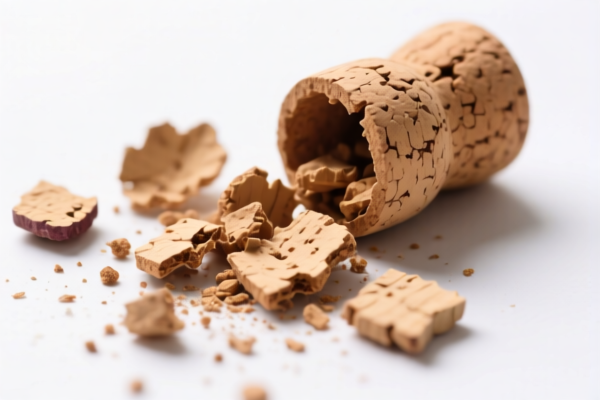
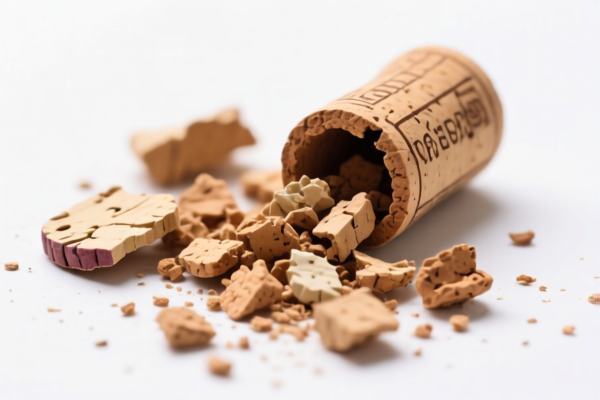
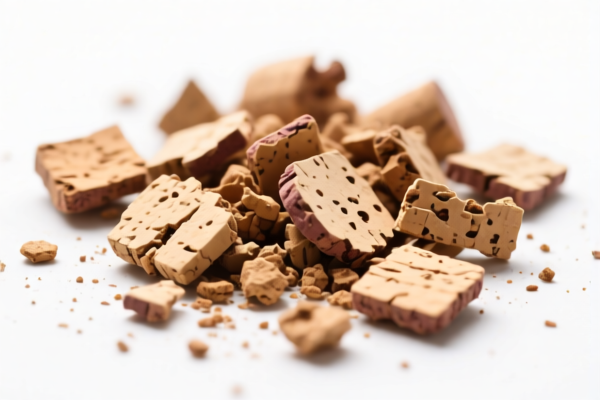
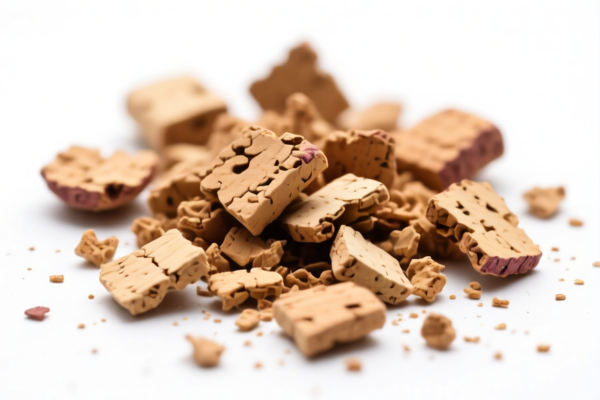
AI分析
🌿 Natural Cork Granule Desiccant Material (天然软木碎屑干燥剂)
🌐 HS Code Reference & Customs Clearance Guide | 2026 Latest Tariff Analysis | Professional Clearance Strategy
📌 I. Product Definition & Classification: What Exactly is "Cork Granule Desiccant"?
Natural cork granule desiccants are eco-friendly moisture-absorbing materials derived from the bark of the cork oak tree (Quercus suber). In international trade, classification depends heavily on the degree of processing and the functional intent.
Key Distinctions: * Simple Processing (Waste/Granules): Cork that has been crushed, ground, or formed into granules but retains its natural basic structure without complex chemical treatment or binding agents. * Specific Articles: Cork products specifically manufactured as desiccants, potentially involving specific shaping or packaging that might elevate them to "cork articles."
⚠️ Critical Classification Logic:
- If the cork is merely crushed, ground, or in granular form without becoming a finished "article" with a specific shape (other than raw granules), it often falls under Chapter 45.01 (Raw or simply prepared cork).
- If it is classified as a specific product or "other" cork products, it may fall under Chapter 45.04.
- ⚠️ Warning: Despite the "desiccant" function, if the material is essentially just crushed cork, customs may classify it based on its physical state (granules/waste) rather than its function, leading to higher tariffs if not declared correctly.
📦 II. HS Code Classification Details (2026 Latest Tariff Reference)
Based on the provided data, here are the four possible HS Codes and their rationales:
| HS Code | Product Description | Application Scenario | Classification Rationale |
|---|---|---|---|
4504.10.50.00 |
Natural Cork Granule Desiccant – Material: Natural Cork; Form: Granules; Classified as Cork Articles. | Specific commercial desiccant products where the granule form is treated as a distinct "article." | Classified under "Cork articles" (4504). The reasoning is that it is a specific manufactured good (desiccant) rather than raw waste. |
4504.90.00.00 |
Natural Cork Granule Desiccant – Material: Cork; Form: Granules; Classified as Other Cork Products. | Broad category for cork products not specified elsewhere. | Classified under "Other articles of cork" (4504.90). Used when the specific sub-heading for granular desiccants doesn't apply. |
4501.90.40.00 |
Natural Cork Granule Desiccant – Material: Natural Cork; Form: Crushed/Granular; Classified as Simple Processing Form. | Basic processed cork, not yet an "article." | Classified under "Cork, waste" (4501.90). Viewed as simple physical processing (crushing/granulating) without adding functional complexity beyond the material itself. |
4501.90.20.00 |
Natural Cork Granule Desiccant – Material: Natural Cork; Form: Granules; Classified as Cork Waste. | Raw granular cork used for desiccation. | Classified under "Cork waste, sawdust and powder" (4501.90). The "desiccant" function does not change its essential nature as cork waste/scraps. |
🔍 Key Insight:
- Codes 4504.10.50.00 and 4504.90.00.00 classify the item as a finished article/product.
- Codes 4501.90.40.00 and 4501.90.20.00 classify the item as raw/processed material or waste.
- Crucial Point: Regardless of the HS Code chosen, all four codes carry a total tariff of 35% for imports from China to the US.
💰 III. 2026 Latest Tariff Rate Breakdown (Including Additional Taxes)
✅ Applicable Country: United States (US)
✅ Country of Origin: China (CN)
✅ Effective Date: Implied current regulations (Section 301 & IEEPA)
For ALL listed HS Codes (4504.10.50.00, 4504.90.00.00, 4501.90.40.00, 4501.90.20.00):
🎯 Total Tariff Structure: 35%
| Component | Rate | Source / Legal Basis |
|---|---|---|
| Base Tariff (MFN) | 0.0% | General Most Favored Nation rate for cork products is typically 0%. |
| Section 301 Additional Tariff | 25.0% | USITC Footnote / Section 301 List 4B (China-origin goods). |
| IEEPA Section 122 Tariff | 10.0% | Executive Order 14117 / IEEPA provisions targeting specific Chinese imports. |
| TOTAL EFFECTIVE RATE | 35.0% | 0% + 25% + 10% |
| De Minimis Exemption? | ❌ NO | Section 301 and IEEPA tariffs override the $800 de minimis exemption (Section 321). |
📌 Explanation:
- Base Rate (0%): Cork products are generally duty-free under normal MFN conditions.
- Section 301 (25%): This is the significant tariff imposed on Chinese goods under the Trump/Biden trade policies. It applies to all cork products listed here.
- IEEPA 10%: A newer additional tariff targeting specific categories of Chinese imports, applying equally to this cork product.
- Result: The 35% total duty is unavoidable for China-origin goods, regardless of whether you declare it as an "article" (4504) or "waste" (4501).
🛠️ IV. Customs Clearance Practical Advice (Real-World Pitfall Avoidance)
✅ 1. Documentation Checklist (Non-Negotiable)
| Document | Required | Notes |
|---|---|---|
| ✅ Product Specification Sheet | ✔️ | Detail particle size, moisture absorption rate, and processing method (crushed vs. bound). |
| ✅ Commercial Invoice | ✔️ | Clearly state: "Natural Cork Granule Desiccant, HS Code [Insert Code], Origin: China." |
| ✅ Packing List | ✔️ | Indicate net/gross weight. Ensure packaging matches invoice description. |
| ✅ Certificate of Origin (CO) | ✔️ | Crucial for confirming China origin (which triggers the 35% tariff). |
| ✅ Material Safety Data Sheet (MSDS) | ✔️ | Even though it's natural cork, some carriers/customs require safety data for "desiccants." |
| ✅ Pre-Ruling Application | ⚠️ Highly Recommended | Given the 35% tax, a binding ruling ensures classification consistency and avoids audits. |
✅ 2. Declaration Strategy (Critical Tips)
🔥 "Don't Let 'Desiccant' Trick You Into the Wrong Code!"
| Scenario | Recommended Approach | Risk of Misclassification |
|---|---|---|
| Pure Crushed Cork | Declare as 4501.90.20.00 (Cork Waste) if no binding agent is used. | Low risk if declared accurately as "cork waste/granules." |
| Processed Granules (Commercial Desiccant) | Declare as 4504.10.50.00 (Cork Articles). | Higher scrutiny on whether it qualifies as an "article." |
| Mixed with Other Materials | DO NOT use these codes. If mixed with silica gel or paper, classification changes entirely (likely 3824 or 4823). | High Risk: Misclassification leads to penalties and higher tariffs. |
| Origin: Non-China | If sourced from Portugal/Morocco, base rate may differ. | Opportunity: Section 301 may not apply, reducing total tariff significantly. |
✅ 3. Special Handling for "Desiccant" Function
- Functional Claims: Avoid claiming "active chemical desiccant properties" if the product is purely natural cork. Customs may reclassify it as a chemical product (Chapter 38) if you overstate its technical specifications, potentially leading to different regulatory requirements.
- Packaging: If the cork granules are enclosed in permeable paper packets, ensure the paper is not declared separately. The whole package is usually classified under the dominant material (cork).
🌍 V. Global Market Comparison (2026)
| Country | HS Code | Base Tariff | Section 301/IEEPA? | Total Effective Tariff |
|---|---|---|---|---|
| 🇺🇸 USA | 4504.10.50.00 etc. | 0% | YES (+25% +10%) | 35% |
| 🇨🇳 China | 4504.10.50.00 etc. | 0% | N/A | 0% |
| 🇪🇺 EU | 4504.10.00 | 0% | No | 0% |
| 🇬🇧 UK | 4504.10.00 | 0% | No | 0% |
| 🇯🇵 Japan | 4504.10.00 | 0% | No | 0% |
📌 Conclusion:
- The US market is exceptionally expensive for this product due to the 35% cumulative tariff.
- EU, UK, Japan, and China have 0% tariffs on natural cork products.
- Strategy: If possible, source cork from non-China origins (e.g., Portugal, Spain, Morocco) to enter the US market duty-free under MFN rules (though Section 301 may still apply to "Chinese content" if processed there; true origin is key).
📌 VI. Common Mistakes & Pitfalls (Learn from Others' Losses)
❌ Mistake 1: Declaring "Cork Desiccant" as "Chemical Desiccant" (HS 3824)
👉 Consequence: Incorrect classification. If customs verifies it's natural cork, they may still assess 35%, but you risk penalties for misdeclaration.
❌ Mistake 2: Assuming "De Minimis" ($800) applies
👉 Consequence: FAIL. Section 301 and IEEPA tariffs exclude Section 321 de minimis exemptions. Even small shipments will incur 35% duty.
❌ Mistake 3: Not separating "Cork" from "Packaging"
👉 Consequence: If declared separately, the paper/packaging might attract different duties. Bundle them and declare the primary good.
❌ Mistake 4: Ignoring Section 122 (10%)
👉 Consequence: Many brokers forget the 10% IEEPA tariff. Result: Underpayment → Audit + Back Taxes + Interest.
✅ Correct Declaration Example:
"Natural Cork Granule Desiccant, Made from Quercus Suber Bark, Crushed into Granules, HS Code: 4504.10.50.00, Origin: China. Subject to 35% Total Duty (0% Base + 25% Sec 301 + 10% IEEPA)."
🎯 VII. Final Recommendation: Cost Optimization Strategy
🎯 Key Takeaway:
🔹 "35% is the floor for China-origin cork in the US."
🔹 "Don't fight the classification; optimize the origin."
-
If Sourcing from China:
- Budget for 35% duty on CIF value.
- Use HS Code 4504.10.50.00 if marketing as a finished "article" (desiccant), or 4501.90.20.00 if selling raw granules. The tax is the same, but 4504 may be easier to justify as a consumer product.
-
If Sourcing from Portugal/Morocco:
- Request a Certificate of Origin proving non-China origin.
- Declare under the same HS Code but avoid Section 301/IEEPA.
- Potential Savings: Up to 35% on every shipment.
-
Apply for a Binding Ruling:
- Submit a Harmonized Tariff Schedule (HTS) Binding Ruling Request to US CBP.
- Benefit: Legally locks in the HS Code and tax rate for 5 years, preventing surprise audits or reclassifications.
📣 Immediate Action Plan:
📞 Contact your customs broker and confirm:
1. Is the cork 100% China-origin?
2. Can we source from Portugal to avoid the 35% tariff?
3. Apply for a Pre-Ruling to confirm 4504.10.50.00 is the safest classification for "commercial desiccants."
🚀 Clearance Efficiency = Lower Costs = Higher Profit Margins!
✨ Professional customs clearance starts with accurate classification!
💼 Every 1% of tariff saved is 1% more profit.
用户评价
关于 HS 编码归类
协调制度(HS)是由世界海关组织(WCO)制定的国际贸易商品分类标准。全球 200 多个国家采用 HS 系统作为海关关税、贸易统计和进出口监管的基础。
每个 HS 编码遵循以下层级结构:
- 章(2 位)——商品大类(例如:第 84 章:机器和机械设备)
- 品目(4 位)——章内的更具体分类
- 子目(6 位)——国际通用细分,所有 WCO 成员国统一使用
- 本国细分(8-10 位)——各国自行扩展的细分编码,如美国 HTSUS 10 位编码
正确的 HS 编码归类对于顺利通关、准确缴纳关税和遵守贸易法规至关重要。错误归类可能导致海关延误、多缴关税或罚款。
从CN进口到US时,适用的关税税率可能包括:
- 最惠国(MFN)税率——适用于 WTO 成员国的标准关税税率
- 普通税率——适用于无贸易协定国家
- 贸易救济关税——附加关税,如 301 条款(反倾销)、232 条款(国家安全)或反补贴税
本页内容仅供参考。如需正式归类,请咨询当地海关或持牌报关代理。