Natural Cork Granule Desiccant Material
CN → US| HS Code | Tariff Rate | Origin | Destination | Doc |
|---|---|---|---|---|
| 4504105000 | 35.0% | CN | US | Official Doc |
| 4504900000 | 35.0% | CN | US | Official Doc |
| 4501904000 | 35.0% | CN | US | Official Doc |
| 4501902000 | 35.0% | CN | US | Official Doc |
Product Images
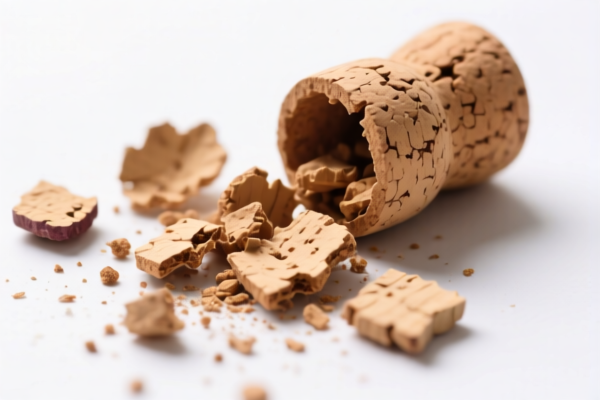
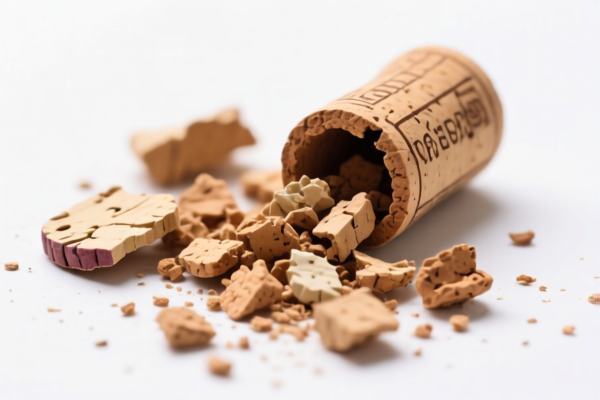
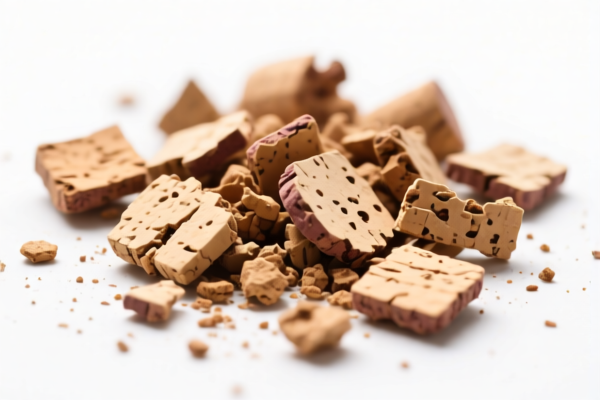
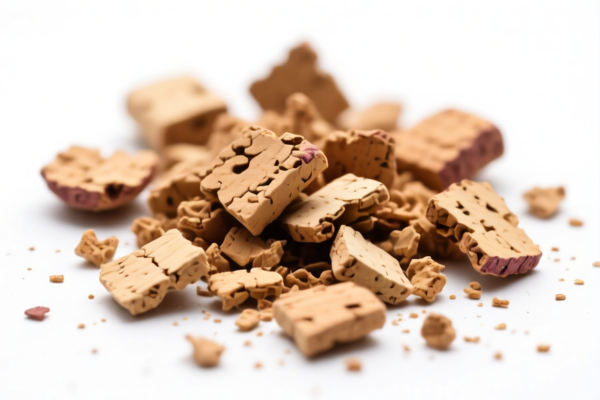
AI Analysis
🌿 Natural Cork Granule Desiccant Material (天然软木碎屑干燥剂)
🌐 HS Code Reference & Customs Clearance Guide | 2026 Latest Tariff Analysis | Professional Clearance Strategy
📌 I. Product Definition & Classification: What Exactly is "Cork Granule Desiccant"?
Natural cork granule desiccants are eco-friendly moisture-absorbing materials derived from the bark of the cork oak tree (Quercus suber). In international trade, classification depends heavily on the degree of processing and the functional intent.
Key Distinctions: * Simple Processing (Waste/Granules): Cork that has been crushed, ground, or formed into granules but retains its natural basic structure without complex chemical treatment or binding agents. * Specific Articles: Cork products specifically manufactured as desiccants, potentially involving specific shaping or packaging that might elevate them to "cork articles."
⚠️ Critical Classification Logic:
- If the cork is merely crushed, ground, or in granular form without becoming a finished "article" with a specific shape (other than raw granules), it often falls under Chapter 45.01 (Raw or simply prepared cork).
- If it is classified as a specific product or "other" cork products, it may fall under Chapter 45.04.
- ⚠️ Warning: Despite the "desiccant" function, if the material is essentially just crushed cork, customs may classify it based on its physical state (granules/waste) rather than its function, leading to higher tariffs if not declared correctly.
📦 II. HS Code Classification Details (2026 Latest Tariff Reference)
Based on the provided data, here are the four possible HS Codes and their rationales:
| HS Code | Product Description | Application Scenario | Classification Rationale |
|---|---|---|---|
4504.10.50.00 |
Natural Cork Granule Desiccant – Material: Natural Cork; Form: Granules; Classified as Cork Articles. | Specific commercial desiccant products where the granule form is treated as a distinct "article." | Classified under "Cork articles" (4504). The reasoning is that it is a specific manufactured good (desiccant) rather than raw waste. |
4504.90.00.00 |
Natural Cork Granule Desiccant – Material: Cork; Form: Granules; Classified as Other Cork Products. | Broad category for cork products not specified elsewhere. | Classified under "Other articles of cork" (4504.90). Used when the specific sub-heading for granular desiccants doesn't apply. |
4501.90.40.00 |
Natural Cork Granule Desiccant – Material: Natural Cork; Form: Crushed/Granular; Classified as Simple Processing Form. | Basic processed cork, not yet an "article." | Classified under "Cork, waste" (4501.90). Viewed as simple physical processing (crushing/granulating) without adding functional complexity beyond the material itself. |
4501.90.20.00 |
Natural Cork Granule Desiccant – Material: Natural Cork; Form: Granules; Classified as Cork Waste. | Raw granular cork used for desiccation. | Classified under "Cork waste, sawdust and powder" (4501.90). The "desiccant" function does not change its essential nature as cork waste/scraps. |
🔍 Key Insight:
- Codes 4504.10.50.00 and 4504.90.00.00 classify the item as a finished article/product.
- Codes 4501.90.40.00 and 4501.90.20.00 classify the item as raw/processed material or waste.
- Crucial Point: Regardless of the HS Code chosen, all four codes carry a total tariff of 35% for imports from China to the US.
💰 III. 2026 Latest Tariff Rate Breakdown (Including Additional Taxes)
✅ Applicable Country: United States (US)
✅ Country of Origin: China (CN)
✅ Effective Date: Implied current regulations (Section 301 & IEEPA)
For ALL listed HS Codes (4504.10.50.00, 4504.90.00.00, 4501.90.40.00, 4501.90.20.00):
🎯 Total Tariff Structure: 35%
| Component | Rate | Source / Legal Basis |
|---|---|---|
| Base Tariff (MFN) | 0.0% | General Most Favored Nation rate for cork products is typically 0%. |
| Section 301 Additional Tariff | 25.0% | USITC Footnote / Section 301 List 4B (China-origin goods). |
| IEEPA Section 122 Tariff | 10.0% | Executive Order 14117 / IEEPA provisions targeting specific Chinese imports. |
| TOTAL EFFECTIVE RATE | 35.0% | 0% + 25% + 10% |
| De Minimis Exemption? | ❌ NO | Section 301 and IEEPA tariffs override the $800 de minimis exemption (Section 321). |
📌 Explanation:
- Base Rate (0%): Cork products are generally duty-free under normal MFN conditions.
- Section 301 (25%): This is the significant tariff imposed on Chinese goods under the Trump/Biden trade policies. It applies to all cork products listed here.
- IEEPA 10%: A newer additional tariff targeting specific categories of Chinese imports, applying equally to this cork product.
- Result: The 35% total duty is unavoidable for China-origin goods, regardless of whether you declare it as an "article" (4504) or "waste" (4501).
🛠️ IV. Customs Clearance Practical Advice (Real-World Pitfall Avoidance)
✅ 1. Documentation Checklist (Non-Negotiable)
| Document | Required | Notes |
|---|---|---|
| ✅ Product Specification Sheet | ✔️ | Detail particle size, moisture absorption rate, and processing method (crushed vs. bound). |
| ✅ Commercial Invoice | ✔️ | Clearly state: "Natural Cork Granule Desiccant, HS Code [Insert Code], Origin: China." |
| ✅ Packing List | ✔️ | Indicate net/gross weight. Ensure packaging matches invoice description. |
| ✅ Certificate of Origin (CO) | ✔️ | Crucial for confirming China origin (which triggers the 35% tariff). |
| ✅ Material Safety Data Sheet (MSDS) | ✔️ | Even though it's natural cork, some carriers/customs require safety data for "desiccants." |
| ✅ Pre-Ruling Application | ⚠️ Highly Recommended | Given the 35% tax, a binding ruling ensures classification consistency and avoids audits. |
✅ 2. Declaration Strategy (Critical Tips)
🔥 "Don't Let 'Desiccant' Trick You Into the Wrong Code!"
| Scenario | Recommended Approach | Risk of Misclassification |
|---|---|---|
| Pure Crushed Cork | Declare as 4501.90.20.00 (Cork Waste) if no binding agent is used. | Low risk if declared accurately as "cork waste/granules." |
| Processed Granules (Commercial Desiccant) | Declare as 4504.10.50.00 (Cork Articles). | Higher scrutiny on whether it qualifies as an "article." |
| Mixed with Other Materials | DO NOT use these codes. If mixed with silica gel or paper, classification changes entirely (likely 3824 or 4823). | High Risk: Misclassification leads to penalties and higher tariffs. |
| Origin: Non-China | If sourced from Portugal/Morocco, base rate may differ. | Opportunity: Section 301 may not apply, reducing total tariff significantly. |
✅ 3. Special Handling for "Desiccant" Function
- Functional Claims: Avoid claiming "active chemical desiccant properties" if the product is purely natural cork. Customs may reclassify it as a chemical product (Chapter 38) if you overstate its technical specifications, potentially leading to different regulatory requirements.
- Packaging: If the cork granules are enclosed in permeable paper packets, ensure the paper is not declared separately. The whole package is usually classified under the dominant material (cork).
🌍 V. Global Market Comparison (2026)
| Country | HS Code | Base Tariff | Section 301/IEEPA? | Total Effective Tariff |
|---|---|---|---|---|
| 🇺🇸 USA | 4504.10.50.00 etc. | 0% | YES (+25% +10%) | 35% |
| 🇨🇳 China | 4504.10.50.00 etc. | 0% | N/A | 0% |
| 🇪🇺 EU | 4504.10.00 | 0% | No | 0% |
| 🇬🇧 UK | 4504.10.00 | 0% | No | 0% |
| 🇯🇵 Japan | 4504.10.00 | 0% | No | 0% |
📌 Conclusion:
- The US market is exceptionally expensive for this product due to the 35% cumulative tariff.
- EU, UK, Japan, and China have 0% tariffs on natural cork products.
- Strategy: If possible, source cork from non-China origins (e.g., Portugal, Spain, Morocco) to enter the US market duty-free under MFN rules (though Section 301 may still apply to "Chinese content" if processed there; true origin is key).
📌 VI. Common Mistakes & Pitfalls (Learn from Others' Losses)
❌ Mistake 1: Declaring "Cork Desiccant" as "Chemical Desiccant" (HS 3824)
👉 Consequence: Incorrect classification. If customs verifies it's natural cork, they may still assess 35%, but you risk penalties for misdeclaration.
❌ Mistake 2: Assuming "De Minimis" ($800) applies
👉 Consequence: FAIL. Section 301 and IEEPA tariffs exclude Section 321 de minimis exemptions. Even small shipments will incur 35% duty.
❌ Mistake 3: Not separating "Cork" from "Packaging"
👉 Consequence: If declared separately, the paper/packaging might attract different duties. Bundle them and declare the primary good.
❌ Mistake 4: Ignoring Section 122 (10%)
👉 Consequence: Many brokers forget the 10% IEEPA tariff. Result: Underpayment → Audit + Back Taxes + Interest.
✅ Correct Declaration Example:
"Natural Cork Granule Desiccant, Made from Quercus Suber Bark, Crushed into Granules, HS Code: 4504.10.50.00, Origin: China. Subject to 35% Total Duty (0% Base + 25% Sec 301 + 10% IEEPA)."
🎯 VII. Final Recommendation: Cost Optimization Strategy
🎯 Key Takeaway:
🔹 "35% is the floor for China-origin cork in the US."
🔹 "Don't fight the classification; optimize the origin."
-
If Sourcing from China:
- Budget for 35% duty on CIF value.
- Use HS Code 4504.10.50.00 if marketing as a finished "article" (desiccant), or 4501.90.20.00 if selling raw granules. The tax is the same, but 4504 may be easier to justify as a consumer product.
-
If Sourcing from Portugal/Morocco:
- Request a Certificate of Origin proving non-China origin.
- Declare under the same HS Code but avoid Section 301/IEEPA.
- Potential Savings: Up to 35% on every shipment.
-
Apply for a Binding Ruling:
- Submit a Harmonized Tariff Schedule (HTS) Binding Ruling Request to US CBP.
- Benefit: Legally locks in the HS Code and tax rate for 5 years, preventing surprise audits or reclassifications.
📣 Immediate Action Plan:
📞 Contact your customs broker and confirm:
1. Is the cork 100% China-origin?
2. Can we source from Portugal to avoid the 35% tariff?
3. Apply for a Pre-Ruling to confirm 4504.10.50.00 is the safest classification for "commercial desiccants."
🚀 Clearance Efficiency = Lower Costs = Higher Profit Margins!
✨ Professional customs clearance starts with accurate classification!
💼 Every 1% of tariff saved is 1% more profit.
Customer Reviews
About HS Code Classification
The Harmonized System (HS) is an internationally standardized nomenclature developed by the World Customs Organization (WCO) to classify traded products. Over 200 countries use the HS system as the basis for customs tariffs, trade statistics, and import/export regulations.
Each HS code follows a hierarchical structure:
- Chapter (2 digits) — Broad category of goods (e.g., Chapter 84: Machinery and Mechanical Appliances)
- Heading (4 digits) — More specific grouping within the chapter
- Subheading (6 digits) — Internationally standardized breakdown, used by all WCO member countries
- National subdivisions (8-10 digits) — Country-specific extensions for further classification, such as US HTSUS 10-digit codes
Correct HS code classification is essential for smooth customs clearance, accurate duty payment, and compliance with trade regulations. Misclassification can lead to customs delays, overpayment of duties, or penalties.
When importing from CN to US, the applicable tariff rates may include:
- Most-Favored-Nation (MFN) rate — The standard duty rate applied to WTO members
- General rate — Applied to countries without trade agreements
- Trade remedy duties — Additional tariffs such as Section 301 (anti-dumping), Section 232 (national security), or countervailing duties
The information provided on this page is for reference purposes only. For official classification, please consult with your local customs authority or a licensed customs broker.