Natural Cork Powder
CN → US| HS编码 | 关税税率 | 原产国 | 目的国 | 文档 |
|---|---|---|---|---|
| 4501100000 | 35.0% | CN | US | 官方文档 |
| 4504900000 | 35.0% | CN | US | 官方文档 |
| 4503906000 | 49.0% | CN | US | 官方文档 |
| 4501904000 | 35.0% | CN | US | 官方文档 |
| 3304995000 | 35.0% | CN | US | 官方文档 |
商品图片
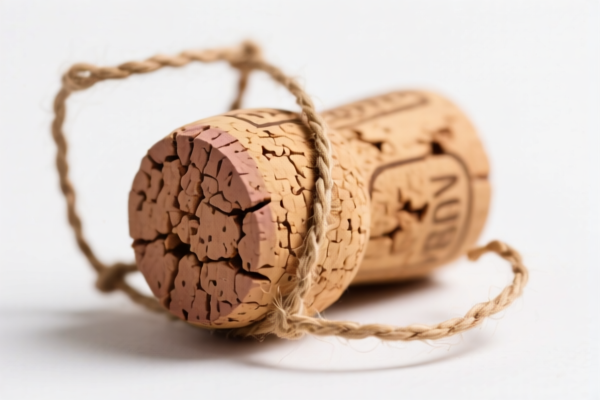

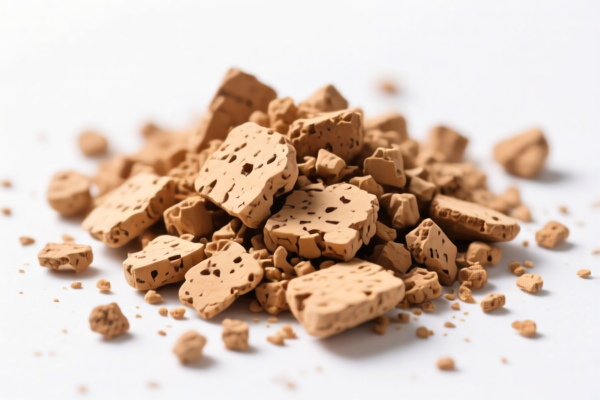
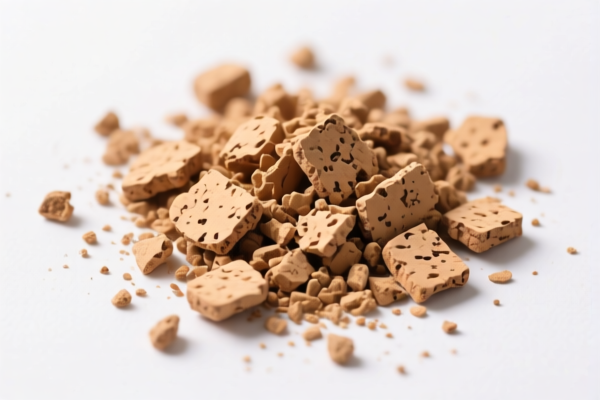
AI分析
🌿 Natural Cork Powder (The “Soft Gold” of Botanicals & Materials)
🌐 HS Code Reference & Customs Clearance Guide | 2026 Latest Tariff Analysis | Professional Clearance Strategy
📌 I. Product Definition & Classification: What is “Natural Cork Powder”?
Natural Cork Powder is a versatile raw material derived primarily from the bark of the Quercus suber (Cork Oak). In international trade, its classification depends entirely on its physical state, processing level, and end-use. It is not a single commodity but rather a spectrum ranging from simple agricultural by-products to specialized cosmetic ingredients.
The key distinction lies in whether it is considered a raw material, a manufactured article, or a specialized formulation.
⚠️ Critical Distinction:
- Raw/Unprocessed State: If the powder is merely crushed, granulated, or ground from natural cork without chemical modification → It falls under Chapter 45 (Cork and Articles of Cork).
- Finished Cosmetic Ingredient: If processed specifically as a base or active ingredient for cosmetics → It may fall under Chapter 33 (Essential Oils & Cosmetic Preparations).
- Processed/Combined: If bound with other materials or significantly modified → It may fall under Other Substances.
📦 II. HS Code Classification Details (2026 Authoritative Cross-Reference)
| HS Code | Product Description | Application Scenario | Processing Level |
|---|---|---|---|
4501.10.00.00 |
Natural cork, in granules or powder | Raw material for insulation, flooring, or industrial filler | ✅ Raw/Minimally Processed |
4504.90.00.00 |
Agglomerated cork & other cork articles, incl. waste | Powder considered as a form of agglomerated/combined cork waste or primary form | ✅ Combined/Agglomerated |
4503.90.60.00 |
Articles of natural cork | Powder treated as a "natural cork article" in primary form (less common for pure powder) | ⚠️ Primary Form/Article |
4501.90.40.00 |
Cork, other than raw cork, in granules or powder | Crushed, granulated, or powdered cork (standard industrial powder) | ✅ Processed (Crushed/Granulated) |
3304.99.50.00 |
Beauty or makeup preparations, other | Used as a raw material/filler specifically for cosmetic formulations | 🧪 Specialized/Cosmetic Use |
🔍 Key Insight:
- For pure, unadulterated cork powder used in construction, insulation, or general manufacturing, 4501.10.00.00 and 4501.90.40.00 are the most accurate.
- If the powder is mixed with other substances to create a "cork composite," 4504.90.00.00 may apply.
- If the powder is explicitly marketed and used as a cosmetic ingredient (e.g., in masks, scrubs), 3304.99.50.00 is required, regardless of its natural origin.
💰 III. 2026 Latest Tariff Rate Breakdown (Including Surtaxes & Policy Add-ons)
✅ Applicable Country: United States (US)
✅ Origin: China (CN)
✅ Effective Date: From November 10, 2025 (including subsequent imports)
🎯 1. 4501.10.00.00 — Natural Cork, Granules or Powder (Raw)
| Item | Content |
|---|---|
| Base Duty Rate | 0% (ad valorem) |
| USITC Surtax (Section 301) | +25% |
| IEEPA Surtax (China) | +10% (122 Clause / IEEPA) |
| Total Duty Rate | 35.0% |
| Tax Calculation | CIF Value × 35% |
| De Minimis Eligibility | ❌ No (deny_de_minimis) |
| Legal Basis Path | IEEPA:9903.01.25 → IEEPA:9903.01.24 → USITC:4501.10.00.00 → FOOTNOTE:9903.88.01 |
📌 Explanation:
- Base Rate 0%: Raw cork is often duty-free under general trade.
- 25% Surtax: Standard Section 301 tariff for Chinese goods.
- 10% IEEPA: Additional tariff under the International Emergency Economic Powers Act targeting specific Chinese materials.
- Total 35%: High cost for raw material imports.
🎯 2. 4501.90.40.00 — Other Cork, Granules or Powder (Processed/Crushed)
| Item | Content |
|---|---|
| Base Duty Rate | 0% |
| USITC Surtax (Section 301) | +25% |
| IEEPA Surtax (China) | +10% |
| Total Duty Rate | 35.0% |
| Tax Calculation | CIF Value × 35% |
| De Minimis Eligibility | ❌ No |
| Legal Basis Path | IEEPA:9903.01.25 → IEEPA:9903.01.24 → USITC:4501.90.40.00 |
📌 Note:
- Even if the cork is crushed or granulated (rather than just ground into fine dust), it retains the same tariff structure as raw cork powder.
- This is the most common classification for standard industrial cork powder.
🎯 3. 4504.90.00.00 — Agglomerated Cork / Other Cork Articles
| Item | Content |
|---|---|
| Base Duty Rate | 0% |
| USITC Surtax (Section 301) | +25% |
| IEEPA Surtax (China) | +10% |
| Total Duty Rate | 35.0% |
| Tax Calculation | CIF Value × 35% |
| De Minimis Eligibility | ❌ No |
| Legal Basis Path | IEEPA:9903.01.25 → IEEPA:9903.01.24 → USITC:4504.90.00.00 |
📌 Note:
- Applies if the powder is considered a form of agglomerated cork or combined cork waste.
- Still subject to the same 35% total burden.
🎯 4. 4503.90.60.00 — Articles of Natural Cork (Primary Form)
| Item | Content |
|---|---|
| Base Duty Rate | 14.0% |
| USITC Surtax (Section 301) | +25% |
| IEEPA Surtax (China) | +10% |
| Total Duty Rate | 49.0% |
| Tax Calculation | CIF Value × 49% |
| De Minimis Eligibility | ❌ No |
| Legal Basis Path | IEEPA:9903.01.25 → IEEPA:9903.01.24 → USITC:4503.90.60.00 |
⚠️ Warning:
- This is the highest tax bracket for cork powder.
- Only use if customs authorities classify your "powder" as a finished "article" rather than a raw material. Avoid this unless necessary!
🎯 5. 3304.99.50.00 — Cosmetic Preparations (Cork Powder as Ingredient)
| Item | Content |
|---|---|
| Base Duty Rate | 0% |
| USITC Surtax (Section 301) | +25% |
| IEEPA Surtax (China) | +10% |
| Total Duty Rate | 35.0% |
| Tax Calculation | CIF Value × 35% |
| De Minimis Eligibility | ❌ No |
| Legal Basis Path | IEEPA:9903.01.25 → IEEPA:9903.01.24 → USITC:3304.99.50.00 |
📌 Note:
- Even though it’s for cosmetics, if it’s imported as a raw powder from China, it still attracts the 35% total duty.
- Classification here requires proof of cosmetic end-use.
🛠️ IV. Customs Clearance Practical Advice (Avoid Pitfalls)
✅ 1. Documentation Checklist (Non-Negotiable)
| Document | Required | Notes |
|---|---|---|
| ✅ Product Spec Sheet | ✔️ | Must specify particle size (e.g., 100 mesh, 200 mesh), origin, and processing method (grinding vs. chemical). |
| ✅ Commercial Invoice | ✔️ | Must clearly state "Natural Cork Powder" or "Cork Granules". Avoid vague terms like "Organic Fillers." |
| ✅ Certificate of Origin (CO) | ✔️ | Essential for verifying Chinese origin to apply correct tariffs. |
| ✅ Material Safety Data Sheet (MSDS) | ✔️ | Required for powder forms to ensure no hazardous chemicals were added during processing. |
| ✅ Photos of Product | ✔️ | Show bulk powder, packaging, and labels. |
✅ 2. Declaration Strategy (Key Mantras)
🔥 “Raw is Chapter 45, Cosmetic is Chapter 33. Don’t mix them up!”
| Scenario | Correct HS Code | Incorrect HS Code | Consequence |
|---|---|---|---|
| Pure cork powder for flooring/insulation | 4501.10.00.00 or 4501.90.40.00 |
4503.90.60.00 |
Avoid 49% tax; save 14%! |
| Cork powder mixed with binders | 4504.90.00.00 |
4501.10.00.00 |
If mixed, it’s agglomerated, not raw. |
| Cork powder for face masks/scrubs | 3304.99.50.00 |
4501.10.00.00 |
Customs may inspect for cosmetic claims. If declared as raw but used for cosmetics, risk of reclassification. |
| Cork dust from sawmills | 4501.10.00.00 |
4501.90.40.00 |
Fine dust is still "powder" under 4501.10. |
✅ 3. Special Handling
| Situation | Recommendation |
|---|---|
| High Fine-ness Dust | If particle size is <100 microns, ensure MSDS states it is non-hazardous. Some ports may require additional hygiene checks. |
| Blended with Oils/Essences | If infused with essential oils, it must be declared under 3304 or 3301. Declaring as "pure cork powder" will lead to severe penalties. |
| Sample Shipments | Do not rely on de minimis (Section 321). With 35% duty, even small shipments are subject to full tax. |
🌍 V. Global Market Clearance Comparison (2026)
| Country/Region | Recommended HS Code | Tariff (China Origin) | Certification | Notes |
|---|---|---|---|---|
| 🇺🇸 USA | 4501.10.00.00 / 4501.90.40.00 |
35% (0% Base + 25% 301 + 10% IEEPA) | FDA (if cosmetic), USDA (if agricultural) | Highest tariff burden. Plan cash flow accordingly. |
| 🇨🇳 China | 4501.10.00.00 |
0% | None | Export-friendly. |
| 🇪🇺 EU | 4501.10.00.00 |
0% - 2.5% | REACH (Chemicals) | No US-style surtaxes. Favorable for exports. |
| 🇬🇧 UK | 4501.10.00.00 |
0% - 2.5% | UKCA | Post-Brexit rules apply. |
| 🇯🇵 Japan | 4501.10.00.00 |
3.0% - 5.0% | FSC (if eco-certified) | Low tariffs, stable trade. |
📌 Conclusion:
- The USA is the most expensive market due to 35% total tariffs.
- For US-bound shipments, consider supply chain diversification (e.g., sourcing from Portugal, Spain, or Morocco) if possible, as EU-origin cork may have lower or zero Section 301 tariffs.
📌 VI. Common Mistakes & Pitfalls (Lessons Learned)
❌ Mistake 1: Declaring "Cork Powder" as "Plastic Filler"
👉 Consequence: Misclassification under Chapter 39 or 38. Higher duties + fraud risk.
❌ Mistake 2: Mixing "Cosmetic" and "Industrial" Cork Powder in One Shipment
👉 Consequence: Customs will separate them. Industrial part (35%) vs. Cosmetic part (35%). Complexity increases, delay risk rises.
❌ Mistake 3: Ignoring the "10% IEEPA" Surcharge
👉 Consequence: Budgeting only for 25% Section 301 tariff leads to 10% underpayment and fines.
❌ Mistake 4: Using "Articles of Cork" (4503) for Raw Powder
👉 Consequence: Triggering the 49% tax rate unnecessarily. Always argue for "Granules or Powder" (4501) for raw forms.
✅ Correct Declaration Example:
"Natural Cork Powder, Ground from Quercus Suber Bark, Particle Size 200 Mesh, Non-Hazardous, for Use in Flooring Manufacturing, HS Code 4501.10.00.00"
🎯 VII. Conclusion: Precision Classification Saves Money!
🎯 Remember the Mantra:
🔹 "Raw Cork = Chapter 45 (35% Total); Cosmetic = Chapter 33 (35% Total); Avoid Chapter 4503 (49% Total)!"
🔹 "35% is the US Price for Chinese Cork. Plan for it!"
📌 Pro Tip:
If you are exporting cork powder to the USA, consider applying for an Advance Ruling from CBP if your product has unique processing steps. This provides legal certainty and prevents post-clearance audits.
📣 Immediate Action:
📞 Contact your freight forwarder + Provide MSDS & Specs + Verify Origin Certificate
🚀 Clear customs smoothly, avoid 49% traps, and protect your margins!
✨ Professional Clearance Starts with Accurate Classification!
💼 Every percentage point of duty impacts your bottom line!
用户评价
关于 HS 编码归类
协调制度(HS)是由世界海关组织(WCO)制定的国际贸易商品分类标准。全球 200 多个国家采用 HS 系统作为海关关税、贸易统计和进出口监管的基础。
每个 HS 编码遵循以下层级结构:
- 章(2 位)——商品大类(例如:第 84 章:机器和机械设备)
- 品目(4 位)——章内的更具体分类
- 子目(6 位)——国际通用细分,所有 WCO 成员国统一使用
- 本国细分(8-10 位)——各国自行扩展的细分编码,如美国 HTSUS 10 位编码
正确的 HS 编码归类对于顺利通关、准确缴纳关税和遵守贸易法规至关重要。错误归类可能导致海关延误、多缴关税或罚款。
从CN进口到US时,适用的关税税率可能包括:
- 最惠国(MFN)税率——适用于 WTO 成员国的标准关税税率
- 普通税率——适用于无贸易协定国家
- 贸易救济关税——附加关税,如 301 条款(反倾销)、232 条款(国家安全)或反补贴税
本页内容仅供参考。如需正式归类,请咨询当地海关或持牌报关代理。