Natural Cork Powder
CN → US| HS Code | Tariff Rate | Origin | Destination | Doc |
|---|---|---|---|---|
| 4501100000 | 35.0% | CN | US | Official Doc |
| 4504900000 | 35.0% | CN | US | Official Doc |
| 4503906000 | 49.0% | CN | US | Official Doc |
| 4501904000 | 35.0% | CN | US | Official Doc |
| 3304995000 | 35.0% | CN | US | Official Doc |
Product Images
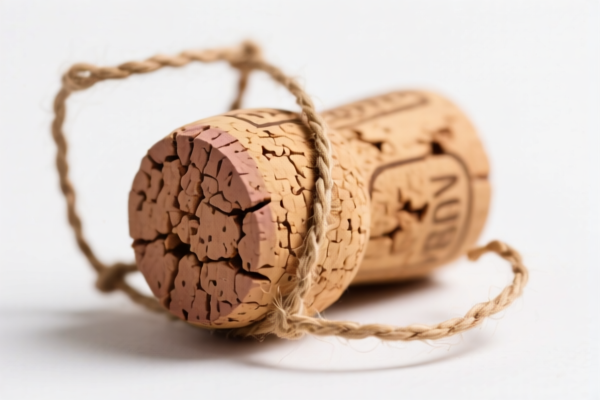

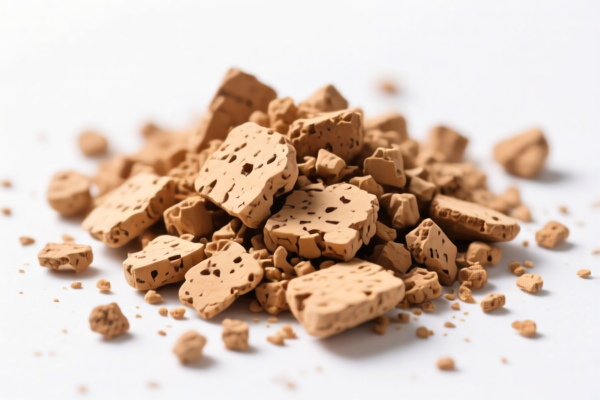
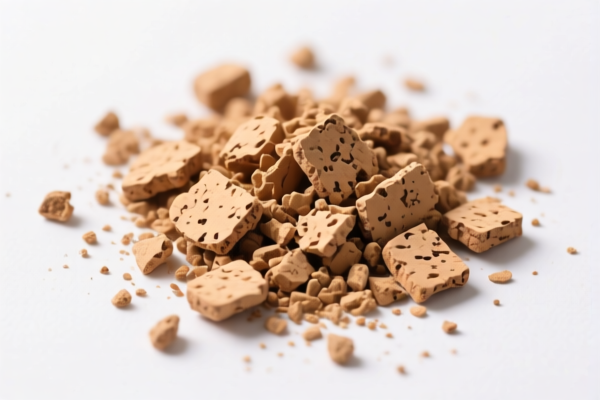
AI Analysis
🌿 Natural Cork Powder (The “Soft Gold” of Botanicals & Materials)
🌐 HS Code Reference & Customs Clearance Guide | 2026 Latest Tariff Analysis | Professional Clearance Strategy
📌 I. Product Definition & Classification: What is “Natural Cork Powder”?
Natural Cork Powder is a versatile raw material derived primarily from the bark of the Quercus suber (Cork Oak). In international trade, its classification depends entirely on its physical state, processing level, and end-use. It is not a single commodity but rather a spectrum ranging from simple agricultural by-products to specialized cosmetic ingredients.
The key distinction lies in whether it is considered a raw material, a manufactured article, or a specialized formulation.
⚠️ Critical Distinction:
- Raw/Unprocessed State: If the powder is merely crushed, granulated, or ground from natural cork without chemical modification → It falls under Chapter 45 (Cork and Articles of Cork).
- Finished Cosmetic Ingredient: If processed specifically as a base or active ingredient for cosmetics → It may fall under Chapter 33 (Essential Oils & Cosmetic Preparations).
- Processed/Combined: If bound with other materials or significantly modified → It may fall under Other Substances.
📦 II. HS Code Classification Details (2026 Authoritative Cross-Reference)
| HS Code | Product Description | Application Scenario | Processing Level |
|---|---|---|---|
4501.10.00.00 |
Natural cork, in granules or powder | Raw material for insulation, flooring, or industrial filler | ✅ Raw/Minimally Processed |
4504.90.00.00 |
Agglomerated cork & other cork articles, incl. waste | Powder considered as a form of agglomerated/combined cork waste or primary form | ✅ Combined/Agglomerated |
4503.90.60.00 |
Articles of natural cork | Powder treated as a "natural cork article" in primary form (less common for pure powder) | ⚠️ Primary Form/Article |
4501.90.40.00 |
Cork, other than raw cork, in granules or powder | Crushed, granulated, or powdered cork (standard industrial powder) | ✅ Processed (Crushed/Granulated) |
3304.99.50.00 |
Beauty or makeup preparations, other | Used as a raw material/filler specifically for cosmetic formulations | 🧪 Specialized/Cosmetic Use |
🔍 Key Insight:
- For pure, unadulterated cork powder used in construction, insulation, or general manufacturing, 4501.10.00.00 and 4501.90.40.00 are the most accurate.
- If the powder is mixed with other substances to create a "cork composite," 4504.90.00.00 may apply.
- If the powder is explicitly marketed and used as a cosmetic ingredient (e.g., in masks, scrubs), 3304.99.50.00 is required, regardless of its natural origin.
💰 III. 2026 Latest Tariff Rate Breakdown (Including Surtaxes & Policy Add-ons)
✅ Applicable Country: United States (US)
✅ Origin: China (CN)
✅ Effective Date: From November 10, 2025 (including subsequent imports)
🎯 1. 4501.10.00.00 — Natural Cork, Granules or Powder (Raw)
| Item | Content |
|---|---|
| Base Duty Rate | 0% (ad valorem) |
| USITC Surtax (Section 301) | +25% |
| IEEPA Surtax (China) | +10% (122 Clause / IEEPA) |
| Total Duty Rate | 35.0% |
| Tax Calculation | CIF Value × 35% |
| De Minimis Eligibility | ❌ No (deny_de_minimis) |
| Legal Basis Path | IEEPA:9903.01.25 → IEEPA:9903.01.24 → USITC:4501.10.00.00 → FOOTNOTE:9903.88.01 |
📌 Explanation:
- Base Rate 0%: Raw cork is often duty-free under general trade.
- 25% Surtax: Standard Section 301 tariff for Chinese goods.
- 10% IEEPA: Additional tariff under the International Emergency Economic Powers Act targeting specific Chinese materials.
- Total 35%: High cost for raw material imports.
🎯 2. 4501.90.40.00 — Other Cork, Granules or Powder (Processed/Crushed)
| Item | Content |
|---|---|
| Base Duty Rate | 0% |
| USITC Surtax (Section 301) | +25% |
| IEEPA Surtax (China) | +10% |
| Total Duty Rate | 35.0% |
| Tax Calculation | CIF Value × 35% |
| De Minimis Eligibility | ❌ No |
| Legal Basis Path | IEEPA:9903.01.25 → IEEPA:9903.01.24 → USITC:4501.90.40.00 |
📌 Note:
- Even if the cork is crushed or granulated (rather than just ground into fine dust), it retains the same tariff structure as raw cork powder.
- This is the most common classification for standard industrial cork powder.
🎯 3. 4504.90.00.00 — Agglomerated Cork / Other Cork Articles
| Item | Content |
|---|---|
| Base Duty Rate | 0% |
| USITC Surtax (Section 301) | +25% |
| IEEPA Surtax (China) | +10% |
| Total Duty Rate | 35.0% |
| Tax Calculation | CIF Value × 35% |
| De Minimis Eligibility | ❌ No |
| Legal Basis Path | IEEPA:9903.01.25 → IEEPA:9903.01.24 → USITC:4504.90.00.00 |
📌 Note:
- Applies if the powder is considered a form of agglomerated cork or combined cork waste.
- Still subject to the same 35% total burden.
🎯 4. 4503.90.60.00 — Articles of Natural Cork (Primary Form)
| Item | Content |
|---|---|
| Base Duty Rate | 14.0% |
| USITC Surtax (Section 301) | +25% |
| IEEPA Surtax (China) | +10% |
| Total Duty Rate | 49.0% |
| Tax Calculation | CIF Value × 49% |
| De Minimis Eligibility | ❌ No |
| Legal Basis Path | IEEPA:9903.01.25 → IEEPA:9903.01.24 → USITC:4503.90.60.00 |
⚠️ Warning:
- This is the highest tax bracket for cork powder.
- Only use if customs authorities classify your "powder" as a finished "article" rather than a raw material. Avoid this unless necessary!
🎯 5. 3304.99.50.00 — Cosmetic Preparations (Cork Powder as Ingredient)
| Item | Content |
|---|---|
| Base Duty Rate | 0% |
| USITC Surtax (Section 301) | +25% |
| IEEPA Surtax (China) | +10% |
| Total Duty Rate | 35.0% |
| Tax Calculation | CIF Value × 35% |
| De Minimis Eligibility | ❌ No |
| Legal Basis Path | IEEPA:9903.01.25 → IEEPA:9903.01.24 → USITC:3304.99.50.00 |
📌 Note:
- Even though it’s for cosmetics, if it’s imported as a raw powder from China, it still attracts the 35% total duty.
- Classification here requires proof of cosmetic end-use.
🛠️ IV. Customs Clearance Practical Advice (Avoid Pitfalls)
✅ 1. Documentation Checklist (Non-Negotiable)
| Document | Required | Notes |
|---|---|---|
| ✅ Product Spec Sheet | ✔️ | Must specify particle size (e.g., 100 mesh, 200 mesh), origin, and processing method (grinding vs. chemical). |
| ✅ Commercial Invoice | ✔️ | Must clearly state "Natural Cork Powder" or "Cork Granules". Avoid vague terms like "Organic Fillers." |
| ✅ Certificate of Origin (CO) | ✔️ | Essential for verifying Chinese origin to apply correct tariffs. |
| ✅ Material Safety Data Sheet (MSDS) | ✔️ | Required for powder forms to ensure no hazardous chemicals were added during processing. |
| ✅ Photos of Product | ✔️ | Show bulk powder, packaging, and labels. |
✅ 2. Declaration Strategy (Key Mantras)
🔥 “Raw is Chapter 45, Cosmetic is Chapter 33. Don’t mix them up!”
| Scenario | Correct HS Code | Incorrect HS Code | Consequence |
|---|---|---|---|
| Pure cork powder for flooring/insulation | 4501.10.00.00 or 4501.90.40.00 |
4503.90.60.00 |
Avoid 49% tax; save 14%! |
| Cork powder mixed with binders | 4504.90.00.00 |
4501.10.00.00 |
If mixed, it’s agglomerated, not raw. |
| Cork powder for face masks/scrubs | 3304.99.50.00 |
4501.10.00.00 |
Customs may inspect for cosmetic claims. If declared as raw but used for cosmetics, risk of reclassification. |
| Cork dust from sawmills | 4501.10.00.00 |
4501.90.40.00 |
Fine dust is still "powder" under 4501.10. |
✅ 3. Special Handling
| Situation | Recommendation |
|---|---|
| High Fine-ness Dust | If particle size is <100 microns, ensure MSDS states it is non-hazardous. Some ports may require additional hygiene checks. |
| Blended with Oils/Essences | If infused with essential oils, it must be declared under 3304 or 3301. Declaring as "pure cork powder" will lead to severe penalties. |
| Sample Shipments | Do not rely on de minimis (Section 321). With 35% duty, even small shipments are subject to full tax. |
🌍 V. Global Market Clearance Comparison (2026)
| Country/Region | Recommended HS Code | Tariff (China Origin) | Certification | Notes |
|---|---|---|---|---|
| 🇺🇸 USA | 4501.10.00.00 / 4501.90.40.00 |
35% (0% Base + 25% 301 + 10% IEEPA) | FDA (if cosmetic), USDA (if agricultural) | Highest tariff burden. Plan cash flow accordingly. |
| 🇨🇳 China | 4501.10.00.00 |
0% | None | Export-friendly. |
| 🇪🇺 EU | 4501.10.00.00 |
0% - 2.5% | REACH (Chemicals) | No US-style surtaxes. Favorable for exports. |
| 🇬🇧 UK | 4501.10.00.00 |
0% - 2.5% | UKCA | Post-Brexit rules apply. |
| 🇯🇵 Japan | 4501.10.00.00 |
3.0% - 5.0% | FSC (if eco-certified) | Low tariffs, stable trade. |
📌 Conclusion:
- The USA is the most expensive market due to 35% total tariffs.
- For US-bound shipments, consider supply chain diversification (e.g., sourcing from Portugal, Spain, or Morocco) if possible, as EU-origin cork may have lower or zero Section 301 tariffs.
📌 VI. Common Mistakes & Pitfalls (Lessons Learned)
❌ Mistake 1: Declaring "Cork Powder" as "Plastic Filler"
👉 Consequence: Misclassification under Chapter 39 or 38. Higher duties + fraud risk.
❌ Mistake 2: Mixing "Cosmetic" and "Industrial" Cork Powder in One Shipment
👉 Consequence: Customs will separate them. Industrial part (35%) vs. Cosmetic part (35%). Complexity increases, delay risk rises.
❌ Mistake 3: Ignoring the "10% IEEPA" Surcharge
👉 Consequence: Budgeting only for 25% Section 301 tariff leads to 10% underpayment and fines.
❌ Mistake 4: Using "Articles of Cork" (4503) for Raw Powder
👉 Consequence: Triggering the 49% tax rate unnecessarily. Always argue for "Granules or Powder" (4501) for raw forms.
✅ Correct Declaration Example:
"Natural Cork Powder, Ground from Quercus Suber Bark, Particle Size 200 Mesh, Non-Hazardous, for Use in Flooring Manufacturing, HS Code 4501.10.00.00"
🎯 VII. Conclusion: Precision Classification Saves Money!
🎯 Remember the Mantra:
🔹 "Raw Cork = Chapter 45 (35% Total); Cosmetic = Chapter 33 (35% Total); Avoid Chapter 4503 (49% Total)!"
🔹 "35% is the US Price for Chinese Cork. Plan for it!"
📌 Pro Tip:
If you are exporting cork powder to the USA, consider applying for an Advance Ruling from CBP if your product has unique processing steps. This provides legal certainty and prevents post-clearance audits.
📣 Immediate Action:
📞 Contact your freight forwarder + Provide MSDS & Specs + Verify Origin Certificate
🚀 Clear customs smoothly, avoid 49% traps, and protect your margins!
✨ Professional Clearance Starts with Accurate Classification!
💼 Every percentage point of duty impacts your bottom line!
Customer Reviews
About HS Code Classification
The Harmonized System (HS) is an internationally standardized nomenclature developed by the World Customs Organization (WCO) to classify traded products. Over 200 countries use the HS system as the basis for customs tariffs, trade statistics, and import/export regulations.
Each HS code follows a hierarchical structure:
- Chapter (2 digits) — Broad category of goods (e.g., Chapter 84: Machinery and Mechanical Appliances)
- Heading (4 digits) — More specific grouping within the chapter
- Subheading (6 digits) — Internationally standardized breakdown, used by all WCO member countries
- National subdivisions (8-10 digits) — Country-specific extensions for further classification, such as US HTSUS 10-digit codes
Correct HS code classification is essential for smooth customs clearance, accurate duty payment, and compliance with trade regulations. Misclassification can lead to customs delays, overpayment of duties, or penalties.
When importing from CN to US, the applicable tariff rates may include:
- Most-Favored-Nation (MFN) rate — The standard duty rate applied to WTO members
- General rate — Applied to countries without trade agreements
- Trade remedy duties — Additional tariffs such as Section 301 (anti-dumping), Section 232 (national security), or countervailing duties
The information provided on this page is for reference purposes only. For official classification, please consult with your local customs authority or a licensed customs broker.