Natural Rubber Chemical Raw Materials
CN → US| HS编码 | 关税税率 | 原产国 | 目的国 | 文档 |
|---|---|---|---|---|
| 4005990000 | 35.0% | CN | US | 官方文档 |
| 4005910000 | 35.0% | CN | US | 官方文档 |
| 4002800000 | 35.0% | CN | US | 官方文档 |
| 4001290000 | 35.0% | CN | US | 官方文档 |
| 4001220050 | 35.0% | CN | US | 官方文档 |
商品图片

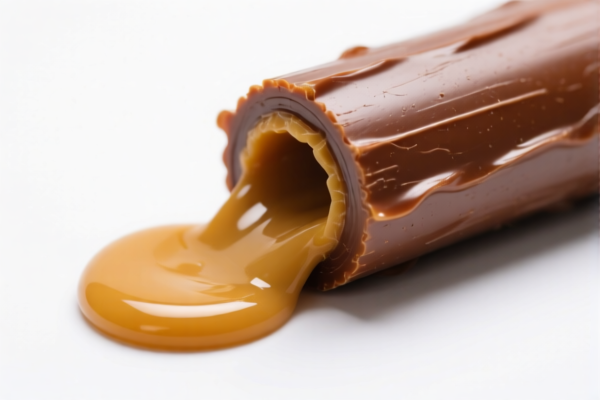
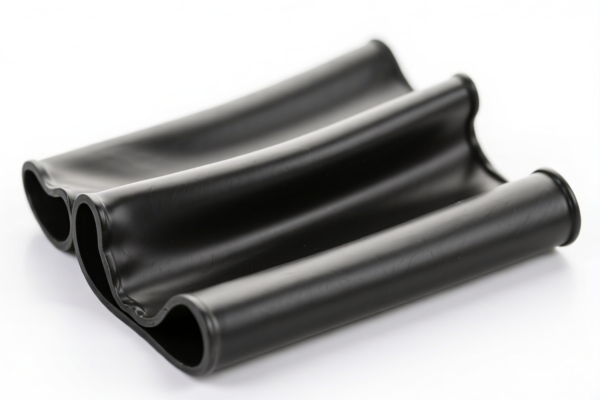
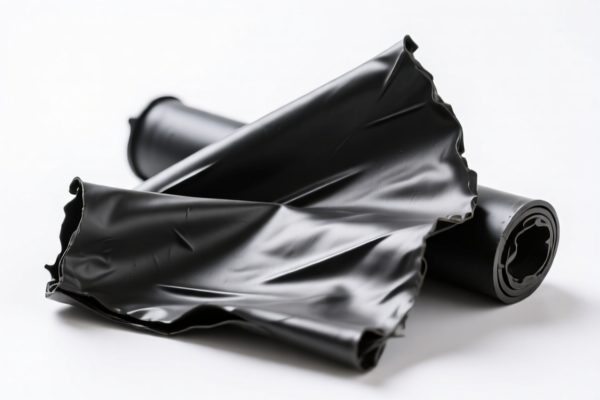
AI分析
🌿 Natural Rubber Chemical Raw Materials (Unprocessed/Compound Rubber)
🌐 HS Code Reference & Customs Clearance Guide | 2026 Latest Tariff Analysis | Professional Clearance Strategy
📌 1. Product Definition & Classification: Do You Really Understand "Natural Rubber Chemicals"?
In international trade, Natural Rubber Chemical Raw Materials refer to natural rubber that has undergone mixing with additives (compounding) but remains in a semi-finished or primary form. It is NOT finished rubber products (like tires or gloves).
Key Distinctions: * "Compound" (混炼橡胶): Refers to rubber mixed with fillers, accelerators, or antioxidants. It is still in a raw/semi-finished state (slabs, sheets, bales). * Material: Must be Natural Rubber (latex, skim milk, crepe, etc.) as the primary component. * Form: Usually appears as blocks, sheets, strips, or lumps.
⚠️ Critical Classification Point:
- If it is unvulcanized (raw/mixed) rubber in basic forms → Chapter 40.
- If it is a mixture of natural and synthetic rubber → 4002.80.00.00.
- If it is specific grades of natural rubber (e.g., TSR 20, LRV) → 4001.29.00.00 / 4001.22.00.50.
- "Compound" does NOT mean finished product! It is still considered raw/primary material for customs classification.
📦 2. HS Code Classification Details (2026 Latest Tariff Authority Reference)
Based on the provided data, here are the applicable HS Codes for "Natural Rubber Chemical Raw Materials":
| HS Code | Product Description | Summary / Logic for Classification | Total Tax Rate |
|---|---|---|---|
4005.99.00.00 |
Natural Rubber Compounds (Other) | "Compound" usually refers to "Milled Rubber" or mixed rubber. Material fits "Rubber," form fits "Primary/Unprocessed" inference. | 35.0% |
4005.91.00.00 |
Natural Rubber Compounds (Sheets/Planks/Strips) | Unvulcanized rubber. "Compound" typically exists in primary forms like sheets/blocks, matching the classification description. | 35.0% |
4002.80.00.00 |
Mixtures of Natural & Synthetic Rubber | If the product is a blend of natural and synthetic rubber, it falls under "Mixtures" material definition. | 35.0% |
4001.29.00.00 |
Natural Rubber (Other, Primary Forms) | Matches material (Natural Rubber) and form (Compound is considered primary/semi-finished, not finished). No material conflict. | 35.0% |
4001.22.00.50 |
Natural Rubber (Specific Grade) | Explicitly Natural Rubber. "Compound" in clearance logic often refers to processed but still primary/intermediate rubber, fitting natural rubber categories. | 35.0% |
🔍 Key Reminder:
- "Chemical Raw Materials" in this context means Unvulcanized Rubber Compounds.
- All listed HS Codes are in Chapter 40 (Rubber and Articles Thereof).
- NO finished rubber products (tires, belts, hoses) should be declared here.
💰 3. 2026 Latest Tariff Rate Breakdown (Including Additional Duties & Policies)
✅ Applicable Country: United States (US)
✅ Country of Origin: China (CN)
✅ Effective Date: November 10, 2025 (and subsequent imports)
🎯 1. General Tax Structure for All Listed HS Codes
| Item | Detail |
|---|---|
| Base Tariff Rate | 0.0% (Most natural rubber imports have a 0% base MFN rate) |
| Section 301 Additional Duty | +25.0% (USITC Footnote for China-origin goods) |
| IEEPA Additional Duty | +10.0% (122 Clause Tariff for China-origin goods, effective Nov 2025) |
| Total Tariff Rate | 35.0% |
| Tax Calculation | CIF Value × 35% |
| De Minimis Exemption | ❌ NOT Eligible (Deny De Minimis for rubber chemicals from China) |
| Legal Basis Path | USITC:4005.xxxx.00 / 4002.80.00.00 / 4001.2x.00.00 → FOOTNOTE:301 + IEEPA:122 |
📌 Explanation:
- The 0% base rate is for standard MFN treatment.
- The 25% Section 301 tariff is a longstanding punitive duty on Chinese goods.
- The 10% IEEPA 122 Clause tariff is a new/additional layer for specific Chinese-origin imports starting late 2025.
- Total 35% is a HIGH duty rate. Profit margins must be carefully calculated.
🛠️ 4. Customs Clearance Practical Advice (Battle-Tested Pitfall Avoidance)
✅ 1. Required Documentation Checklist (No Missing Items)
| Document | Mandatory? | Description |
|---|---|---|
| ✅ Product Specification Sheet | ✔️ | Must detail: Rubber type (TSR, Latex, etc.), additives mixed, unvulcanized status. |
| ✅ Commercial Invoice | ✔️ | Clearly state: "Natural Rubber Compounds, Unvulcanized," HS Code, CIF Value. |
| ✅ Packing List | ✔️ | Detail weight, dimensions, and number of bales/sheets. |
| ✅ Certificate of Origin (CO) | ✔️ | To confirm China origin (triggers 35% tax). If from Thailand/Vietnam, may qualify for lower rates. |
| ✅ MSDS (Material Safety Data Sheet) | ✔️ | Required for chemical/raw material safety assessment. |
| ✅ Photo of Goods | ✔️ | Show packaging, labeling, and physical form (sheets/bales) to prove it's not finished goods. |
✅ 2. Declaration Tips (Critical Mnemonics)
🔥 "Raw & Mixed, Not Finished; Declare 'Unvulcanized' to Avoid Rejection!"
| Scenario | Correct Declaration | Wrong Practice |
|---|---|---|
| Mixed Rubber (Natural + Additives) | 4005.91.00.00 or 4005.99.00.00 |
Declare as "Raw Rubber" (4001) → Potential misclassification audit. |
| Pure Natural Rubber (Unprocessed) | 4001.29.00.00 or 4001.22.00.50 |
Declare as "Compound" → May delay clearance for verification. |
| Natural + Synthetic Blend | 4002.80.00.00 |
Declare as 100% Natural → High risk of penalty. |
| Finished Rubber Products (e.g., Mats) | NOT Chapter 40 Raw | ❌ CRITICAL ERROR: Do not declare finished goods as raw material. Tax may differ, and legal risks arise. |
✅ 3. Special Case Handling
| Situation | Advice |
|---|---|
| OEM Private Label Rubber | Provide supplier invoice and proof of origin. Ensure "Unvulcanized" is clearly stated. |
| Mixed Shipment (Natural + Synthetic) | Must use 4002.80.00.00. Separate declaration is not recommended unless physically separate packages. |
| Transshipment (via Vietnam/Thailand) | If you can prove substantial transformation, you may avoid US origin. However, simple re-export from China still triggers 35%. |
| Chemical Additives Included | If additives exceed certain thresholds, ensure HS code 4005 is used, not 4001. |
🌍 5. Global Market Comparison (2026 Latest)
| Country/Region | Recommended HS Code | Tariff (China Origin) | Certification/Notes |
|---|---|---|---|
| 🇺🇸 USA | 4005.91.00.00 / 4005.99.00.00 / 4002.80.00.00 / 4001.29.00.00 |
35% (0% Base + 25% 301 + 10% IEEPA) | High duty. Strict origin verification. |
| 🇨🇳 China | 4005.91.00.00 |
0% - 5% | No additional punitive tariffs. |
| 🇪🇺 EU | 4005.91.00.00 |
0% (Most likely) | No Section 301 equivalent. CE/REACH may apply. |
| 🇻🇳 Vietnam | 4005.91.00.00 |
Varies (Often lower) | Potential for lower tariffs if processed locally. |
📌 Conclusion:
- USA is the only major market with a 35% punitive tariff on Chinese natural rubber chemicals.
- EU and China have significantly lower or zero tariffs.
- Supply Chain Strategy: Consider sourcing from or processing in Thailand, Vietnam, or Indonesia to mitigate the 35% US duty, if feasible.
📌 6. Common Errors & Pitfalls (Blood & Tears Lessons)
❌ Error 1: Declaring finished rubber mats as "Natural Rubber Chemicals"
👉 Consequence: Customs will reclassify, delay shipment, and impose penalties. Tax may change, but legal risk is high.
❌ Error 2: Not specifying "Unvulcanized" in the description
👉 Consequence: Customs may suspect finished goods or require additional chemical analysis → Delays.
❌ Error 3: Ignoring the IEEPA 122 Clause
👉 Consequence: If declared before Nov 2025, you might have paid less. After Nov 2025, failing to include the 10% additional duty leads to underpayment penalties.
❌ Error 4: Mixing Natural and Synthetic rubber in one HS Code
👉 Consequence: Must use 4002.80.00.00. Using 4005 or 4001 will cause audit flags.
✅ Correct Practice:
"Natural Rubber Compounds, Unvulcanized, Mixed with Carbon Black, Sheets/Bales, HS 4005.91.00.00, Made in China"
🎯 7. Conclusion: Professional Declaration, Cost Control, Smooth Clearance!
🎯 Remember These Mantras:
🔹 "Unvulcanized is Key: Raw/Mixed, Not Finished!"
🔹 "35% Tax in USA: Calculate Before You Ship!"
🔹 "Origin Matters: China = 35%, Vietnam/Thailand = Lower?"
📌 Pro Tip:
If your natural rubber chemicals are originally from Thailand, Vietnam, or Indonesia, you may avoid the 35% US duty (only base rate applies, likely 0-2.5%).
Recommend Advance Ruling from US Customs (CBP) for complex compound mixtures to ensure correct HS Code classification.
📣 Immediate Action:
📞 Contact a Professional Customs Broker
📄 Provide Product Specs + Photos + Origin Certificate
🚀 Apply for HS Code Advance Ruling if Value is High
✨ Professional Clearance Starts with Accurate Classification!
💼 Every Percent of Duty Saved is Pure Profit!
用户评价
关于 HS 编码归类
协调制度(HS)是由世界海关组织(WCO)制定的国际贸易商品分类标准。全球 200 多个国家采用 HS 系统作为海关关税、贸易统计和进出口监管的基础。
每个 HS 编码遵循以下层级结构:
- 章(2 位)——商品大类(例如:第 84 章:机器和机械设备)
- 品目(4 位)——章内的更具体分类
- 子目(6 位)——国际通用细分,所有 WCO 成员国统一使用
- 本国细分(8-10 位)——各国自行扩展的细分编码,如美国 HTSUS 10 位编码
正确的 HS 编码归类对于顺利通关、准确缴纳关税和遵守贸易法规至关重要。错误归类可能导致海关延误、多缴关税或罚款。
从CN进口到US时,适用的关税税率可能包括:
- 最惠国(MFN)税率——适用于 WTO 成员国的标准关税税率
- 普通税率——适用于无贸易协定国家
- 贸易救济关税——附加关税,如 301 条款(反倾销)、232 条款(国家安全)或反补贴税
本页内容仅供参考。如需正式归类,请咨询当地海关或持牌报关代理。