Natural Rubber Chemical Raw Materials
CN → US| HS Code | Tariff Rate | Origin | Destination | Doc |
|---|---|---|---|---|
| 4005990000 | 35.0% | CN | US | Official Doc |
| 4005910000 | 35.0% | CN | US | Official Doc |
| 4002800000 | 35.0% | CN | US | Official Doc |
| 4001290000 | 35.0% | CN | US | Official Doc |
| 4001220050 | 35.0% | CN | US | Official Doc |
Product Images


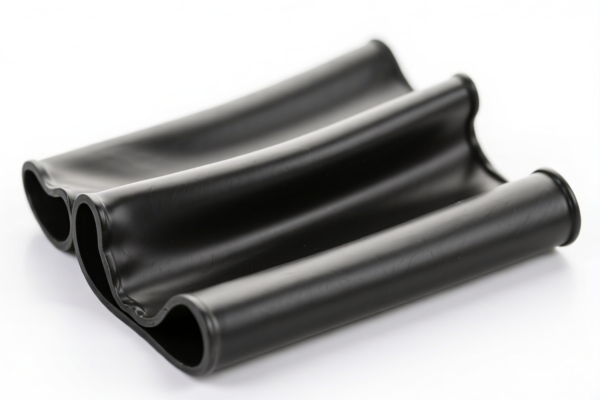
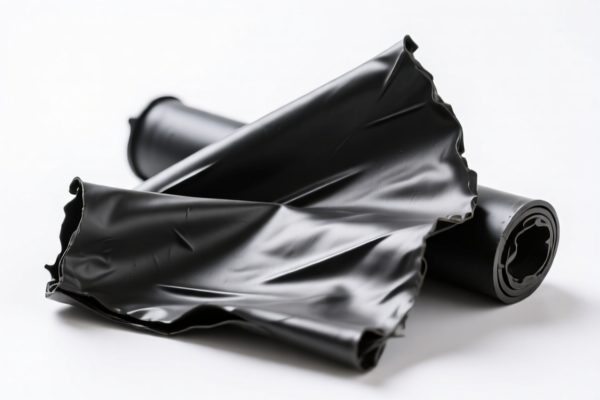
AI Analysis
🌿 Natural Rubber Chemical Raw Materials (Unprocessed/Compound Rubber)
🌐 HS Code Reference & Customs Clearance Guide | 2026 Latest Tariff Analysis | Professional Clearance Strategy
📌 1. Product Definition & Classification: Do You Really Understand "Natural Rubber Chemicals"?
In international trade, Natural Rubber Chemical Raw Materials refer to natural rubber that has undergone mixing with additives (compounding) but remains in a semi-finished or primary form. It is NOT finished rubber products (like tires or gloves).
Key Distinctions: * "Compound" (混炼橡胶): Refers to rubber mixed with fillers, accelerators, or antioxidants. It is still in a raw/semi-finished state (slabs, sheets, bales). * Material: Must be Natural Rubber (latex, skim milk, crepe, etc.) as the primary component. * Form: Usually appears as blocks, sheets, strips, or lumps.
⚠️ Critical Classification Point:
- If it is unvulcanized (raw/mixed) rubber in basic forms → Chapter 40.
- If it is a mixture of natural and synthetic rubber → 4002.80.00.00.
- If it is specific grades of natural rubber (e.g., TSR 20, LRV) → 4001.29.00.00 / 4001.22.00.50.
- "Compound" does NOT mean finished product! It is still considered raw/primary material for customs classification.
📦 2. HS Code Classification Details (2026 Latest Tariff Authority Reference)
Based on the provided data, here are the applicable HS Codes for "Natural Rubber Chemical Raw Materials":
| HS Code | Product Description | Summary / Logic for Classification | Total Tax Rate |
|---|---|---|---|
4005.99.00.00 |
Natural Rubber Compounds (Other) | "Compound" usually refers to "Milled Rubber" or mixed rubber. Material fits "Rubber," form fits "Primary/Unprocessed" inference. | 35.0% |
4005.91.00.00 |
Natural Rubber Compounds (Sheets/Planks/Strips) | Unvulcanized rubber. "Compound" typically exists in primary forms like sheets/blocks, matching the classification description. | 35.0% |
4002.80.00.00 |
Mixtures of Natural & Synthetic Rubber | If the product is a blend of natural and synthetic rubber, it falls under "Mixtures" material definition. | 35.0% |
4001.29.00.00 |
Natural Rubber (Other, Primary Forms) | Matches material (Natural Rubber) and form (Compound is considered primary/semi-finished, not finished). No material conflict. | 35.0% |
4001.22.00.50 |
Natural Rubber (Specific Grade) | Explicitly Natural Rubber. "Compound" in clearance logic often refers to processed but still primary/intermediate rubber, fitting natural rubber categories. | 35.0% |
🔍 Key Reminder:
- "Chemical Raw Materials" in this context means Unvulcanized Rubber Compounds.
- All listed HS Codes are in Chapter 40 (Rubber and Articles Thereof).
- NO finished rubber products (tires, belts, hoses) should be declared here.
💰 3. 2026 Latest Tariff Rate Breakdown (Including Additional Duties & Policies)
✅ Applicable Country: United States (US)
✅ Country of Origin: China (CN)
✅ Effective Date: November 10, 2025 (and subsequent imports)
🎯 1. General Tax Structure for All Listed HS Codes
| Item | Detail |
|---|---|
| Base Tariff Rate | 0.0% (Most natural rubber imports have a 0% base MFN rate) |
| Section 301 Additional Duty | +25.0% (USITC Footnote for China-origin goods) |
| IEEPA Additional Duty | +10.0% (122 Clause Tariff for China-origin goods, effective Nov 2025) |
| Total Tariff Rate | 35.0% |
| Tax Calculation | CIF Value × 35% |
| De Minimis Exemption | ❌ NOT Eligible (Deny De Minimis for rubber chemicals from China) |
| Legal Basis Path | USITC:4005.xxxx.00 / 4002.80.00.00 / 4001.2x.00.00 → FOOTNOTE:301 + IEEPA:122 |
📌 Explanation:
- The 0% base rate is for standard MFN treatment.
- The 25% Section 301 tariff is a longstanding punitive duty on Chinese goods.
- The 10% IEEPA 122 Clause tariff is a new/additional layer for specific Chinese-origin imports starting late 2025.
- Total 35% is a HIGH duty rate. Profit margins must be carefully calculated.
🛠️ 4. Customs Clearance Practical Advice (Battle-Tested Pitfall Avoidance)
✅ 1. Required Documentation Checklist (No Missing Items)
| Document | Mandatory? | Description |
|---|---|---|
| ✅ Product Specification Sheet | ✔️ | Must detail: Rubber type (TSR, Latex, etc.), additives mixed, unvulcanized status. |
| ✅ Commercial Invoice | ✔️ | Clearly state: "Natural Rubber Compounds, Unvulcanized," HS Code, CIF Value. |
| ✅ Packing List | ✔️ | Detail weight, dimensions, and number of bales/sheets. |
| ✅ Certificate of Origin (CO) | ✔️ | To confirm China origin (triggers 35% tax). If from Thailand/Vietnam, may qualify for lower rates. |
| ✅ MSDS (Material Safety Data Sheet) | ✔️ | Required for chemical/raw material safety assessment. |
| ✅ Photo of Goods | ✔️ | Show packaging, labeling, and physical form (sheets/bales) to prove it's not finished goods. |
✅ 2. Declaration Tips (Critical Mnemonics)
🔥 "Raw & Mixed, Not Finished; Declare 'Unvulcanized' to Avoid Rejection!"
| Scenario | Correct Declaration | Wrong Practice |
|---|---|---|
| Mixed Rubber (Natural + Additives) | 4005.91.00.00 or 4005.99.00.00 |
Declare as "Raw Rubber" (4001) → Potential misclassification audit. |
| Pure Natural Rubber (Unprocessed) | 4001.29.00.00 or 4001.22.00.50 |
Declare as "Compound" → May delay clearance for verification. |
| Natural + Synthetic Blend | 4002.80.00.00 |
Declare as 100% Natural → High risk of penalty. |
| Finished Rubber Products (e.g., Mats) | NOT Chapter 40 Raw | ❌ CRITICAL ERROR: Do not declare finished goods as raw material. Tax may differ, and legal risks arise. |
✅ 3. Special Case Handling
| Situation | Advice |
|---|---|
| OEM Private Label Rubber | Provide supplier invoice and proof of origin. Ensure "Unvulcanized" is clearly stated. |
| Mixed Shipment (Natural + Synthetic) | Must use 4002.80.00.00. Separate declaration is not recommended unless physically separate packages. |
| Transshipment (via Vietnam/Thailand) | If you can prove substantial transformation, you may avoid US origin. However, simple re-export from China still triggers 35%. |
| Chemical Additives Included | If additives exceed certain thresholds, ensure HS code 4005 is used, not 4001. |
🌍 5. Global Market Comparison (2026 Latest)
| Country/Region | Recommended HS Code | Tariff (China Origin) | Certification/Notes |
|---|---|---|---|
| 🇺🇸 USA | 4005.91.00.00 / 4005.99.00.00 / 4002.80.00.00 / 4001.29.00.00 |
35% (0% Base + 25% 301 + 10% IEEPA) | High duty. Strict origin verification. |
| 🇨🇳 China | 4005.91.00.00 |
0% - 5% | No additional punitive tariffs. |
| 🇪🇺 EU | 4005.91.00.00 |
0% (Most likely) | No Section 301 equivalent. CE/REACH may apply. |
| 🇻🇳 Vietnam | 4005.91.00.00 |
Varies (Often lower) | Potential for lower tariffs if processed locally. |
📌 Conclusion:
- USA is the only major market with a 35% punitive tariff on Chinese natural rubber chemicals.
- EU and China have significantly lower or zero tariffs.
- Supply Chain Strategy: Consider sourcing from or processing in Thailand, Vietnam, or Indonesia to mitigate the 35% US duty, if feasible.
📌 6. Common Errors & Pitfalls (Blood & Tears Lessons)
❌ Error 1: Declaring finished rubber mats as "Natural Rubber Chemicals"
👉 Consequence: Customs will reclassify, delay shipment, and impose penalties. Tax may change, but legal risk is high.
❌ Error 2: Not specifying "Unvulcanized" in the description
👉 Consequence: Customs may suspect finished goods or require additional chemical analysis → Delays.
❌ Error 3: Ignoring the IEEPA 122 Clause
👉 Consequence: If declared before Nov 2025, you might have paid less. After Nov 2025, failing to include the 10% additional duty leads to underpayment penalties.
❌ Error 4: Mixing Natural and Synthetic rubber in one HS Code
👉 Consequence: Must use 4002.80.00.00. Using 4005 or 4001 will cause audit flags.
✅ Correct Practice:
"Natural Rubber Compounds, Unvulcanized, Mixed with Carbon Black, Sheets/Bales, HS 4005.91.00.00, Made in China"
🎯 7. Conclusion: Professional Declaration, Cost Control, Smooth Clearance!
🎯 Remember These Mantras:
🔹 "Unvulcanized is Key: Raw/Mixed, Not Finished!"
🔹 "35% Tax in USA: Calculate Before You Ship!"
🔹 "Origin Matters: China = 35%, Vietnam/Thailand = Lower?"
📌 Pro Tip:
If your natural rubber chemicals are originally from Thailand, Vietnam, or Indonesia, you may avoid the 35% US duty (only base rate applies, likely 0-2.5%).
Recommend Advance Ruling from US Customs (CBP) for complex compound mixtures to ensure correct HS Code classification.
📣 Immediate Action:
📞 Contact a Professional Customs Broker
📄 Provide Product Specs + Photos + Origin Certificate
🚀 Apply for HS Code Advance Ruling if Value is High
✨ Professional Clearance Starts with Accurate Classification!
💼 Every Percent of Duty Saved is Pure Profit!
Customer Reviews
About HS Code Classification
The Harmonized System (HS) is an internationally standardized nomenclature developed by the World Customs Organization (WCO) to classify traded products. Over 200 countries use the HS system as the basis for customs tariffs, trade statistics, and import/export regulations.
Each HS code follows a hierarchical structure:
- Chapter (2 digits) — Broad category of goods (e.g., Chapter 84: Machinery and Mechanical Appliances)
- Heading (4 digits) — More specific grouping within the chapter
- Subheading (6 digits) — Internationally standardized breakdown, used by all WCO member countries
- National subdivisions (8-10 digits) — Country-specific extensions for further classification, such as US HTSUS 10-digit codes
Correct HS code classification is essential for smooth customs clearance, accurate duty payment, and compliance with trade regulations. Misclassification can lead to customs delays, overpayment of duties, or penalties.
When importing from CN to US, the applicable tariff rates may include:
- Most-Favored-Nation (MFN) rate — The standard duty rate applied to WTO members
- General rate — Applied to countries without trade agreements
- Trade remedy duties — Additional tariffs such as Section 301 (anti-dumping), Section 232 (national security), or countervailing duties
The information provided on this page is for reference purposes only. For official classification, please consult with your local customs authority or a licensed customs broker.