Natural Rubber Modified Coating
CN → US| HS编码 | 关税税率 | 原产国 | 目的国 | 文档 |
|---|---|---|---|---|
| 4005200000 | 35.0% | CN | US | 官方文档 |
| 4001290000 | 35.0% | CN | US | 官方文档 |
| 4001220050 | 35.0% | CN | US | 官方文档 |
| 4005100000 | 35.0% | CN | US | 官方文档 |
| 4002990000 | 35.0% | CN | US | 官方文档 |
商品图片
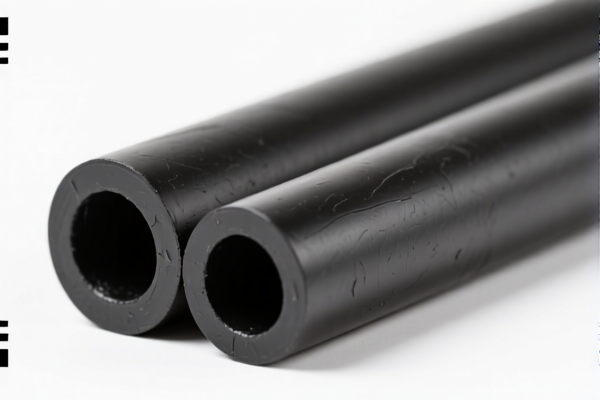
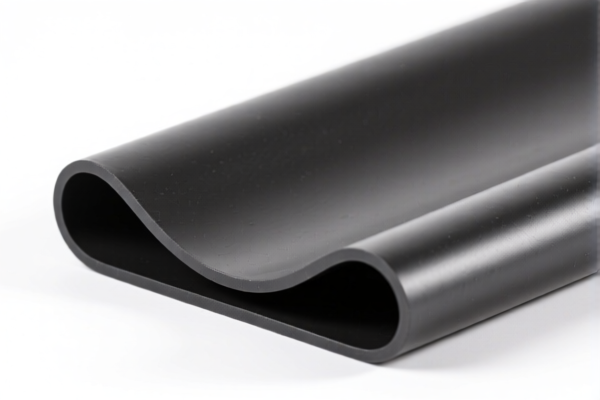
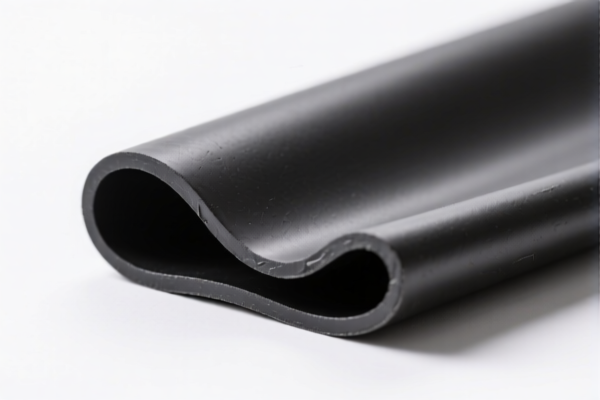
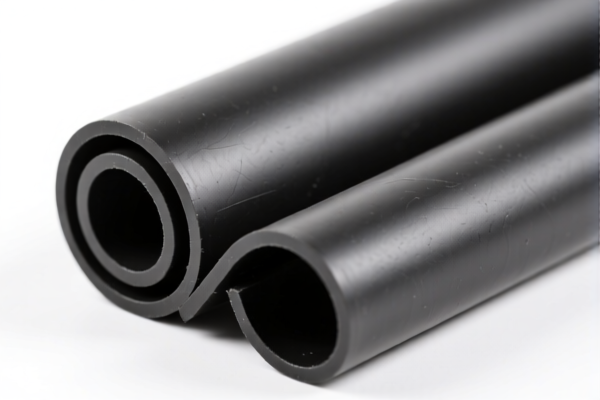
AI分析
🌿 Natural Rubber Modified Coating (NRMC)
🌐 HS Code Reference & Customs Clearance Guide | 2026 Latest Tariff Analysis | Professional Clearance Strategy
📌 I. Product Definition & Classification: What is "Natural Rubber Modified Coating"?
Natural Rubber Modified Coating refers to a semi-finished or intermediate rubber product where natural rubber has been mixed with other materials (plasticizers, accelerators, antioxidants, etc.) and is in a state of unvulcanized (uncured) plastic mass. It is not yet in its final manufactured shape (like a tire or gasket) but is prepared for further processing.
In international trade, this product falls strictly under Chapter 40 (Rubber and Articles Thereof). The key distinction lies in its state: * Is it a finished coating for walls/floors? ❌ No. That would be Chapter 32 (Paints/Varnishes). * Is it a finished rubber part? ❌ No. * Is it unvulcanized rubber mixed with additives? ✅ Yes.
⚠️ Critical Classification Point:
- If the product is natural rubber based, mixed with plasticizers, and unvulcanized → It belongs to 4005 (Unvulcanized rubber mixtures) or 4001 (Natural rubber in primary forms) depending on the specific physical form (sheets, lumps, liquid). - The provided<DATA>suggests a strong match for 4005 (Unvulcanized mixtures) and 4001 (Natural rubber, primary forms), as well as a potential misclassification risk to 4002 (Synthetic rubber) if the "modified" aspect implies synthetic blending. However, "Natural Rubber Modified" implies NR is the base.
📦 II. HS Code Classification Details (2026 Latest Tariff Authority Comparison)
Based on the <DATA> provided, here are the matched HS Codes and the logical reasoning for each:
| HS Code | Product Description | Logic for Matching "Natural Rubber Modified Coating" |
|---|---|---|
4005.20.00.00 |
Unvulcanized rubber mixtures, natural rubber based | Best Match. "Modified coating" often implies a mixture. If the coating is an unvulcanized mass of natural rubber mixed with other substances, it fits here. The summary notes: "Matches natural rubber material and modified material attributes, fits the classification of unvulcanized milled rubber." |
4001.29.00.00 |
Natural rubber, primary forms (other than sheets/lumps) | Strong Alternative. If the "coating" is in a liquid or semi-liquid paste form that is still considered a "primary form" of natural rubber before detailed mixing/vulcanization, it may fall here. Summary: "Matches natural rubber material and primary/intermediate forms, fits natural rubber and similar rubber categories." |
4001.22.00.50 |
Other forms of natural rubber (primary/semi-finished) | Possible Match. Similar to above, if the physical state is a specific intermediate form (e.g., liquid latex concentrate or specific paste) not covered by 4001.29. Summary: "Matches natural rubber material, inferred as primary or semi-finished form, fits other forms of natural rubber." |
4005.10.00.00 |
Unvulcanized rubber mixtures, synthetic or blend | Risk Match. If the "modified" part contains significant synthetic rubber or the customs authority suspects it's not purely natural, they may route it here. Summary: "Matches natural rubber material and modified material attributes, fits unvulcanized milled rubber." (Note: This code is often for synthetic blends, so ensure documentation proves NR dominance). |
4002.99.00.00 |
Other synthetic rubber (primary forms) | Wrong Classification (But Listed). This code is for Synthetic Rubber. The input is "Natural Rubber Modified." However, if the modification introduces synthetic elements, or if the "coating" is actually a synthetic emulsion disguised as NR, customs might flag it here. Summary: "Matches rubber components and modified material primary/intermediate forms, fits synthetic rubber attributes." |
🔍 Key Takeaway:
The product is primarily Unvulcanized Natural Rubber Mixtures. The most accurate codes are 4005.20 or 4001.29. 4002 is likely incorrect unless the product is predominantly synthetic.
💰 III. 2026 Latest Tariff Rate Breakdown (Including Surtaxes & Policy Surcharges)
✅ Applicable Country: United States (US)
✅ Origin: China (CN) (Implied by the tax details in DATA)
✅ Effective Date: 2025/2026 (Current Trade Environment)
🎯 1. 4005.20.00.00 / 4001.29.00.00 / 4001.22.00.50 / 4005.10.00.00
(Unvulcanized Natural Rubber & Mixtures)
| Item | Content |
|---|---|
| Base Tariff Rate | 0.0% (ad valorem) |
| Section 301 Surtax (USITC) | +25.0% (On Chinese origin rubber goods) |
| Section 122 / IEEPA Surtax | +10.0% (Additional surcharge on certain Chinese goods) |
| Total Tariff Rate | 35.0% |
| Tax Calculation | CIF Value × 35% |
| De Minimis Exemption? | ❌ No (Denied) |
| Legal Basis Path | USITC:4005.20.00.00 → Footnote: Section 301 → IEEPA: Section 122 |
📌 Explanation:
- Base Rate 0%: Rubber raw materials generally have low base tariffs to support US manufacturing.
- 25% Surtax: This is the standard Section 301 tariff on most Chinese rubber products (Chapter 40).
- 10% Surtax: The<DATA>explicitly mentions "122条款关税10%" (Section 122 tariff 10%). This is an additional layer on top of Section 301 for certain strategic materials.
- Total 35%: This is a high barrier. You must budget for a 35% tariff on the CIF value.
⚠️ Note on 4002.99.00.00 (Synthetic Rubber)
- If misclassified as Synthetic (
4002), the tax is also 35% (0% Base + 25% Sec 301 + 10% Sec 122). - Risk: Misclassification from
4001/4005to4002doesn't change the tax rate significantly but poses a legal/compliance risk if the product is actually Natural Rubber.
🛠️ IV. Customs Clearance Practical Advice (实战避坑指南)
✅ 1. Preparation Checklist (Non-negotiable)
| Document | Required | Explanation |
|---|---|---|
| ✅ Technical Data Sheet (TDS) | ✔️ | Must specify: % Natural Rubber, % Synthetic Rubber (if any), Additives, State (Liquid/Paste/Solid). Crucial to prove it's "Natural" not "Synthetic." |
| ✅ Formula/Composition List | ✔️ | Detailed breakdown of ingredients. Customs will check if the "Modified" part makes it a chemical product (Chapter 32) or Rubber (Chapter 40). |
| ✅ Product Photos | ✔️ | Show the physical state (e.g., drum of liquid, blocks of unvulcanized rubber). |
| ✅ Bill of Lading & Invoice | ✔️ | Must clearly state "Unvulcanized Natural Rubber Mixture" or "Natural Rubber Paste." Avoid vague terms like "Coating" alone. |
| ✅ Statement of Origin | ✔️ | Prove Chinese Origin to accept the 35% rate (or apply for exclusions if available). |
✅ 2. Declaration Strategy (Key Mantra)
🔥 "State is Unvulcanized, Material is Natural, Mix is Clear, Tax is 35%!"
| Scenario | Correct Declaration | Incorrect Declaration | Consequence |
|---|---|---|---|
| Product is Unvulcanized Rubber Paste | 4005.20.00.00 (Unvulcanized Mixture) |
"Paint" or "Varnish" | Wrong Chapter (32 vs 40) → High penalty, seizure. |
| Product is Liquid Latex | 4001.29.00.00 or 4001.22.00.50 |
"Synthetic Rubber" | Misclassification → Audit risk. |
| Product contains >50% Synthetic | 4005.10.00.00 |
"Natural Rubber" | Customs Rejection → Must re-classify. |
✅ 3. Special Handling Tips
| Situation | Advice |
|---|---|
| "Coating" vs "Rubber" | Do not use "Paint" or "Coating" in the HS Code description if it's rubber-based. Use "Unvulcanized Rubber Mixture." "Coating" might trigger Chapter 32 (Chemicals), which has different, potentially higher, scrutiny. |
| Section 301 Exclusion | Check if your specific HS Code was excluded from the 25% tariff in recent rounds. Unlikely for Rubber, but always verify. |
| Pre-Ruling Application | Given the complexity of "Modified" rubber, apply for an Advance Ruling from CBP if the product is new to the US market. |
🌍 V. Global Market Comparison (2026)
| Country/Region | Recommended HS Code | Tariff (China Origin) | Notes |
|---|---|---|---|
| 🇺🇸 USA | 4005.20.00.00 / 4001.29.00.00 |
35.0% | 25% Sec 301 + 10% Sec 122. High cost. |
| 🇨🇳 China | 4005.20.00.00 |
0% - 5% | Low duty for import into China. |
| 🇪🇺 EU | 4005.20.00 |
0% | Generally 0% MFN duty. No 301-style surtaxes. |
| 🇯🇵 Japan | 4005.20.00 |
0% - 3.2% | Low duty under EPA/JEFTA. |
📌 Conclusion:
The US is the most expensive market for this product due to the 35% total tariff.
If you are importing into the US, the 35% cost is fixed for Natural Rubber products from China.
📌 VI. Common Errors & Pitfalls (Blood & Tears Lessons)
❌ Error 1: Declaring as "Paint" (HS 3208)
👉 Consequence: Customs will reject it. Rubber coatings are Chapter 40, not 32. If declared as 3208, you might pay 0% base but face fraud allegations for misdeclaration.
👉 Correct: Use 4005/4001.
❌ Error 2: Ignoring the "Modified" aspect
👉 Consequence: If the product contains significant synthetic rubber, declaring it as Pure Natural (4001) is fraud.
👉 Correct: If synthetic > natural, use 4005.10 (Synthetic Mixtures).
❌ Error 3: Assuming "De Minimis" applies
👉 Consequence: Rubber is not eligible for the $800 de minimis exemption.
👉 Correct: Full duty payment is required.
🎯 VII. Conclusion: Professional Declaration, Cost Control
🎯 Key Mantra:
🔹 "Unvulcanized = 4005, Natural = 4001, Tax = 35%, No De Minimis."
🔹 "Don't call it Paint, Call it Rubber Mixture!"
📌 Pro Tip:
If your "Natural Rubber Modified Coating" is actually a finished waterproof coating for construction (with polymers, pigments, etc.), it might be classified under Chapter 39 (Plastics) or Chapter 32 (Paints).
However, based on the <DATA> provided, the system has matched it to Chapter 40 (Rubber).
Recommendation: Provide a Material Safety Data Sheet (MSDS) and Composition Analysis to CBP to prove the rubber content is dominant and unvulcanized.
📣 Immediate Action:
📞 Consult a Customs Broker: Confirm if
4005.20vs4001.29is better for your specific physical form.
💰 Budget 35% Duty: Do not underestimate the total landed cost.
📄 Prepare Documentation: TDS and Composition List are mandatory.
✨ Professional Clearance Starts with Precise Classification!
💼 Every percent of tax matters!
用户评价
关于 HS 编码归类
协调制度(HS)是由世界海关组织(WCO)制定的国际贸易商品分类标准。全球 200 多个国家采用 HS 系统作为海关关税、贸易统计和进出口监管的基础。
每个 HS 编码遵循以下层级结构:
- 章(2 位)——商品大类(例如:第 84 章:机器和机械设备)
- 品目(4 位)——章内的更具体分类
- 子目(6 位)——国际通用细分,所有 WCO 成员国统一使用
- 本国细分(8-10 位)——各国自行扩展的细分编码,如美国 HTSUS 10 位编码
正确的 HS 编码归类对于顺利通关、准确缴纳关税和遵守贸易法规至关重要。错误归类可能导致海关延误、多缴关税或罚款。
从CN进口到US时,适用的关税税率可能包括:
- 最惠国(MFN)税率——适用于 WTO 成员国的标准关税税率
- 普通税率——适用于无贸易协定国家
- 贸易救济关税——附加关税,如 301 条款(反倾销)、232 条款(国家安全)或反补贴税
本页内容仅供参考。如需正式归类,请咨询当地海关或持牌报关代理。